

Travel Experts Warn Why You Should Never Throw Away Your Boarding Pass
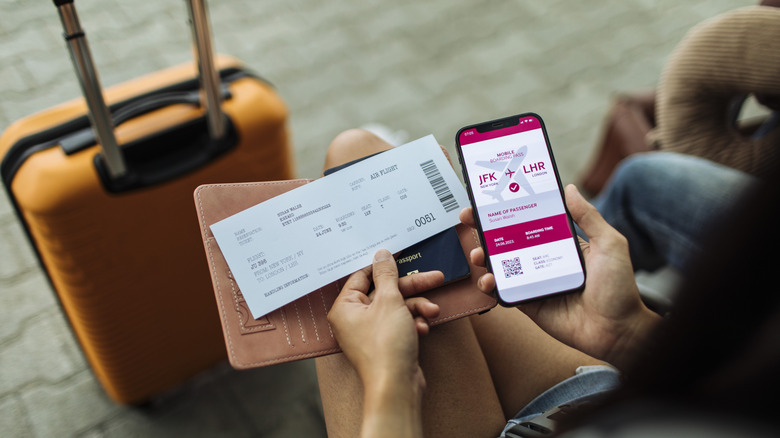
When you've finally reached your seat and have settled in for your flight to your destination, instinct may cause you to crumble up that boarding pass and stuff it into the seat in front of you. But travel experts caution airline passengers against tossing those passes away too quickly. Not only can they be useful after your flight, but they also hold personal information that can wreak havoc if in the wrong hands.
There are procedures in place to help passengers who lose their boarding pass before their flight. But throwing caution to the wind when throwing it away can haunt you. That's because, to the naked eye, a boarding pass seems simple. Name, flight information, and seat numbers are likely the most common sections of the pass.
But there's more information there than meets the eye. The bar code printed on the pass holds even more details about you. That not-so-random, pixelated ink connects to a digital landscape that not only identifies you, but has access to things like your airline rewards program, passport information, and connecting flight details, experts say. It doesn't take much for a thief to grab that information with a barcode scanner, so travelers should keep their boarding passes close and consider discarding them in a paper shredder.
Your boarding pass holds more information than just your name and seat assignment
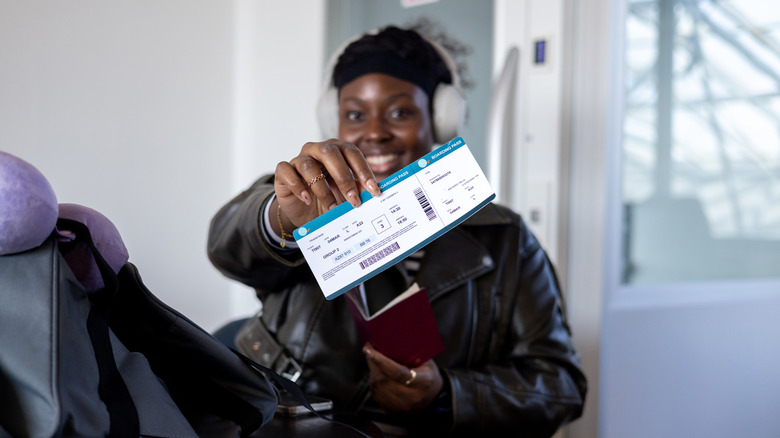
According to an article in Reader's Digest, airline boarding passes can give thieves access to sensitive information. Dave Lewis, a security expert with more than 30 years of experience, told the magazine that even with the most basic pieces of information, phishing scams can create professional-looking emails that can convince the more innocent among us to provide more personal details, such as banking information. "The real danger lies in how easily this information can be weaponized," Lewis told Reader's Digest.
Not only does that mean tossing your boarding pass can be dangerous, but so can posting photos of it on social media. On a Reddit thread, United Airlines advised its customers to avoid sharing pictures of their boarding passes on public platforms. Boarding passes include record locator numbers and itineraries. That can sometimes be enough to give others access to your trip information on their website. The same rules apply for luggage tags too, the airline said.
There are even some sneaky codes on a boarding pass that could mean you're more likely to get upgraded. Keep your pass safely in a purse or carry-on bag, and dispose of it only when you are back home and your trip is over. Even if shredding it isn't possible, consider cutting it up, making sure the bar code and any personalized text is destroyed.
While more secure, digital boarding passes have their own risks
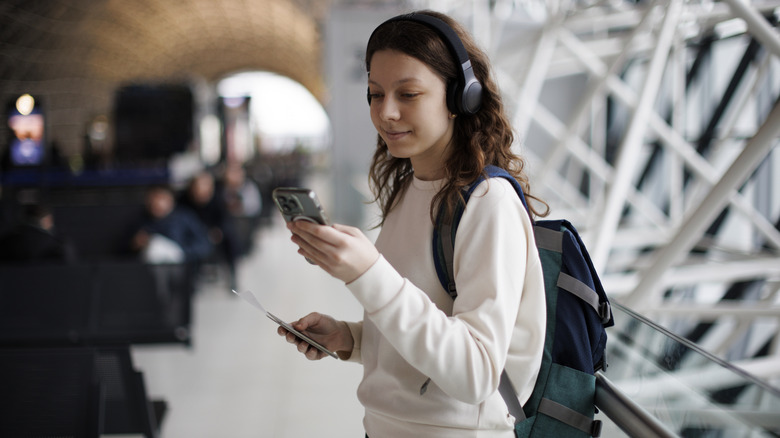
With airline apps now readily available, many opt to download their boarding pass. This method of ensuring your entry onto a flight is definitely more secure, experts say. It's also a great way to keep your flight information up to date and synced with any changes that may happen along the way.
in a separate United Airlines Reddit thread, a customer advised against relying solely on an airline app to access boarding passes. On their trip, the pass disappeared from their digital wallet and the app. "It took 40 minutes of desperately refreshing the app for the pass to show up again." A screenshot is always a good back up plan; another customer commented on the thread. It's also one example of why printing your boarding pass at the airport is always a good idea.
Hanging onto your digital boarding pass after your trip can be useful, especially if you have to reach out to airlines or employers for reimbursement. The boarding pass is proof of your trip and can assist in reconciling airline miles, for example. But only share the pass with trusted sources. Perhaps the best advice given to Reader's Digest came from Eva Velasquez, CEO of Identity Theft Resource Center, who said, "When you treat all your data with care, it becomes a simple, routine practice."