

TSA Has Banned This Electronic Item From Being Packed In Checked Luggage
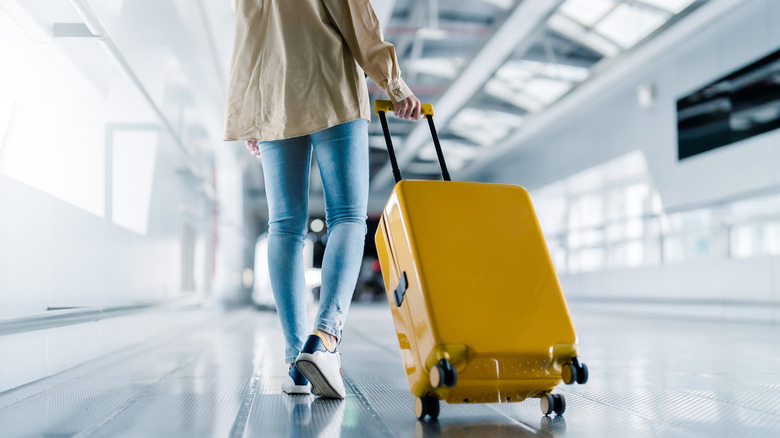
These days, we all carry a number of electronic items along with us wherever we go, and that includes when we fly — it's just a fact of modern life. However, according to the Transportation Security Administration (TSA), you aren't permitted to pack items with a lithium-ion battery exceeding 100 watt-hours (Wh) in your checked luggage. Items that use this type of battery can include power banks and portable chargers, laptops, cordless hair straighteners, and curling irons. If you're someone who tends to check a bag — whether you pay for it or get it free with airline or credit card perks — this may affect how you distribute items when you pack.
However, even for people who use strategies like the 5-4-3-2-1 capsule wardrobe to stick to a carry-on alone, there is more you need to know: While lithium-ion batteries under 100 Wh can be packed in your carry-on bag with no restrictions, lithium-ion batteries between 101 and 160 Wh require special permission from the airline beforehand. Even then, you are only allowed to bring two such batteries. Anything above 160 Wh is banned. Additionally, you can't charge portable lithium-ion batteries or power banks at any point during the flight.
The rules around lithium batteries
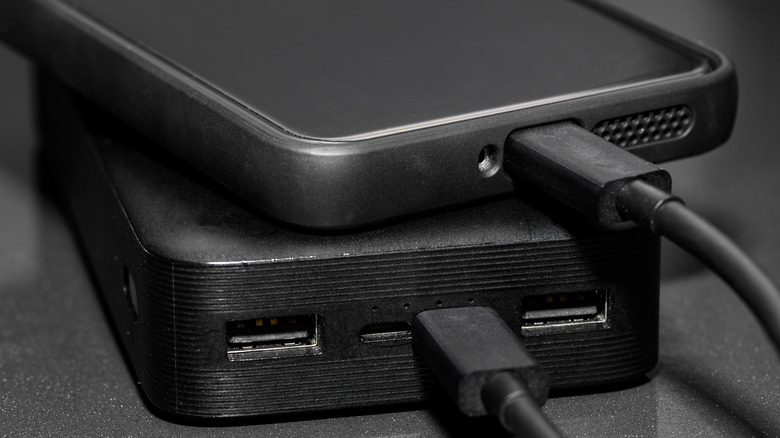
There is a good reason for not permitting items with these types of batteries in checked luggage, and for the carry-on restriction for ones over 100 Wh. Lithium-ion batteries can overheat and catch fire, and if they're in a carry-on bag, the situation can be taken care of before it's out of control. A fire can happen due to issues like damage, overcharging (and who among us hasn't done that?), and even defects in the product. If you have items like these in your carry-on bags, and you notice smoking, expanding, overheating, or burning, don't try to hide it — promptly let a crew member know. They've been trained to deal with situations like this and have equipment, such as fire-resistant pouches, to contain flames.
With some airlines raising the price of checked bags, this is yet another reason to try to avoid overpacking. If you're sticking with a carry-on bag, make sure you don't overstuff it or try to use a bag that is slightly bigger than the official requirements allow. The TSA has done a major upgrade at a number of airports that, while making things more convenient, may not allow your larger bag through scanners. Make sure you know all the rules before you head out to the airport. If you ever have a question about what is okay to pack, you can text "Travel" to AskTSA (275-872) to get an automated response.