

TSA's Major Upgrade Offers A More Convenient Method Of Airport Security Screening
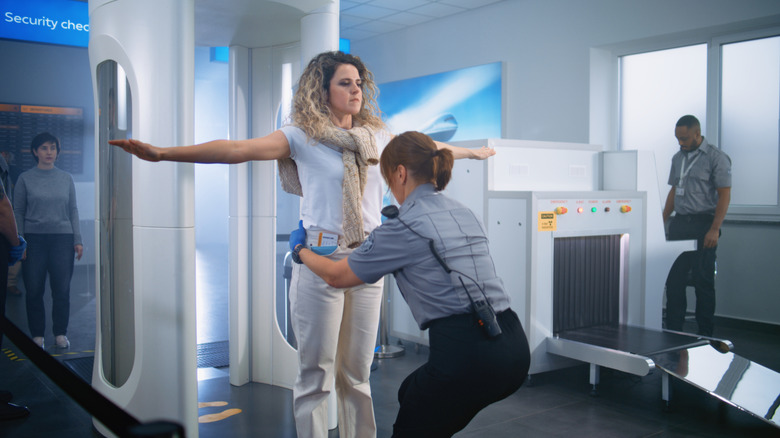
More than 250 airports across the United States now have a more efficient and convenient way of screening carry-on baggage. The Transportation Security Administration (TSA) used $781 million to place high-tech computed tomography (CT) scanners in airport security lines. The new scanners not only generate higher quality 3D images of a bag's interior contents, but those images can be manipulated to give security officers better views of the items inside.
The new tech helps security officers more efficiently evaluate the contents of carry-on baggage. An added benefit is that it also reduces the number of times those officers will have to pause the process to manually open luggage for a better look inside, according to a TSA press release. Because of the high quality of the images created by the CT scanners, passengers using them will no longer have to remove electronics like laptops or their travel-sized liquids, as long as they follow TSA's rules on toiletries.
The efficiency of the new scanners is definitely a plus for travelers. However, their design could create headaches for those trying to squeeze as much into their carry-on as humanly possible. The CT scanners have a smaller opening for bags to pass through, which now serves as an additional way to ensure bags don't exceed size limits. To avoid a last-minute checked bag fee, here's what passengers should know about carry-on luggage size requirements in 2026.
New airport CT scanners may change the way you pack for your flight
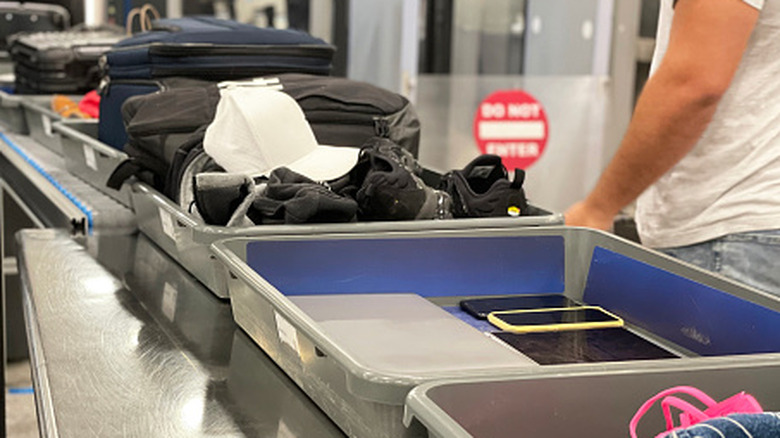
Unfortunately, checking luggage will now cost you more when flying on some U.S. airlines. So, it's no surprise that more travelers are trying to fit as much as they can into their carry-on luggage. However, since TSA said in its press release that not all carry-on bags will fit within its new CT scanners, that diligently packed roller bag or duffle may end up in the plane's cargo hold after all.
The openings of the new scanners measure 24.5 inches wide by 16.5 inches tall, which means that a standard carry-on suitcase, measuring around 22 inches by 14 inches, will fit with no trouble. Rather than placing carry-on items directly on a conveyor belt, all bags going through the new CT scanners should be placed into a bin for screening, TSA said. To help save time, travelers are encouraged to place any items from their pockets, such as keys and cell phones, into carry-on luggage, rather than placing them into the bins themselves.
Even though the new technology means it is less likely that travelers will need to open their bags for inspection, there's an additional chance that a too-big-for-the-scanner carry-on may be redirected. For those looking to avoid checking any bags, consider packing light. Using the 5-4-3-2-1 packing method is one popular way to ensure you have the essentials for your travel wardrobe, without overpacking.