

Georgia's Island Destination Offers Beaches With Glowing Bioluminescence During Summer
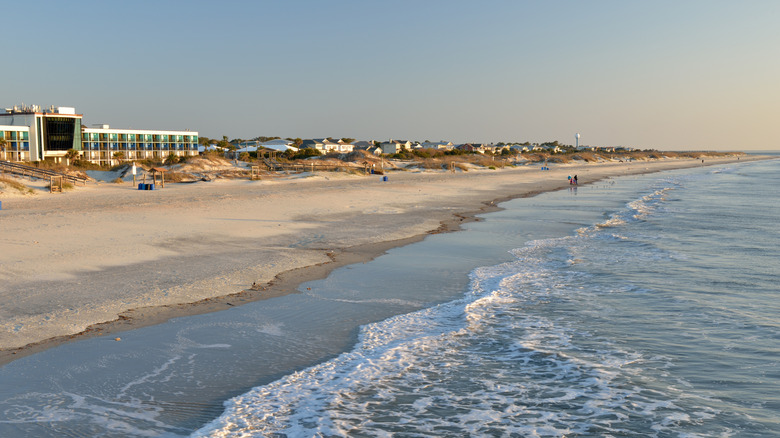
For most people, a trip to the beach is already an enjoyable experience, simply because of the combination of soft sands, ocean waves, and sunshine. However, if you're looking for a way to make your next beach vacation even more memorable, it may be time to start planning around bioluminescence. If you're not familiar with the term, it refers to "light produced by a living organism using a chemical reaction," according to the National Oceanic and Atmospheric Administration (NOAA). When it comes to bioluminescent beaches, this usually happens because of plankton in the water, which create an ethereal blue glow.
Fortunately, there are a number of places to see this biological reaction in person in the United States, such as at the brightest bioluminescent bay in Puerto Rico. However, if you prefer something on the mainland and you happen to be in the Southeast (or close to it) during the summer, you can visit Tybee Island, Georgia, instead. The island, located next to Savannah on the Atlantic coast, is one spot where the water is known to glow after nightfall.
That said, unlike other places around the world where glowing beaches are relatively common and easy to see, you have to work a little bit to see the phenomenon in person on Tybee. So, let's break down the best methods for witnessing bioluminescence on the island and what else you can do while you're in the area.
How to maximize your chance of seeing bioluminescence on Tybee Island
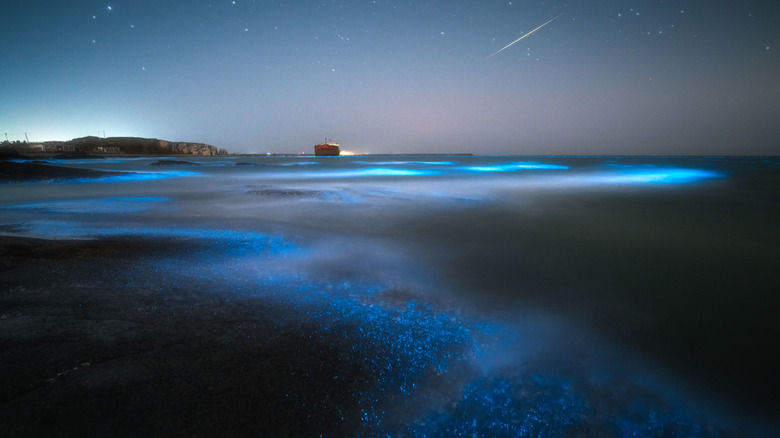
Before you start packing your bags and booking flights to Savannah, let's break down the factors that can affect whether you'll actually see bioluminescence during your visit to Tybee Island. First, the time of year matters. The plankton in the water, called dinoflagellates, are most active during the late summer months, when the ocean is the warmest. So, from about July to mid-September is the best option. You should also plan around the phases of the moon, as a new moon means less ambient light and better visibility in the water. Fortunately, you can use a moon phases calendar to pick the best dates.
Since light is such a vital factor, you want to find a spot along the beach that is farthest away from the city or other sources of light pollution. Overall, the darker it is outside, the easier it is to spot the bioluminescence. Just make sure to bring a flashlight or lantern to see where you're going as you make your way to and from the beach. According to a Facebook post by Georgia locals, Back River Beach is better than beaches facing the Atlantic directly. One reason Back River is ideal is that the water is calmer than more east-facing shorelines; choppy waves disperse the plankton, making their glow much harder to see. When the water is relatively still, the dinoflagellates can congregate more easily. Even then, though, don't expect the bioluminescence at Tybee Island to be impressively bright. Those who have seen it remark that it looks like tiny white sparks.
Planning a visit to Tybee Island
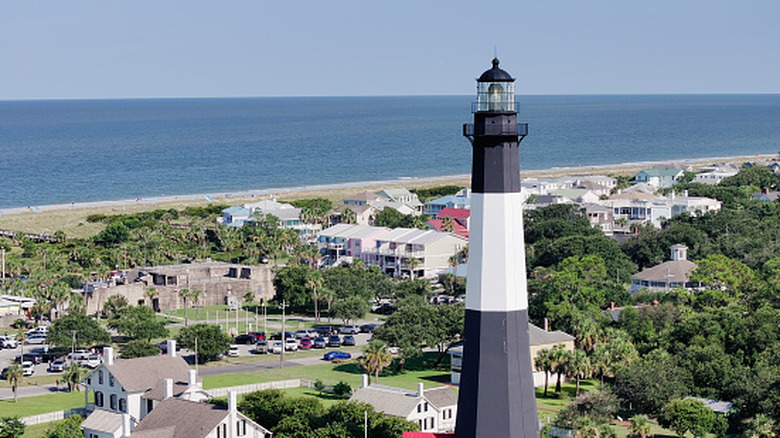
Although seeing bioluminescence in person is certainly cool, there's far more to do on Tybee Island and the surrounding area. First, it's best to fly into the Savannah/Hilton Head International Airport (SAV), which is only about a 45-minute drive from the island. Savannah is one of the 10 most beautiful cities in the United States, so make sure to spend some time walking its historic streets and scenic squares. Then, make your way to Tybee. Since the island is a tourist destination, it has quite a few hotels and vacation rentals, many of which face the ocean, so you get incredible views during your stay.
Tybee Island has five unique beaches, three of which are on the Atlantic. There is also the aforementioned Back River Beach on the south side and the Savannah River Beach on the north. Both of these are quieter, less-crowded options compared to the most popular beach, South Beach. Many visitors come here because of the soft sands, but if you're more into beachcombing, you can check out North Beach, which is next to multiple historical sites, such as the Tybee Island Light Station and Museum and Fort Screven. You can also check out the Tybee Island Marine Science Center, featuring live animals and interactive exhibits.
Finally, if a day at the beach works up an appetite, you can indulge at local restaurants. The Deck Beach Bar and Kitchen is next to the water and features fresh seafood. Or, imbibe at the Kelpie bistro and English-style pub, where you can get fish and chips or fisherman's pie. However, if you're really into food, you can drive about two and a half hours north to one of the best foodie cities in the region, South Carolina's "holy city" of Charleston.