

Americans Don't Need A Passport To Visit The World's Brightest Bioluminescent Bay
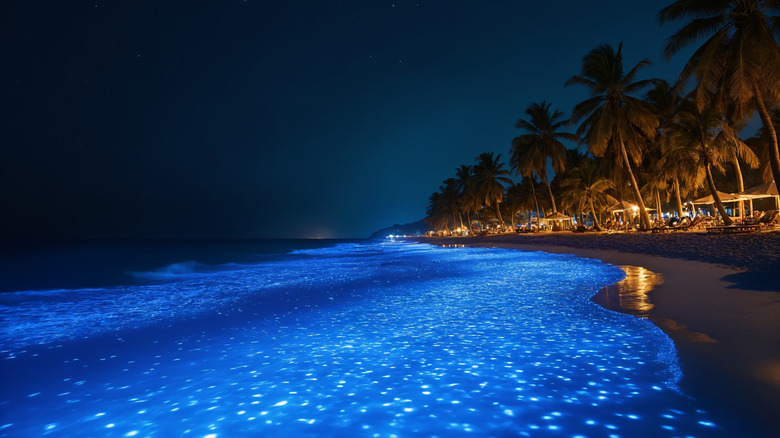
Beneath the ocean, small organisms emit a gentle blue glow when they're disturbed by the waves or a kayak's paddle. While there are bioluminescent organisms all around the world, the world's brightest bioluminescent bay is in the United States, in a bay on the coast of Puerto Rico. That means Americans can skip the passport and easily book a trip to witness the natural phenomenon.
While Puerto Rico isn't a state, it is a U.S. territory, and it's among several Caribbean destinations that don't require Americans to hold a passport, such as the U.S. Virgin Islands. And the territory's Mosquito Bay holds the Guinness World Record for the world's brightest bioluminescent bay. Guinness is quick to point out that Mosquito Bay on the island of Vieques is not its only bioluminescent bay. It is, however, the brightest. That's because an estimated 700,000 of the tiny organisms called dinoflagellates are in each gallon of water contained within the bay.
Puerto Rico takes its wildlife and bioluminescence seriously. After Hurricane Maria devastated much of Puerto Rico in September of 2017, concentrations of bioluminescent organisms flooded into the bay and then flourished. To protect them, and the mangroves upon which those organisms feed, gas-powered boats are banned from operating on the bay and swimming in its waters is prohibited. The result is a thriving natural preserve with a bioluminescent community that can be enjoyed by visitors throughout the year.
When to visit Puerto Rico's Mosquito Bay to see the best bioluminescence
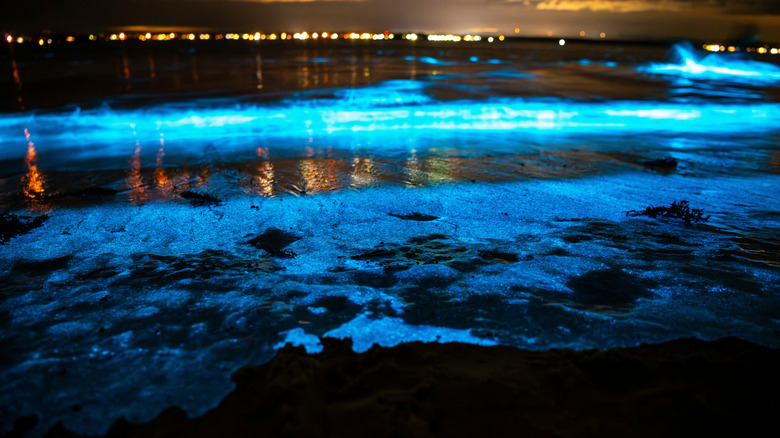
Puerto Rico's Mosquito Bay's bioluminescent phytoplankton have more than doubled since the devastating Hurricane Maria struck the island. While the organisms are always present, visitors are encouraged to time trips appropriately to witness the "liquid starlight," as Island Activities Puerto Rico refers to it. The biggest factor to consider when making plans is the moon.
Experts suggest visiting Mosquito Bay around a new moon, when the sky is at its darkest. For the best visuals, book visits within the two-and-a-half-week window around the new moon. A new moon means less moonlight and therefore less competition for the visual display swirling beneath the waves. Waves, kayaks, and paddles gently disturbing the water activate the bioluminescent organisms, which are always there, but can be seen more clearly without the moon's reflection on the waves.
If you're unsure about the timing of the moon's phases, don't worry. Tour operators generally avoid leading groups out into the bay during the period surrounding the full moon, when visibility is low. The time of year also impacts the bioluminescent show. The two best times of year to visit Mosquito Bay's bioluminescent waters are from July to October and December to April, when the waters are calmest. Since Puerto Rico is not within a hurricane-free zone, like Aruba, however, it's also important to be aware of any churning tropical weather before making the trip.
Mosquito Bay requires more than just a day trip
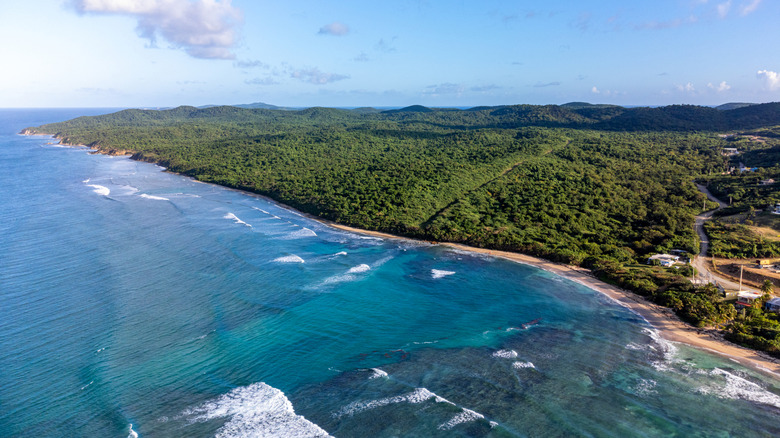
There are plenty of flights to connect to San Juan, Puerto Rico's capital, from Miami. A typical flight lasts about three hours, but additional travel is required to reach Mosquito Bay (named after a famous ship and not the pesky bug, by the way). Because of this additional travel, a simple day trip (or evening trip) to Mosquito Bay is difficult to pull off.
The Puerto Rican island of Vieques and home to the world's brightest bioluminescent bay is about 8 miles off the east coast of the territory's main island. A ferry makes regular, one-hour trips to Vieques, and 25-minute flights to the island are available from San Juan. Visitors are encouraged to book their transportation to Vieques months in advance, since flights and ferry rides tend to sell out.
Because the bay is most popular at night, tourists are encouraged to consider staying overnight in the island's main town of Isabel Segunda or in the village of Esperanza, from where most of the bay's bioluminescent tours begin. This gives visitors a chance to explore the clear waters during the day and experience the bioluminescence at night, without the stress of catching the last flight or ferry of the day. Accommodations on the island range from guest houses to hotels, and plenty of restaurants offer fare for every taste. For more bioluminescence in the U.S., plan a trip to the California beaches where you're most likely to find this glowing phenomenon.