

What Happens To Your Checked Luggage As It Gets Searched By TSA?
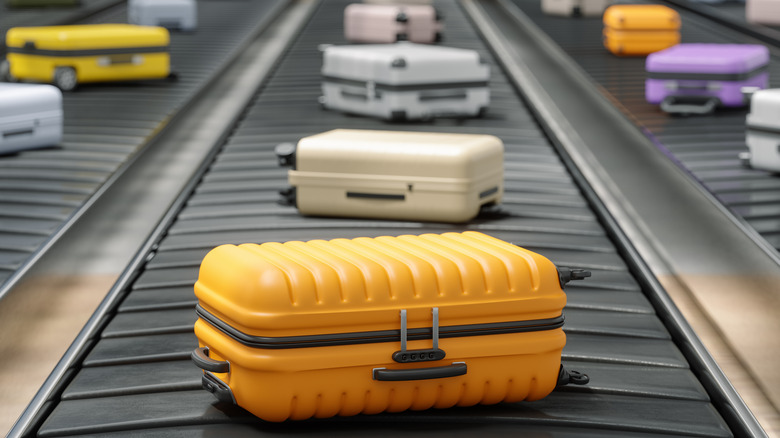
If you fly often, you know the routine: You hand over your suitcase at the check-in counter, watch it disappear onto a conveyor belt, and hope it shows up when you land. For most travelers, that's where the story ends. Yet, between check-in and baggage claim, your luggage moves through a surprisingly sophisticated security and logistics network. As airports continue investing in advanced automation — including robot baggage handlers – the journey your luggage takes behind the scenes is becoming even more complex.
In the United States, responsibility for screening checked luggage falls largely to the Transportation Security Administration (TSA), the federal agency charged with protecting the traveling public and watching flier behavior with an eagle eye. Before a checked bag can be loaded onto an aircraft, it must pass through a security screening process designed to identify explosives, weapons, and other prohibited items. The scale of that operation is enormous: TSA screens roughly 1.3 million pieces of checked luggage every day. Over the course of a year, that adds up to nearly 475 million bags moving through airports across the country.
Most travelers never see this process unfold. Hidden behind secure doors and miles of conveyor belts, luggage passes through multiple checkpoints before it reaches the aircraft. What determines whether a bag gets a closer look? What are TSA officers actually searching for? And what happens if your luggage is selected for inspection? Understanding how checked luggage screening works can help remove some of the mystery from air travel — and may even help you avoid delays the next time you fly.
How TSA screens checked luggage
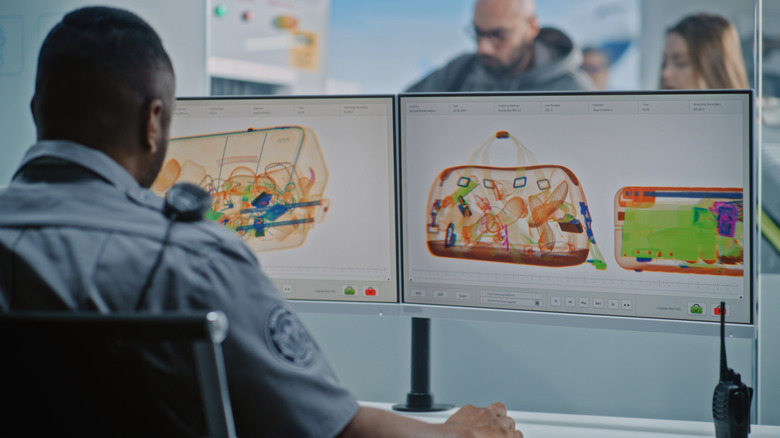
TSA officers do not routinely open every piece of checked luggage. The vast majority of bags pass through sophisticated screening equipment without requiring any hands-on inspection. When you check a suitcase, it enters a network of scanners designed to detect prohibited items. If the system clears the bag, it continues directly toward the aircraft. If an image raises questions or reveals an item that cannot be clearly identified, the luggage may be pulled aside for further inspection by a TSA agent.
Many travelers worry about locking their luggage. TSA can open certain TSA-approved locks using master keys provided through agreements with manufacturers. Even so, officers may cut a lock if necessary to complete an inspection. Officers also have the legal authority to remove and confiscate prohibited items from your bag. If your property is lost or damaged during the screening process, you may file a claim with TSA. However, there's no procedure available for passengers to recover prohibited items. If something is deemed a hazard, consider it gone for good.
Once the inspection is complete, agents typically place a baggage inspection notice inside the suitcase. At that stage in the process, responsibility shifts to the airline. Airline baggage handlers transport luggage to the correct aircraft and, after arrival, deliver it to the baggage claim area.
Tips for packing luggage to avoid extra screening
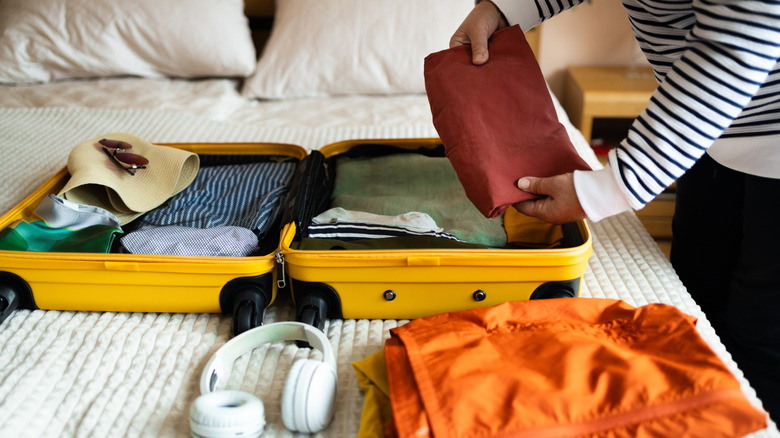
Most luggage passes through airport security without issue, but packing smart can reduce the chances of your bag being selected for additional screening. The first step is understanding prohibited and restricted items. TSA maintains a lengthy list covering hundreds of restricted items, many of which fall into categories such as flammables, weapons, hazardous materials, and sharp objects. Travelers carrying unusual items should check the rules before heading to the airport.
One of the most common mistakes involves lithium batteries. Spare lithium-ion batteries, including power banks and many portable chargers, cannot be packed in checked luggage because they present a potential fire risk. These items generally belong in carry-on bags instead. Other everyday items can also attract extra attention from security scanners. Large aerosol containers, pressurized products, flammable materials, and tools with blades or sharp edges frequently require closer review. Even food can complicate the screening process. Dense products such as blocks of cheese, jars of peanut butter, or large quantities of packaged snacks may appear difficult to identify on an X-ray image.
How you pack matters, too. You may want to avoid overpacking on your next trip, as an overstuffed suitcase can create dense areas that make scanner images harder to interpret. Spreading heavier objects throughout your luggage helps create a clearer image during screening. Packing cubes can also keep belongings separated and easier to identify, reducing visual clutter inside the bag. There's no packing strategy that guarantees your luggage won't receive extra scrutiny, though. Still, keeping items organized, following TSA guidelines, and avoiding prohibited materials can help your checked luggage move through the system with fewer delays.