

Robot Baggage Handlers Are Coming To A Japanese Airport. Is This The Future, Or A Bad Sci-Fi Movie?
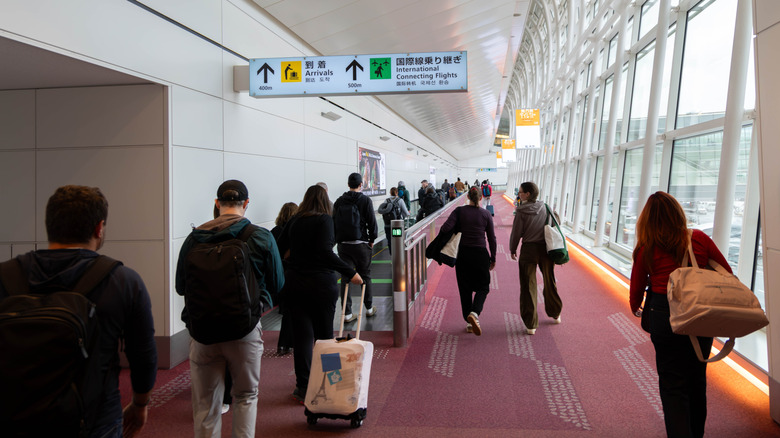
Imagine this: The next time your plane taxis into a terminal, you look out your window and see a sea of robots swarming the tarmac. This might sound like a science fiction movie, but it may soon be a reality in Japan. Labor shortages there are causing pain points in major industries, including air travel. To address this challenge, Japan Airlines has announced the launch of a multi-year pilot program of robot baggage handlers. The robots, designed to look and move like humans, will start loading and unloading luggage and cargo at Tokyo's Haneda Airport in May 2026 through 2028.
The robots "possess a range of motion and adaptability comparable to humans" that enables them to replicate human labor, according to the press release from Japan Airlines. While companies have been improving humanoid robots in recent years, the meteoric rise of AI has offered more possibilities (even Rick Steves supports a limited use of AI when planning a trip). These days, robot manufacturing companies are trying to integrate AI into their existing robot models, allowing the robots to perform even more high-skilled tasks. The humanoids deployed at Haneda Airport will be powered by AI.
There's a lot at stake. Tokyo's Haneda Airport welcomes more than 60 million passengers a year. Without a solution for the labor shortage, the airline industry will face major challenges in order to meet demand. And this is coming at a time when travel experts are expecting more and more disruptions in air travel. In addition, Japanese airports also have a reputation to uphold. They're recognized by travelers from around the world for being among the most accurate and efficient airports at handling baggage. For example, Osaka's Kansai airport famously hasn't lost a bag in more than 30 years, despite millions of passengers annually (per NPR). Are these new robots really up to the task?
Are humanoid robots the future of baggage handling or a distraction?
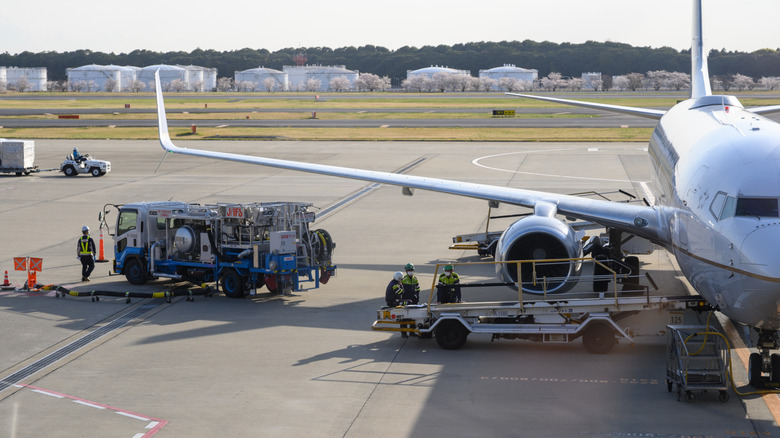
So what do supporters think about robot baggage handlers at the Tokyo airport? Many say it's a pragmatic response. Japan's aging population and shrinking workforce have pushed companies to explore automation out of necessity. Proponents argue that recent technological advances in artificial intelligence, machine vision, and robotics have made real-world deployment of humanoid systems viable. In their view, the humanoid design offers a key advantage: These robots can operate within environments already built for human bodies, reducing the need for costly infrastructure redesign. This approach has proven successful in logistics, where companies like Amazon have deployed robotic systems in warehouses to streamline sorting and transport tasks.
Critics, meanwhile, see this initiative as driven by spectacle, rather than substance. They argue that highly orchestrated public robot demonstrations are designed to generate buzz for big companies, and sometimes as state propaganda, according to The Guardian. In reality, critics say humanoid robotics are still unreliable in dynamic, high-stakes settings like airports. Of course, there's the larger concern of how AI and robot technology could replace human workers and what that could mean for current baggage handlers. Critics also point out that making robots in human form is itself misguided. Why are we making robots look like humans, when simpler, nonhuman-like machines could perform the same tasks more efficiently? In this sense, recreating the human form may have less to do with functionality and more to do with vanity. Skeptics warn that companies may be investing heavily in solutions that fail to scale or deliver returns.
Time will tell if these robot baggage handlers will succeed and expand beyond the Tokyo airport. In the meantime, if you are planning a trip to Tokyo, make sure you check out the best sights and attractions in Tokyo for first-time visitors. For now, they don't include humanoid robots.