

Southwest Airlines Banned This 'Human-Like' Technology After A Flight Went Viral
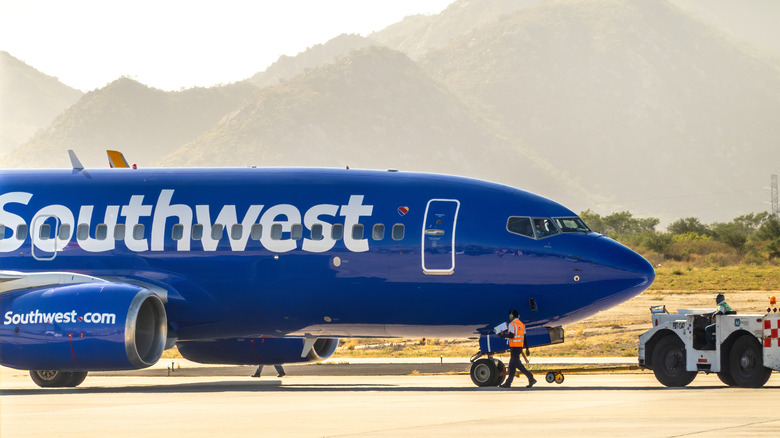
Humanity has finally reached the point where people are debating whether robots should be allowed on flights. It may sound like something out of a science fiction film, but as futuristic as it seems, it's becoming reality. After two recent incidents, Southwest Airlines has decided to ban human-like robots from flying.
On April 30, 2026, a Southwest Airlines passenger named Eily Ben-Abraham boarded a flight in Oakland with a human-like robot named Bebop, reports San Francisco Chronicle. Bebop even had an assigned seat, but despite being a ticketed passenger, the flight was delayed by nearly an hour as the flight crew determined whether it was safe to have a robot on board. Just over a week later, on May 7, another lifelike robot named Stewie boarded a plane traveling from Las Vegas to Dallas, per CNN. Aaron Mehdizadeh, owner of The Robot Studio, purchased a seat for Stewie, and the two successfully made it to their destination — the whole journey was captured in a now-viral video. But not long after, Southwest Airlines updated its policy to ban such practices moving forward.
Policies regarding technology use on planes is nothing new – United Airlines' just announced a new headphone rule and passengers who don't comply could face consequences. But Southwest Airlines' new robot ban isn't over fears that the machines will outsmart humans and seize control of the plane. The real concern has to do with the robots' lithium-ion batteries, the airline said to CNN. According to the FAA, these batteries can overheat, increasing the risk of heavy smoke and fire. It's something that happens more often than you might think — there were 89 incidents involving lithium-ion batteries on planes in 2024, the highest number ever recorded. However, Mehdizadeh told CBS News that Stewie was outfitted with a small battery similar to those used in laptops, suggesting that the airline's explanation doesn't exactly hold up.
Animal-like robots are also banned from Southwest Airlines
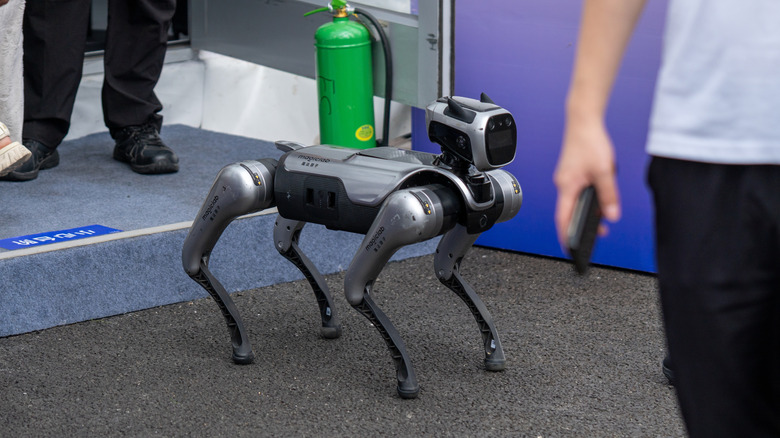
In addition to humanoid robots in the cabin, Southwest Airlines has also banned robots from traveling as checked baggage. This applies to any and all robots, "regardless of size or purpose," according to Southwest's website. While robots themselves may not always be welcome on board, robot baggage handlers will soon become part of the workforce at an airport in Japan.
The new policy extends beyond robots that resemble humans. Southwest states that "animal-like" robots are also banned from its planes. The reason also has to do with lithium-ion batteries. In case you need clarification, the airline has provided a definition for each. "A 'human‑like robot' is a robot designed to resemble or imitate a human in its appearance, movement, or behavior," the policy reads. "An 'animal-like robot' is a robot designed to resemble or imitate an animal in its appearance, movement, or behavior."
Other robotic devices must meet the airline's battery requirements and fit within a carry-on bag, including toys, the policy states. On that note, it's important to know your airline's size requirements for carry-on bags, which are more strictly enforced during busy travel months. As of now, robots resembling humans or animals are better off staying at home while you travel.