

Planning To Hike The Grand Canyon? This Interactive Online Tool Is A Life Saver
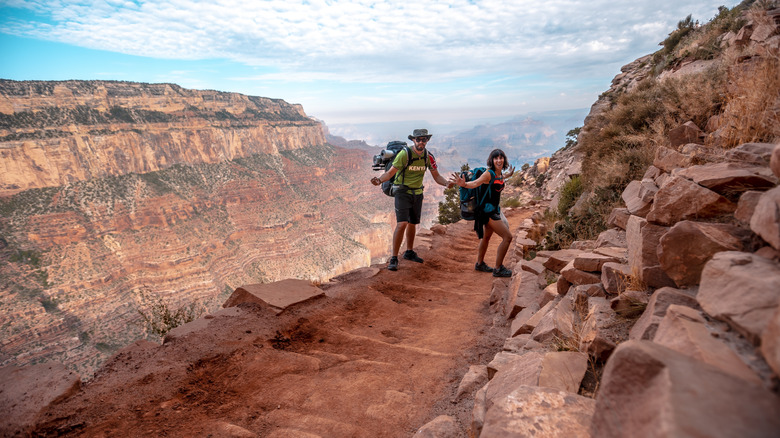
Grand Canyon National Park is among the best U.S. national parks for hiking, and its extraordinary scenery draws around 5 million visitors from around the world each year. But with so much to see at the Grand Canyon, it's easy to forget how intense the conditions can be. The high altitude and low humidity at the North and South Rim increase the risk of sunburns. The Inner Canyon is the hottest part of the park, and direct sunlight can make temperatures feel warmer by up to 20 degrees Fahrenheit. To safely enjoy this incredible environment, it's important to have the right tools with you, and the Grand Canyon Shade Tracker can be a life-saving necessity.
The shade tracker was launched by the hiking apparel brand hiKin in 2025. It's an interactive online map that helps hikers locate shady areas to cool off in Grand Canyon National Park. By simply inputting a route, a landmark, or a specific trail into the tracker, visitors can see what shade is available in any given area at any time of day, 365 days per year.
The tracker also provides real-time updates on shade coverage while you hike, as long as there is data signal available. It allows users to zoom in or out to determine their best path to get much-needed relief from the sun. Heat-related illnesses are a serious concern at the Grand Canyon, and lack of shade increases the risk for hikers. In addition to the shade tracker, there are several precautions worth adding to your checklist to stay safe at Grand Canyon National Park.
How to stay safe while hiking in Grand Canyon National Park
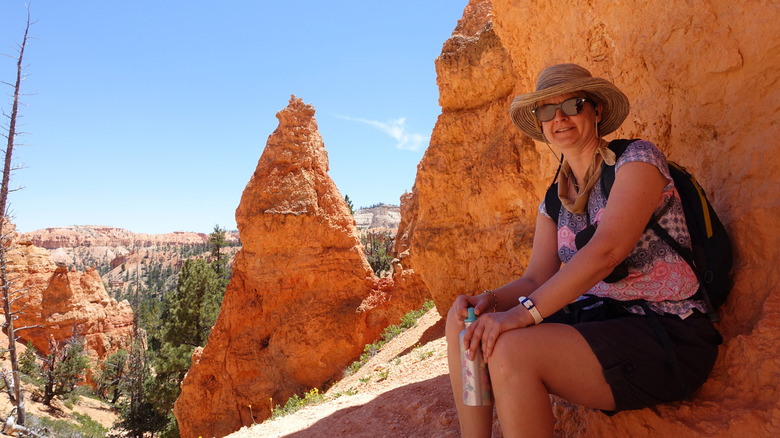
Hiking in Grand Canyon National Park is an exciting and memorable experience, but without adequate preparation, it can become dangerous. Heat injury, or heatstroke, begins when the core body temperature rises to 104 degrees Fahrenheit or more, according to the Mayo Clinic. Heatstroke ranges from mild to severe — if untreated, heatstroke can damage muscles and vital organs, and it can even be fatal. Prolonged sun exposure also increases the risk of skin cancer. This form of cancer is incredibly common, with around 9,500 people diagnosed in the U.S. every day, according to The American Melanoma Foundation.
The National Park Service (NPS) has several key tips to prevent heat- and sun-related illnesses. First and foremost, pick a hike that is suitable for your group — there are many stunning hikes in the Grand Canyon for every experience level that you can choose from. Check the UV index, weather forecast, and posted advisories at your destination prior to venturing out. Drinking water availability and ranger assistance is limited in certain areas of the park. Each hiker should carry and drink at least one gallon per day in warmer weather. The NPS also recommends packing The 10 Essentials, which include navigation tools, first-aid supplies, and sun protection, for starters.
The time of day matters greatly when it comes to hiking safety. The American Hiking Society recommends planning longer, sun-exposed hikes earlier or later in the day, as the sun's rays are strongest between 10 a.m. and 4 p.m. This is especially important at higher elevations and on cloudy days, as UV-B rays can be much stronger than they seem. Of course, tourists visiting the Grand Canyon should also follow other important safety rules, such as staying on marked trails and within safety barriers.