Savannah Tourist Attractions

Savannah lies on the Atlantic coast at the mouth of the Savannah River, directly on the border with South Carolina. Once the world's most important cotton port, it suffered a period of decline but is now once again a considerable port (mainly container ships and tankers), with oil refineries. Savannah was founded in 1733 by General James E. Oglethorpe in his newly created colony of Georgia - the first town in North America to be laid out on a regular plan. It developed into the leading port for the shipment of cotton and was thus a place of strategic importance in the Civil War. It was badly damaged during the war, but when it was taken by General Sherman's Union troops in December 1864 it was not set on fire but was preserved intact as a Christmas gift to President Lincoln. It has thus one of the largest historic districts in the United States, which with its green streets and shady squares carries visitors back to the great days of the south.

Ships of the Sea Maritime Museum

The Ships of the Sea Maritime Museum is housed in the Scarbrough House, once the home of the president of the Savannah Steamship Company, and is located in downtown Savannah. The collection features ship models, which are based on real life ships, complete with their history and significance. There are also paintings and various nautical antiques, primarily from the 18th and 19th century.
Scarbrough House is itself an attraction. Built in 1819 as a mansion for William Scarbrough, it was later used as a public school and eventually abandoned. The house was restored in part by the Historic Savannah Foundation in the 1970s, and left vacant again until it was bought by the Ships of the Sea Maritime Museum in 1995. Once again it was renovated and opened to the public in 1997.
Visitors will also want to see the museum's garden. It is based on a 19th C parlor garden, using mainly native plants, or plants which would have existed in this area when the house was built.

Forsyth Park

Forsyth Park is the largest and most active park in Savannah. It was created in the mid 19th C, at a time when large parks where fashionable in American cities. The large, cast-iron fountain was placed here in 1858 and intended to be the focal point of the park. It has remained the primary feature in the park since that time, with several periods of restoration, including the most recent major restoration in the late 1980s.
While the main feature is the fountain, Forsyth Park is also a lovely area to walk, with mature, shady tree and paved paths. Surrounding the park are a number of interesting old buildings. In the spring the park puts on a great display of color when the azaleas are in full bloom.
One of the latest additions is the Forsyth Park Visitor Center and Band Shell, with amenities that include a café and snack bar.

Cathedral of St John the Baptist

The Cathedral of St John the Baptist in Savannah was first built in the 1870s and then rebuilt in 1899 after a severe fire. It took more than a decade to redecorate the new cathedral. The building again underwent restoration work in the 1950s and 60s, and more work done in the 80s and 90s.
The interior is a delight, with marble railings, floors, and altar. The main altar, carved in Italy, weighs 9,000 pounds. The Cathedral of St John the Baptist is also well known for its incredible renaissance-style murals, and the pipe organ with 2,308 pipes. Above the organ is the Great Rose Window, with panels radiating out from the images of St. Cecilia in the middle. There also are many other artful details to be found throughout the cathedral.

Juliette Gordon Low Birthplace

The Savannah birthplace of Juliette Gordon Low who was a founder of the Girl Scouts of the USA was built in 1821. Known less formally as "Daisy", her family house, which was the first National Historic Landmark in Savannah, has been restored to reflect the 1880s and furnished with many original Gordon family pieces. In the Gallery are some of her original artworks, as well as some of the family's furnishings and memorabilia. Some of the collections on display in the house include jewelry, photographs, and written material.
The house offers great insight into the lifestyle of the family and of the era. It also describes the achievements of Juliette Gordon Low and the history of the Girl Scouts.

University of Georgia Marine Education Center and Aquarium (MECA)

A visit to the University of Georgia Marine Education Center and Aquarium is a good way to get acquainted with the waters off the coast of Georgia. The Aquarium features a number of tanks, including a touch tank, with aquatic life typical of the local habitats. On display are a variety of fish, turtles, and invertebrates. The touch tank is always a favorite with children. There are also fossil displays, including remains of wooly mammoths, whales, and sharks. Dioramas and a variety of other education materials are also on display.
The Georgia Marine Education Center and Aquarium was renovated in 2007 with funding from the Gray's Reef National Marine Sanctuary Program.

Bull Street

The best way of getting to know Savannah's historic district is to take a stroll along Bull Street and the side streets opening off it. The starting point is City Hall (1905), opposite which is the U.S. Customs House, built in 1852 on the site of the colony's first public building. To the south of this is Johnson Square, the first square laid out in the new planned town, with Christ Episcopal Church (1838), on the site of the colony's first church of 1733. There are many historic squares to explore in this section of Savannah. Also, take the opportunity to stop in at one of the numerous coffee shops along Bull Street and enjoy some people watching.
For a more memorable experience, see Bull Street from the comfort of a horse drawn carriage tour, where you can also learn a little history. Trolley tours are another good way of seeing this area.

Fort McAlliser State Historic Park

Fort McAlliser, now a State Historic Park, was used in the Civil War and contains some of the best preserved earthwork fortification of the Confederacy. It is an excellent example of coastal defenses during this time period. On the grounds are cannons, and other military operational items, as well as a Civil War museum with interesting displays and information.
Despite its historical significance many people also visit the park simply for the recreational opportunities and the natural beauty. The park is located on the Great Ogeechee River south of Savannah and offers such activities as camping, hiking, fishing and picnicking in a lovely treed area. There are a limited number of cabins available for rent. Trails offer places to walk or bike and there is some children's equipment. Since winter months can be cool and mid-summer can be blazing hot, the spring and fall are generally the best times to visit.

Old Fort Jackson

Old Fort Jackson in Savannah is the oldest standing fort in the state of Georgia. The original brick fort, one of only a few Second System fortifications still left standing in the United States, was begun in 1808. It was manned during the War of 1812 and was also active during the Civil War. Today it is a National Historic Landmark, preserved and managed by the Coastal Heritage Society. On display at the fort are various exhibits on military history.
During the summer the fort has daily canon firing demonstrations. Various events are also held at Old Fort Jackson throughout the year so be sure to check the calendar to see what is happening.

Savannah History Museum

The Savannah History Museum is located in a restored 19th century train shed that was the site of the 1779 Siege of Savannah. The museum focuses on the history of Savannah. Exhibits include a model of the SS `Savannah` an 1890 Baldwin locomotive, a cotton gin, military uniforms, as well as transportation and natural history displays.

Factors Walk

Factors Walk runs from east to west above the river, with iron steps and bridges linking the old cotton warehouses on the river banks with the streets on a higher level. The most important building is the Cotton Exchange (1886), the centre of the cotton trade.

Fort Pulaski National Monument

The Fort Pulaski National Monument commemorates the fort. During the Civil War, Fort Pulaski was captured with the use of rifled cannon fire. After capturing the fort the release of local slaves was ordered and the First South Carolina Colored Regiment was formed.

Riverfront

One of the flights of iron steps leads down from Factors Walk to Riverfront, a row of 19th c. warehouses now occupied by shops, bars and restaurants. From here there are views, particularly fine in the evening, of the port and the large suspension bridge.

Tybee Island Beach

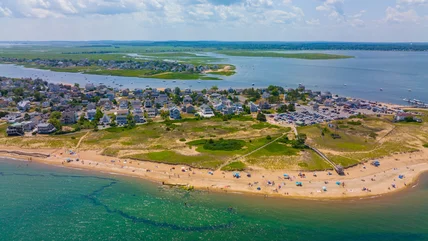
Anyone wanting to bathe can do so at the Tybee Island beach, just half hour's drive east of Savannah.
The 3mi/5km long beach features sand dunes making it a great spot for swimming in the Atlantic Ocean and sun tanning.

2CarGarage Contemporary Art Gallery (closed)

2CarGarage Contemporary Art Gallery in downtown Savannah highlights nationally exhibiting and emerging artists. The styles include a range of influences such as Classicism, Modernism and Postmodernism.

City Hall

The City Hall in Savannah was designed and built in 1901. This building replaced a circa 1799 City Exchange building which had housed City government for many years.

Independent Presbyterian Church

The original church was constructed in Savannah from 1817-1819 and then burned in 1889. The Independent Presbyterian Church is one of the most important Federal churches in the country.

Savannah Riverboat Cruises

Savannah Riverboat Cruises gives visitors an opportunity to tour along the Savannah River on a riverboat cruise. A variety of options are available throughout the day.

Wormsloe State Historic Site

The Wormsloe Plantation was established in 1737. The site is located 10mi/16km southeast of the historic district of Savannah. It includes an 1828 home, a detached library, Confederate earthworks and the ruins of a fortified house.

Civic Center

The Savannah Civic Center hosts a variety of events including conventions, exhibit shows and social events.

Emmet Park

Emmet Park in Savannah is named for Irish Patriot Robert Emmet. The park features the Old City Exchange Bell and a memorial to veterans.

King-Tisdell Cottage (African-American Heritage Museum)

The King-Tisdell Cottage in Savannah is a restored 1896 cottage that is home to an African-American heritage museum.

Massie Heritage Interpretation Center

The Massie Heritage Interpretation Center in Savannah offers education on the history, culture, and geography of the city, complete with a scale model of the city.

Ralph Mark Gilbert Civil Rights Museum

The Ralph Mark Gilbert Civil Rights Museum in Savannah features documents, photographs, and information on the Civil Rights Movement.

Tours of Savannah

Several different companies offer sightseeing tours of the Savannah historic district.

Old Town Trolley Tours

Savannah's Old Town Trolley Tours feature narrated tours that cover more than 100 points of interest and allow visitors to step off and reboard free of charge. Board the trolley at the Savannah Visitor's Center, City Market, Juliette Gordon Low House, Madison Square, Cathedral of St. John, Davenport House, Pirate's House, Marriott, Hampton Inn, River Street, Hyatt, Days Inn. Tours depart every 30 minutes.

Gray Line Tours

Gray Line Tours offers guided trolley, mini bus, and walking tours including the historic district of Savannah and restored waterfront area. Tours vary in length and price.

Carriage Tours of Savannah

Carriage Tours of Savannah offers one hour tours covering major points of interest in the historic district.

Old Savannah Tours

Old Savannah Tours offers tours by minibus, boat or trolley of historic, natural, and island areas.

Tapestry Tours

Tapestry Tours offers bus tours for two and a half or four and a half hours of historic Savannah.
More Savannah Pictures
More Georgia Resources
Map of Savannah Attractions