16 Top-Rated Tourist Attractions in Santa Fe, NM
Santa Fe, the New Mexico capital, lies on a tributary of the Rio Grande on the southwestern slopes of the snowcapped Sangre de Cristo Mountains. This fun and fascinating city gains its particular atmosphere from the mingling of Native American, Spanish, Mexican, and Anglo-American cultural influences.
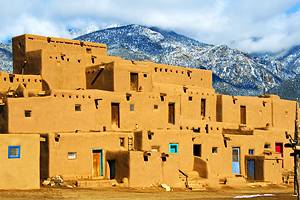
Among Santa Fe's many attractions are its picturesque streets and lanes, low adobe houses, beautiful Spanish colonial churches, as well as the profusion of Native American arts and crafts and contemporary art.
In the forest-covered mountain country around the town, you can discover a number of fascinating Native American pueblos that are still occupied.
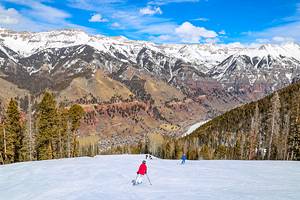
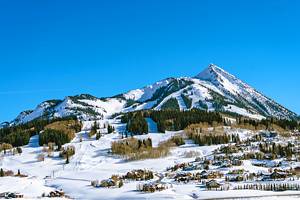
During the last 20 years, excellent winter sports facilities have been developed in the Sangre de Cristo Mountains near Santa Fe.
Plan your next New Mexico trip with our list of the top things to do in Santa Fe.
See also: Where to Stay in Santa Fe
- 1. Visit Canyon Road's Galleries
- 2. Explore History at the Museum of New Mexico Complex
- 3. Santa Fe Opera House
- 4. Go Skiing, Southwest Style
- 5. Visit the Plaza & Downtown
- 6. Museum of International Folk Art
- 7. Cathedral Basilica of St. Francis of Assisi
- 8. Georgia O'Keeffe Museum
- 9. Santa Fe Farmers' Market
- 10. Loretto Chapel
- 11. El Rancho de Las Golondrinas
- 12. Become a Glassblower at Liquid Light Glass
- 13. Museum of Indian Arts and Culture - Laboratory of Anthropology
- 14. San Miguel Mission Chapel
- 15. Randall Davey Audubon Center
- 16. Wheelwright Museum of the American Indian
- Where to Stay in Santa Fe for Sightseeing
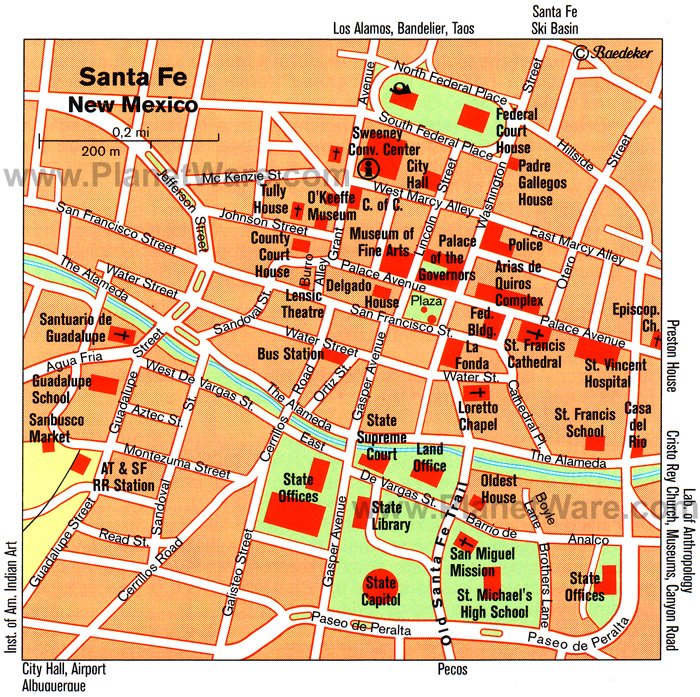
- Map of Things to Do in Santa Fe, NM
- Santa Fe, NM - Climate Chart
- History of Santa Fe
1. Visit Canyon Road's Galleries
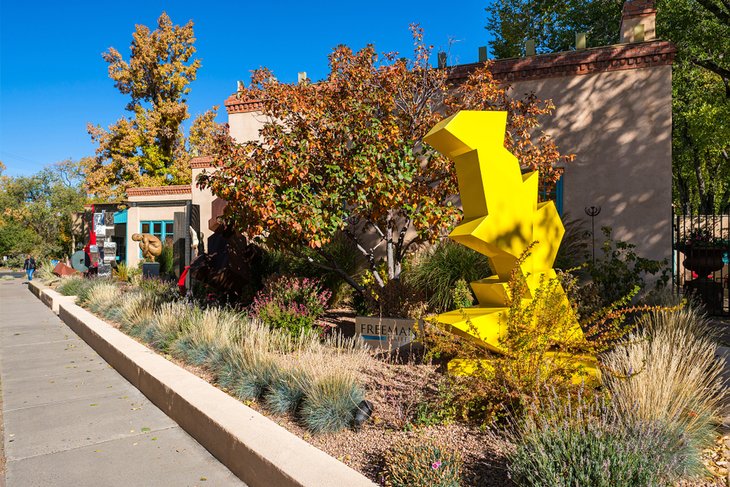
Canyon Road was once a trade route leading to the community of Pecos on the eastern slope of the mountains. Today, a half-mile-long stretch has become the heart of Santa Fe's arts district, home to over 80 galleries and a wide assortment of artisan jewelry stores and boutiques. Many of these businesses offer workshops, including those that focus on Native American traditional crafts.
Spend a day perusing the shops and enjoying the public art and architecture that make the half-mile stretch so beautiful. In addition to all the visual arts, you'll have plenty of choices, including light fare at Café Greco, fine dining at Geronimo, divine treats at Kawaka Chocolate House, and even a Tea Room.
The arts community on Canyon Road also hosts numerous special events throughout the year, including the Spring Arts Festival, an Edible Art Tour, and seasonal events for Halloween and Christmas.
To make visiting even more convenient, tourists can use the Santa Fe Pick-Up shuttle, a free service, to get to and from the Canyon Road shops, with several stops in the area. The shuttle connects to many of the city's top tourist attractions, including several museums, as well as other popular neighborhoods.
Official site: www.visitcanyonroad.com
2. Explore History at the Museum of New Mexico Complex
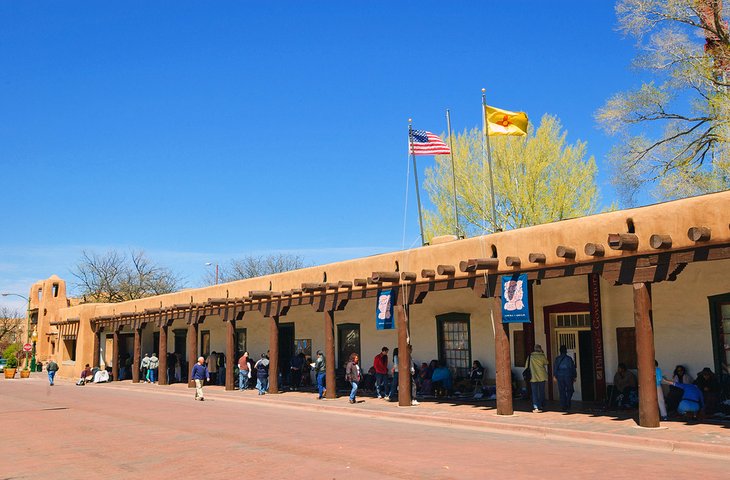
The Museum of New Mexico Complex houses four museums that explore the state's heritage. The New Mexico History Museum chronicles the state's history from the 16th century onwards by way of exhibits that look at the native populations, colonization, and the ways the Santa Fe Trail shaped the state's economy and development.
The museum is housed in The Palace of the Governors, the former 17th-century seat of the Spanish government, which is a National Historic Landmark. Visitors can tour this adobe palace and see rooms complete with period furniture, set up as they would have been during the 1600s. Palace Press offers a unique chance to see live demonstrations of the first printing press in the state of New Mexico.
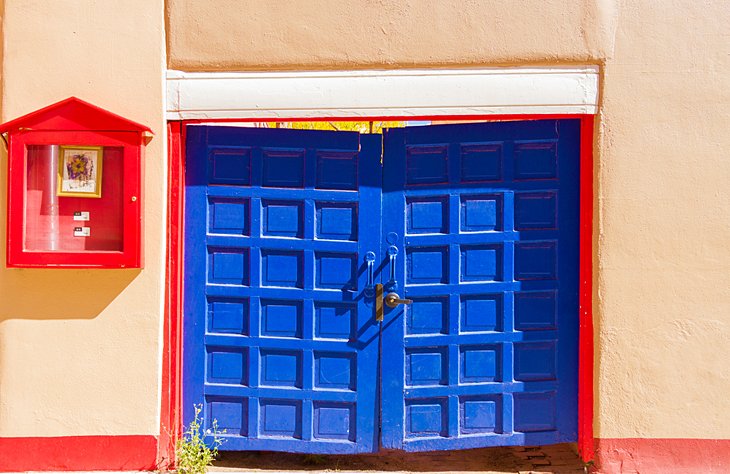
Another attraction at the complex includes the Fray Angelico Chavez History Library, which contains archival materials and historic documents, and the Photo Archives, where you will find more than 750,000 images that date back as far as the mid-19th century. The complex also hosts a Native American arts market that operates daily.
Address: 113 Lincoln Avenue, Santa Fe, New Mexico
Official site: http://www.nmhistorymuseum.org/
3. Santa Fe Opera House
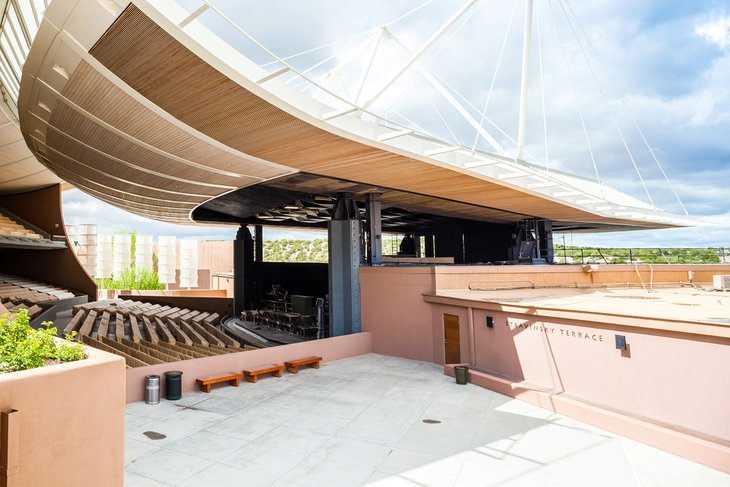
The Santa Fe Opera House is the state's top performing arts center, presenting a wide variety of operatic works that range from traditional favorites like Madame Butterfly to contemporary performances like Doctor Atomic. One of the most endearing traditions here in Santa Fe is tailgating - a unique sight indeed as throngs of theatergoers in formal wear mingle in the parking lot while nibbling on upscale finger-food.
In addition to seasonal performances, the opera house provides apprenticeship programs for all aspects of production, and backstage tours are available year-round.
Address: 301 Opera Drive, Santa Fe, New Mexico
Official site: www.santafeopera.org
4. Go Skiing, Southwest Style
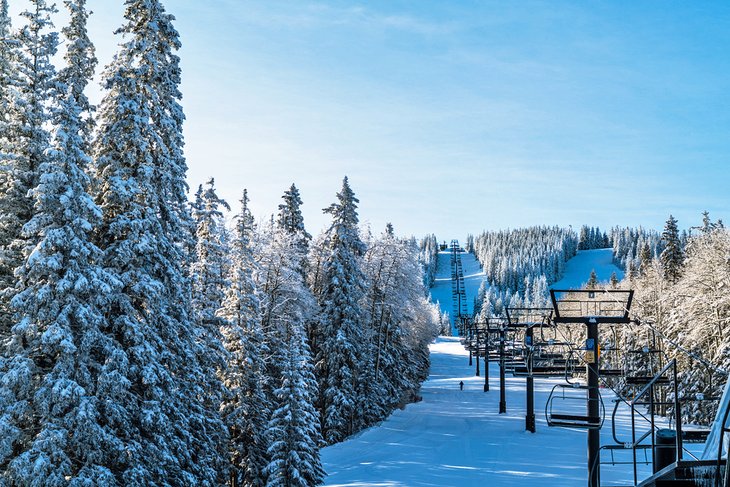
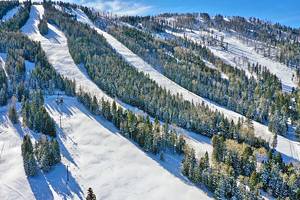
If you're visiting in winter, there are several good ski areas in New Mexico, some of which are within driving distance of Santa Fe. Many people are familiar with Taos Ski Valley, which is known for it's advanced terrain and attracts visitors from across the country, but a number of nearby resorts offer more family-friendly skiing.
Ski Santa Fe is just 15 miles from the city, and tourists who don't have a car can take a shuttle right from downtown. This popular ski area has over 650 acres and more than 80 trails, with plenty of variety in terrain.
Pajarito Mountain Ski Area is located less than an hour's drive from Santa Fe, covering 750 acres and offering 45 trails. With fewer trails and more space, this is a favorite ski area for families and beginners.
Another excellent smaller ski area is Sipapu Ski and Summer Resort, located a little over an hour's drive from the city. Here, tourists will find three terrain parks in addition to over 40 trails, as well as recreational facilities during the summer months.
5. Visit the Plaza & Downtown
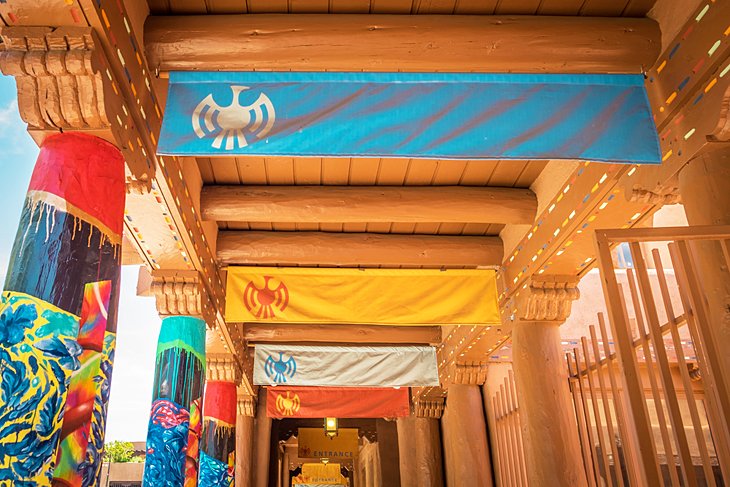
The busy hub of the town's life is the Plaza, a market square that was built by the Spaniards at the spot where the Santa Fe Trail ended. The Plaza itself is a lovely tree-shaded park that sits in front of the Palace of the Governors, a central point that's close to many top tourist attractions.
Today, the busy streets surrounding the Plaza are a lively place to visit, filled with numerous shops, galleries, restaurants, and cafés, as well as vendor tents during the city's frequent events. Tourists will find that it is the best place in the city to find Native American arts and crafts, especially jewelry.
The Plaza is just as popular with locals as it is tourists and is an ideal spot for people-watching. Many of the city's special events, especially Native American cultural celebrations, are held here.
Address: 63 Lincoln Ave, Santa Fe, New Mexico
6. Museum of International Folk Art
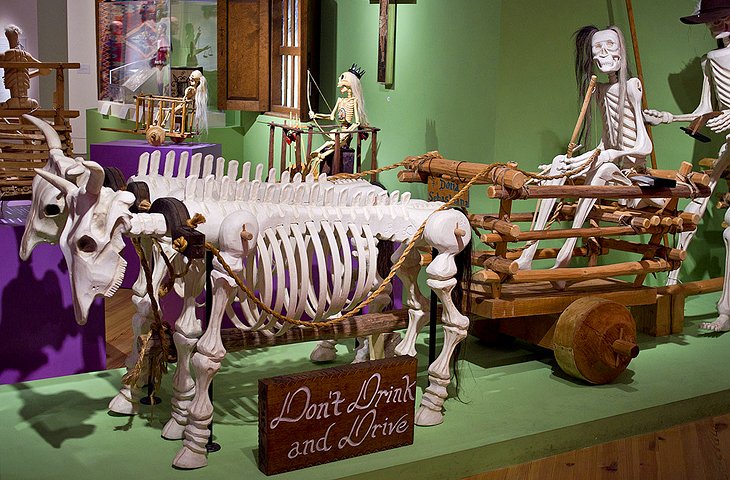
Established in 1953, the Museum of International Folk Art has the largest collection of international folk art in the world, including baskets, textiles, wood carving and ceramics.
The collections are divided up by geographical region: Africa, Asia and the Middle East, Contemporary Hispano and Latino, European and North American, and Latin American. There are also sections covering Spanish Colonial, and Textiles & Costumes.
The foundation of the collection comes from Florence Dibell Bartlett, who founded the museum. Many other individuals have made sizable donations to the museum and the collection has expanded greatly over the years.
The museum features a number of temporary exhibitions each year as well as events. Check the calendar to see about upcoming features that include music, films, lectures, and other programs.
Official site: www.internationalfolkart.org
7. Cathedral Basilica of St. Francis of Assisi
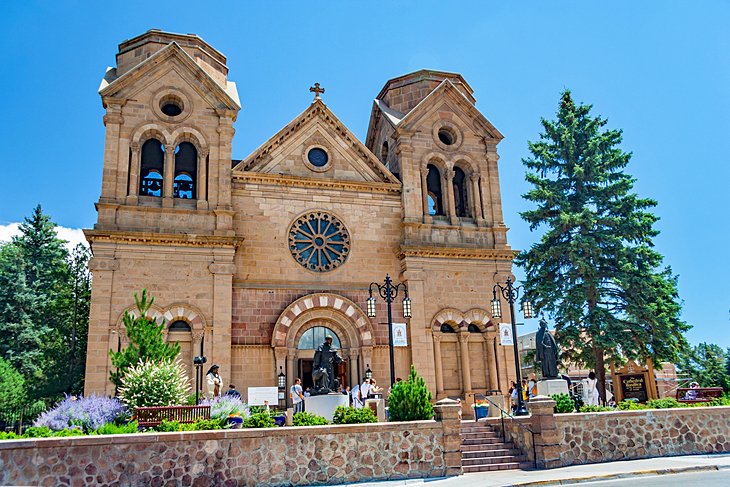
The Cathedral Basilica of St. Francis of Assisi is a lovely example of Romanesque Revival architecture, characterized by its Corinthian columns, rounded arches, and square towers. Built between 1869 and 1886, it took the place of a much older adobe chapel.
The last remaining piece of the original church houses a statue of the Virgin Mary known as Our Lady La Conquistadora. The statue was first brought to the site in 1626 from Spain and is the oldest of its kind in the United States.
The cathedral's interior is impressive yet simple, enhanced by features such as a Brazilian granite baptismal font, stained glass imported from France, and delicate woodwork. One of its most remarkable features, and one that has spurned much debate over the centuries, is the keystone with a carving of the Tetragrammaton in Hebrew.
Address: 131 Cathedral Place, Santa Fe, New Mexico
Official site: www.cbsfa.org
8. Georgia O'Keeffe Museum
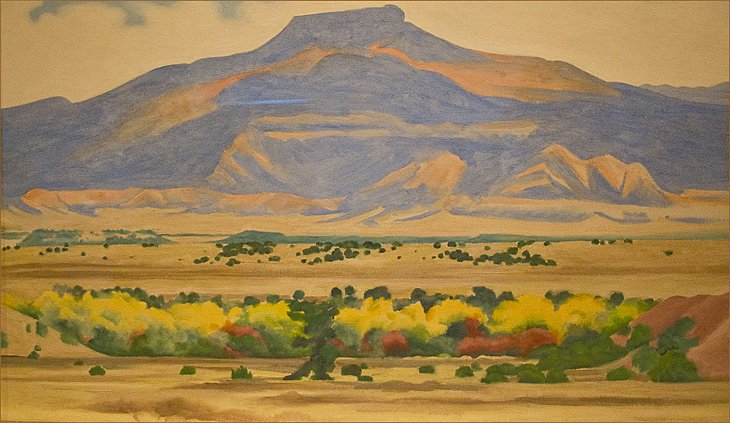
The Georgia O'Keeffe Museum in Santa Fe has the world's largest collection of O'Keeffe's work with more than 3,000 of her paintings, drawings, and assorted works. Different parts of the collection are available to the public throughout the year, making every visit a unique experience.
The museum also hosts special exhibitions of O'Keeffe's work or that of other modernists such as Pollock, Warhol, and Levine. Year-round activities include lectures, workshops, and kids' activities. It is also responsible for the maintenance of O'Keeffe's former home in Abiquiu, a National Historic Landmark that can be toured by appointment.
Address: 217 Johnson Street, Santa Fe, New Mexico
Official site: www.okeeffemuseum.org
9. Santa Fe Farmers' Market
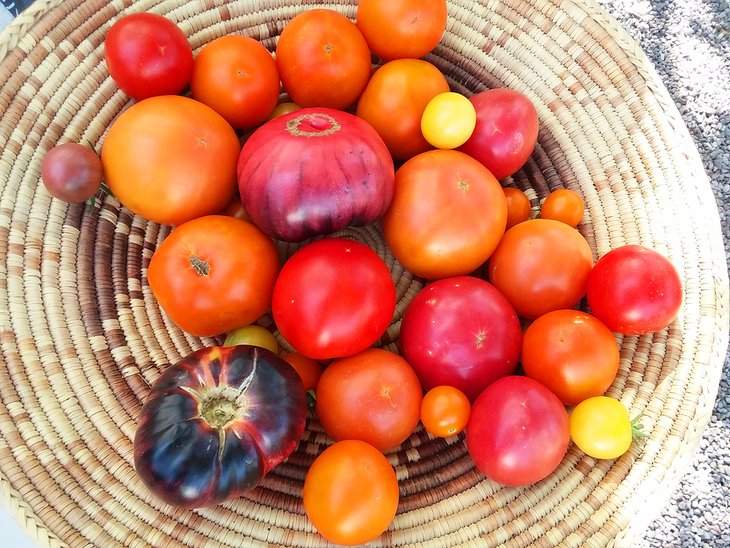
More than 150 local growers and vendors converge every Saturday morning at the refurbished Santa Fe Railyard for the Santa Fe Farmers' Market. The market itself has been in operation since 2002 with an ever-expanding array of products, from dried beans and peas to squashes, apples, corn, breads, breakfast burritos, and coffee.
Local musicians and other artists also perform at the market adding to the excitement. The market's parent association requires all items to be locally grown. Eighty percent of the ingredients and materials used in processed products are likewise expected to come from northern New Mexico.
Address: 1607 Paseo de Peralta, Santa Fe, New Mexico
Official site: www.santafefarmersmarket.com
10. Loretto Chapel
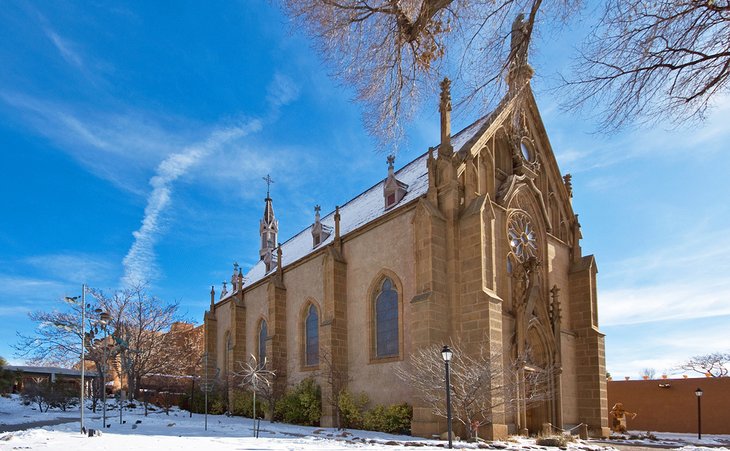
In 1850 Archbishop Jean-Baptiste Lamy requested that the Sisters of Loretto send seven members from Kentucky to Santa Fe to help him grow the struggling New Mexico educational system. In 1853, the sisters opened the Academy of Our Lady of Light for 300 girls and Lamy rewarded them by constructing this touching Gothic Revival-style chapel.
Designed by French architect Antoine Mouly, the spires, buttresses, and stained-glass windows of the chapel make the spirit soar. The chapel is also home to a unique spiral staircase made entirely of wood and supported by a hidden central column that gives the structure the appearance of hanging free in the air.
Address: 207 Old Santa Fe Trail, Santa Fe, New Mexico
Official site: http://www.lorettochapel.com/
11. El Rancho de Las Golondrinas
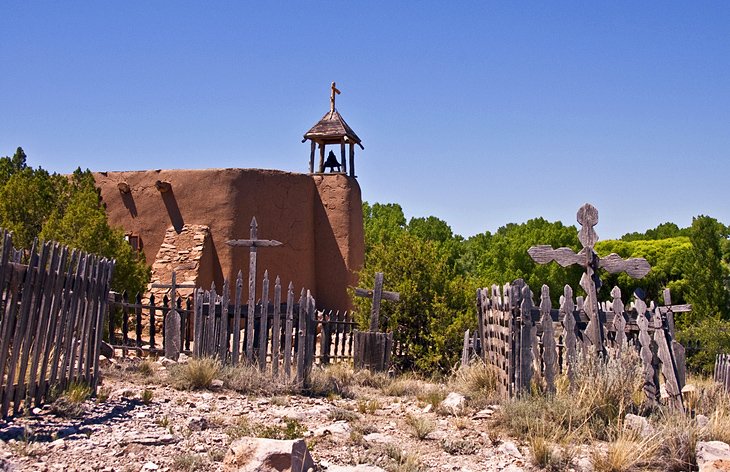
Located 10 minutes south of Santa Fe, El Rancho de Las Golondrinas is a living history museum located on a former Spanish ranch dating back to 1710. This expansive 200-acre facility has 33 historic buildings, including originals, as well as relocated historic buildings from around the state. These include a variety of homes, as well as barns, a chicken coop, general store, schoolhouse, and mills.
Living history interpreters provide demonstrations of everyday life, including spinning, weaving, cooking, tin-smithing, farming, and blacksmithing, among others. The ranch also has traditional corrals and hosts special events throughout the year.
Address; 334 Los Pinos Rd, Santa Fe, New Mexico
Official site: http://www.golondrinas.org/
12. Become a Glassblower at Liquid Light Glass
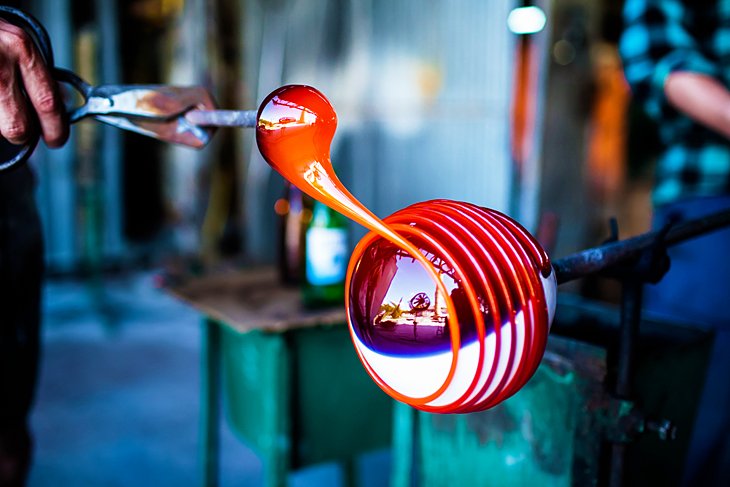
Liquid Light Glass is a studio and gallery created by the acclaimed glass-blower Elodie Holmes. Admire the finished pieces, watch as the artists shape new creations, and even take a class. Workshops vary in length, and students can learn how to design and make their own glass creations, including paperweights, blown glass cups, and flowers.
Convenient for tourists just passing through Santa Fe, the studio will gladly ship the finished piece once it is ready. Liquid Light glass is located in the Baca Street Arts District, which occupies part of the old Railyard on its southern end. Here, you will find a variety of unique shops, galleries, and quirky eateries within the heart of Santa Fe's art scene.
Address: 926 Baca Street, Ste 3. Santa Fe, New Mexico
Official site: www.liquidlightglass.com
13. Museum of Indian Arts and Culture - Laboratory of Anthropology
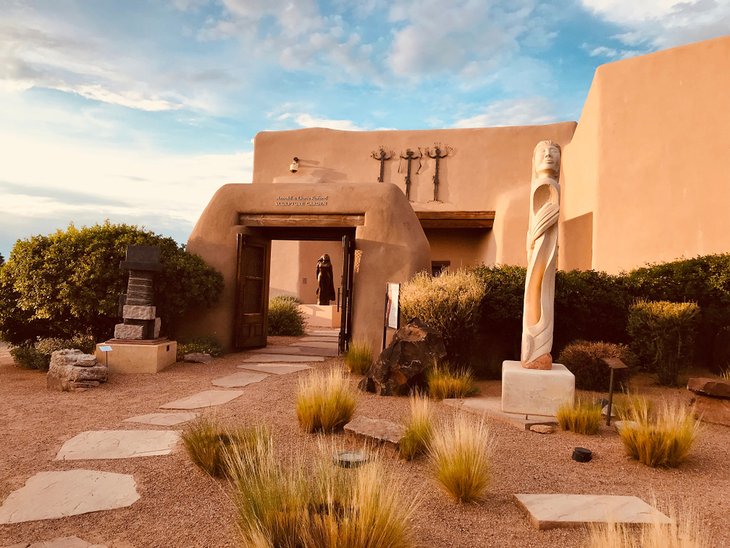
One of the centerpieces of the entire Southwest, the Museum of Indian Arts and Culture was founded in 1909 with the mission to preserve the material culture of the Native Americans of the region – a people who at that time were enduring major transition and perhaps extinction.
In 1947, the museum was combined with JD Rockefeller's Laboratory of Anthropology, an institution dedicated to the ongoing study of the cultures of the Southwest.
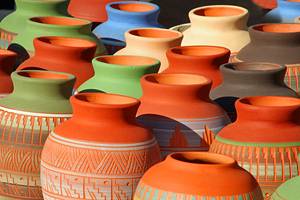
Today, the museum hosts impressive collections of pottery, jewelry, basketry, and saddle blankets, as well as regular performances of Native American music, dances, storytelling, and other traditions. The facility is also home to extensive archives and research collections that include photographs, ethnographic records, and archaeological materials.
Address: 710-708 Camino Lejo, Santa Fe, New Mexico
Official site: www.indianartsandculture.org
14. San Miguel Mission Chapel
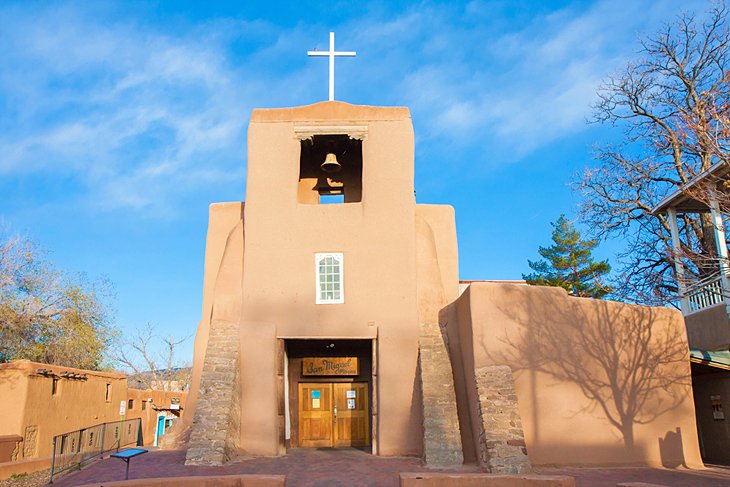
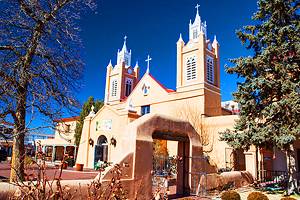
One of the oldest religious buildings in the United States, and the oldest of its kind in Santa Fe, the chapel of San Miguel was originally built in 1636. It was later burned and rebuilt at the start of the 18th century. It contains a number of fine statues and a high altar from 1798, with the likeness of St. Gertrude.
The adobe structure, which seems to change color throughout the day when the sun strikes it at different angles, features an open bell tower with a cross jutting from the top. The interior has white walls and wood beams on the ceiling and is decorated with unique works of art.
Address: 401 Old Santa Fe Trail, Santa Fe, New Mexico
15. Randall Davey Audubon Center
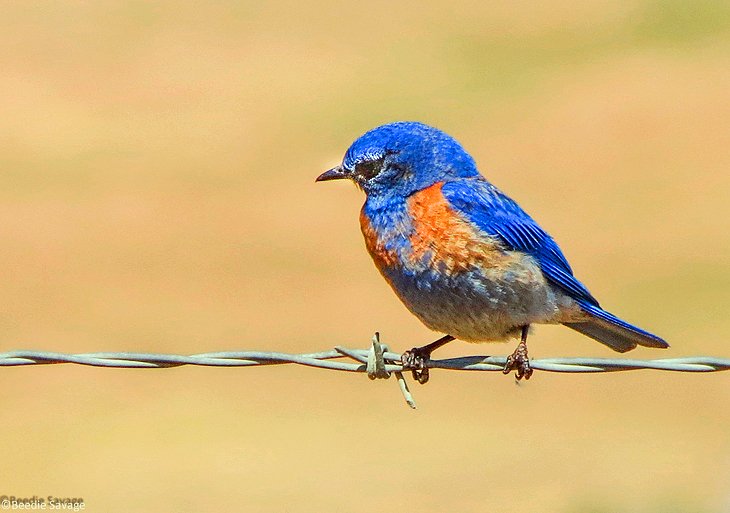
The 135-acre Randall Davey Audubon Center, on Upper Canyon Road in Santa Fe, has bird-watching tours and nature walks. It is a peaceful setting with a little history to it as well.
Set in the Santa Fe River Watershed and surrounded by forest, the center sees approximately 130 different species of birds. You can wander the trails on their own or take a guided walking tour to learn about the environment and its inhabitants.
The complex, which maintains several buildings, is home to the historical Randall Davey House. This unique building was originally a sawmill that Davey turned into his home and art studio. He died in 1964, and his family later donated the property to the National Audubon Society for use as a sanctuary and cultural center. You can tour the house, which is today a museum, and see his artworks, the studio, and furnishings.
Address: 1800 Upper Canyon Road, Santa Fe, New Mexico
Official site: nm.audubon.org
16. Wheelwright Museum of the American Indian
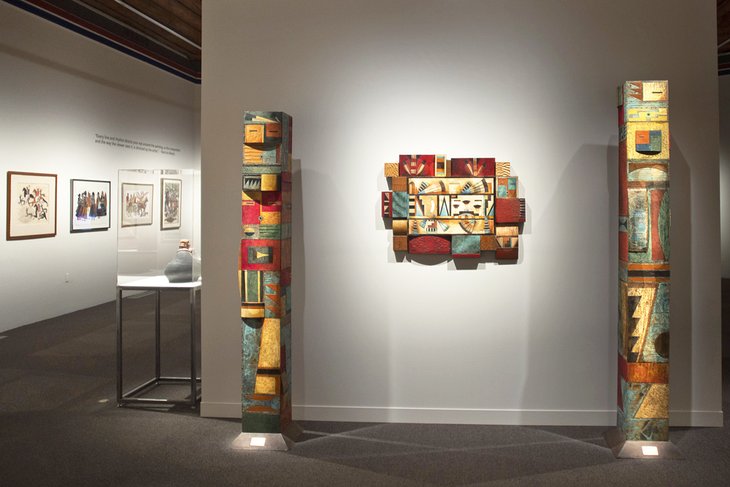
The Wheelwright Museum focuses on the arts and crafts of the Native Americans of the American Southwest.
In addition to a great variety of cultural objects, woven fabrics, silverware and sand paintings, it has a collection of old writing and even some documents inscribed in clay. The exhibits include contemporary works as well.
The museum is named for Mary Cabot Wheelwright, who established the museum in the 1930s with the help of Hastiin Klah, a Navajo "medicine man" with whom she had long been a friend.
Address: 704 Camino Lejo, Santa Fe, New Mexico
Official site: www.wheelwright.org
Where to Stay in Santa Fe for Sightseeing
While Santa Fe is large and spread out, many of the attractions are located in the quaint, old city center, near the historic Plaza. This is the best place to stay for sightseeing and general ambience. Below is a list of some of the highly rated hotels and inns in this area of the city:
Luxury Hotels:
- In the heart of Santa Fe is the iconic La Fonda on the Plaza, built in 1922, and located on the site of the city's first inn, which stood here in the early 1600s. This adobe style building features uniquely designed rooms and suites, some with fireplaces, and an outdoor pool.
- One of the finest hotels in New Mexico, Inn of the Five Graces is a boutique hotel set in a group of restored adobe structures, with exquisitely furnished rooms and spaces.
- Two blocks from the Plaza, near the Georgia O'Keeffe Museum, is the Hilton Santa Fe Historic Plaza, with southwestern décor and a lovely outdoor pool area.
Mid-Range Hotels:
- The Old Santa Fe Inn, with a charming Southwestern style and atmosphere, is a good mid-range option within walking distance of the downtown attractions.
- The Las Palomas Hotel is another well located property with a great ambience and beautifully designed rooms, including some with fireplaces.
- The quaint Inn of the Turquoise Bear is an 11-room bed and breakfast in a historic adobe mansion, surrounded by gardens, and within walking distance of downtown and the major attractions. Rooms are all individually designed and stays include a complimentary breakfast and afternoon tea.
Budget Hotels:
- Less than a mile from the Plaza, the Guadalupe Inn is a reasonably priced, quaint little B&B with lots of charm.
- El Sandero Inn offers basic accommodation but a central location in the city center. For more budget options it's best to head outside the downtown area.
- About a 15- to 20-minute drive from the city center are the Econo Lodge Inn & Suites and the Santa Fe Comfort Inn, both with reasonable rates and comfortable rooms.
Map of Things to Do in Santa Fe, NM
Santa Fe, NM - Climate Chart
| Average minimum and maximum temperatures for Santa Fe, NM in °C | |||||||||||
| J | F | M | A | M | J | J | A | S | O | N | D |
| 6 -9 | 9 -6 | 13 -3 | 18 0 | 23 4 | 28 9 | 30 12 | 28 12 | 25 8 | 19 2 | 11 -4 | 7 -9 |
| PlanetWare.com | |||||||||||
| Average monthly precipitation totals for Santa Fe, NM in mm. | |||||||||||
| 15 | 13 | 21 | 18 | 32 | 32 | 57 | 54 | 42 | 33 | 27 | 17 |
| Average minimum and maximum temperatures for Santa Fe, NM in °F | |||||||||||
| J | F | M | A | M | J | J | A | S | O | N | D |
| 43 15 | 49 21 | 56 26 | 64 32 | 73 40 | 83 49 | 86 54 | 83 53 | 77 46 | 66 35 | 52 24 | 44 16 |
| PlanetWare.com | |||||||||||
| Average monthly precipitation totals for Santa Fe, NM in inches. | |||||||||||
| 0.6 | 0.5 | 0.8 | 0.7 | 1.3 | 1.2 | 2.3 | 2.1 | 1.7 | 1.3 | 1.1 | 0.7 |
History of Santa Fe
In 1542, the first Spaniards arrived to find a populous Native American village. It was abandoned soon after. In 1609 the Spanish founded a town, which became the religious and administrative center of the province of New Mexico. In 1680 the Spaniards were driven out by the Native Americans, but returned twelve years later.
After Mexico broke away from Spain in 1821, Santa Fe remained the capital of New Mexico and built up a lively trade with the Americans. The principal transport route was the Santa Fe Trail, which ran through the valley of the Rio Grande to reach the Missouri at Kansas City. Another important route was the Old Spanish Trail, which led to Los Angeles in California.
In 1846, during the Spanish-Mexican War, Santa Fe fell to the United States without any serious fighting and later became capital of the US territory of New Mexico. In 1862 the town fell briefly into the hands of the Confederates. The economy of the town and surrounding area was given a boost by the opening of the Santa Fe Railroad in 1880, and since the early part of the 20th century, Santa Fe has been a hub for artists of all stripes.