Tourist Attractions in the Jezreel Plain
Frequently referred to merely as HaEmek (The Valley), the large and fertile Jezreel Plain extends southeast from the bay of Haifa to the Jordan Valley.
Called the Plain of Esdraelon in the Old Testament, the region has a long and illustrious history. It was populated and fought over for centuries due to its strategic significance on the trade routes and the fertility of the land.
For road trip fans, this is one of the best places to visit, as you could spend a long day driving through the region, stopping off at major sightseeing highlights such as Megiddo and Beit Shean along with lesser-known tourist attractions.
If you're looking for things to do while in the region, check out our list of the top tourist attractions in the Jezreel Plain.
Megiddo
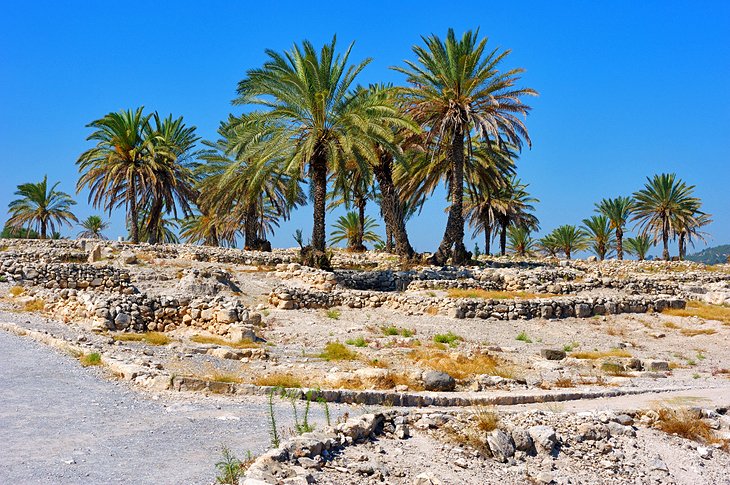
The most important sightseeing attraction in the area and forever immortalized as the place of Armageddon, thanks to St. John's writings in the New Testament's Revelations, Megiddo is said to be the place where the world's last battle will take place.
Located about 12 kilometers west of Afula, this ancient site has already been through the wars a few times in its long history.
Megiddo was an important stronghold in ancient times thanks to its strategic situation at the mouth of the valley, where the road divides into a western branch heading for Tyre and Sidon (in modern Lebanon) and an eastern branch heading to Damascus and Mesopotamia.
The extensive ruins have been thoroughly excavated here and include an Eastern Temple and Double Temple complex, as well as an extremely well-preserved water system that dates back to the 9th century BC.
The site is well laid out, and due to helpful information signs dotted around the ruins and a good museum, even those with a woolly sense of history will enjoy a visit here.
- Read More:
- Exploring Megiddo: A Visitor's Guide
Mount Tabor
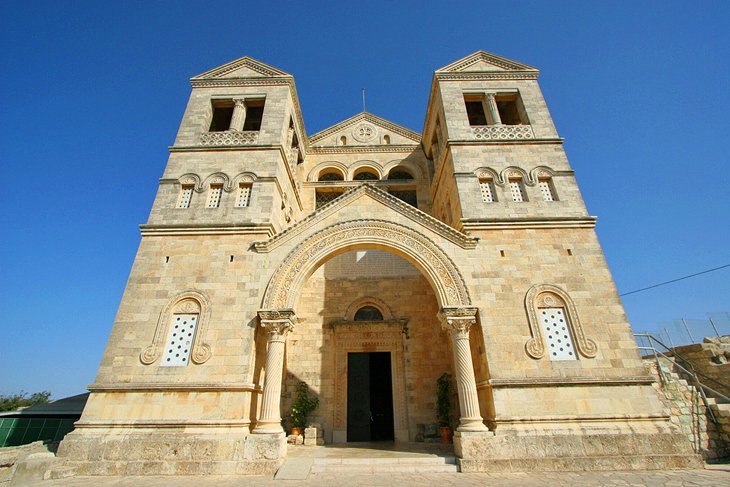
Mount Tabor plays an important religious role, and for many tourists here on pilgrimage trips, it is high on their things to do list.
For Christians, Mount Tabor is believed to be the site of Christ's Transfiguration, and the summit is home to both a Franciscan Monastery and the Basilica of the Transfiguration.
Even if you're not religious, the basilica is worth a visit for its gorgeous mosaics.
The views across the surrounding countryside are stunning from atop the mountain, and for those who like activity, there are plenty of hiking opportunities in the area.
Location: 21 kilometers northeast of Afula
- Read More:
- Exploring Mount Tabor: A Visitor's Guide
Mount Gilboa
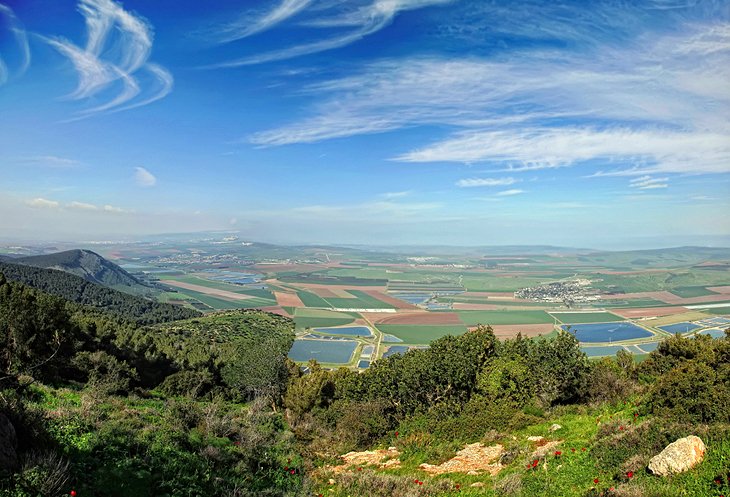
Mount Gilboa was the scene of one of Jewish history's tragic events. It was here that King Saul assembled his army for battle with the Philistines and was defeated, as the witch of Endor had predicted.
Saul's sons Abinadab and Malchisua were killed, and Saul, in despair, fell on his sword.
Today, this mountain (508 meters) is a great spot for nature lovers, and the more gentle pursuits of walking and wildflower spotting are the main activities.
It also makes a lovely road trip, as a winding track runs up to the peak with awesome views across the Jezreel Plain.
Location: 23 kilometers southeast of Afula
Gan HaShlosha National Park
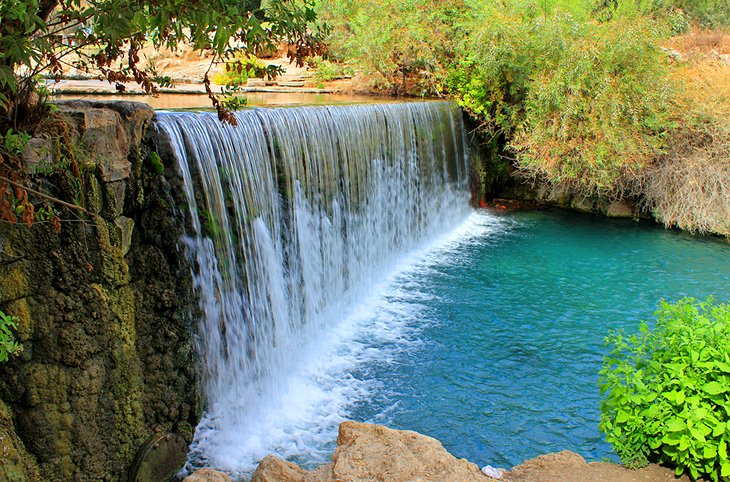
The Jezreel Plain region is ripe with ruins and important religious monuments, but when you need a break from that, head to this national park.
Under the north side of Mount Gilboa, Gan HaShlosha National Park ("Park of the Three"), is home to a cache of relaxing hot springs and natural waterfalls formerly used to drive a watermill.
On summer weekends, this is a major point of interest for locals who flock here for a slice of nature.
The hot springs here have a steady temperature of 28 degrees Celsius throughout the year. The area around the pools, and the pools themselves, have been landscaped to create an attractive space for swimming, soaking, and picnicking beside the pools.
If you don't fancy crowds, time your trip for a weekday.
Location: 15 kilometers southeast of Afula
Beit Shean National Park
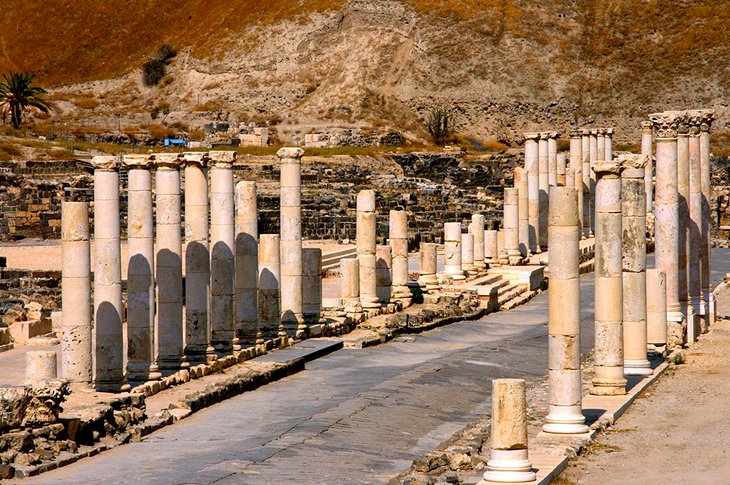
According to the Talmud, "If the Garden of Eden is in Israel then its gate is in (Beit Shean)."
The extensive Roman ruins of Beit Shean are the largest and best preserved in the country and they are a fascinating place to visit.
Archaeological excavations here have dated that settlement of this site dates back to the 4th millennium BC. What you see in front of you though are monuments dating from the Roman era up to the Byzantine period.
The most important monuments are Beit Shean's Roman theater, which is the largest surviving theater in the country; the area around the Byzantine-era bathhouse; and the Tell el-Husn section, which has the most concentrated amount of ruins.
The entire site offers great views over the rippling hills, which adds to the atmosphere here.
If you only see one archaeological site in Israel, make it this one.
Location: 26 kilometers south of the Sea of Galilee
- Read More:
- Exploring Beit Shean: A Visitor's Guide
Belvoir Castle (Kokhav HaYarden)
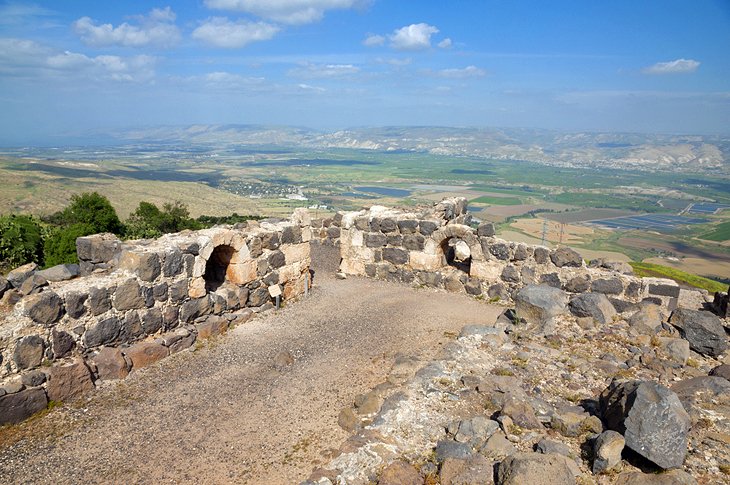
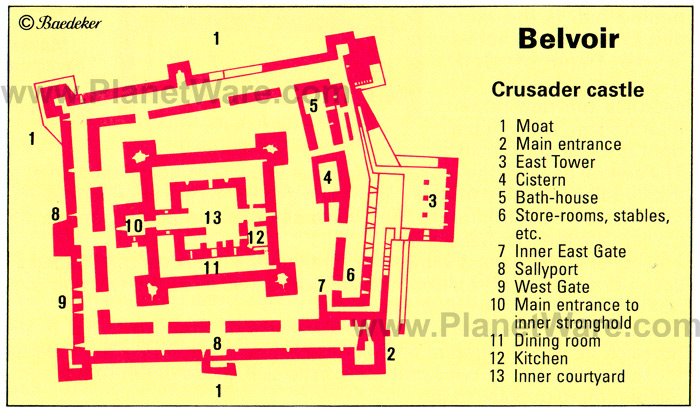
Rising above the valley plains are the ruins of this Crusader castle built by the French Knights Hospitallers and named Belvoir for the views.
The knights acquired this territory in 1168 and went on to build one of the strongest frontier fortresses in the Frankish kingdom. In 1187, it withstood an attack by Saladin, although two years later, the knights were forced to surrender the castle on the promise of safe passage to Tyre.
Fearing the Crusaders might regain possession of the castle, the Arabs decided to destroy it in 1219, and although the Crusaders did indeed recover the area in 1241, the castle was never rebuilt.
The ruins here are incredibly atmospheric, surrounded on three sides by a moat and with outer walls in the form of a pentagon reinforced by seven towers.
On the ground floor, you can still make out the areas that would have acted as store rooms, a kitchen, and dining room, and that branched off an inner courtyard, which is thought to have been roofed over originally.
Location: 19 kilometers north of Beit Shean
Beit Alpha Synagogue
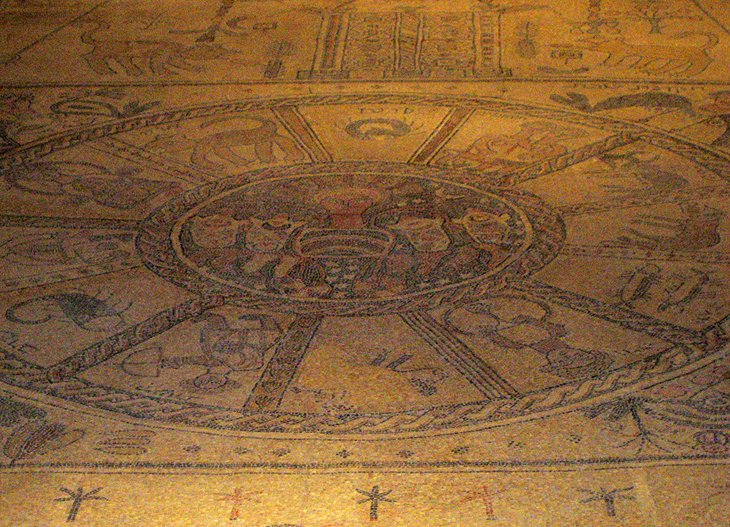
Inside this 6th-century synagogue is a beautiful and completely preserved mosaic floor that all art lovers should make sure they include on their travel itinerary in the Jezreel Plains region.
The mosaic was found by chance in 1928 during the construction of an irrigation canal on the neighboring kibbutz of Hefzi-Bah.
It ranks with the mosaic at Tiberias-Hamat in the Galilee region as one of the most important synagogues built during the Byzantine era.
The synagogue is a three-aisled building with a semicircular apse for the Torah shrine at the southern end.
The mosaic pavement in the central aisle is in three parts. Just inside the doorway is a representation of Abraham's sacrifice, with the bearded figure of Abraham in a long robe holding the sacrificial knife in his right hand and his son Isaac in the left.
The middle mosaic is dominated by a cosmological theme, with the sun god Helios in a chariot drawn by four horses, surrounded by the 12 signs of the Zodiac. The panel at the far end shows the Torah shrine in the center flanked by seven-branched candlesticks.
This merging of themes from the Zodiac and Judaism is also found in the synagogue at Tiberias-Hamat, but while the Tiberias-Hamat mosaics are works of consummate artistic skill, these at the Bet Alpha Synagogue are drawn in a plainer, more popular, form.
Location: Beit Alfa kibbutz, 6 kilometers west of Beit Shean
Ma'ayan Harod National Park
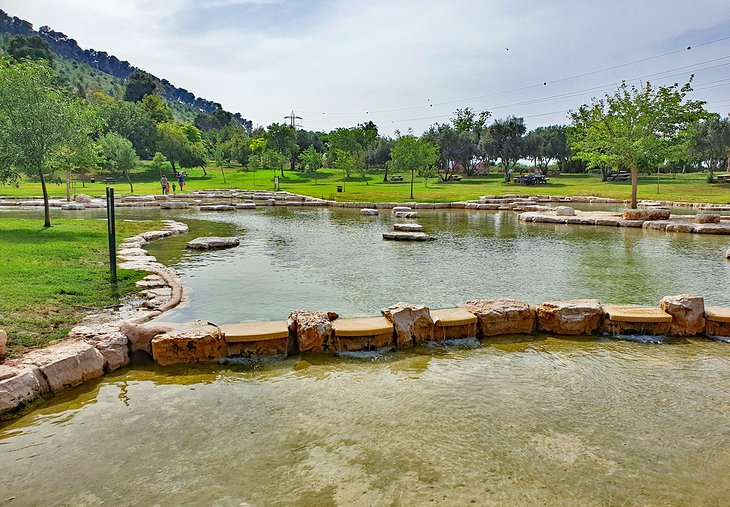
Ma'ayan Harod National Park is near the village of Gidona at the foot of Mount Gilboa, about 10 kilometers southeast of Afula.
The artificial lake here is surrounded by shady eucalyptus trees and is the source of the Harod River.
The spring is believed to be the Well of Harod at which Gideon selected the 300 men with whom he defeated the Midianites.
In the middle ages, this was also the scene of another battle when in 1260, the Mameluke general Baibars won a decisive victory over the Mongols here.
Today, the national park is a great spot for swimming, camping, hiking, and generally enjoying nature.