Kristinehamn Attractions
From Mariestad the road runs by way of Gullspånd, on the boundary between Västergötland and Värmland, to Kristinehamn (pop. 26,000), a town whose character has been shaped by its location on Lake Vänern. A market center and port in the Middle Ages, it grew in importance with the development of iron-mining in Bergslagen, when the ore was shipped from Kristinehamn.
The town received its municipal charter in 1642, during the minority of Queen Christina, after whom it was named. The importance of Kristinehamn as a port for the shipment of iron ore and timber was further increased in the mid 19th century, when the railroad came to the town; and it is still a considerable port.
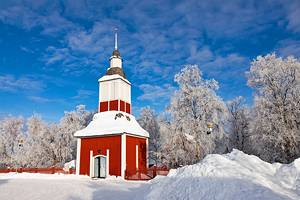
On a promontory reaching put into the lake stands a 15m/50ft high concrete sculpture by Picasso which he presented to the town in 1965. Some 4km/2.5mi south of the town center can be seen a runic stone dating from the year 500. 5km/3mi west of the town is the Östervik Chapel, built by Georg Adlersparre in 1869. The Kristinehamn Church, opened in 1858, has a museum in the sanctuary gallery with notable architecture.
At Kristinehamn E 18, coming from Stockholm, joins the road round Lake Vänern.
The town received its municipal charter in 1642, during the minority of Queen Christina, after whom it was named. The importance of Kristinehamn as a port for the shipment of iron ore and timber was further increased in the mid 19th century, when the railroad came to the town; and it is still a considerable port.
On a promontory reaching put into the lake stands a 15m/50ft high concrete sculpture by Picasso which he presented to the town in 1965. Some 4km/2.5mi south of the town center can be seen a runic stone dating from the year 500. 5km/3mi west of the town is the Östervik Chapel, built by Georg Adlersparre in 1869. The Kristinehamn Church, opened in 1858, has a museum in the sanctuary gallery with notable architecture.
At Kristinehamn E 18, coming from Stockholm, joins the road round Lake Vänern.
Read More