Tourist Attractions in Tomar & Easy Day Trips
In central Portugal's fertile Ribatejo region, Tomar is dominated by its 12th-century castle and the Convento de Cristo, one of the country's most spectacular religious sites. Tomar is wrapped in Templar myth and legend. Seat of the mysterious Order of the Knights Templar and later, the Order of Christ in Portugal, the convent, with its two churches and myriad cloisters, is mesmerizing.
Straddling the crystalline River Nabão, this quaint little town is a pleasure to explore. The town center, webbed by narrow lanes lined with family-run restaurants, cozy cafés, and homestyle shops, exudes a delightfully domestic atmosphere, a quality not lost on visitors who appreciate the humble, down-to-earth character.
Rua Serpa Pinto, the main shopping street, arrows into Praça de República and provides onlookers with a glorious vista of the ever-present fortress. But Tomar's main square is also the focus of great celebration when, every four years, the townsfolk take part in the ebullient Festa dos Tabuleiros, a major tourist draw on Portugal's festival calendar.
Further afield, a lake provides sunbathing and water sports opportunities, while another castle, renowned for its rugged good looks, woos sightseers at Almourol. And yes, the Templars built it!
No matter what you like to do, find all the best places to visit with our list of the top attractions in and around Tomar.
Convento de Cristo
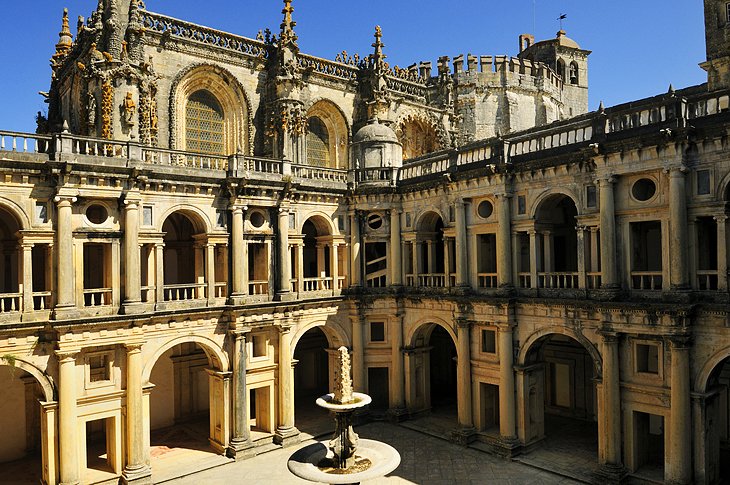
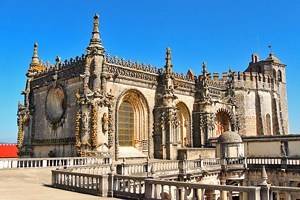
Tomar's stand out crowd-pleaser is the magnificent Convent of Christ, inscribed on UNESCO's World Heritage list. Founded in the 12th century by the Grand Master of the Templars, this extraordinary church with its graceful cloisters and impressive castle is one of the most dazzling and extensive of Portugal's religious sites.
The powerful and enigmatic monk-knights were rewarded for their ferocity on the battlefield with a castle, built in 1160 within sturdy walls on a wooded hilltop near the River Nabão.
Soon afterwards, a church appeared, the Charola. Sometimes called the Rotunda, a reference to its drum-like appearance, this is the Templars' oratory, a hallowed sanctuary that surrounds a gilded octagon of breathtaking beauty. Pope Clement V suppressed the Order of the Knights Templar in 1314, but in Portugal, a canny King Dinis turned it into the Order of Christ, thus facilitating the construction of what would become the Convent of Christ.
A second church was consecrated in the early 16th century, and its elaborate chapter house window, framed by a rhapsody of curvaceous filigree stonework, is one of the most recognized examples of Manueline architecture in the country.
Of the convent's eight cloisters, it is the resplendent Great Cloister that captures the imagination of most visitors. To climb its spiral staircases and wander the elegant terraces is to immerse oneself in the romantic and intriguing world of the Templars and 16th-century Portugal.
Address: Colina do Castelo, Tomar
Official site: http://www.conventocristo.pt
Igreja de São João Baptista
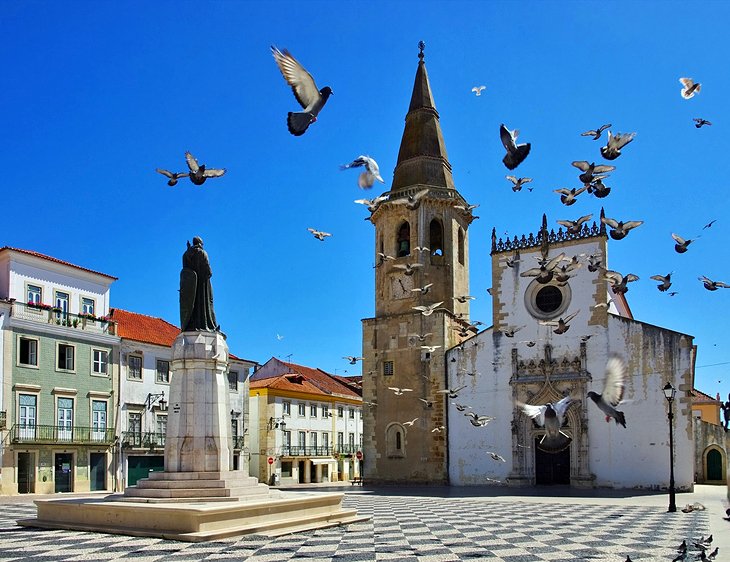
Positioned across chessboard paving stones in the middle of lively Praça da República, the church of St. John the Baptist is a graceful, late 15th-century head-turner.
Many a tourist has had their photograph taken under its elegant Manueline portal, and the lofty aspect of the brick-stone clocktower, with its octagonal spire, is beautifully proportioned against the squat, mainly 17th-century townhouses that flank the square. Its cool, hushed interior is decorated with a number of 16th-century paintings, including a finely detailed Last Supper by Gregório Lopes.
Historians should note the statue of Gualdim Pais standing in the middle of the square. Pais was a Portuguese crusader knight and the first grand master of the Order of the Templars in Portugal, who founded Tomar in 1157. His grave lies in Igreja de Santa Maria do Olival.
Praça da República is the focus of the spectacular Festa dos Tabuleiros, a costumed festival that takes place every four years and culminates in the area outside the church.
Location: Praça da República, Tomar
Museu dos Fósforos (Matchbox Museum)

Even committed non-smokers will be struck by Tomar's Matchbox Museum. This vast and quirky collection of more than 43,000 matchboxes from 127 countries of the world is the largest of its kind in Europe. A further 16,000 matchbox labels enhance the exhibition.
The museum is housed in the former cloisters of the 17th-century church of São Francisco, a rather incongruous setting perhaps, but one that enlightens the sightseeing experience.
The scope of the display is overwhelming, but visitor interest is immediately sparked by the sheer variety of the exhibits. One of the rarest portfolios is a set of 24 boxes featuring caricatures of film stars from Hollywood's golden era of comedy, screen greats such as Laurel and Hardy, Bob Hope, and Buster Keaton.
A more whimsical collection is the 50 boxes that illustrate scenes from children's fairy tales, including those from Cinderella and Little Red Riding Hood. Among the curiosities are examples of stylishly embroidered and hand-painted pieces and the eight 19th-century Italian Luigi de Medici lithographs of exceptional detail and vivid color reproduced on matchboxes sold in Turin.
Address: Avenida General Bernardo Faria, Tomar
Synagogue-Museu Luso-Hebraico de Abraham Zacuto
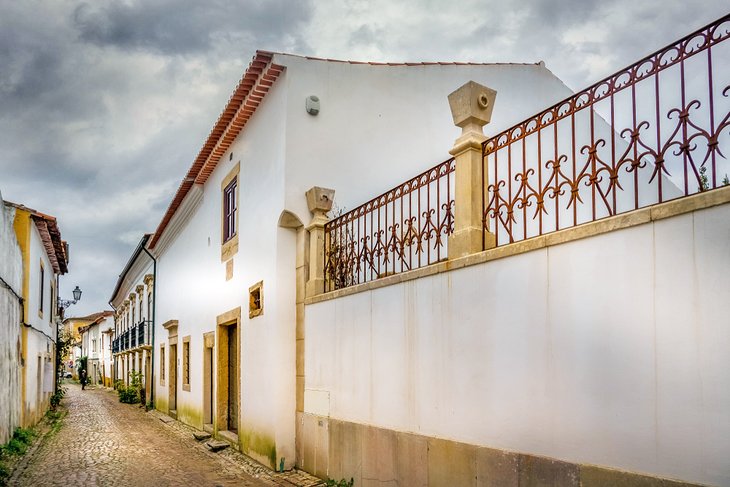
One of the more unusual things to do in Tomar is explore the town's cobblestone lanes and seek out the Jewish museum, named after a renowned 15th-century astronomer and mathematician. An added incentive is the fact that it's housed in one of Portugal's oldest synagogues.
Built in 1430-60, it only served as a place of worship for three dozen years before King Manuel I banished all Jews who refused to convert to Christianity. Its drab, unprepossessing façade belies a serene interior that features a vaulted ceiling supported by four smooth, lanky columns and 12 pointed arches.
The atmosphere is silent and meditative and allows the visitor to ponder the various exhibits related to Judaism that include ceramics and a number of medieval stone slabs engraved with Hebraic inscriptions, one of which is a blush-hued limestone tombstone from the Great Synagogue of Lisbon, dating from 1307 and bearing an engraved message of greeting.
A recently excavated 15th-century mikvah, or ritual bath, has elevated the collection's status.
Address: Rua Dr Joaquim Jacinto, Tomar
Núcleo de Arte Contemporânea
With the town wrapped in medieval splendor, this contemporary art center makes for a refreshingly up-to-date diversion.
The gallery's permanent collection of around 100 paintings showcases the abstract and sometimes seriously leftfield brushwork of 20th-century Portuguese modernists and surrealists and was donated by the celebrated art critic, historian, and author José-Augusto França.
The earliest canvas dates from 1932, and aficionados of Portuguese modern art will recognize artists like expressionists Mário Eloy and António Pedro, among other names from the period. The bequest also includes examples of drawing, photography, and sculpture arranged chronologically up to 1970.
Enriching the temporary exhibitions gallery is new and exciting contemporary painting and sculpture by up-and-coming Portuguese artists.
Address: Rua Gil Avô, Tomar
Igreja de Santa Maria do Olival
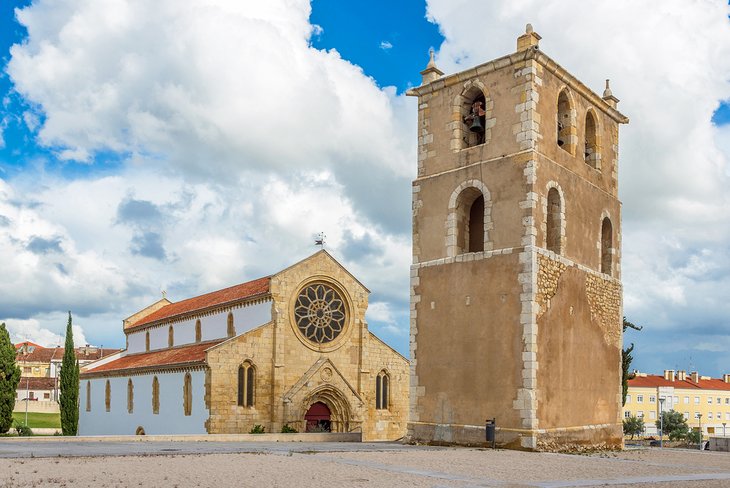
Visitors to Tomar with a genuine interest in the Knights Templar and the Order of Christ should make the pilgrimage to this 13th-century church and stand over the grave of Gualdim Pais, who founded the town in 1157 and was the first grand master of the Order of the Templars in Portugal.
Other Templar Masters are also buried here, and the church, in effect, serves as a pantheon. The sense of history is tangible. An elegant carved stone Renaissance pulpit can be admired, as can the heavily ornamented 16th-century chapels. When the sun burnishes it, an impressive stained-glass rose window set in the Gothic façade illuminates the interior.
Restored several times over the centuries, Santa Maria do Olival became the church mother for mariners in the Age of Discovery, during the 1500s, with telltale flourishes of Manueline architecture reinforcing the timeline. The church is situated on the east side of the River Nabão. Look for its distinctive three-story bell tower, which stands separately from the building.
Address: Estrada de Marmelais de Baixo, Tomar
Festa dos Tabuleiros
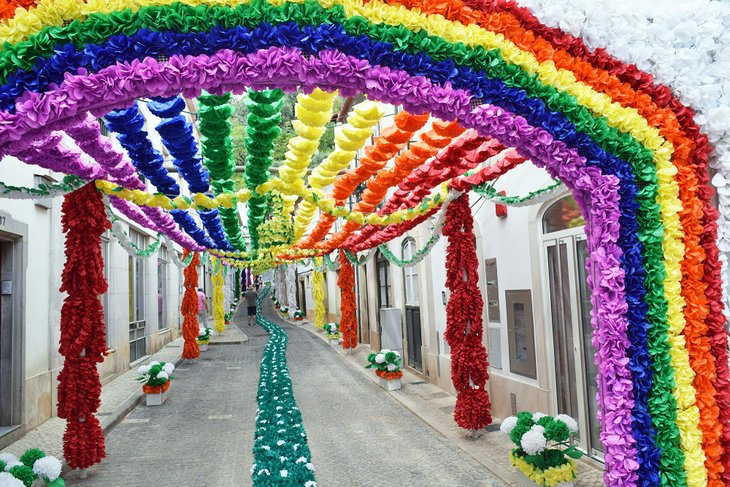
The Festival of the Trays is regarded as one of most spectacular and extravagant of all Portugal's festivals. Held once every four years in Tomar, the event has its origins in pagan ritual and is a centuries-old tradition.
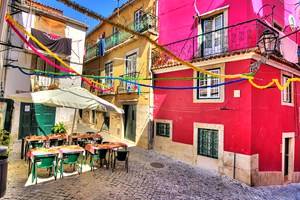
It's celebrated over a one-week period in July, when the town is festooned with colorful streamers, bunting, and paper flowers. A party atmosphere pervades the narrow lanes, where restaurants serve specially prepared traditional fare and cheerful townsfolk dance in the street.
The highlight, though, is the astonishing town-center parade, when hundreds of women — the "maidens" — attired in crisp white cotton ankle-length skirts and scarlet sashes file through the streets balancing towering platters of bread and flowers on their heads. Accompanied by their chaperones, the ladies, a picture of balanced repose and quiet determination, slowly thread their way towards Praça da República and the church, where they can finally shed their elaborate — and heavy — headdresses in a symbolic act of giving and sharing.
The festival attracts hundreds of thousands of tourists from around the world eager to witness this rare and happy occasion.
Barragem do Castelo de Bode
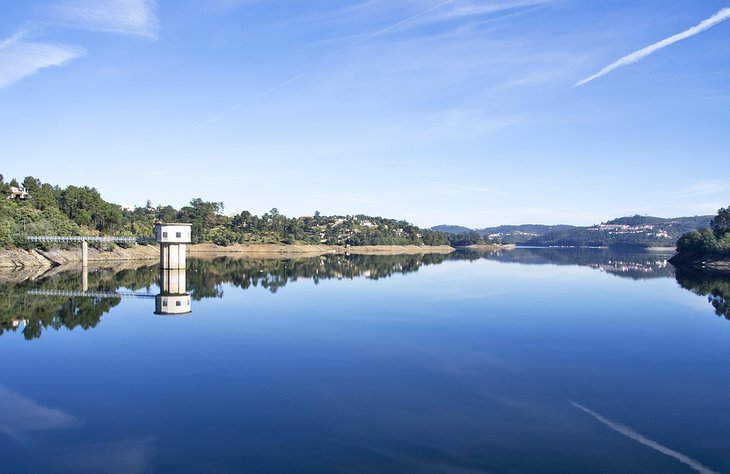
An inviting stretch of water lying 13 kilometers southeast of Tomar, this huge reservoir provides plenty of diversion for those tourists with an outdoor disposition and a passion for water sports.
Nestling between rolling banks of pine and eucalyptus forests, the shimmering freshwater lake is a magnet for water-skiers and canoeists, although windsurfers might sometimes find a decent breeze wanting. Boating and fishing are also favorite pastimes. Equipment can be hired from several rental outlets dotted along the water's edge, and yachting facilities are usually available from the lakeside hotels that draw visitors seeking a peaceful and secluded holiday destination.
Most of the hotel restaurants are open to non-residents. Numerous small islands pepper the lake and are ideal picnic venues; some even have small sandy beaches. These can be reached under your own steam, or by cruise boat. Bordering the lake are footpaths and nature trails that meander past isolated villages, where locals wave with bemused indifference.
In summer, the sheltered location can roast under a fierce sun, so cream up first if swimming or sunbathing.
Castelo de Almourol
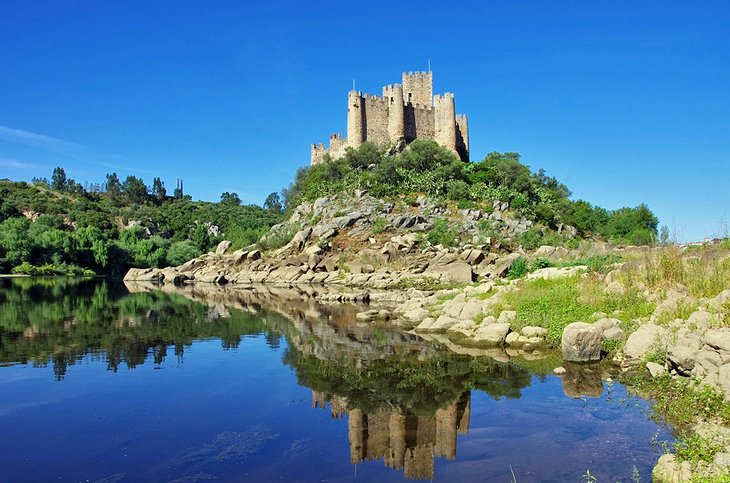
Prime your cameras and smartphones because Almourol Castle is as chocolate box as it gets. This magical fortress, dramatically set on a marble-sized island in the Tagus River near the town of Constância, is one of the most picturesque historical monuments in the region.
Built by Gualdim Pais, the founder of Tomar, in 1171 over existing Roman foundations, ancient Almourol, whose walls and keep are reflected in the mirror-like water, is steeped in myth and legend. Some believe the stronghold is haunted by the ghost of a princess yearning for the love of her Moorish slave.
In the 16th century, romantic poets waxed lyrical about chivalrous knights defending the castle against hordes of ugly ogres. Indeed, the evocative ruins do conjure up images of medieval lords mounted on snorting warhorses riding under banners of fluttering heraldry.
One thing's for sure, over the centuries, the castle, protected by stocky ramparts and nine forbidding towers, has never yielded to invading forces — except for happy bands of mesmerized tourists.
Ferries depart regularly from Tancos to land in front of the castle.
Location: Praia do Ribatejo, Vila Nova da Barquinha
Aqueduto Pegões
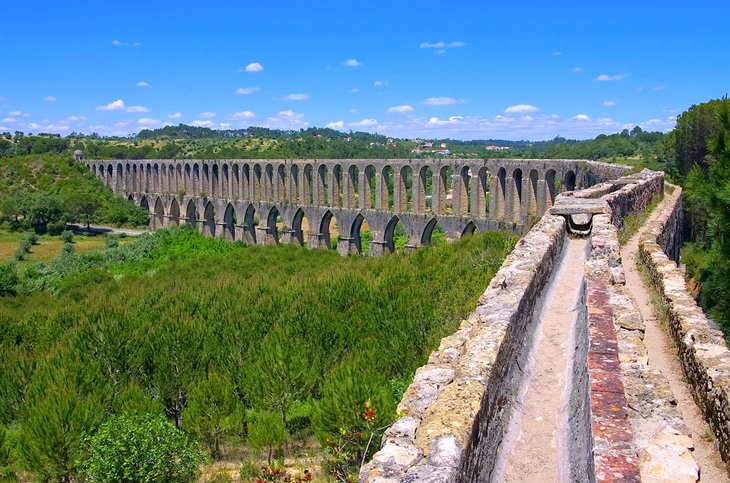
A short distance out of town is a superb example of 17th-century civil engineering: the Pegões Aqueduct. Construction began on this architectural marvel in 1593, during the reign of Filipe I, and was completed in 1614.
Designed by Italian Filippo Terzi, who didn't live to see its inauguration, the aqueduct was built to supply thirsty monks ensconced in the Convent of Christ with fresh water. The impressive structure features 180 arches over 16 ogival arches resting on pillars. It is best viewed northwest of Tomar near Pegões, off the N113 Leiria road.
Location: Pegões, 2 kilometers northwest of Tomar.
Day Trips from Tomar
Óbidos
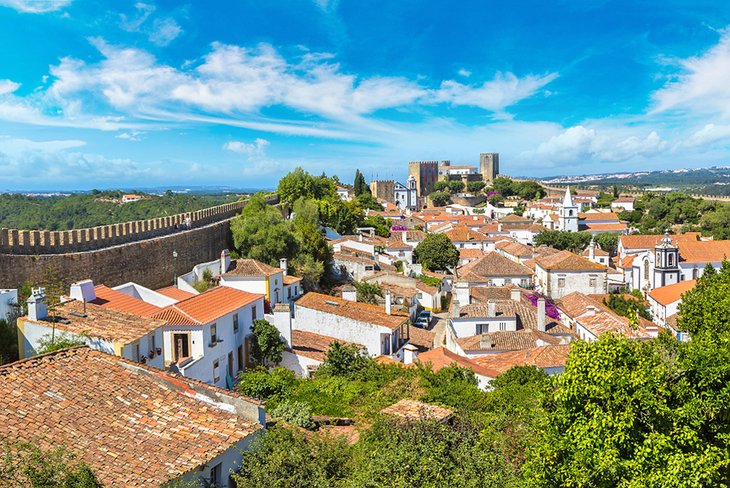
The enchanting hilltop town of Óbidos is a must-see and worth a good few hours of your time.
Blessed with picture-postcard looks and an undeniably romantic character, Óbidos charms with its whitewashed cottages, fortified walls, and fairy-tale castle.
Dating back to the 13th-century, Óbidos is known by the Portuguese as the "wedding gift town" after a custom whereby the kings of past gave the village to their queens as a wedding present.
Óbidos today is a gift for the senses, and to really appreciate this delightful destination, located 110 kilometers southwest from Tomar, take a leisurely stroll along the top of the castle's weatherworn ramparts.
Fátima
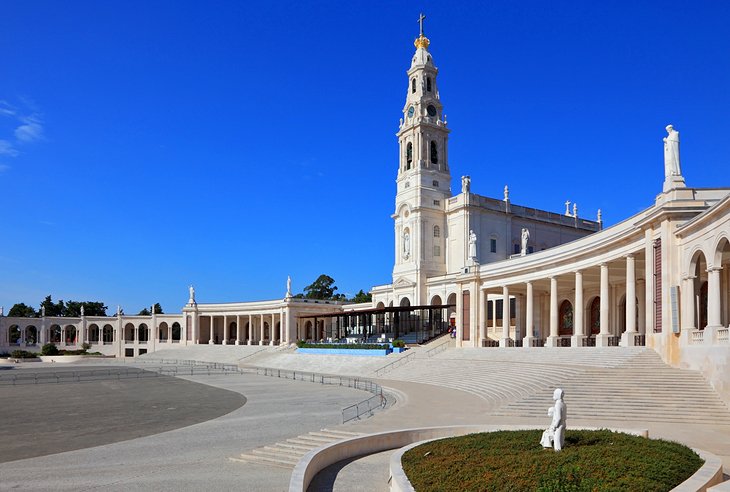
Fátima, internationally famous as a place of pilgrimage, lies in central Portugal about 30 kilometers from Tomar. On May 13, 1917, and again on the 13th of each subsequent month until October in that year, the "Virgin of the Rosary" is said to have appeared to three peasant children in what is known as the Miracle of Fátima.
At first skeptical about these visions, the Church saw more than 70,000 people making the pilgrimage to Fátima for the last appearance on October 13, 1917. Now, every year, thousands of believers travel here from around the world to beseech forgiveness for their sins or pray for healing.
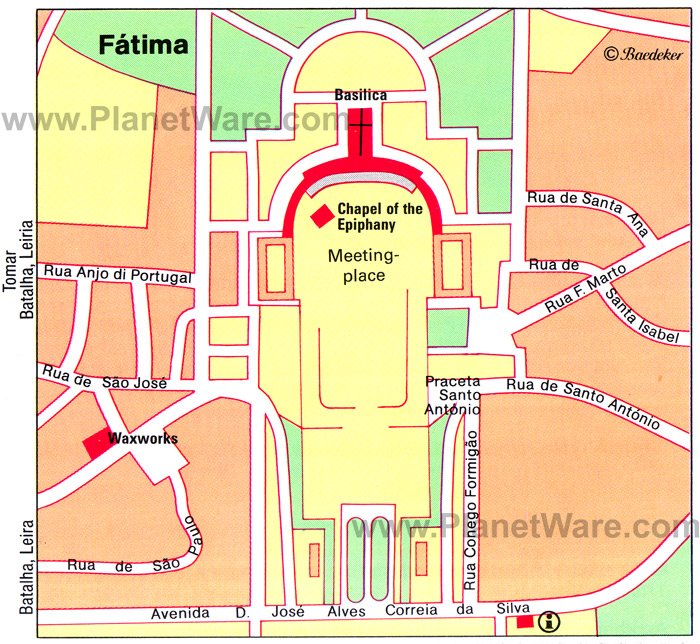
On the eve of the chief annual pilgrimages, large torch light processions take place. The Neo-Baroque basilica with its 65-meter-high central tower dominates the esplanade that serves as the rallying point for the kneeling pilgrims.
In front of the basilica, the little chapel of the apparitions, the Capela das Apariçôes, marks the place where the Virgin Mary is supposed to have appeared to the children in the branches of an oak tree in 1917.
Batalha
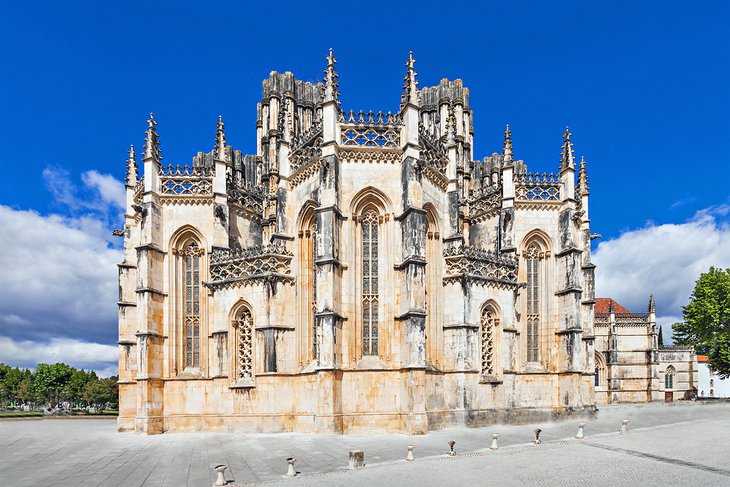
You can combine a visit to two celebrated UNESCO World Heritage Sites by first making a 35-minute drive west out of Tomar on the IC9, which brings you to the town of Batalha.
This is where one of the great masterpieces of Portuguese Gothic architecture is located — the Dominican abbey of Santa Maria da Vitória, better known as Mosteiro da Batalha.
Built to celebrate King João I's victory over Castile at the Battle of Aljubarrota in 1385, the monastery took more than a century to complete.
A beautiful and impressive building, Batalha's façade of ornamental masonry is simply breathtaking.
Equally stunning is the interior and in particular, the Founder's Chapel and the Royal Cloister.
Alcobaça
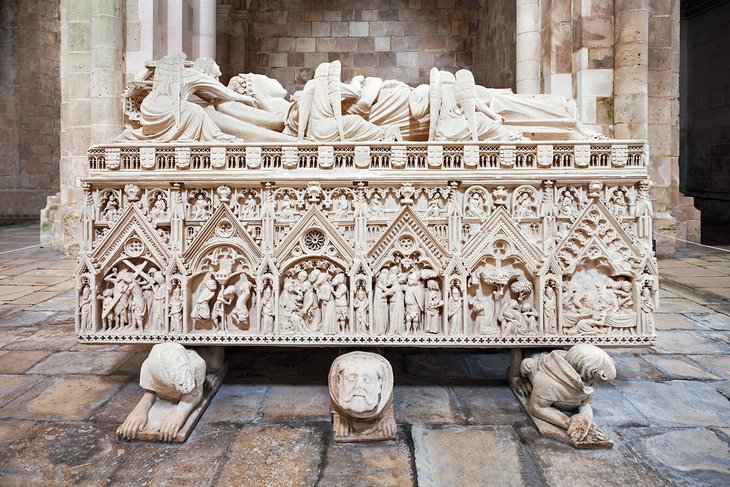
A 30-minute drive south of Batalha is Alcobaça and another one of Portugal's great historic monuments, the vast Cistercian Mosteiro de Santa Maria de Alcobaça.
Founded in 1138, the monastery's abbey church and medieval cloister are the largest of their types in the country.
Alcobaça is forever associated with the doomed 14th-century romance between Prince Pedro and his lover Inês de Castro, who was murdered on the orders of Pedro's father, King Afonso IV.
The elaborately carved tombs of both face each other in the church and add a touch of poignancy to any visit.
Santarém
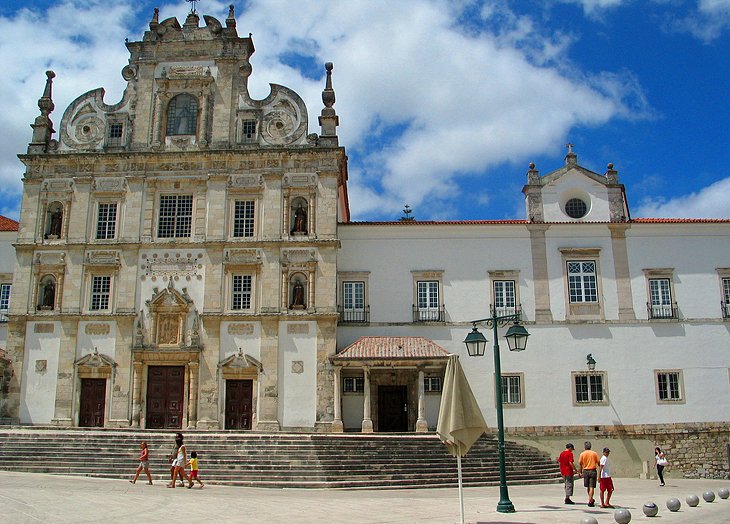
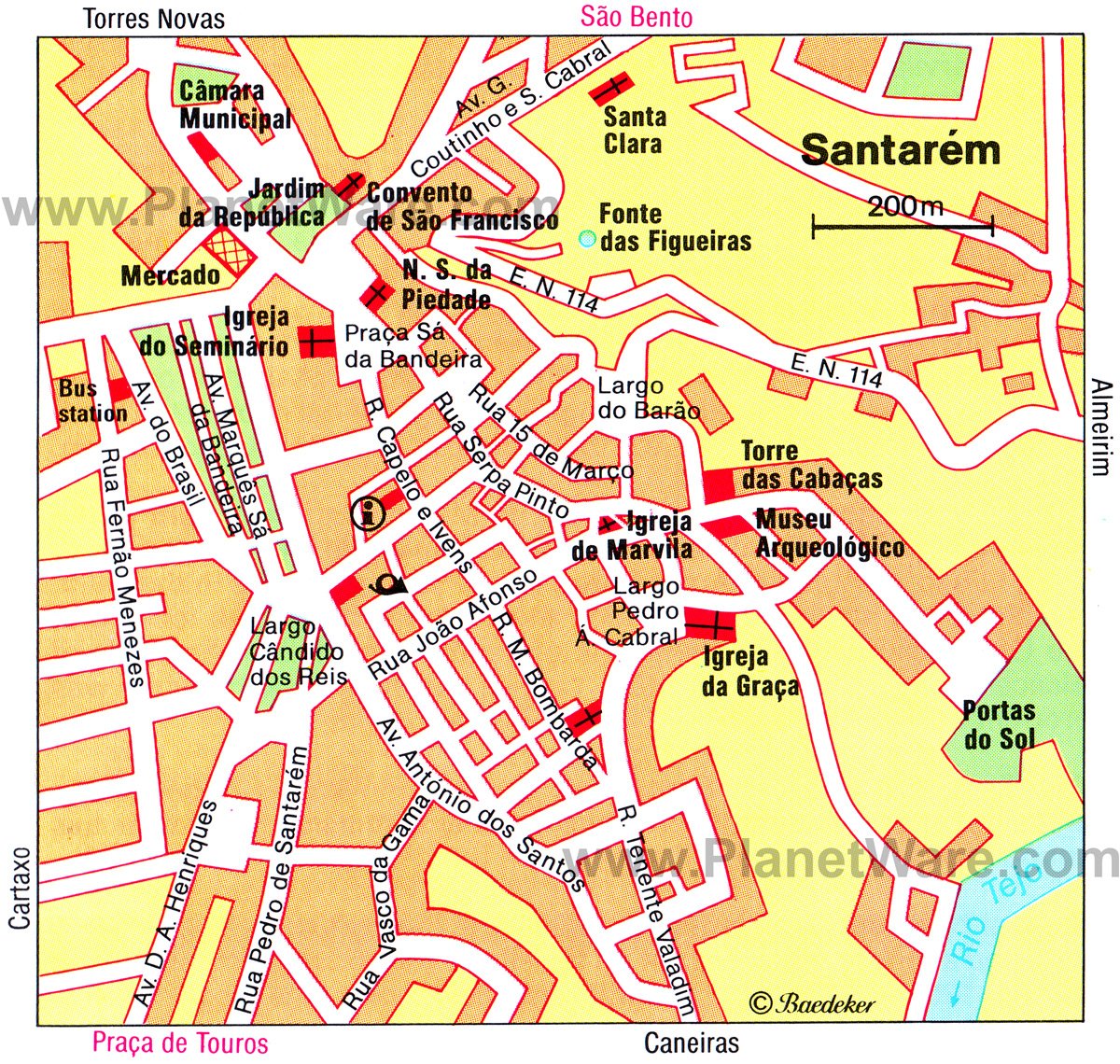
About 70 kilometers southwest of Tomar, Santarém, capital of the old province of Ribatejo, is a town of low whitewashed houses built on a hill above the right bank of the Tagus. The town is worth visiting for its interesting churches and the splendid views over the river.
Apart from an important agricultural fair (Feira Nacional de Agricultura) held here in early June each year, the town's main attractions include the Igreja do Seminário with a Baroque facade; the Igreja da Graça, a late Gothic convent church built towards the end of the 14th century; and the Portas do Sol, where a park and a terrace were laid out on the site of a Moorish castle at the end of the 19th century. It now affords magnificent views over the Tagus valley.
Abrantes and Constância
A 40-minute morning jaunt south on the A13 and then east along the A23 brings you to Abrantes, a handsome town that sits grandly above the River Tagus.
Park and head for its historic center, a maze of attractive narrow alleys and broad squares lined with squat town houses.
An amble up to the 14th-century castle works up a healthy appetite, which can be appeased at any one of the excellent eateries the town has a reputation for.
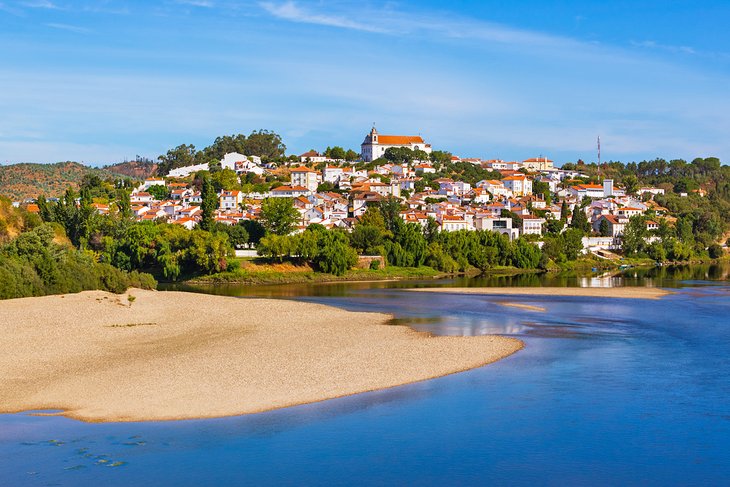
After lunch, return along the A23 and pause at Constância, situated at the confluence of the Tagus and Zêzere rivers.
It's widely believed Luís de Camões, Portugal's greatest poet and author of the epic Os Lusiadas, was born here; the town's riverside Camões gardens are based on those described in the poem.
If you've time, continue to Tancos, where a ferry departs to land at Castelo de Almourol, one of the most scenic of Portugal's many ancient castles.