Tourist Attractions in Granada
Granada is the soul of Andalusia, a place of breathtaking beauty at the foot of the Sierra Nevada Mountains. This mystical city was the capital of a Moorish kingdom from the 13th until the 15th centuries but today it has a modern vibe. The mix of old and new is what makes this such a dynamic city.
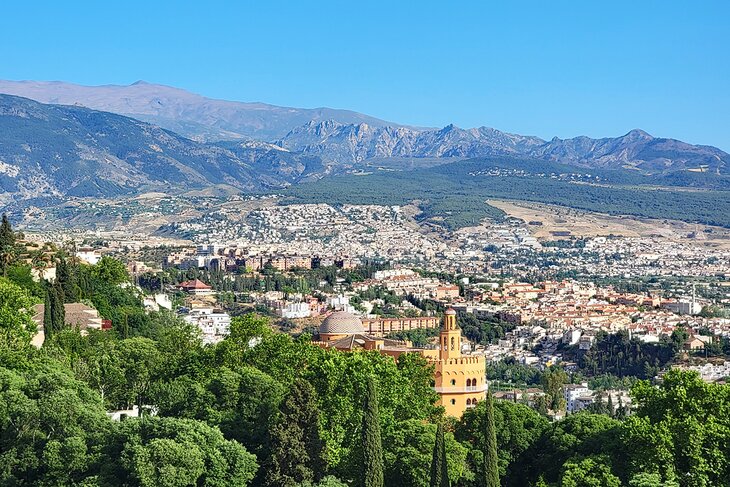
Although now predominantly Christian, Granada has inherited rich Islamic, Jewish, and Gypsy influences. The Renaissance Catholic cathedral was once a mosque. The Albaicín (old Moorish town) and the Alcaicería (spice market) have an authentic Arabic flavor. Colorful Gypsy culture and fabulous flamenco dancing is found in the caves of the Sacromonte quarter.
Granada is also a great place for shopping, dining, and nightlife. Wander down Calle Mesones for some retail therapy or enjoy an outdoor meal in summer at Plaza Bib-Rambla. The city holds treasures for all types of travelers.
Discover the best places to visit with our guide to the top attractions in Granada.
Alhambra: A Masterpiece of Islamic Architecture
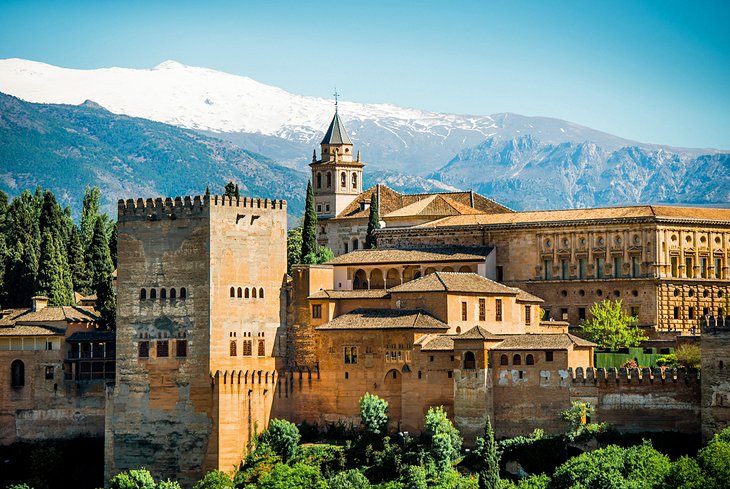
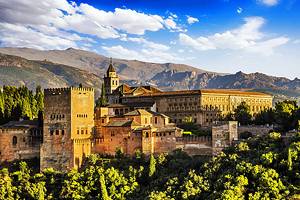
The Alhambra stands majestically on a fortified hilltop with the snow-peaked Sierra Nevada Mountains as a backdrop. An absolute must-see attraction in Granada, this UNESCO-listed World Heritage Site was the residence of the Moorish rulers of the Nasrid Dynasty for 250 glorious years, from the 13th to the 15th centuries.
The complex of palaces was the Moors' last stronghold in Spain. A veritable museum of Islamic architecture, the Alhambra is surrounded by ancient defensive walls and appears from afar to be an impenetrable fortress.
The Alhambra complex consists of four groups of buildings in carefully landscaped grounds. The Alcazaba is the original 13th-century Moorish fortress, the oldest part of the Alhambra. All that remains of the Alcazaba are the ramparts and the towers.
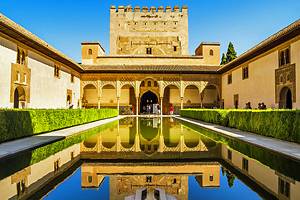
The Nasrid Palaces are the most splendid buildings of the complex, with marvelous accommodations and public spaces used by the sultans of the Nasrid Dynasty. Typical of secular Moorish buildings, the Nasrid Palaces are plain on the exterior but sumptuous on the interior, with decorative tile work and peaceful courtyards.
The Palace of Charles V was built in the 16th century after the conquest of the Moors and was used by the Spanish emperor as his summer palace.
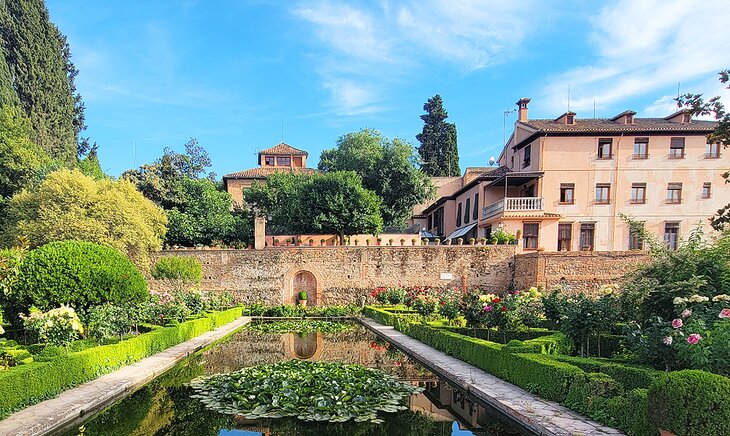
Beautiful and serene Moorish gardens surround the Generalife Palace, which was used as a leisure villa by the sultans of Granada. The grounds feature shady patios, fountains, fragrant roses, and flower-adorned terraces overlooking the palaces of the Alhambra and the mountains.
Tickets and Advance Booking: Be sure to book tickets online well in advance, especially during the high season (May/June). This is the most popular thing to do in Granada and tickets sell out months in advance. You will need to bring an official ID with your ticket to gain entry.
To save time and learn about the Alhambra, consider joining a skip-the-line tour. Note that even with this tour it's important to book well in advance.
Author's Tip: The Alhambra complex is massive, you'll be walking up and down stairs, along pathways, in and out of palaces, and through wonderful gardens. It's not an in and out grab a picture and go kind of place. Count on several hours at a bare minimum. If you are visiting in the summer, the heat and level of exertion required to see the entire place can take a toll. Go early if at all possible, not only will you avoid the crowds, you won't end up exhausted and overheated.
Albaicín and Mirador of San Nicolas
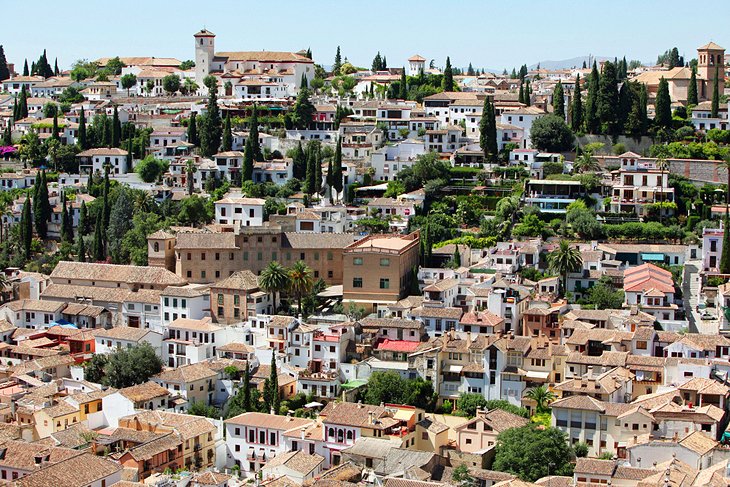
One of the most enchanting things to do in Granada is to get lost in the hillside neighborhood of the Albaicín, a UNESCO-listed World Heritage Site. The Albaicín, Granada's medieval Arabic quarter, was once surrounded by defensive walls and has retained an authentic Moorish character thanks to its picturesque narrow streets and simple whitewashed houses.
From Puerta Nueva (Puerta de los Estandartes), a well-preserved stretch of the town's old ramparts runs west to the Puerta Monaita. The best view of the walls is from the Cuesta de la Alhacaba, near the ninth-century Puerta de Elvira, once the town's principal gate.
Many places in the Albaicín offer stunning outlooks onto the Alhambra complex, which is separated from the Albaicín by the dramatic gorge of the Río Darro.
The most spectacular viewpoint in the Albaicín is the Mirador of San Nicolas, the terrace in front of the 16th-century Church of San Nicolas at the heart of the Albaicín quarter. This frequently painted panorama captures the Alhambra palaces and the Sierra Nevada Mountains.
Not far from San Nicholas, the Church of San Salvador was built on the site of an earlier mosque and is noteworthy for its Mudéjar style (Christian architecture influenced by Islamic design).
The Carrera del Darro, one of the oldest streets in Granada, which runs along the north side of the Río Darro, provides another fabulous view of the Alhambra.
Capilla Real de Granada (Royal Chapel of Granada)
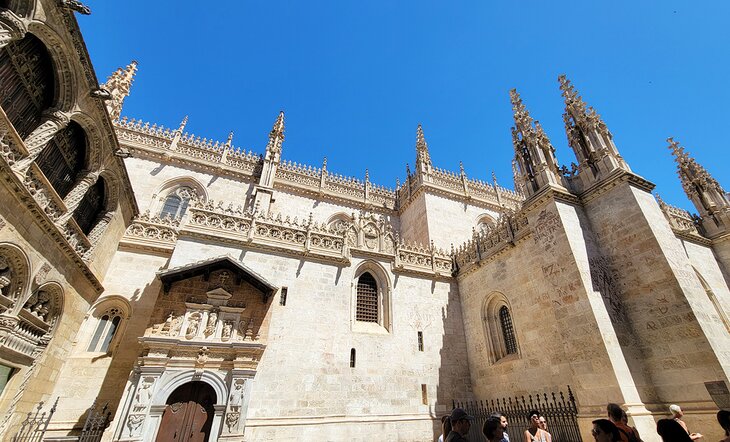
The grandeur of Spain's Catholic Monarchs is best seen at the Capilla Real de Granada, which houses the royal tombs. This impressive 47-meter-high domed chapel is attached to the Catedral Santa María de la Encarnación but has a separate entrance; it was an addition to the cathedral built from 1506 to 1521 in Late Gothic style.
The interior features beautiful 16th-century stained-glass windows and seven large paintings by Alonso Cano. An elaborately wrought grille by Bartolomé de Jaén encloses the richly decorated royal tombs. To the right is the Tomb of Ferdinand and Isabella in a monument of Carrara marble created by sculptor Domenico Fancelli of Florence.
The crypt houses sarcophagi of other kings and princes. To the left is the tomb of Philip the Handsome and Joan the Mad by Bartolomé Ordóñez. A large intricately carved retablo behind the royal tombs features statues of the Catholic Monarchs by Diego de Siloé.
In the transepts are richly decorated relicarios (side altars) by Alonso de Mena. The north transept displays the famous Triptych of the Passion by Dieric Bouts.
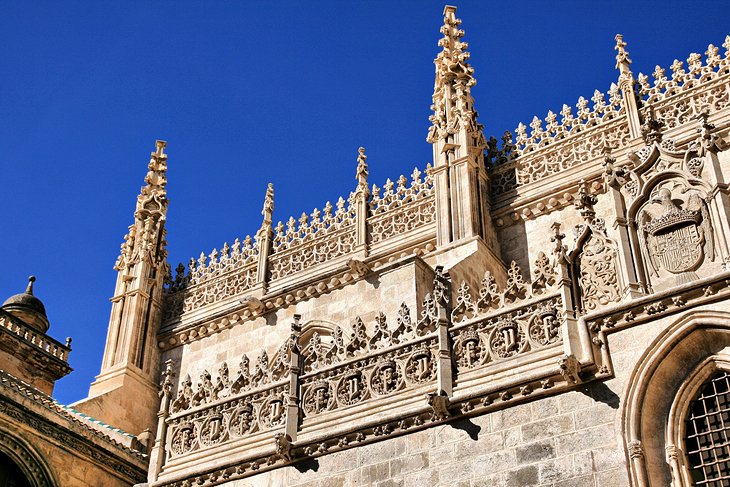
A highlight of the Capilla Real is the Sacristy-Museum, a treasure trove of artwork, including Botticelli's Christ on the Mount of Olives painting, Rogier van der Weyden's Pietà, and Hans Memling's Descent from the Cross. The collection also displays polychrome wood figures of the Catholic Monarchs in prayer by Felipe Vigarny; King Ferdinand's sword; Queen Isabella's crown; and a prayer book, which belonged to the Catholic Monarchs.
All this wonderful history just begs to be photographed, but keep your camera in your pocket, taking photos and videos is not allowed.
As with the Alhambra, it's important to buy your tickets in advance online to ensure you'll be able to visit at a time that suits you and without issues. Individual tickets can be purchased for Capilla Real de Granada but if you plan to visit the Cathedral of Granada, the Carthusian Monastery of Granada, the Sacromonte Abbey, and the Monastery of San Jeronimo of Granada, consider a combined ticket. You'll save 33% off the regular price of individual admissions.
Address: 3 Calle Oficios, Granada
Catedral Santa María de la Encarnación (Cathedral)
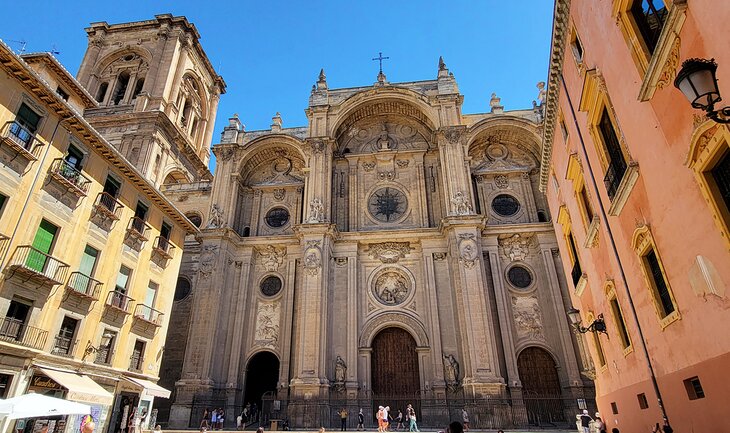
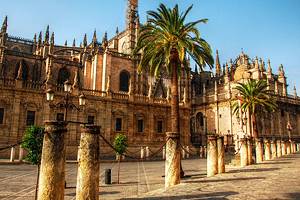
Granada's Cathedral of Santa María de la Encarnación is arguably the finest Renaissance church in Spain. The cathedral was built by Queen Isabella as a monument to the victory of Christian Spain over the Moors. It stands on the site of a former mosque.
Begun in Gothic style in 1523 and continued in Plateresque style from 1525, the cathedral was consecrated in 1561 while still unfinished.
The 16th-century west facade features a large relief by José Risueño over the main doorway. The northwest side of the cathedral is also richly decorated with ornate sculptures. On the entrance arch pillars are statues of the Catholic Monarchs and bronze statues of the Apostles.
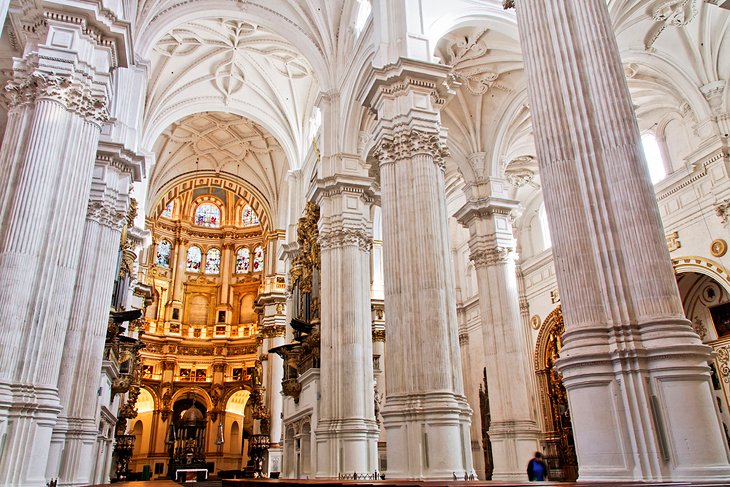
Visitors enter the cathedral through the main doorway and revel in the Renaissance splendor of the interior with its spacious nave and lavishly adorned chapels.
Exquisitely decorated, the Capilla Mayor (Main Chapel) exemplifies harmonious Renaissance architecture that was perfected in Granada during the 16th century.
The Choir boasts two impressive Baroque organs, which sound out sacred melodies during religious services. Mass is celebrated at the cathedral on Sundays and holidays. Special religious ceremonies are held for Semana Santa (Easter week) and for the Catholic holidays during Christmastime (Navidad).
The cathedral's Sala Exposición (museum) displays a collection of religious art, including paintings, sculptures, tapestries, and sacred objects. Highlights are the large silver monstrance and the Flemish tapestries.
Address: 5 Gran Via de Colón, Granada
The Gypsy Quarter of Sacromonte
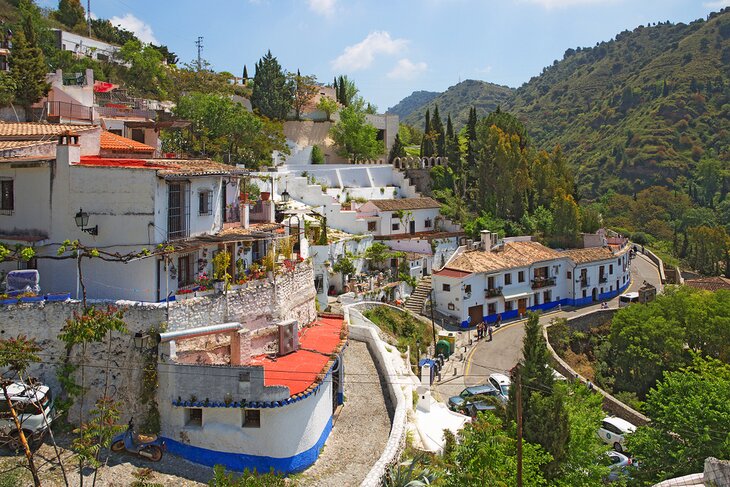
Granada's colorful Gypsy quarter on the Sacromonte ("sacred mount") is a fascinating place to visit. This hilltop neighborhood begins around the Cuesta del Chapiz, where the Camino del Sacromonte ascends the hill. The Gypsies (Gitanos) have had a presence in Granada since 1532 and settled in the caves of Sacromonte in the 18th century.
Take some time to enjoy wandering the hillside roads of this atmospheric neighborhood to discover the artistic Gypsy homes; some are decorated with vibrant handcrafted ceramics. The caves in the upper area of the Camino del Sacromonte are in the best condition, and one has been made into a museum, so you can see inside. The Museo Cuevas del Sacromonte is located on Barranco de los Negros, a short walk from the Camino del Sacromonte.
You'll find many cave venues in Sacromonte where flamenco is performed, including Cueva de la Rocío, whose famous guests have included the King of Spain, Bill Clinton, and Michelle Obama. The Cueva de la Rocío is renowned for La Zambra, a special type of flamenco dancing and singing that originated in the gypsy caves of Granada.
The Sacromonte offers some of the best views in Granada, with panoramas over rugged ravines, the Valparaiso Valley, and the Darro River. Some vantage points look out to the Alhambra and the Albaicín.
A steep and picturesque footpath (a difficult walk) climbs through deeply indented gullies to the Ermita de San Miguel Alto. This 17th-century Baroque hermitage has a magnificent viewpoint of the Alhambra and the Albaicín.
Another noteworthy religious monument is the Sacromonte Abbey. Built in the 17th and 18th centuries, the Abbey's church is a gem of Andalusian Renaissance architecture. Standing on Mount Valparaiso and accessible by the Camino del Sacromonte (a 10-minute taxi ride from the Plaza Nueva), the Abbey is open for guided tours. Several caves were found on this site, which possess precious relics of the 16th century, as well as a cross of Saint John.
El Bañuelo: Historic Arab Baths
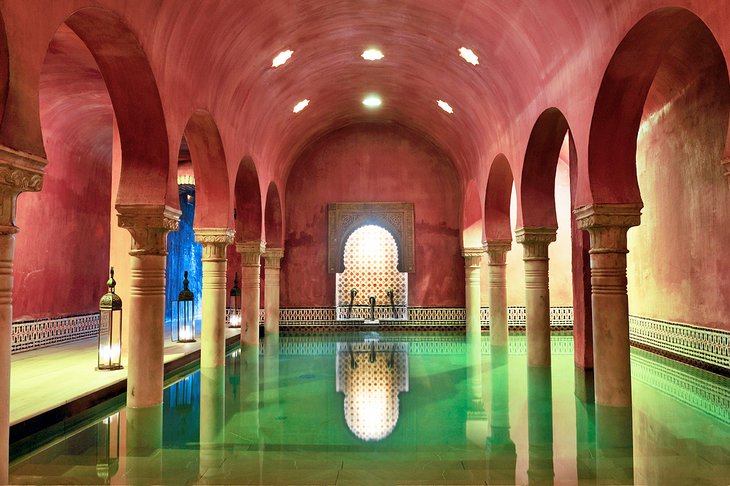
The Moors brought the ritual of the hammam (Arab baths) from their homeland in North Africa to Andalusia, and Granada's 11th-century Hammam al-Yawza (known as El Bañuelo) are among the oldest and best preserved in Spain.
One of the few bath complexes not destroyed after the Reconquista by the Catholic monarchs, who considered the baths as immoral, they are one of Granada's oldest surviving Moorish sites.
El Bañuelo is one of Granada's Patrimonio Mundial de la Humanidad (UNESCO World Heritage) sites. This exceptional historical monument is open to the public as a museum; tickets are required for admission.
Today, you can experience the magical serenity of Andalusian baths at the Hammam Al Ándalus near Plaza Nueva. Although it is on the site of an original Moorish bathhouse and constructed in the authentic style, with graceful arches and exquisite Islamic-style tile work, this hammam is a newly built replica and offers the latest pampering spa services, aromatherapy, bathing rituals, and massages.
Address: El Bañuelo, Carrera del Darro, 31 Albaicín, Granada; Hammam Al Ándalus, 16 Calle Santa Ana, Granada
Parque de las Ciencias (Science Park)
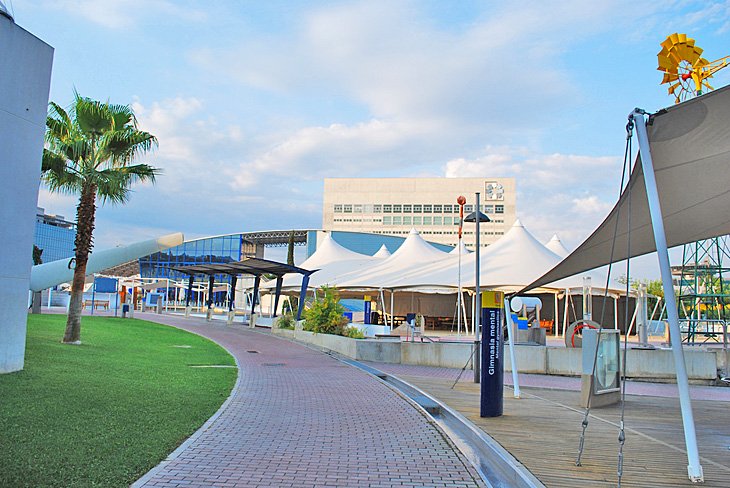
Families traveling with young children will find plenty to discover at this Science Park, which is about a 15-minute walk from the historic center of Granada.
The complex includes a Biosphere Pavilion, which explores the Earth's geology and environment; the Perception Pavilion, which features vision-oriented technologies such as a giant kaleidoscope; and several other pavilions with kid-pleasing science exhibits.
There's also a Planetarium, which projects 7,000 stars, and outdoor exhibit areas that explore topics such as botany, mechanics, perception, and energy.
Address: Av. de la Ciencia, Granada
La Alcaicería (Arab Spice Market)
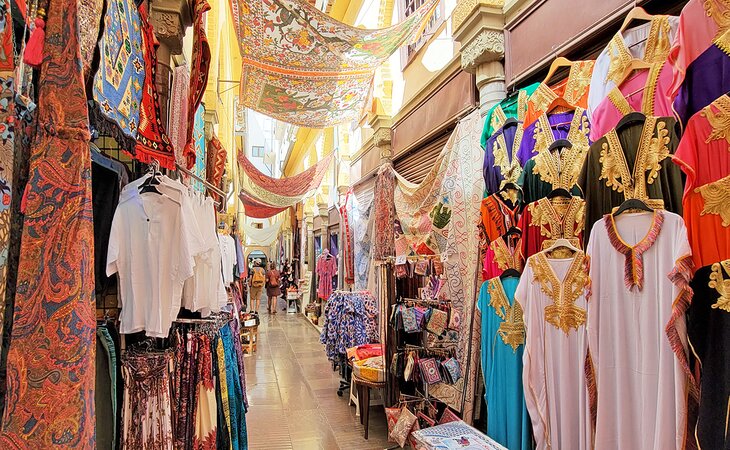
This traditional Arab bazaar is a recreation of the old Moorish market that existed here before the fire in 1843 destroyed the area. Close to the cathedral, the Alcaicería runs on the Calle de la Alcaicería from the Plaza Alonso Cano.
The entire neighborhood of the Alcaicería, a maze of narrow streets, once held the silk and spices market. The Alcaicería recalls the original souk, but nowadays the vendors cater mostly to tourists.
Nearby is Plaza Bib Rambla, a spacious public square that teems with people and activity. An artistic fountain stands at the center of the square surrounded by decorative ironwork and colorful flower stands.
Author's Tip: As you wander through this fascinating area and into the shops, don't buy at the first place you stop. As you go deeper into the market you'll find many of the stores sell the same items and with some sharp negotiating, you may be able to get a better deal from another vendor.
Address: Calle de la Alcaicería, Granada
The 16th-Century Monasterio de la Cartuja
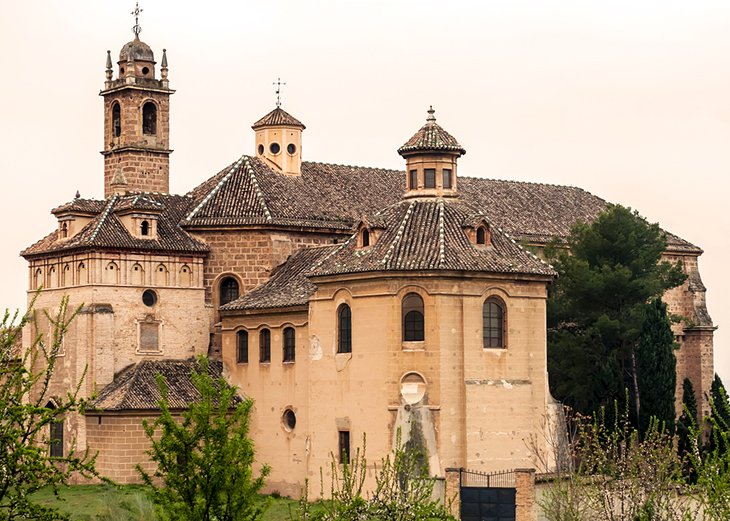
This serene 16th-century monastery is on the outskirts of Granada, about 25 minutes from the center (one kilometer north of the Plaza del Triunfo). The Monasterio de la Cartuja, also known as the Monasterio de la Nuestra Señora de la Asunción, belonged to the Carthusian order that was founded in France in the 11th century.
Behind the simple exterior and courtyard is a surprisingly opulent interior. The monastery's ornately decorated church is one of the most extravagant religious buildings in Spain. The 17th-century Baroque sanctuary leaves visitors awestruck with its marvelous display of lavish paintings, marble statues, gilded details, and impressive altar pieces.
The most striking feature of the church is the Sacristy, designed by Luis de Arévalo, with a riot of elaborate stucco ornamentation and marble pilasters. The Refectory displays a painting of the Last Supper by Fray Juan Sanchez Cotán.
The Monasterio de la Cartuja is open to the public for visits (entrance fee required) everyday year-round, except during religious services and on December 25th and January 1st. The monument closes early on December 24th and December 31st.
Address: Paseo de Cartuja, Granada
Basílica San Juan de Dios
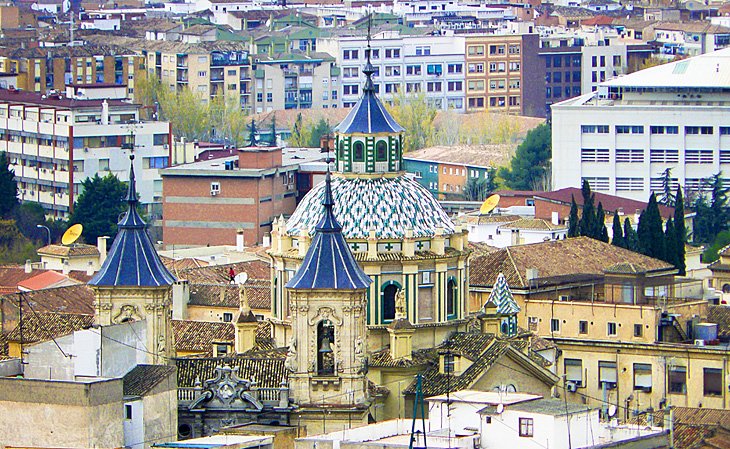
Amid the beautiful medieval Islamic art and architecture, Granada's masterpiece of Baroque often goes unnoticed. The Basílica San Juan de Dios immerses visitors into a fantasy of dazzling 18th-century decor. Intricate gilded carvings adorn almost every corner of the domed ceiling, walls, and side altars and frame the monumental paintings.
The basilica is open to the public for visits (for an entrance fee) Monday through Saturday year-round. An audio guide in English is included with the admission charge, pointing out details you might otherwise miss. If it is not evident, ask for access to the upper level behind the altar for a view down into the church.
Address: Calle San Juan de Dios 23, Granada
Festival de Granada
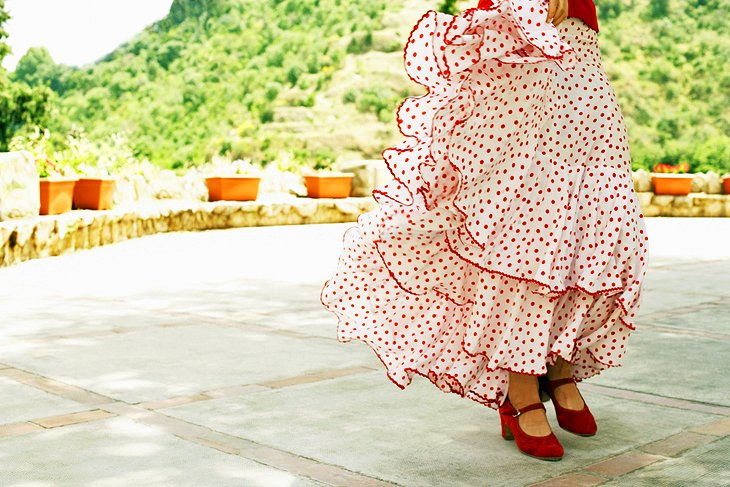
The wistful melodies of Gypsy guitar and flamboyant flamenco captivate audiences who attend this world-class festival. Held during June and July at historic monuments and other venues throughout the city, the Festival de Granada showcases the city's rich cultural heritage with high-caliber performances of music and dance.
The history of the festival dates back to 1883, when concerts were held at the Palace of Carlos V. The festival continues the tradition with its showcasing of diverse Spanish musical styles and genres, such as opera, zarzuelas, flamenco, and Sephardic (Jewish) songs, as well as classical music piano recitals and symphony performances. The festival also includes a flamenco contest.
The concerts and performances take place at several outdoor locations within the Alhambra complex: the Palace of Charles V, El Patio de los Arrayanes, and the Teatro del Generalife. Other festival venues are found in the Albaicín neighborhood, at the Centro Federico Garcia Lorca, and at the Hospital Real de Granada. The festival draws more than 30,000 people every year.
Religious Events and Festivals
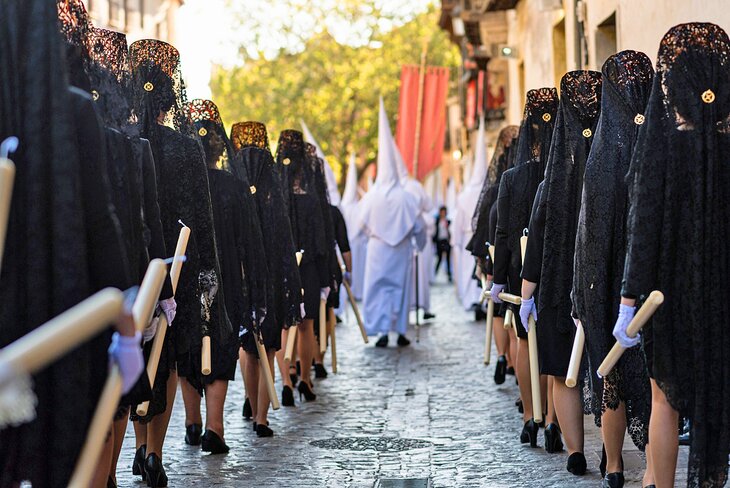
Most of Granada's religious festivals originated during the Renaissance after the Reconquest. On January 2nd, Granada celebrates Conquest Day with a religious parade commemorating the conquest of Granada by the Catholic Monarchs (Queen Isabella and King Ferdinand) in 1491.
The Fiesta de Los Reyes (Parade of the Three Kings) on January 5th features a motley entourage of camels, horse and carriages, and circus characters in a lively procession through the city.
Saint Cecilio is Granada's patron saint, and February 1st is the Fiesta de San Cecilio. The festival takes place at the Sacromonte Abbey and includes religious events, music, dance, and delicious regional foods.
Holy Week is an important religious festival that celebrates Easter with religious masses, parades, and folkloric events. A highlight of Holy Week, the Cristo de los Gitanos (Christ of the Gypsies) procession to the Sacromonte is a special event with bonfires and saetas (traditional devotional songs).
One of Granada's most important festivals, the Corpus Christi Procession on June 7th, features zambras moriscas (Moorish dances) and a parade of mythical characters such as giants, demons, and Tarasca, a woman on a dragon.
On September 15th, pilgrims leave bouquets of flowers and single blossoms in front of the Basílica de la Virgen de las Angustias for the Floral Offering to the Virgen de las Angustias, patron saint of the city.
The Fiesta de San Miguel takes place at the end of September in the Albaicín neighborhood with a religious parade to the chapel of the Ermita de San Miguel Alto, the legendary site of a miraculous olive tree.
Centro Federico García Lorca
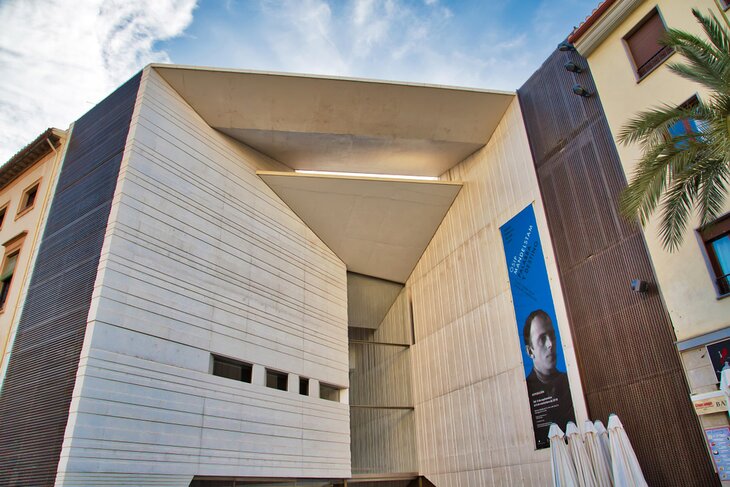
The Centro Federico García Lorca is devoted to conserving and encouraging the study of works by famous Spanish poet Federico García Lorca (who was born in a village near Granada). The center also organizes educational programs and cultural activities on the topics of literature, music, film, and the visual arts.
The center displays manuscripts of poems, prose, and plays by Federico García Lorca, along with letters written by Lorca and artistic pieces (such as posters and theater costumes) that he created. The Federico García Lorca Foundation possesses an incredibly diverse collection that will interest enthusiasts of modern poetry and art.
Address: Plaza de la Romanilla, Granada
Hospital Real de Granada
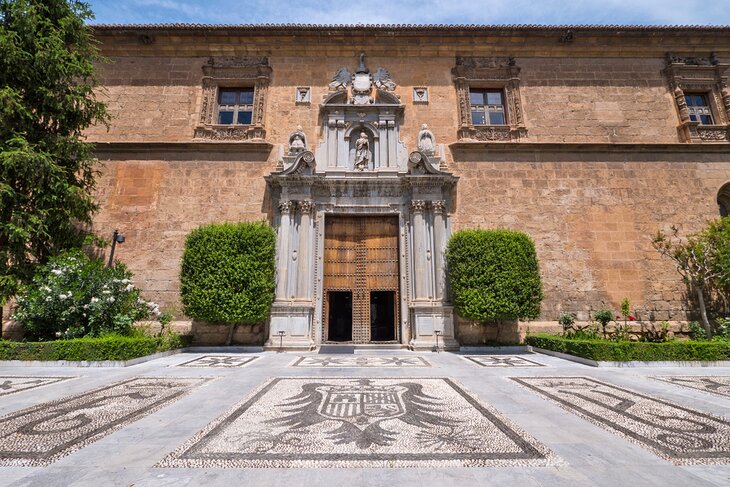
A Renaissance architectural gem, this splendid monument was founded by the Catholic Monarchs in the 16th century as a hospital for wounded war veterans. Today, the building houses the administrative offices of the University of Granada, and the interior courtyards, as well as the university's library are open to the public for visits (free of charge).
Not to be missed are the Mudéjar patios with exquisite colonnaded arcades. There are four interior courtyards. The most striking is the Patio de los Mármoles, which is used as a venue for music recitals during the Festival de Granada.
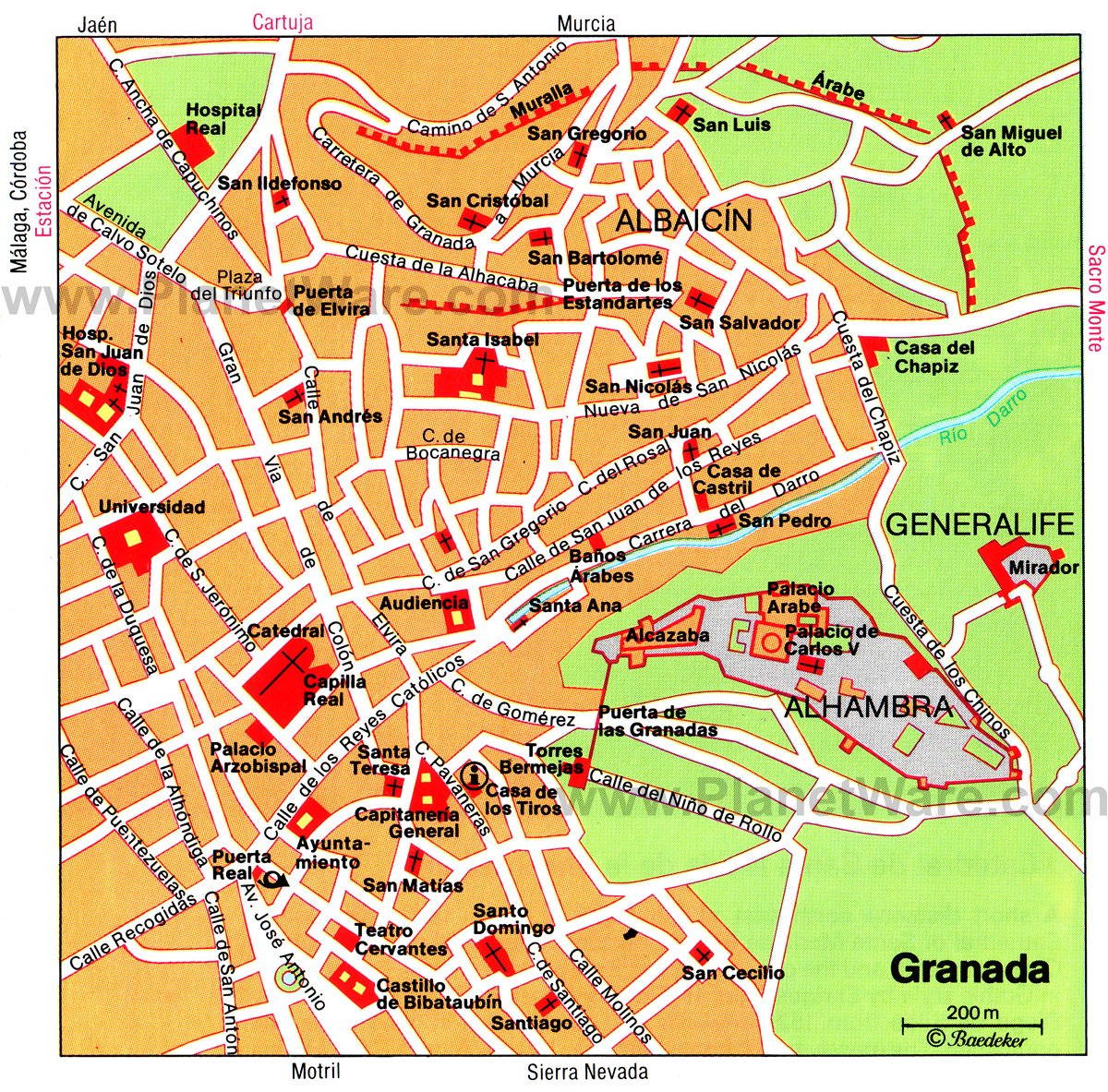
Map of Tourist Attractions in Granada