Tourist Attractions in San Francisco
Set along the ocean, with rolling hills and the iconic Golden Gate Bridge, San Francisco is one of the most beautiful cities in the United States and the jewel of Northern California. The city is full of history, great neighborhoods, parks, beaches, museums, entertainment options, and an astounding variety of restaurants.
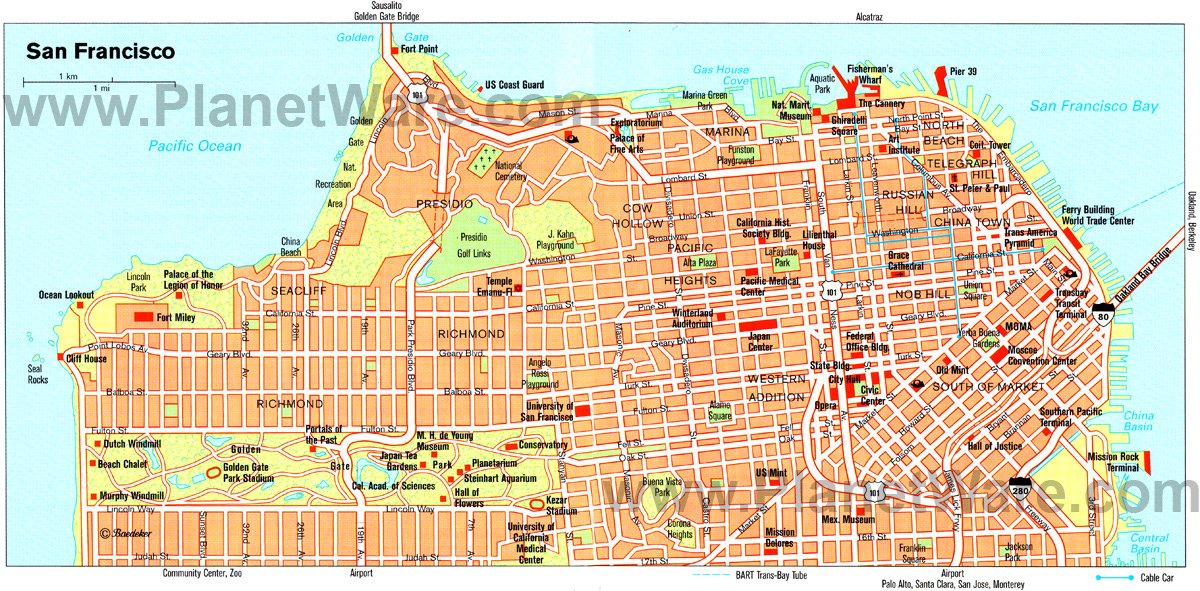
Some of the most famous attractions are Alcatraz Island and Fisherman's Wharf, but the sightseeing possibilities here are extensive. San Francisco's Chinatown is the largest of its kind in North America and definitely worth visiting. For an exciting experience, hop on one of the historic cable cars and tour the city.
Discover more things to do with our list of the top tourist attractions in San Francisco.
Golden Gate Bridge
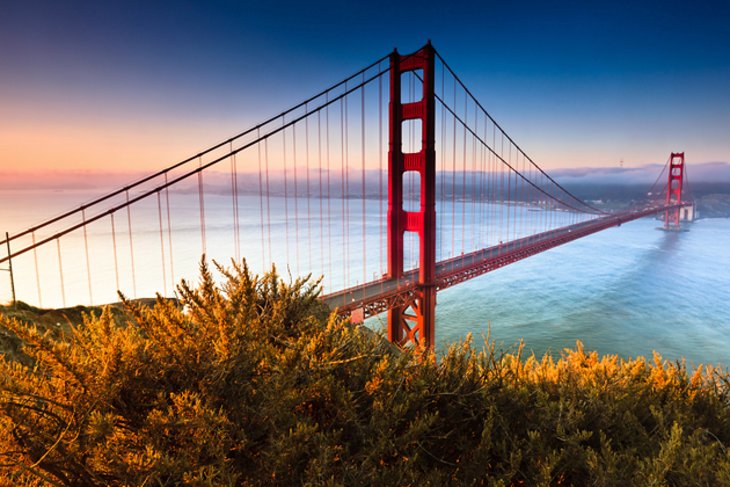
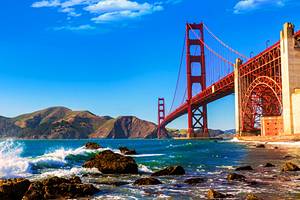
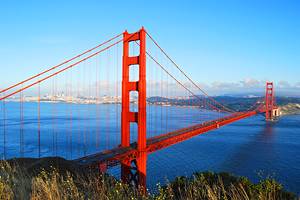
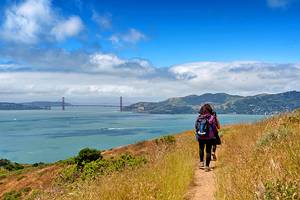
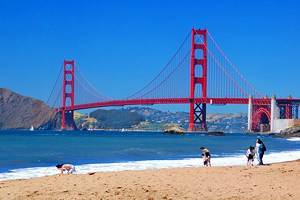
The Golden Gate Bridge appears even more beautiful and impressive in real life than it looks in photos. It is the most photographed site in the city, with the orange structure backed by blue water, or in many cases, peaking through a dense layer of coastal fog. At night, the flood-lit structure is equally striking.
Connecting San Francisco with Marin County and other districts further north, the Golden Gate Bridge was, at one time, designated the greatest man-made sight in the United States by the U.S. Travel Service. Opened on May 28th, 1937, the bridge took four years to build and at the time of its completion, was the longest suspension bridge in the world, measuring approximately two miles in length.
If you want to drive over the Golden Gate Bridge, the road is US Hwy 101, or SR 1. On the east side of the bridge, a sidewalk is open to pedestrians. Bicycle access is allowed on both sides of the bridge.
The walk across the bridge begins at the Golden Gate Bridge Welcome Center (near the Presidio GO shuttle bus drop-off point) and ends in Marin County with a panoramic viewpoint of San Francisco's cityscape.
Many locals enjoy biking across the bridge to the nearby waterfront town of Sausalito.
For a great view of the bridge, or for anyone interested in photographing the bridge, there are a number of ideal vantage points. From the San Francisco side, Nob Hill, an area known for its posh old mansions, offers some beautiful views over the bridge.
On the opposite side of the bridge, in Marin County, the Golden Gate National Recreation Area is another good place to visit. Also, if you take a tour of Alcatraz Island, you will enjoy completely open views of the Golden Gate Bridge from the boat and island.
Alcatraz Island
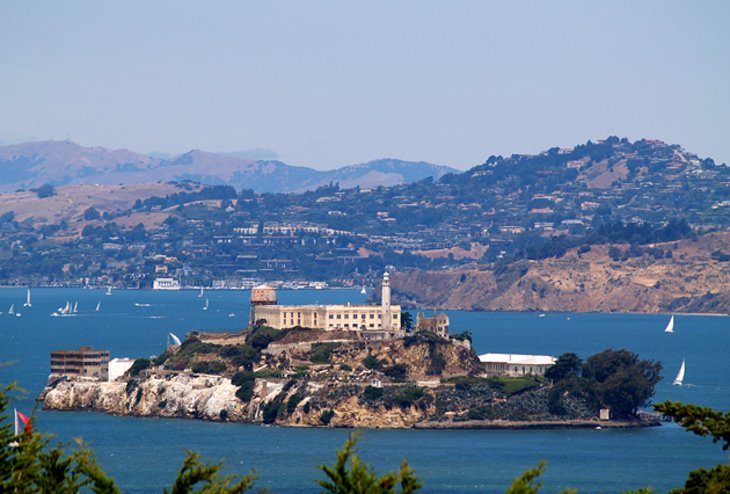
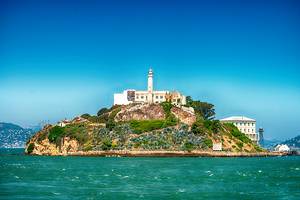
The former federal penitentiary, located on Alcatraz Island in San Francisco Bay, was one of America's most infamous prisons. It operated for almost thirty years, closing in 1963 and re-opening as a tourist attraction in 1973.
Some of America's most well-known criminals were incarcerated here, including Al Capone, "Machine-Gun" Kelly, and the "Birdman," who would later form the basis for the fictional movie The Birdman of Alcatraz.
In the course of its 30-year existence, the penitentiary received a total of 1,576 convicts. There were never more than 250 at any one time, even though therewere 450 cells measuring about 10ft by 4ft. At times the number of guards and staff was greater than the number of convicts. Alcatraz Island is also home to migrating birds.
You can visit Alcatraz on a guided tour (which includes round-trip ferry transportation from Pier 33). Choose from a daytime tour or an evening tour.
At the Alcatraz prison site, you are provided with an exceptional audio recording that offers a glimpse into life in the cellhouse, rather than just a historical list of the facts. The narration is even voiced by former inmates and guards of Alcatraz.
Fisherman's Wharf
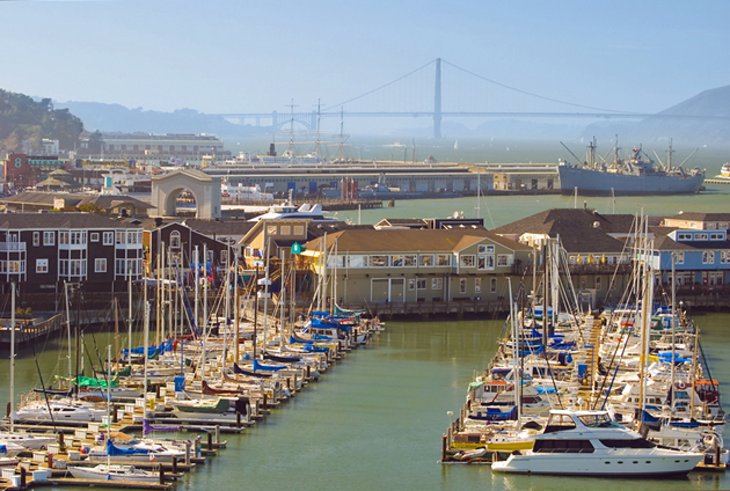
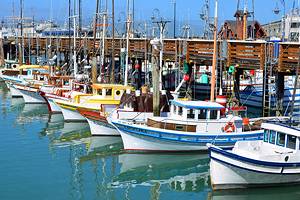
Locals call it a tourist trap, but visitors can't seem to resist. Fisherman's Wharf ranks as one of San Francisco's most popular tourist spots. The picturesque waterfront scenery and old-fashioned Italian fishing boats (feluccas), not to mention the fresh-caught Dungeness crab, make quite an impression!
Originally the "Little Italy" district of San Francisco, Fisherman's Wharf is known for its shops, restaurants, and spectacular setting. Italian immigrants began to arrive in San Francisco in the 1860s and brought the waterfront to life with seafood commerce.
Some of the best seafood is served in the bay-view dining room of Scoma's restaurant. It's a great place for a gourmet dining experience. Or you could sample the local specialty of seafood stew at Cioppino's Restaurant just steps away from the waterfront.
Pier 39 is a hub of activity at Fisherman's Wharf. Be sure to go for a stroll here and check out the dozens of boutiques and eateries. The shops are very touristy (T-shirts, souvenirs, pretzels, chocolate-chip cookies), but the seafood restaurants give you a true taste of the city. You can also find authentic local sourdough bread at Boudin Bakery.
Tourists are not the only crowds you'll encounter at Pier 39. Local sea lions love this waterfront spot and are often found lounging on the Pier 39 docks. There's a viewing area where you can check them out. It's easy to find. You'll hear the sea lions barking from quite a distance!
From Pier 39, you can take a sightseeing cruise for spectacular views of the San Francisco Bay. You might also want to organize a fishing charter boat trip or hop on a whale-watching tour.
Some of the main attractions of Fisherman's Wharf are Madame Tussauds Wax Museum, the Musée Mécanique, Ripley's Believe it or Not!, and Ghirardelli Square. Restored 19th- and 20th-century ships line the waterfront at the Hyde Street Pier, which is now the San Francisco Maritime National Historical Park.
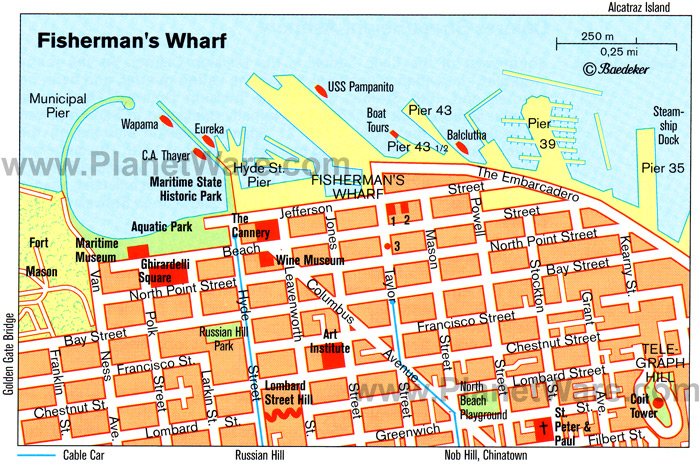
- Fisherman's Wharf
- Pier 39
- Ghirardelli Square
- The Cannery
- Fort Mason
- National Maritme Museum
- Maritime State Historic Park
- USS Pampanito
- Art Institute
- Telegraph Hill
- Coit Memorial Tower
- St Peters and Paul
Ride the Cable Cars
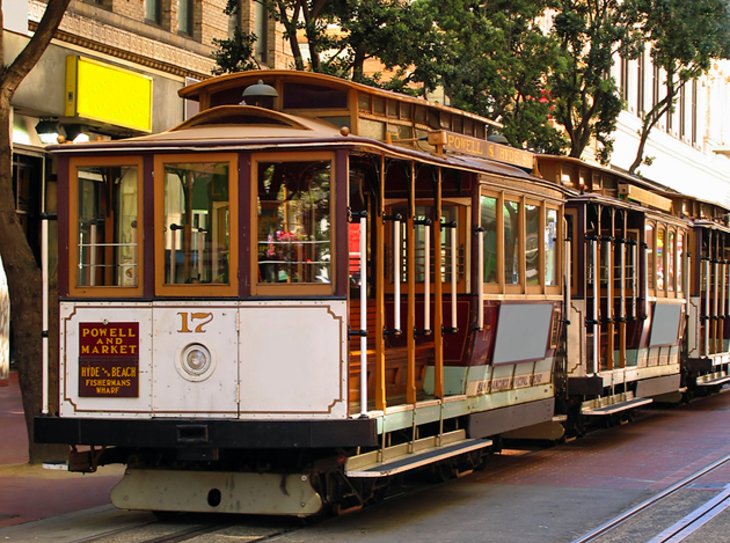
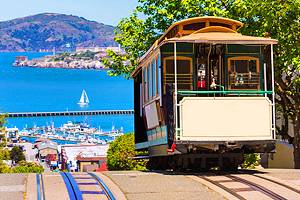
Cable cars were introduced in 1873 to spare the horses from the city's grueling hills. Today, the few remaining cable cars are mainly a tourist attraction rather than a mode of transportation for local residents. Since 1964, these tram-like vehicles have had the unique distinction of being the only public transport system to be declared a National Historic Landmark.
Riding a cable car is an unforgettable tourist experience in San Francisco. It's an exhilarating way to take in the scenery. If you're standing on the open-air deck of a cable car, you'll feel the wind on your face. Anywhere you sit on a cable car, the noise of the brakes will surprise you.
Three sets of brakes are required to stop a cable car: A red lever operates the main brakes, a foot pedal controls the front brakes, and a really loud crank puts the rear brakes in action.
The Powell-Mason and Powell-Hyde are the most scenic routes. These cable car lines will get you to tourist attractions such as Fisherman's Wharf, Ghirardelli Square, the Ferry Building, Nob Hill, and Lombard Street. The California line runs through the Financial District, Chinatown, and Nob Hill.
You can wait for a Powell-Mason or Powell-Hyde cable car at the cable car turntable (departure point), either at Powell & Market Street near Union Square or on Hyde Street near Aquatic Park, Ghirardelli Square, and Fisherman's Wharf. You can catch the California cable car at the Market & Drumm turntable in the Financial District.
Alternatively, you can hop on a cable car at any of the stops. Tickets can be purchased onboard the cable car.
If you are planning on more than a couple of rides or are going to be sightseeing for a few days, consider buying a pass.
Author's Tip: The Powell & Market and California Street cable car turntables (departure points) are in downtown San Francisco, in areas that could be described as gritty. You should be aware of your surroundings and watch your wallet/purse while in these areas.
You may want to avoid taking public transportation if you are going to the Powell & Market turntable. Some consider the Powell Street BART station to be San Francisco's worst example of a station (in a close tie with the Civic Center station). The Embarcadero BART station, near the Market & Drumm turntable, is cleaner and less gritty.
Official site: http://www.sfcablecar.com/
Golden Gate Park
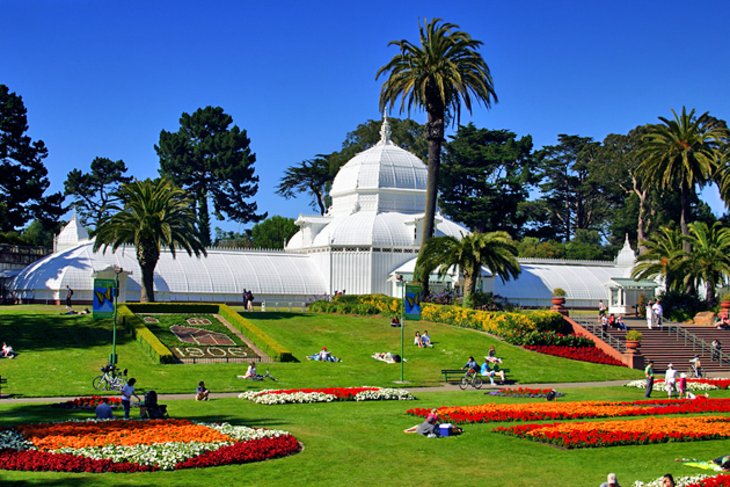
Golden Gate Park, home to gardens and museums, is a fabulous green space in the heart of San Francisco. Before development began in 1871, this was an area of arid dunes.
Today, the park has a network of walking trails and cycling paths, more than 5,000 different kinds of plants and dozens of species of trees, several lakes, bridle paths, and a buffalo paddock.
The main attractions include the de Young Fine Arts Museum, the California Academy of Sciences which houses a planetarium, rainforest, and the Steinhart Aquarium, the Japanese Tea Garden, and the San Francisco Botanical Garden.
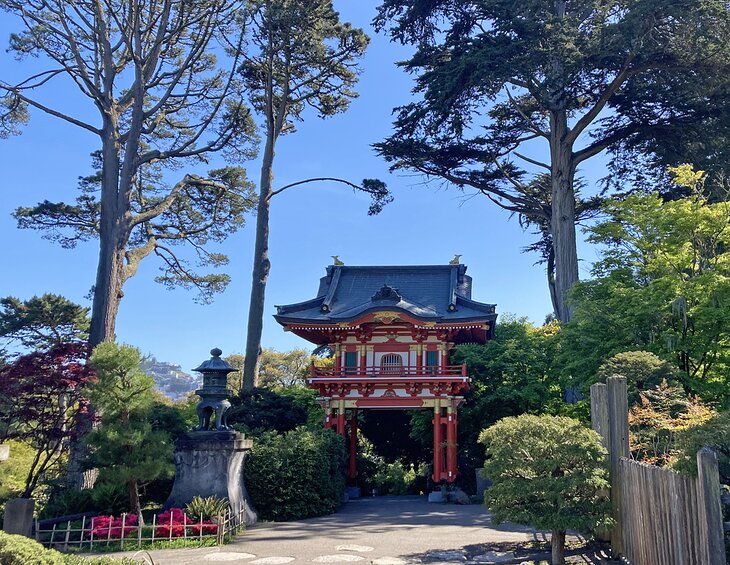
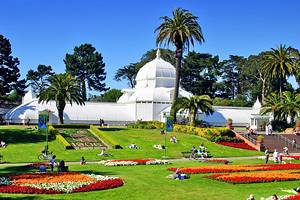
Other favorite spots include Stow Lake where you can enjoy boating and picnics, the Conservatory of Flowers which dates to the Victorian era, and the Koret Children's Quarter which has an old-fashioned Herschell-Spillman carousel.
You could easily spend a couple of hours at Golden Gate Park or visit several times over a couple of days. The park is too large to cover it all on foot. If you want to see all of the highlights of Golden Gate Park, you will need a car or a bicycle to get around.
Bike rentals are available, and this can be a good way to explore the park, rather than trying to do everything on foot. Parkwide Bike Rentals offers bicycle rentals at two locations in Golden Gate Park (near the Music Concourse and at the corner of Stanyan & Haight streets); the bicycles are rented out for a full day of use. The company also leads guided bike tours.
Chinatown
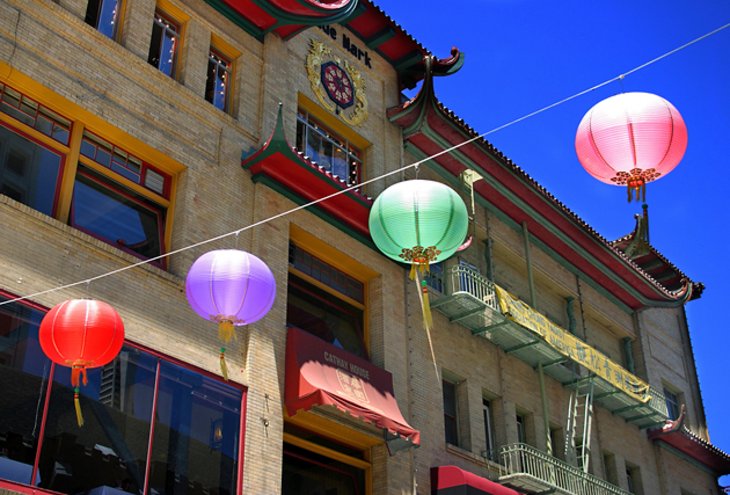
You may have been to Chinatown in other cities, but San Francisco's Chinatown is a whole other realm. It is both the largest and oldest Chinatown in North America. Almost completely destroyed in the 1906 earthquake, Chinatown was rebuilt entirely in the Chinese style and was soon even more attractive than before the disaster.
Chinatown gives you a glimpse of Chinese immigrant culture in San Francisco, an important part of the local heritage. In this compact area (San Francisco's most densely populated neighborhood), you'll find traditional green tile-roofed buildings filled with small businesses, restaurants, dim sum places, houses of worship, herbal shops, tea houses, and boutiques that sell jade jewels, antiques, and souvenirs.
For delicious and authentic Chinese cuisine, try the award-winning Z & Y Restaurant (655 Jackson Street). This Michelin Bib Gourmand-rated restaurant has served two Chinese presidents and several Foreign Ministers as well as other distinguished guests (such as President Obama).
If you are traveling through San Francisco during an important Chinese holiday or event, you can expect to see an elaborate celebration. Chinese New Year celebrations are often considered the best in North America. The main street in Chinatown for tourists is Grant Avenue, with the Chinatown Gateway at Grant Avenue and Bush Street.
San Francisco City Guides offers guided walking tours of Chinatown led by knowledgeable locals, free of charge (donations recommended). The Chinatown tour takes you beyond the main street into the neighborhood's hidden alleyways, to visit a Taoist temple, a fortune cookie factory, and a park where you'll see Chinatown residents practicing tai chi and playing chess outside.
If you don't mind a little exercise, you can do your own walking tour beginning in Chinatown with the help of our San Francisco Walking Tour.
Legion of Honor Fine Arts Museum of San Francisco
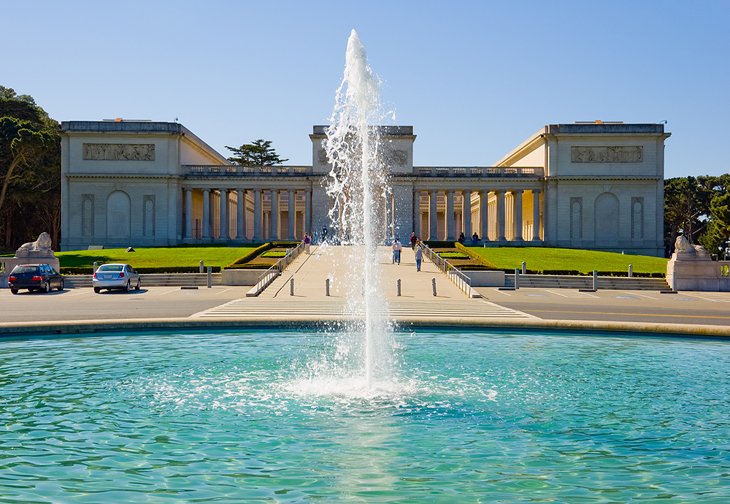
Discover an exquisite fine arts collection, displayed in a beautiful location: a dramatic Neoclassical building surrounded by a woodsy parkland near the ocean. Just outside the museum, you'll find a walking path with perfect outlooks onto the Golden Gate Bridge.
For a scenic hike, continue on the walking path until reaching the Land's End Trail. This winding cliffside trail in a wild, rugged terrain offers sweeping Pacific Ocean views.
The Legion of Honor was the gift of the socialite, philanthropist, and patron of the arts Alma de Bretteville Spreckels. Because of her love for all things Parisian, the museum was designed as a replica of the Palais de la Légion d'Honneur in Paris.
This museum is one of the top cultural attractions in San Francisco. The Legion of Honor's permanent collection includes European decorative arts, sculptures, and paintings, along with antiquities from the Mediterranean and Near East. Admission to the Legion of Honor Fine Arts Museum also gives you same-day admission to the de Young Fine Arts Museum.
Palace of Fine Arts
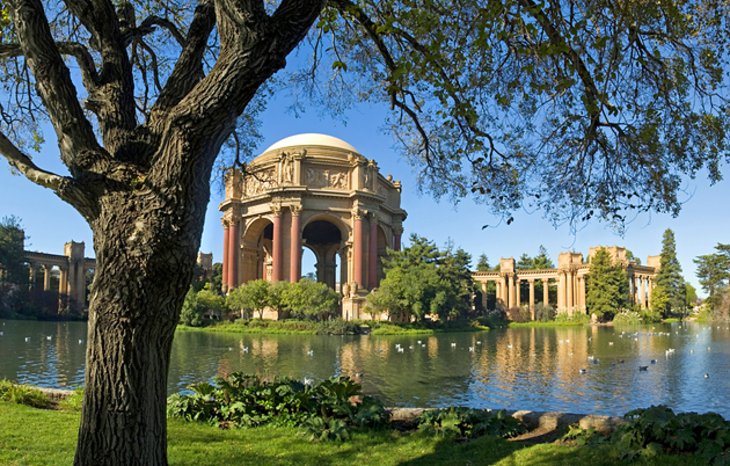
The Palace of Fine Arts in San Francisco is the last remaining structure from the 1915 Panama Pacific Exposition. Listed on the National Register of Historic Places, this Neoclassical building is beautifully situated on a lagoon that reflects the mirror image on the surface of the calm water, while ducks and geese drift by.
The palace has been restored, along with the grounds, and today hosts art exhibitions and cultural events. The Palace of Fine Arts Theatre primarily presents comedy performances.
Address: 3301 Lyon Street, San Francisco
California Academy of Sciences
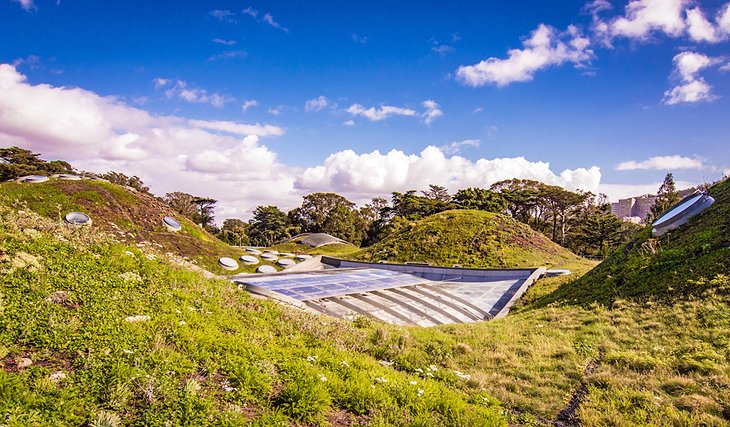
The California Academy of Sciences, in Golden Gate Park, is an architectural marvel as well as a multifaceted museum. The exhibition space is voluminous and bright, thanks to walls that are largely made of glass allowing for natural light.
This state-of-the-art building features an eco-friendly design. The 2.5-acre Living Roof is covered with native plants, grassy fields, and seven "rolling hills" to match the natural surroundings. The roof also has solar panels to generate electricity, and the soil acts as natural insulation.
Inside is an incredible natural history museum, planetarium, aquarium, rainforest, gift shop, café, and restaurant. Both the café and restaurant offer plant-based options and California cuisine specialties prepared from local ingredients.
The Steinhart Aquarium includes some 60,000 live specimens and a 25-foot-deep coral reef. You can descend in a glass elevator to arrive at the aquarium. When you exit the elevator, look up through an acrylic tunnel to see fish swimming overhead in the freshwater mangrove forest.
The four-story-high Osher Rainforest houses tropical flora and fauna (birds, reptiles, amphibians, and insects) within a temperature-regulated environment, beneath an enormous glass dome. The temperature is kept at 82 to 85 degrees Fahrenheit. With the humidity, heat, and butterflies fluttering about, you might think you're walking through a real tropical rainforest. Look out for the poison-dart frogs and golden-silk orb-weaver spiders!
The Kimball Natural History Museum has skeletons of a T. rex and a blue whale, along with an exhibit of brilliant gems and minerals and exhibits about earthquakes, coastal fog, local marine mammals, and ancient redwood forests.
Little kids love the Natural History Museum's Tusher African Hall because it houses a colony of African penguins, part of a program to protect endangered species. It's fun to watch these small penguins waddle and splash about in their glass-enclosed area (which replicates their natural habitat). From time to time, the penguins jump or slide into a refreshing pool of water.
Address: 55 Music Concourse Drive, Golden Gate Park, San Francisco
San Francisco Museum of Modern Art
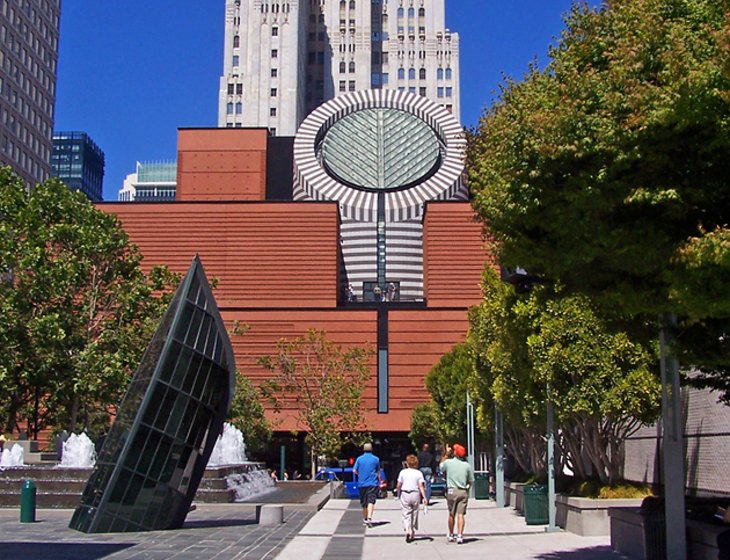
If you love modern art, be sure to visit the San Francisco Museum of Modern Art (SFMOMA) in the SoMa District. SoMa is in downtown San Francisco next to Union Square and the Financial District.
The museum focuses on 20th-century art, in all forms, and the innovative and interesting exhibits are constantly changing. You will have plenty to admire during your visit, as the museum displays thousands of artworks within 170,000 square feet of exhibition space spread across 10 floors.
You can visit one section of the museum free of charge. This area includes 45,000 square feet of space. Here you'll find a Diego Riviera mural and an exhibit of paintings and sculptures dating from the early 20th century to the present. Some of the museum's highlights (such as Femme au chapeau by Henri Matisse, Frieda and Diego Rivera by Frida Kahlo, Lake George by Georgia O'Keeffe, and Mark Rothko's No. 14) are in the free-of-charge section. The rest of the museum requires a ticket.
The museum is housed in a modern, architecturally stunning building that was extensively renovated and expanded in 2016. The light and airy building is a pleasure to wander about.
Should you work up an appetite, you can stop for a bite to eat. A lunch menu is available at the museum's casual restaurant and at Café 5 in the museum's Sculpture Garden which features fabulous city views. There's also a coffee shop that serves coffee, tea, pastries, and desserts.
About the neighborhood: SoMa is a happening urban area but unfortunately has recently experienced some of San Francisco's urban issues. Still, you should visit the museum and the attractions near the SFMOMA: the Contemporary Jewish Museum, the Yerba Buena Gardens, the Metreon shopping center (which has a movie theater, restaurants, and casual eateries), and the Children's Creativity Museum, but there's no need to explore SoMa much further.
Address: 151 Third Street, San Francisco
de Young Fine Arts Museum of San Francisco
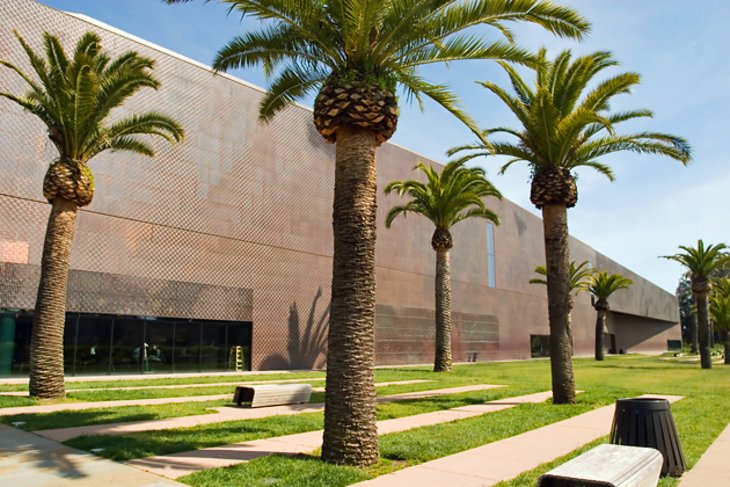
While visiting Golden Gate Park, set aside some time to explore the de Young. This fine arts museum is one of the top cultural attractions in San Francisco. The collection covers a wide variety of exhibits from Mayan antiquities to 19th-century Hudson River landscape paintings.
While art and period interiors from North America feature strongly in the collection, many other exhibits from Egypt, Greece, Rome, and the Near East are of note. British art and folk art from Africa, America, and the Pacific Islands, are also well represented.
Admission to the de Young Fine Arts Museum includes free same-day admission to the Legion of Honor.
Address: 50 Hagiwara Tea Garden Drive, Golden Gate Park, San Francisco
Twin Peaks
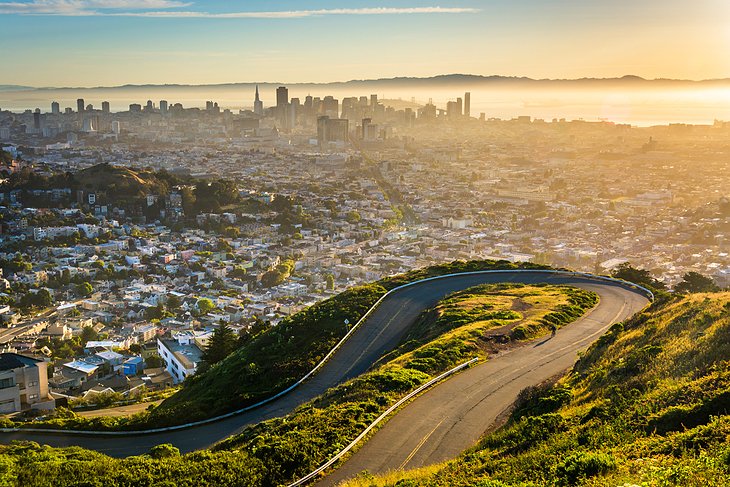
These two uninhabited hills, more than 900 feet high, have one of the finest views out over the city and bay. Access is easy - you can drive to the north peak parking area, park your car, and soak up the amazing vista.
If you're outdoorsy, take a hike along trails over the north and south peaks. This is some of the best hiking in San Francisco. While up here, you may be forgiven for thinking these are the highest of San Francisco's 43 hills; however, that lofty distinction belongs to Mount Davidson, which is 33 feet higher.
The Twin Peaks are the only hills in San Francisco not to have been built over and remain in their original state. The Spaniards called them "Los pechos de la Chola" or the Breasts of the Indian Maiden. Even on warm days, strong, cool breezes blow in from the Pacific, especially in the late afternoon.
Asian Art Museum
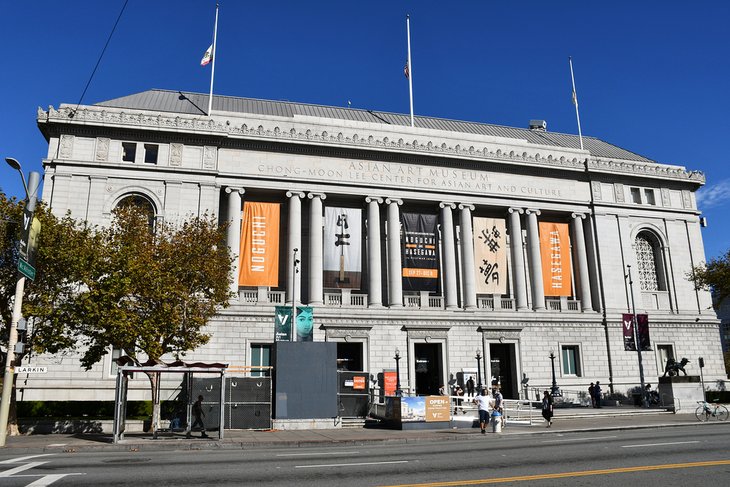
The Asian Art Museum is unquestionably one of the most important museums in San Francisco. The museum opened in 1966, with the basis of the collection coming from art collector Avery Brundage.
Brundage built up a private collection, which in 1959 he offered to the city of San Francisco "to bridge the gap between East and West." The museum building was constructed, and on his death in 1975 at the age of 88, the museum also received the rest of his collection of works of art in the form of a legacy.
Building on this, the museum has continued to amass various pieces and now contains an extensive collection of sculptures, paintings, bronzes, ceramics, jade carvings, and architectural fragments from Japan, Korea, China, India, Iran, and other Asian cultures. The works span more than 6,000 years.
Author's Tip: Try to avoid taking public transportation to the Civic Center BART station or walking around the Civic Center area, as this is a rough neighborhood of San Francisco.
Address: 200 Larkin Street, San Francisco, California
Exploratorium
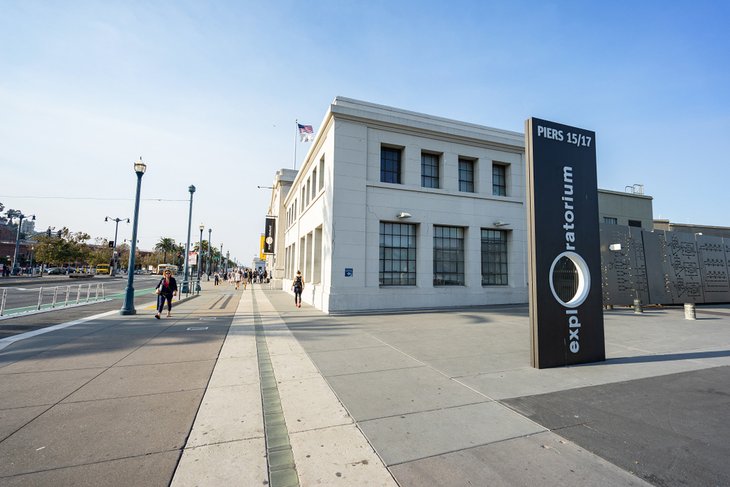
If you are traveling with children or you are young at heart, you must visit the Exploratorium. This incredibly popular science museum is one of the most popular things to do with kids in San Francisco. It displays fascinating interactive science exhibits. Kids enjoy the hands-on learning experiences, which educate and entertain at the same time.
Children tend to rate this museum very highly because the exhibits are so much fun to check out. Adults also rave about the Exploratorium whether or not they have kids.
For a top-notch dining experience, try the museum's Seaglass Restaurant which serves seasonal cuisine prepared from local organic ingredients. The sleek modern dining room looks out onto the San Francisco Bay, the Bay Bridge, and Treasure Island. You may also enjoy your meal outside on the bay-view patio.
Address: Pier 15, San Francisco, California
Golden Gate National Recreation Area
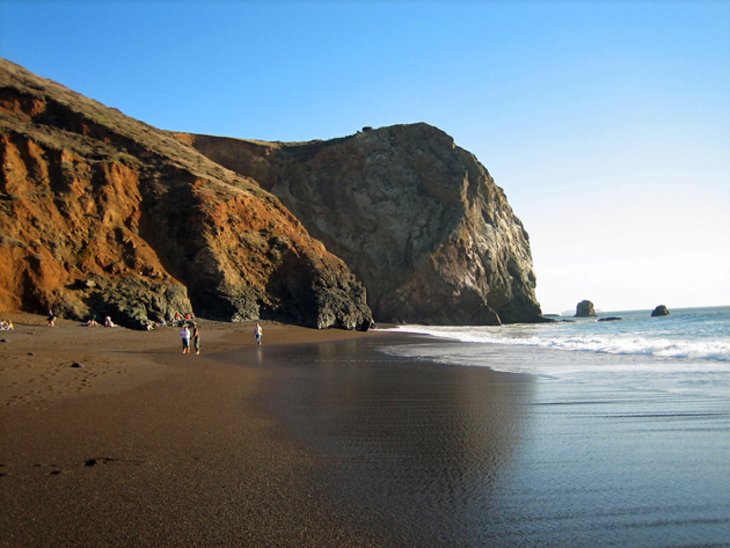
Golden Gate National Recreation Area, not to be confused with Golden Gate Park, is a huge natural area located across the Golden Gate Bridge from downtown San Francisco. This 600-square-mile park in Marin County is a UNESCO-designated Biosphere Reserve and a recreational area. It is also simply a beautiful place to enjoy nature and relax.
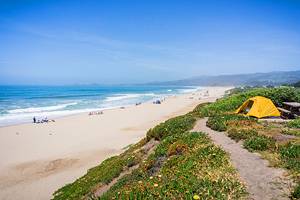
The park has walking trails, campgrounds, picnic areas, and beautiful beach areas. Some of the beaches have fabulous views of the Golden Gate Bridge.
The park is home to the historic Fort Baker, a former US Army post from the early 20th century.
Oracle Park
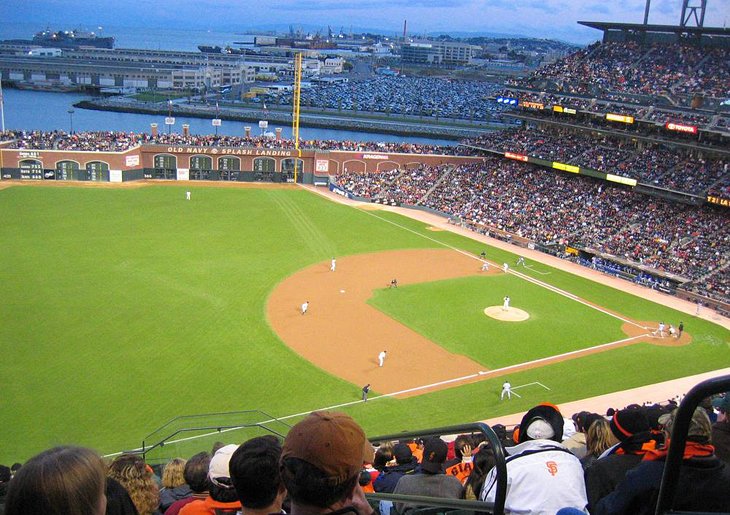
Home of the San Francisco Giants, Oracle Park is a fun place to take in a baseball game while visiting the city. If you want to gaze out over the ballpark to the sublime view of the ocean, buy tickets along the 1st base or 3rd baselines or behind home plate.
If you don't have time to see a game, consider taking a 90-minute Oracle Park Ballpark Tour for a behind-the-scenes look at places off-limits to most people. You can step onto the field, sit in the dugout, check out the clubhouse, and learn about the historic moments that have taken place at the ballpark.
Address: 24 Willie Mays Plaza, San Francisco
Day Trip to Napa Valley
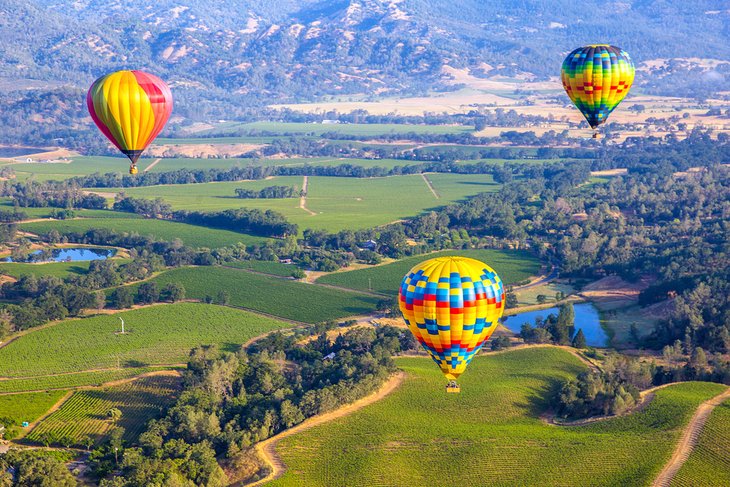
About a 1.5-hour drive from San Francisco are two gorgeous rural destinations: Napa Valley and Sonoma Valley. These are the two best-known and largest grape-growing areas in California. Many people day trip to this area to enjoy the scenery and stop in at some of the sites along the way.
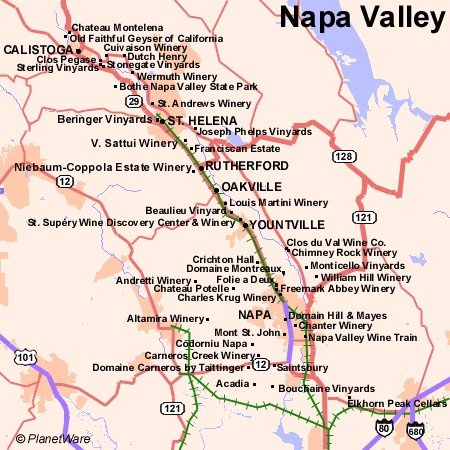
Top tourist attractions include the quaint town of Yountville, which has many excellent French restaurants, the historic town of Sonoma, and the spa destination of Calistoga where you can see Old Faithful Geyser. In Sonoma, be sure to visit the Sonoma State Historic Park which is partly in the downtown near the Plaza and also includes the historic Mission that was founded in 1823.
Many people visit Napa or Sonoma as a day trip or for a relaxing weekend getaway. You'll find many lovely resorts in the Napa Valley.
Both Napa Valley and Sonoma Valley are renowned for gastronomy. You'll find fine dining establishments as well as casual gourmet restaurants. Napa Valley is home to the Culinary Institute of America where you can take cooking classes and the famous three Michelin-starred restaurant The French Laundry in Yountville.
Hike and Picnic on Angel Island State Park
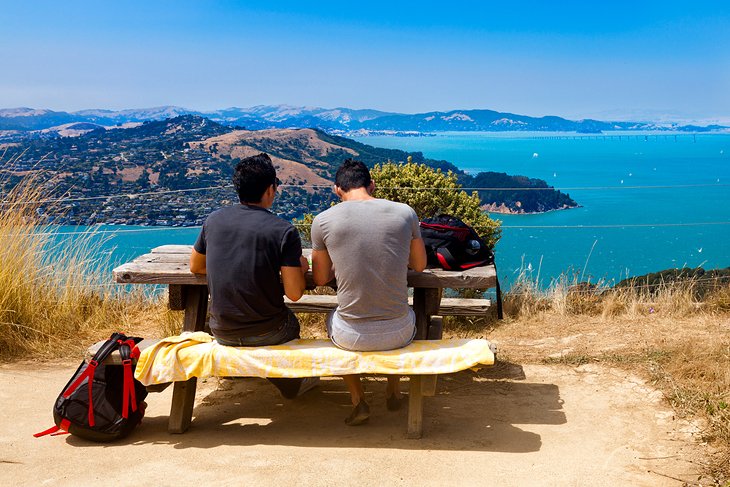
If you are looking for a non-touristy thing to do in San Francisco, take a 25-minute ferry ride from San Francisco to Angel Island State Park for a refreshing escape to nature. The largest natural island in the San Francisco Bay, Angel Island affords panoramic views of the surrounding bay.
You can enjoy the lovely scenery while hiking or biking on the well-groomed trails. It's possible to hike up to the island's summit, Mount Caroline Livermore, at 788 feet, where the views are sensational.
Relaxation is another reason to visit. The island has picnic areas, campsites, and several sandy beaches ideal for taking a walk or sunbathing. If you enjoy guided sightseeing tours, take a tram tour to see the island from an open-air vehicle. Tram tours include audio guides that share interesting commentary about the island.
Angel Island served as an Immigration Station from 1910 until 1940. You can visit the Angel Island Immigration Museum to learn more about the island's history and to see the barracks where immigrants were detained for weeks or months during an interrogation process.
Well designed for visitors, the island has day-use boat docks, bicycle rentals, and a café that is open daily during the high season and from Wednesday through Sunday during the low season. The café sells snacks, sandwiches, salads, and beverages.
To reach Angel Island, you can take the ferry from San Francisco Ferry Terminal. The Golden Gate Ferry company provides service daily year-round. Keep in mind that it can be expensive to park in this area of San Francisco, so it's best to get a taxi or ride to the San Francisco Ferry Terminal.
Alternatively, you can get to Angel Island from Marin County (north of San Francisco). The Angel Island Tiburon Ferry company runs ferries from Tiburon to Angel Island daily from early March through October; service is limited from November through February.
If you are traveling with a car, you could combine a visit to Angel Island with a trip across the Golden Gate Bridge and a stop in Tiburon. This takes longer if you are based in San Francisco, but it's an incredibly scenic drive and you avoid the hassle and the crowds taking the ferry from the San Francisco Ferry Terminal.
For a full-day outing, add Tiburon to your itinerary. This bayfront town has a charming downtown and an idyllic seaside setting. It's definitely worth visiting, especially if you want to have a meal at a waterfront restaurant with views. The vistas of the Golden Gate Bridge and San Francisco across the bay are spectacular.
Ghirardelli Square
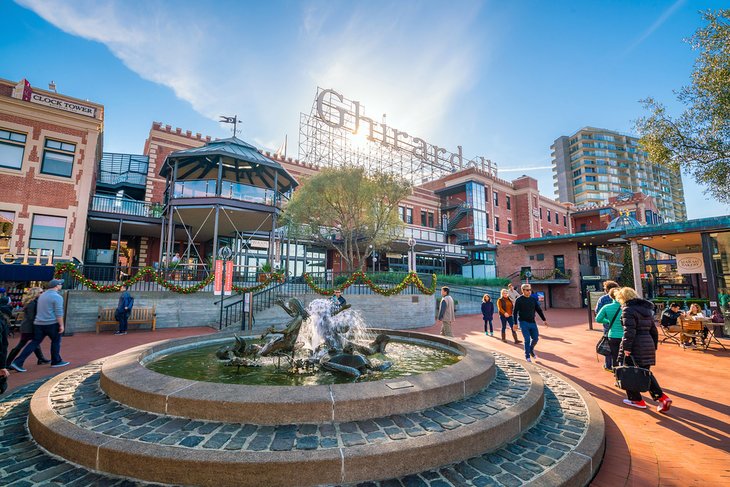
When visiting the Fisherman's Wharf area, you must visit Ghirardelli Square. Overlooking the bay, this quaint shopping and dining complex occupies historic brick buildings: a former chocolate factory, a woolen mill, and a mustard company. The square was inaugurated in 1964 and is listed on the National Historic Register.
Today, Ghirardelli Square appeals to chocolate lovers and anyone with a sweet tooth. The main tourist attraction of the square is the Ghirardelli Ice Cream and Chocolate Shop. Here, you can indulge in a decadent hot fudge sundae or shop for Ghirardelli chocolate bars and candies.
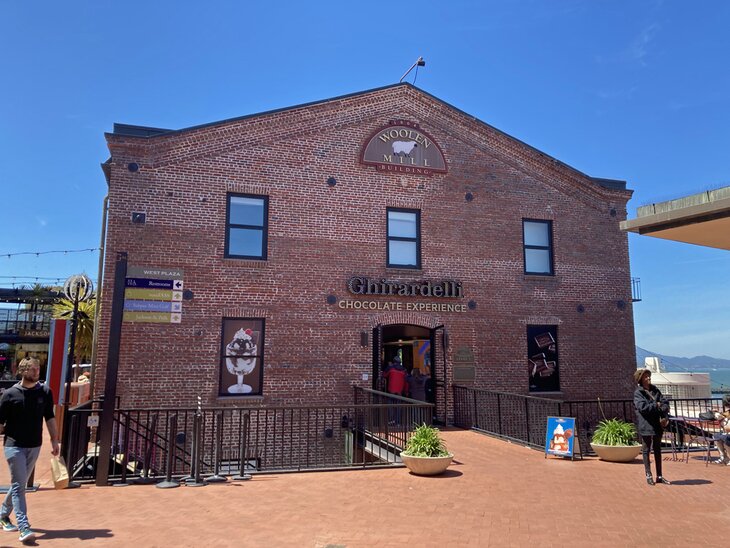
Besides chocolate and ice cream, Ghirardelli Square offers an inviting ambiance, with its fountains and flowers, and splendid bay views. Take a stroll around the square as you browse the boutiques. On sunny days, you'll want to spend some time sitting on the outdoor terraces.
The dining options at Ghirardelli Square include an excellent dim sum restaurant, Palette Tea House (which requires advanced reservations), and McCormick & Kuleto's, an old-timey restaurant that specializes in seafood and steaks. If you're looking for stunning bay views, McCormick & Kuleto's does not disappoint. The dining room has floor-to-ceiling windows that look out to the Golden Gate Bridge and Alcatraz Island.
Steps away from Ghirardelli Square near the Hyde Street cable car turntable, you will find Aquatic Park Cove where there is a small beach. Aquatic Parc Cove is also home to the San Francisco Maritime National Historical Park.
High Tea at a Historic Hotel
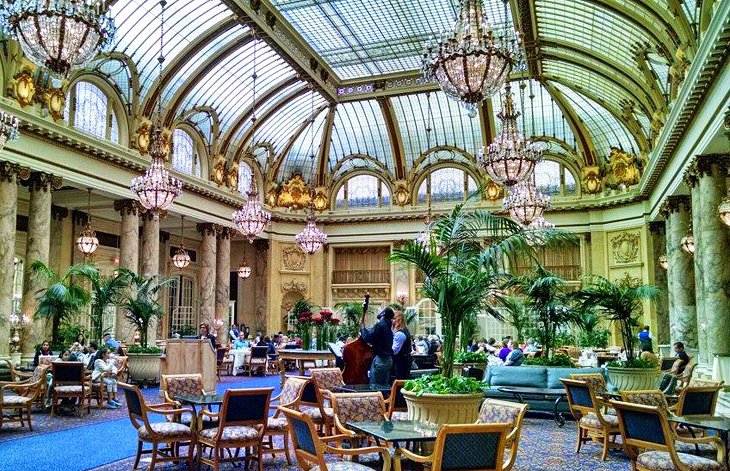
Enjoy afternoon tea at one of San Francisco's landmark hotels, and you'll experience the refinement of another era.
Opened in 1907, the Fairmont San Francisco on Nob Hill delights guests with its opulent lobby and elegant ambiance. The Fairmont offers afternoon tea service on Saturday afternoons, in the lovely Neoclassical Laurel Court dining room. You will be treated to a choice of organic tea, house-made scones with clotted cream, gourmet finger sandwiches, macarons, and other desserts.
The Palace Hotel, in the downtown area near Market Street, is famous for its fancy afternoon tea service. This Gilded Age landmark has a magnificent glass-domed reception area, the Garden Court, where you may enjoy the Signature Tea on Saturday afternoons. It's a sophisticated affair, complete with fine china, sterling silver, and haute cuisine afternoon tea specialties.
Walt Disney Family Museum
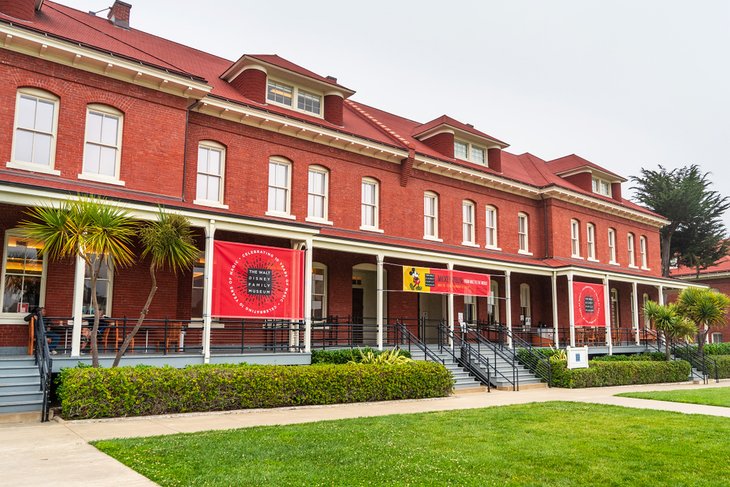
If you love the original Disney cartoons or you're traveling with kids who love Disney stories, then make a beeline for the Walt Disney Family Museum in San Francisco. This unique museum is dedicated to chronicling the life and works of Walt Disney.
Exhibits showcase drawings, cartoons, and films created by Walt Disney and describe his worldwide business empire. Also on display are the numerous awards he won over his career, along with priceless sketches of Mickey Mouse.
The Walt Disney Family Museum is located in the Presidio National Park, which has picnic areas, a children's playground, beaches, hiking trails, and scenic overlooks including views of the Golden Gate Bridge.
Muir Woods National Monument
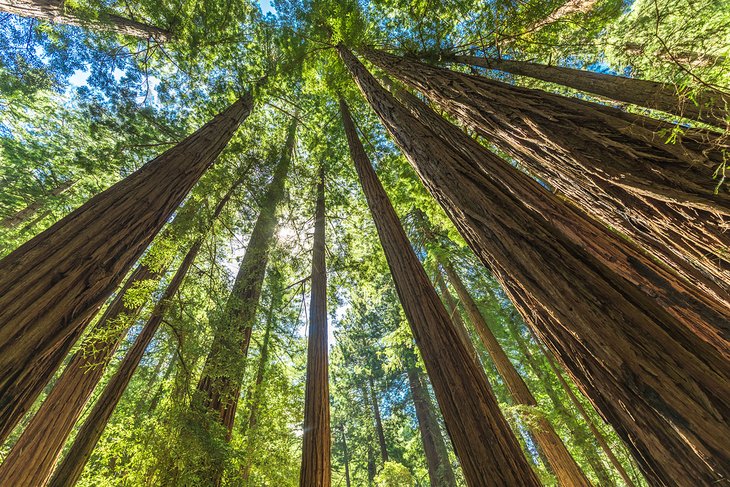
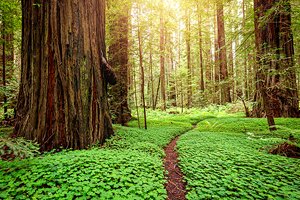
Take a 45-minute drive north of San Francisco to marvel over the magnificent ancient redwood forest at Muir Woods National Monument. At this serene and shady nature site, meandering paths wind their way alongside a babbling creek and beneath enormous old-growth redwood trees, some of which are nearly 260 feet high.
Until you visit, it's hard to appreciate the incredible sight of these stoic sentinels that have been living quietly in the forest for almost a thousand years.
To get a deeper understanding and to make the most of your visit, check out the Visitor Center, where you'll find fascinating exhibits and displays along with park staff who are happy to answer any questions you may have.
Note that to visit the park, you will need to reserve your parking space or shuttle tickets in advance. Plan ahead to secure a spot in this popular tourist attraction.
Coit Tower
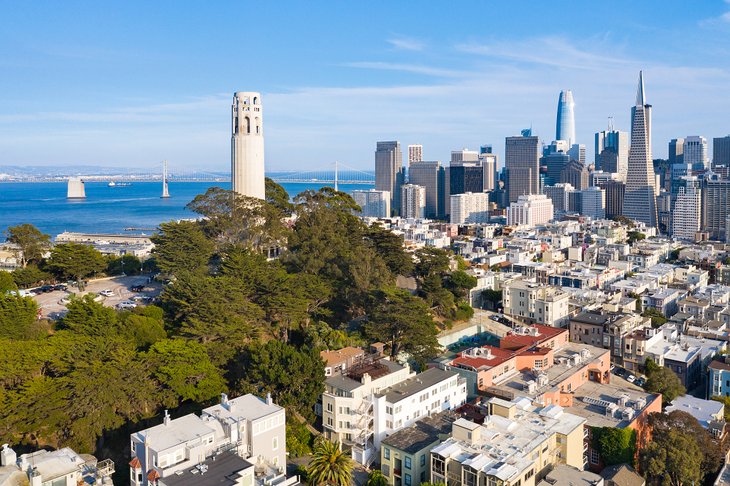
As you look up Telegraph Hill in San Francisco, you may notice the cylindrical tower that looks a little like the Leaning Tower of Pisa (without the lean). This is the Coit Tower. Completed in 1933, the tower stands 210 feet high and is one of the best places for panoramic views of the city.
From the top of the tower, the sights that lie before you include Lombard Street, Pier 39, the downtown skyscrapers, the Golden Gate Bridge, and Alcatraz.
Inside the tower are wonderful murals painted in the early 1930s depicting views of daily life during the Depression. The tower is named after its benefactor, Lillie Hitchcock Coit, who was a wealthy and somewhat eccentric lady.
Nestled within charming gardens in the Telegraph Hill neighborhood, Coit Tower is open daily year-round except for a few holidays (Thanksgiving, Christmas, and January 1st). Groups of four or more people may arrange to take a guided tour, for an additional fee, to learn about the murals.
Address: 1 Telegraph Hill Boulevard, San Francisco
San Francisco, CA - Climate Chart
| Average minimum and maximum temperatures for San Francisco, CA in °C | |||||||||||
| J | F | M | A | M | J | J | A | S | O | N | D |
| 14 8 | 16 9 | 17 9 | 18 10 | 18 11 | 20 12 | 20 12 | 21 13 | 22 13 | 21 13 | 18 11 | 15 8 |
| PlanetWare.com | |||||||||||
| Average monthly precipitation totals for San Francisco, CA in mm. | |||||||||||
| 120 | 105 | 86 | 32 | 14 | 3 | 1 | 2 | 7 | 30 | 84 | 81 |
| Average minimum and maximum temperatures for San Francisco, CA in °F | |||||||||||
| J | F | M | A | M | J | J | A | S | O | N | D |
| 58 46 | 61 49 | 62 49 | 65 50 | 65 51 | 68 53 | 68 54 | 69 56 | 71 56 | 70 55 | 64 51 | 59 47 |
| PlanetWare.com | |||||||||||
| Average monthly precipitation totals for San Francisco, CA in inches. | |||||||||||
| 4.7 | 4.2 | 3.4 | 1.3 | 0.5 | 0.1 | 0 | 0.1 | 0.3 | 1.2 | 3.3 | 3.2 |
More Related Articles on PlanetWare.com
More on San Francisco: Plan out a free walking tour beginning in Chinatown with the help of our San Francisco Walking Tour. For families looking for activities to entertain children, see our article on San Francisco with Kids: Things to Do. If you're interested in some healthy dining options, have a read through our list of the best vegan and vegetarian restaurants in San Francisco.
Exploring Northern California: San Francisco is the gateway to some of California's most amazing sites. In three or four hours you can be exploring the sites of Yosemite National Park or gazing out at Lake Tahoe. If you don't want to go that far, have a look at our day trips from San Francisco to see where you can get to in even less time.