Tourist Attractions in Bangkok
Bangkok is everything you'd expect from the capital of Thailand: it's noisy, crowded, colorful, exciting, infuriating, and simply magical. Bangkok is a microcosm of what makes Thailand so special. Centuries-old temples and ancient sites sit side by side with 21st-century shopping malls that have a kitschy, yet high-end ambience. Bangkok can be overwhelming, but it's also a fascinating city that represents Southeast Asia's tension between the developed and developing worlds.
Bangkok also serves as a gateway to many other parts of Thailand. From here, you can hop a short flight to Phuket, Chiang Mai, Koh Samui, and other popular destinations. You can also board a train or hop on a bus for little money, and visit national treasures such as Ayutthaya, Lopburi, and many other gems around the country.
Discover the best things to do in this bustling city with our list of the top attractions in Bangkok.
Admire the Beauty of the Grand Palace
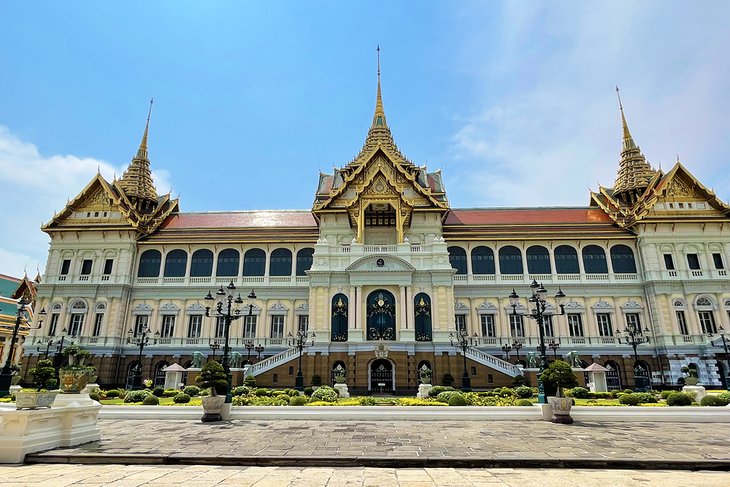
If you only visit one major historical tourist attraction in Bangkok, this should be the one. The royal compound lives up to its name, with spectacular structures that would put the most decadent modern monarchs to shame.
Built in 1782, the grand palace was the royal residence for generations and is still used for important ceremonies and accommodating heads of state. Dress modestly when visiting the Grand Palace, which basically means covering your arms and legs and avoiding any sloppy attire.
Location: Na Phra Lan Road, Phra Borom Maha Ratchawang, Phra Nakhon
Wat Pho
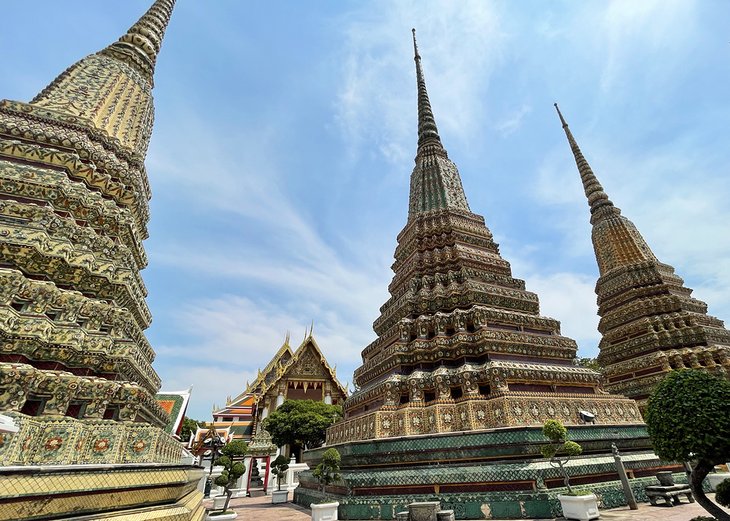
Located immediately south of the Grand Palace precinct, Wat Pho makes an excellent addition to your palace tour, provided your feet are up for more walking.
The temple was built by King Rama I and is the oldest in Bangkok. It has long been considered a place of healing, and was famous centuries ago for its pharmacy and as Thailand's first "university"-both established by King Rama III. You can get a Thai or foot massage at the traditional medical school on the premises, but the prices are significantly higher than what you will find at massage parlors elsewhere in the city.
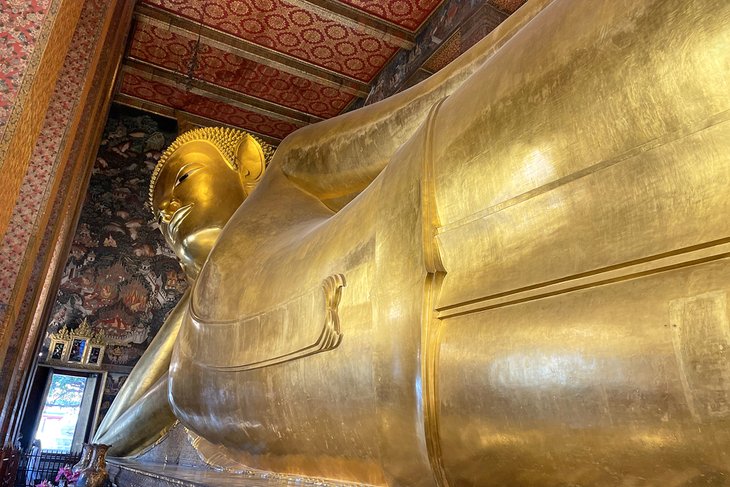
Today Wat Pho is best known for the Temple of the Reclining Buddha, where you'll find a statue so big (45 meters long and 15 meters high), it cannot be viewed in its entirety but only appreciated in sections. The soles of the feet, inlaid with a myriad of precious stones, are particularly beautiful. Look also for the long earlobes signifying noble birth, and the lotus-bud configuration of the hand to symbolize purity and beauty.
Address: 2 Sanamchai Road, Grand Palace Subdistrict, Pranakorn District
Wat Arun
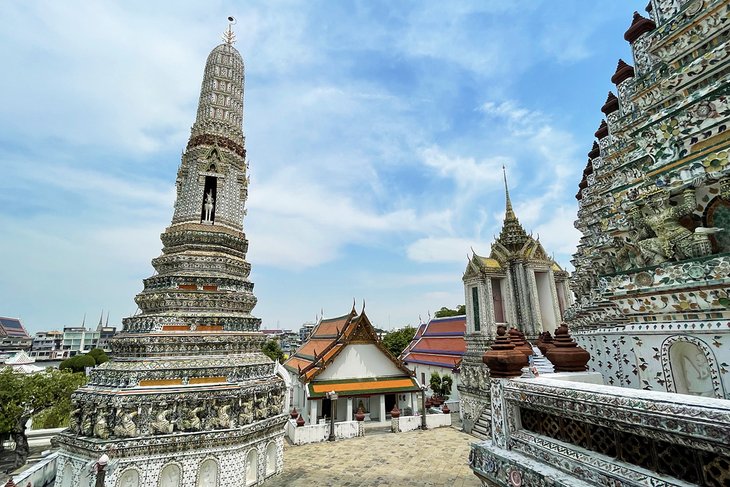
Wat Arun is something of a triumphant complex, dating back to the time of ancient battles between the former Siam and Burma. Having fallen to the Burmese, Ayutthaya was reduced to rubble and ashes, but General Taksin and the remaining survivors vowed to march "until the sun rose again" and to build a temple here. Wat Arun, the Temple of the Dawn, was that temple. It is where the new king later built his royal palace and a private chapel.
If you climb to the top of the prang just before sunset, you will be rewarded with an unforgettable view as the sun sinks over the Chao Praya River. Even if you don't plan on doing any climbing, sunset is really the time to take in this place in all its glory.
Address: Arun Amarin Road, Bangkok
Wat Traimit, Temple of the Golden Buddha
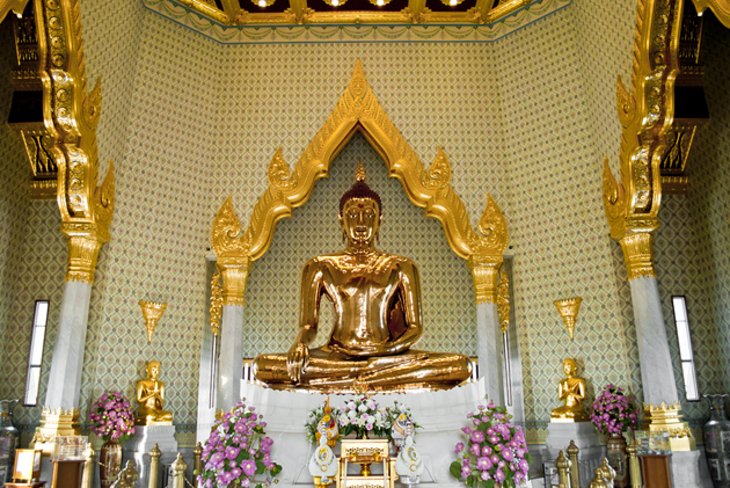
Sheer luck (or lack thereof) makes this attraction special. During the 1950s, the East Asiatic Company purchased the land around the temple.
A condition of the sale was the removal of a plaster statue of Buddha, but the statue proved too heavy for the crane being used. The cable parted and the figure was dropped, being left overnight where it fell. It happened to be in the rainy season, and when next morning some monks walked past, they noticed a glint of gold shining through the plaster. The coating was removed, revealing a 3.5-meter Buddha cast from 5.5 tons of solid gold.
All attempts to trace the origin of this priceless statue have so far failed, but it is assumed to date from the Sukhothai period, when marauding invaders threatened the country and its treasures, and it became common practice to conceal valuable Buddha figures beneath a coating of plaster. No one knows how it came to Bangkok, but here it stands, available for the admiration of visitors from all over the world.
Wat Suthat
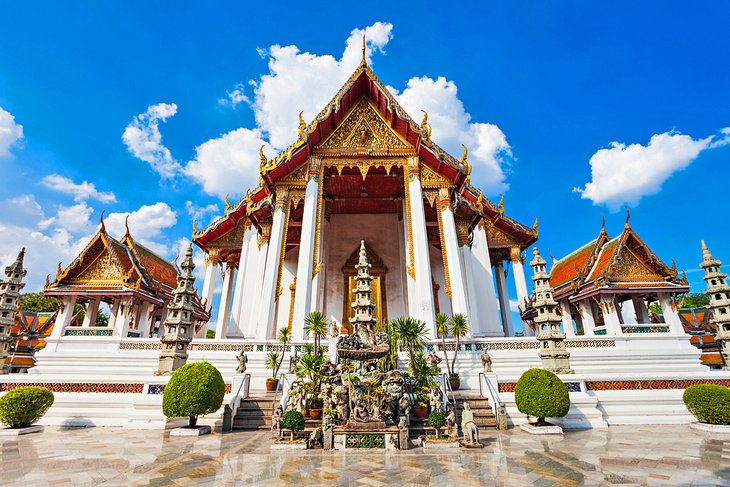
Wat Suthat, adjacent to the Great Swing, is one of the oldest and most beautiful of Bangkok's Buddhist temples. Three kings had a hand in its construction: it was begun soon after the coronation of Rama I (founder of the Chakri dynasty) in 1782, continued by Rama II, and completed 10 years later by Rama III.
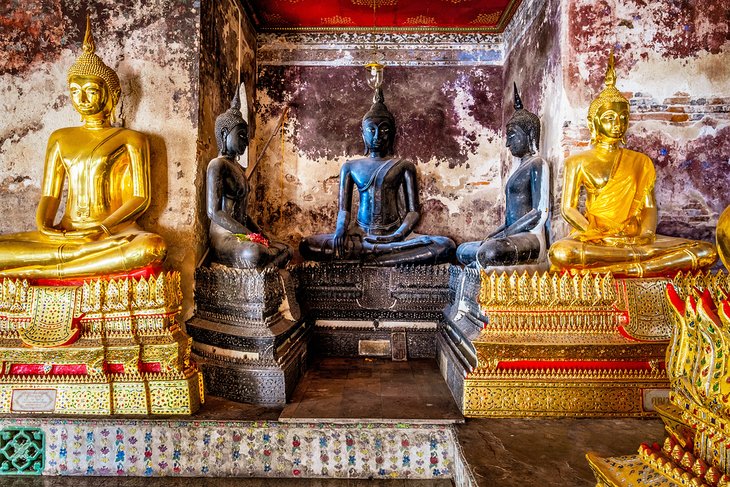
Apart from its delightful architecture, the temple boasts some exceptionally interesting wall paintings. Wat Suthat is less popular than some of the other temple complexes in the city, so you'll enjoy a more peaceful and intimate experience here.
Address: Bamrung Muang Road, Sao Chingcha, Phra Nakhon
Giant Swing
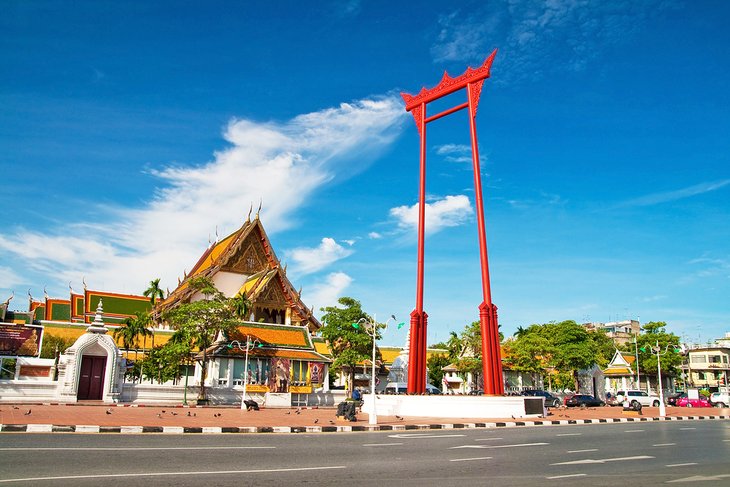
In the center of the busy square in front of Wat Suthat stands one of Bangkok's most eye-catching sights: the 27-meter-high teak frame of the so-called Giant Swing. Built in the 1700s to be used as part of traditional Brahmin (Hinduist) ceremonies, the swing was later damaged by lightning and became just decorative.
This used to be the focus of a religious ceremony held every year in December after the rice harvest. Teams of three took turns to balance on a dangerously narrow board and be swung 25 meters or more off the ground "up to Heaven," at which point they would attempt to catch a bag of silver coins in their teeth. King Rama VII banned the contest in 1932, following a number of fatal accidents.
National Museum & Wang Na Palace
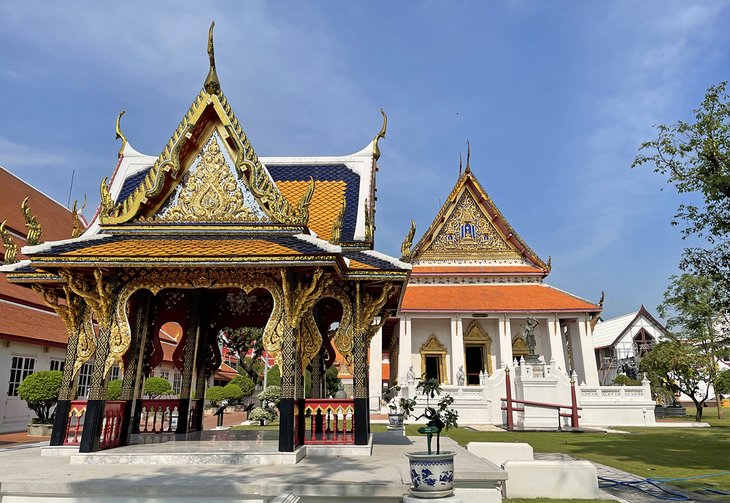
History buffs will want to devote at least half a sightseeing day to the national museum. Until the mid-1970s, this was Thailand's only museum, which explains why its collection is so big and diverse.
Fortunately, just about every exhibit is labeled in Thai and English and guided tours are also offered in English, so you won't miss out on any of the country's fascinating ancient and contemporary history.
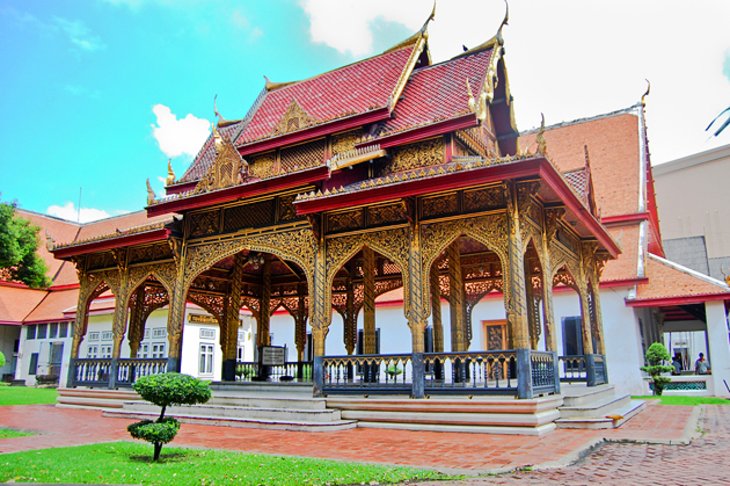
King Rama I's Wang Na Palace, located within the grounds of the museum, remains essentially as it was, and stands as a testament to Thai history. Visitors can see regalia, religious and ceremonial artifacts, ceramics, games, weaponry, musical instruments, and the Viceroy's throne, as well as an impressive collection of Buddha figures arranged according to period.
Address: Na Phra That Road, Bangkok
Stock Up on Authentic Souvenirs at Chatuchak Market
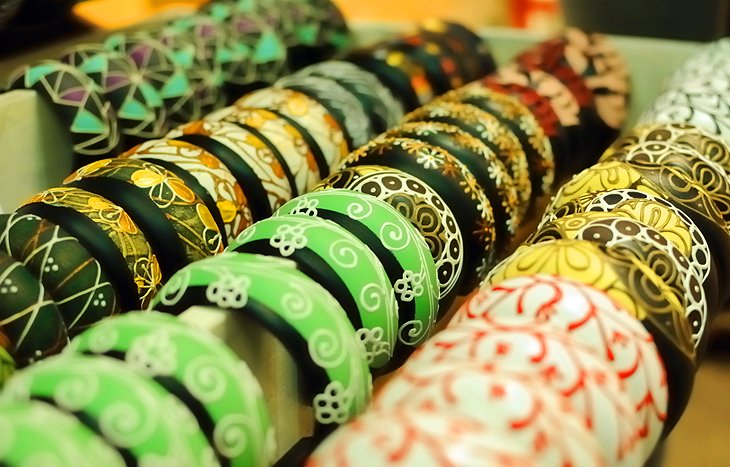
This sprawling semi-outdoor weekend market is the largest in the world and one of the top things to do when visiting Bangkok. Shoppers can find everything from jewelry and religious icons to pet supplies, paper lamps, and delicious street food here. Chatuchak Market is home to over 15,000 stalls offering just about anything you can dream up-even better, any souvenir you might want is probably available here at a much cheaper price than anywhere else in Bangkok.
This is a great place to mingle with locals and immerse yourself in everyday Thai life, so arrive early and clear your schedule for the rest of the day if you want to do this place justice.
The market is adjacent to the Kamphaengpecth Station (MRT), about a five-minute walk from Mochit Skytrain (BTS) Station and Suan Chatuchak (Chatuchak Park) Station (MRT)
Shop by Boat at the Damnoen Saduak Floating Market
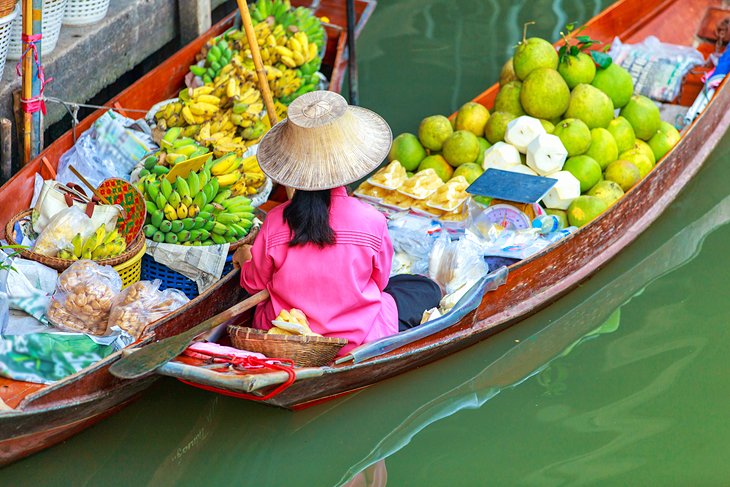
For an even more interesting market experience, you can arrange a tour to Damnoen Saduak, a famous floating market located in Ratchaburi (about 1.5 hours outside Bangkok). The popularity of floating markets once earned Bangkok the nickname "Venice of the East."
Keep in mind that floating markets are now highly touristic enterprises, so don't expect an exclusive morning of shopping by boat – but you will be able to buy fresh and delicious foods and interact with locals in an authentic way.
A popular way to reach the market is to join a tour.
Discover Khao San Road
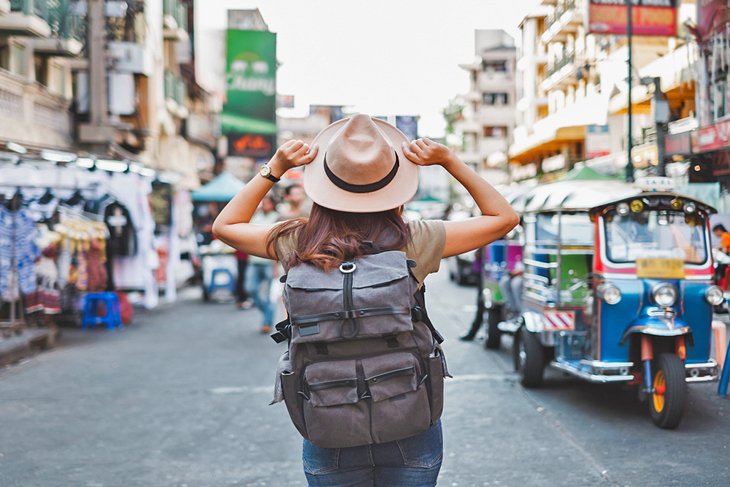
This is Bangkok's infamous backpacker district, a neighborhood jam-packed with guesthouses, food vendors, clothing stalls, and travelers from every corner of the globe. You'll need to tap into your patience when hanging out here, because while it is colorful and exciting in its own way, the crowds and scents and blaring music can test even the calmest soul.
All that said, Khao San Road is also a great place to pick up a few pairs of baggy fisherman pants, the perennial staple of every backpacker's wardrobe when trekking through Thailand; browse the treasures in a used bookstore; and dig into some delicious Indian food from a neighborhood restaurant.
Jim Thompson House
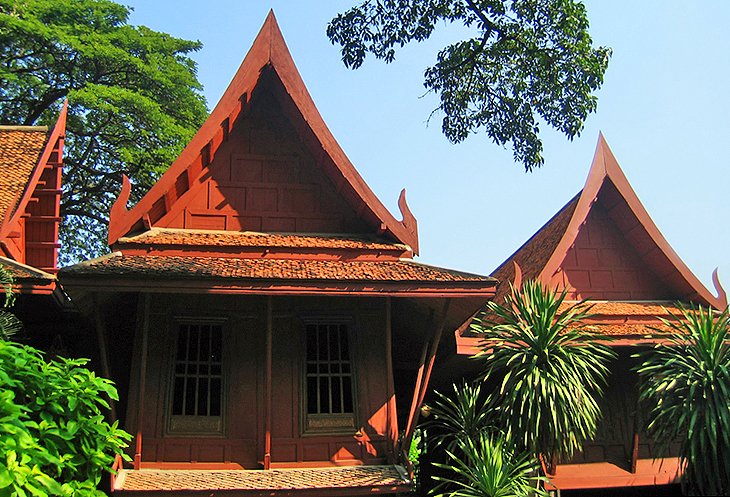
The historic home of a "self-made American entrepreneur" who disappeared while traveling in Malaysia now stands as a relic of an older time in Bangkok. Jim Thompson settled in Thailand after spending time there as a serviceman around the end of WWII and quickly became a well-known name in the Thai silk industry.
Thompson was awarded the Order of the White Elephant, an important honor given to foreigners who have made significant contributions to Thailand. Thompson's home has been turned into a museum offering insights into his life and business, as well as the history of the city and the Thai silk industry.
Address: 6 Soi Kasemsan 2, Rama 1 Road, Bangkok
Walk around Lumpini Park
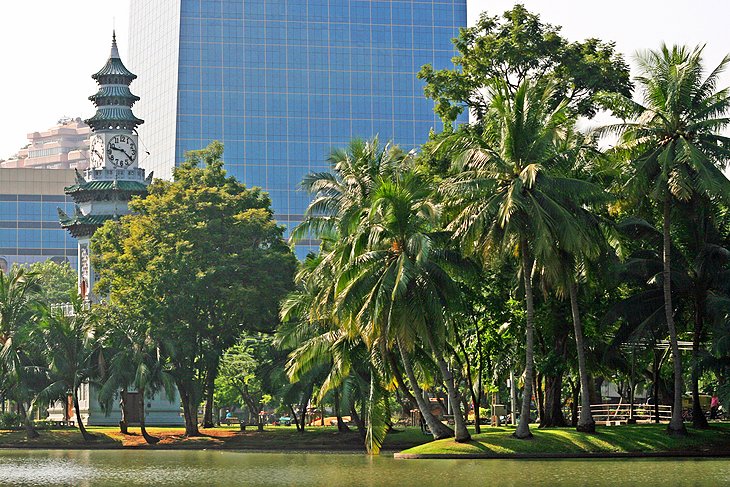
Lumpini Park provides visitors with a green oasis amid the traffic and chaos of Bangkok. Hang out on one of several lawn areas, enjoy the shade of a Chinese pagoda, or take a boat out on the lake. Lumpini Park is a great place to spend an afternoon enjoying the contrast of the tranquil park with the skyscrapers rising all around it.
Note that the park has been the site of anti-government protests that have occasionally turned violent in the past, so be sure to check on the current political situation before visiting. Keep an eye out for the massive Asian water monitors as well-they can often be found taking a stroll around the lake.
Location: Rama IV Road, between Ratchadamri and Witthayu (Wireless) roads
Shop at Terminal 21
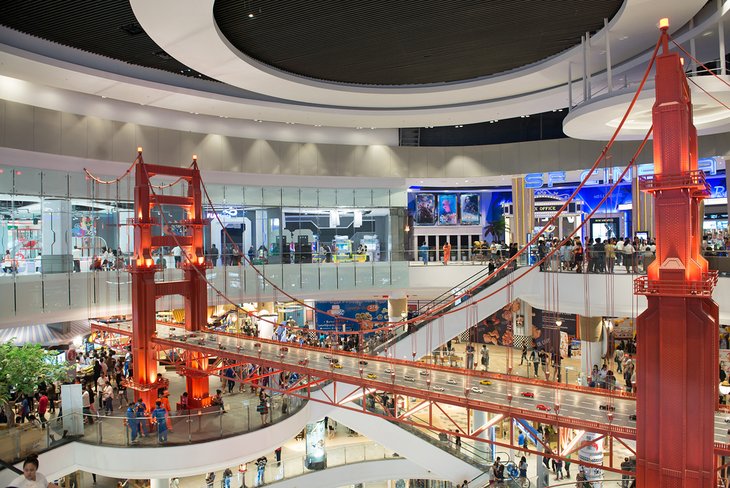
Don't let the airport-like name fool you. This shopping mall is one of the best places to visit in Bangkok if you're looking for a mix of local and international brands, as well as plenty of unique buys.
Terminal 21 is unique in more ways than one – even by Thailand's shopping standards. Every floor of the mall has been themed to a different international city. Enter at the level of the BTS station and you'll be in Paris; go up a floor and it's Tokyo; another floor and you're staring at the iconic red phone booths of London. The Caribbean, San Francisco, and Istanbul also figure into the design theme.
Other malls of note include the high-end Siam Paragon, and adjacent Siam Discovery, which has more moderately priced chains; fun cafés; and the super luxurious Virgin Active Siam Discovery, self-dubbed "the largest gym in Southeast Asia." Here, visitors can rock climb, try anti-gravity yoga, or visit the unique "Sleep Pod" rooms for the ultimate in relaxation.
Experience Street Food Stalls
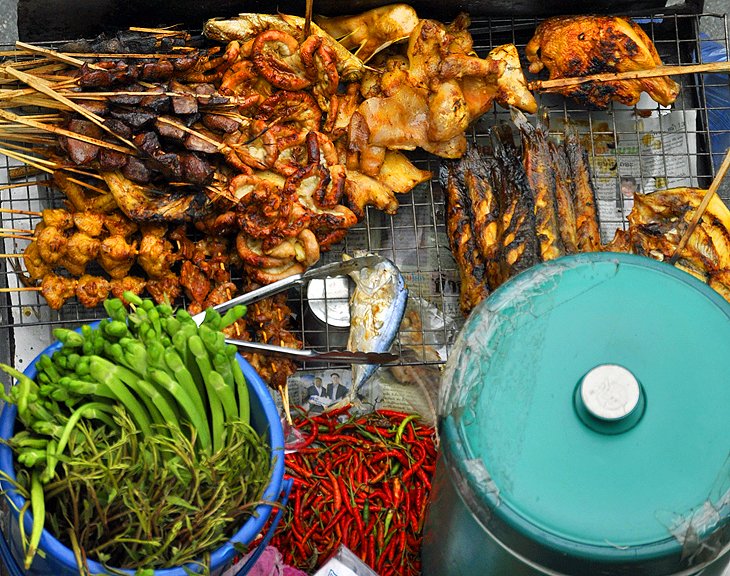
To really experience Bangkok, you have to try the local cuisine. You haven't really "done" the city without chowing down on grilled meats and fish, spicy noodles, fresh fruit, and curries. If you think you know Thai food, you're in for a surprise. Whatever you've tried before is nothing like the dishes you'll find here.
You'll have no trouble at all finding vendors to tempt you with treats all around Bangkok and help you live through a quintessential Thailand experience, tucking into a delicious (if mysterious) meal, surrounded by the chaos and heat of the city.
Surprisingly, some of the best street food in Bangkok is on Khao San Road – both in the little stalls lining up the street and in the small shacks and restaurants just off the main road selling pad Thai, pad see ew, and mango sticky rice.
Take a River Cruise
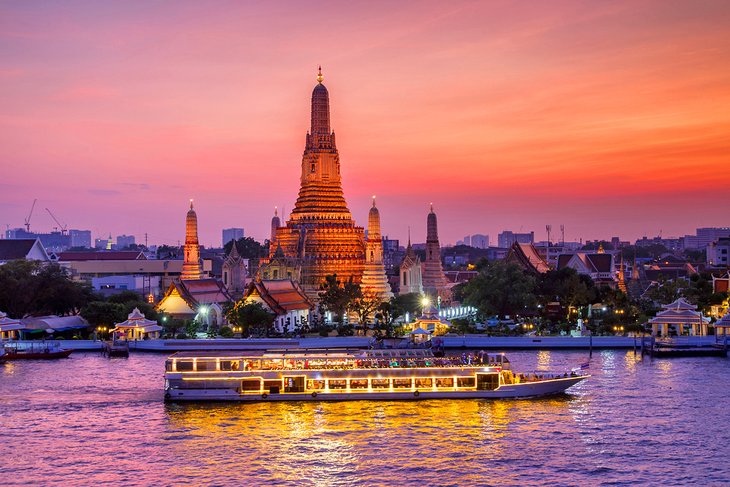
The Chao Phraya River is Bangkok's heartline. Known as the "river of kings," this major waterway will allow you to discover some of the city's most stunning temples and monuments from a completely new angle.
In the evening, you can jump on a dinner cruise to see the lit-up city skyline as you sail along the Grand Palace and Wat Arun and under the Rama VIII Bridge.
During the day, take advantage of Bangkok's many ferries and express boats, which depart from Sathorn Pier and will stop right at the ports of major tourist attractions, including Wat Arun and Ratchawongse. Local canal boats (khlong Saen Saep) are used by the locals to commute to work and are a great way to see the real Bangkok, as the boats zigzag through small canals and behind residential buildings.
Step inside the Temple of the Emerald Buddha
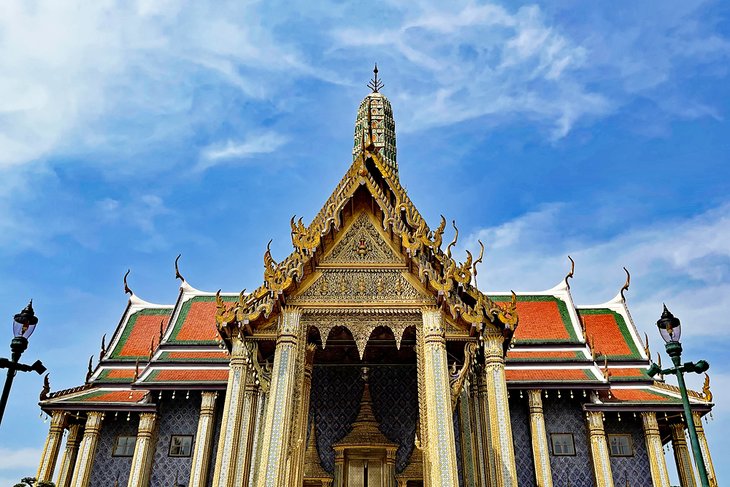
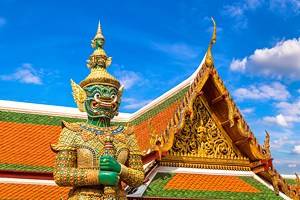
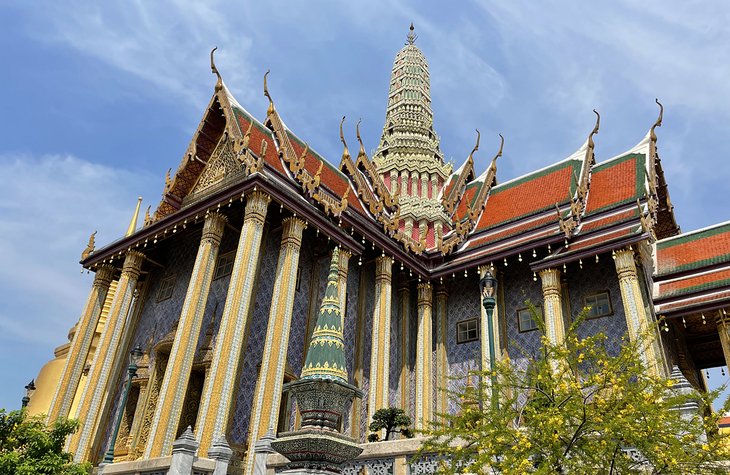
The Temple of the Emerald Buddha, or Wat Phra Kaew, is located on the grounds of Bangkok's Grand Palace. It is regarded as one of the most sacred Buddhist temples in the Kingdom of Thailand. The temple itself is simply spectacular, as is the Buddha statue itself, which is carved out of bright green jade.
For such a massive reputation, significance, and shrine, the statue itself is rather small. But it has been sitting on its perch since 1784. Hundreds of thousands of tourists and pilgrims pass through the gates to the temple every hear in order to view the statue.
Prior to taking up residence here at the Grand Palace, the Emerald Buddha traveled for centuries across Southeast Asia, from India and Sri Lanka to Cambodia and Laos. It was one of the most important treasures for King Rama I, who reigned from 1782 to 1809. In fact, when the capital of Thailand was moved from Ayutthaya to Bangkok, it was partly done so that this statue had a permanent home.
Pass through Wat Mahathat
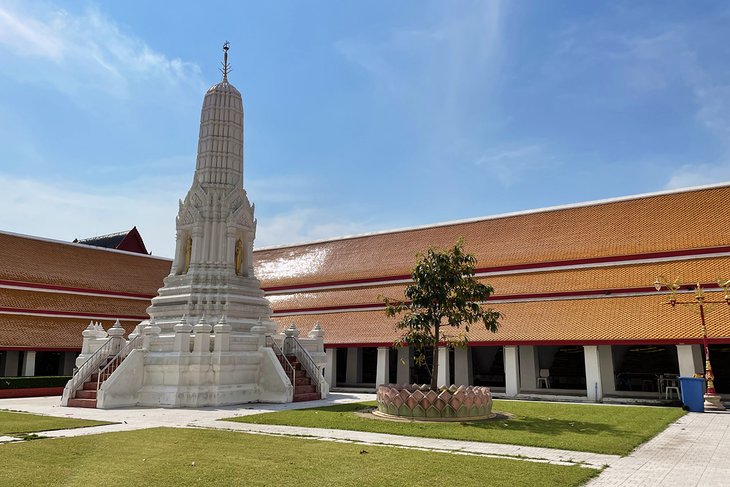
Not far from the Grand Palace is one of the most important temples in Thailand: Wat Mahathat. Not to be confused with the temple of the same name in the historic city of Ayutthaya, Bangkok's Wat Mahathat is deeply significant to the culture and history of Thailand – in fact, it is the final resting place of King Rama IX.
The temple was constructed before the city of Bangkok was founded. Built in 1782, today it is home to one of the largest schools of Buddhism, dedicated to the Mahanikai school, Thailand's largest monastic order.
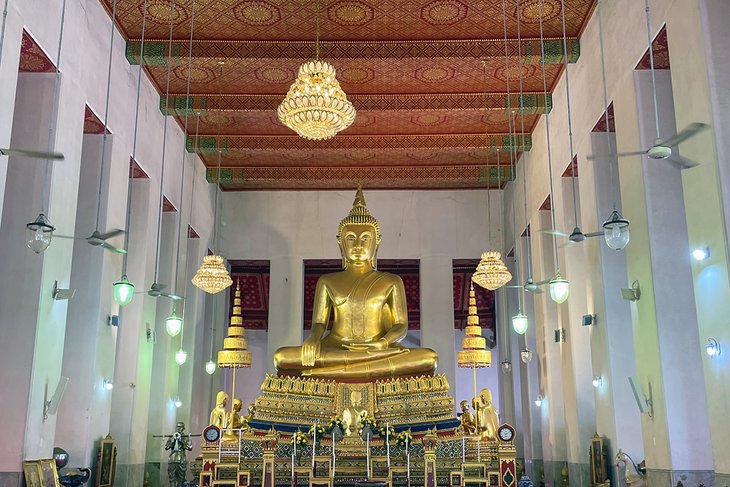
The temple complex is rather large and may appear confusing, as it is home to several school buildings and offices, but if you press on towards the center, you'll find the temples, which are packed with golden images and statues of Buddha. In fact, it has one of the largest collections of Buddha's image than most other temples in Bangkok.
Explore Chinatown
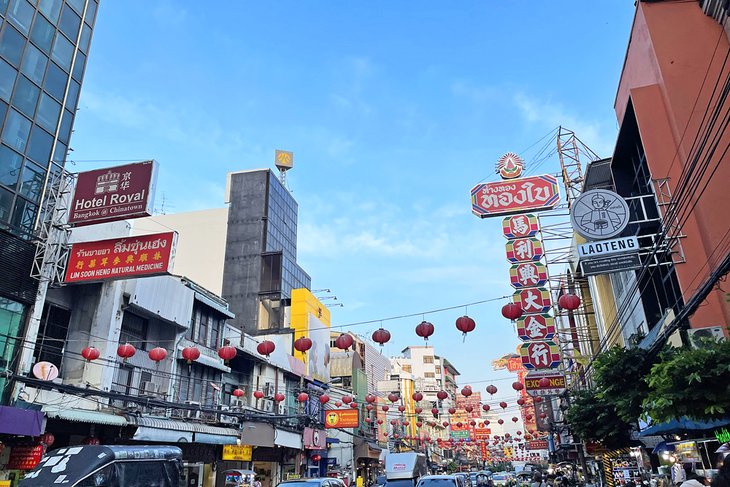
Of Bangkok's many colorful and diverse neighborhoods, Chinatown stands out as one of its most exciting. In fact, Bangkok's Chinatown is one of the largest Chinatowns in the world, and, as it so happens, one of the best.
The main artery of Chinatown is Yaowarat Road. This energetic thoroughfare and its side streets are slammed with restaurants, food carts, gold stores, cafés, herb shops, fruit stalls, and so much more. If you've come to Chinatown to eat, then you'll want to wait until the sun sets, when the entire neighborhood explodes with food stalls overflowing with mouthwatering treats.
Chinatown is slowly revamping, as well. Today you'll find more "fine dining" dim sum houses and swanky hotels than before. Still, the energy is always swirling and chaotic, but it's always one of the most beautiful parts of Bangkok.
Ride the Skytrain
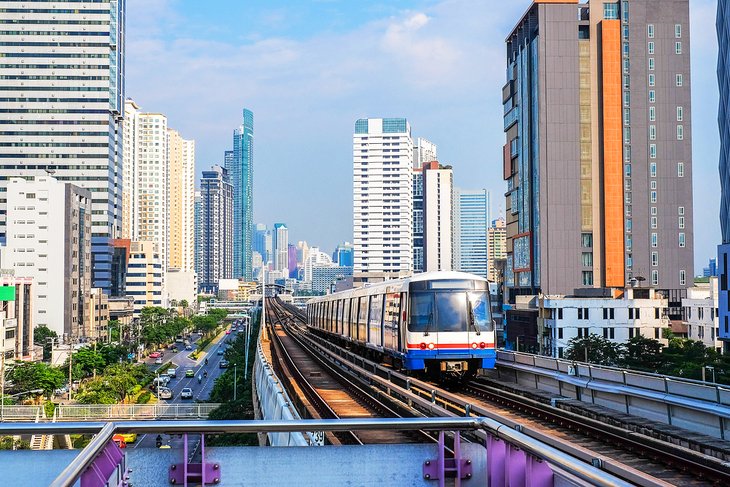
Bangkok is famous for many things, and one of them, unfortunately, is the traffic. To go a short distance can sometimes take upwards of half an hour. Fortunately, visitors to Bangkok have a very easy, convenient, and time-efficient option: the Bangkok Skytrain.
Bangkok's BTS Skytrain is truly a game changer. It opened in 1999 and has quickly become the most popular way to get around the city. Travelers love it for its speed, cleanliness, air-conditioning, and price.
The Skytrain does not go everywhere in the city, but it does cover two of the most important areas: Sukhumvit and Silom. Silom will take you from the National Stadium through Silom and Sathorn and out to Bang Wa in the suburbs. Th Sukhumvit line will run from Mo Chit in the north to the eastern province of Samut Prakan.
You can purchase individual tickets, or use a Rabbit Card, which is a pre-paid card that can be loaded as often as you need it.
The BTS Skytrain is absolutely better than sitting in Bangkok traffic, but just be aware that it does not go everywhere in the city, and it stops running at midnight.
Shop at ICONSIAM
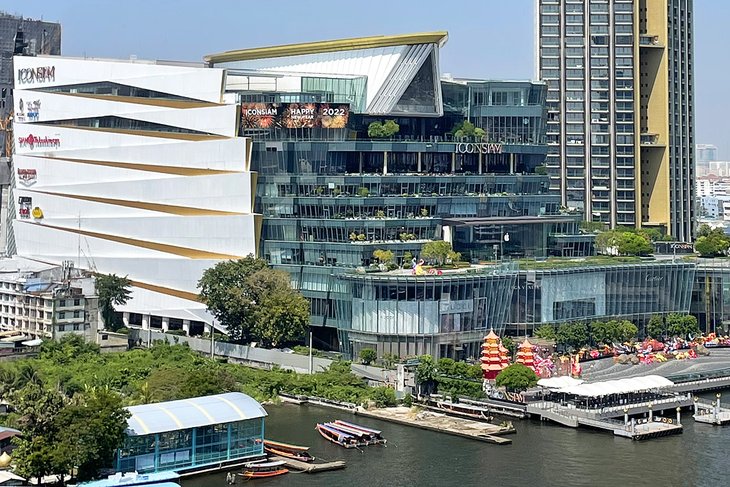
Bangkok loves its luxury shopping centers, but none is as popular (or large) as the riverfront ICONSIAM. Perched on the banks of the Chao Phraya River, the 750,000-square-meter mega-mall is a destination in its own right.
The mall is divided into three main sections: ICONSIAM, ICONLUXE, and Siam Takashimaya. Inside each section are further zones that have been designated to highlight parts of Thailand's culture and design. SookSiam, for example, has brought together art, culture, tradition, and food from its many different provinces. It houses more than 3,000 local businesses from all over Thailand.
The facility also has seven dining zones, outdoor park space, and retail devoted to fashion, beauty, health & fitness, Thai crafts, and more. Visiting ICONSIAM is so much more than a day of shopping. It really is a Bangkok (and Thailand) experience.
Address: 299 Charoen Nakhon Rd, Khlong Ton Sai, Khlong San, Bangkok 10600
Official site: https://www.iconsiam.com/th
Take a Muay Thai Lesson
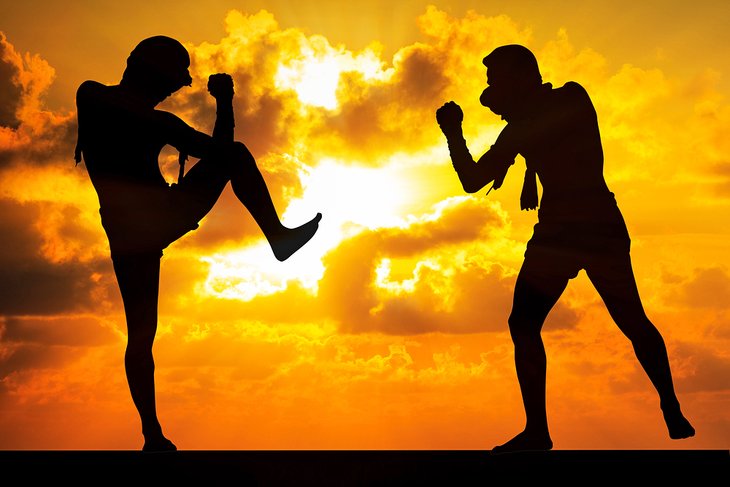
Thailand's national martial art, Muay Thai, is famous around the world. Also known as "Thai boxing," the combat sport is known as the "art of eight limbs" because it uses combinations of shins, knees, elbows, and fists.
It's a complicated and challenging sport, but those who practice are devoted to the art. If you're coming to Bangkok, it is the perfect place to get your feet wet in the sport and learn from those who have mastered it.
Many gyms across Thailand, but in Bangkok in particular, offer May Thai training. It is a mecca for May Thai fans, where you will find the best stadiums, gyms, and gear. Bu you'll also find gyms suited to beginners, as well.
Visit Kalayanamit
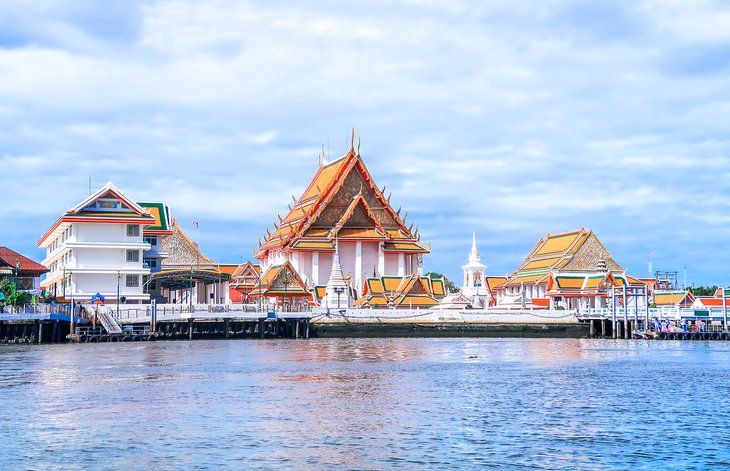
Gazing across the Chao Phraya River at Wat Arun, another beautiful, sprawling temple complex may catch your eye. What you're looking at is Wat Kalayanamit. This historic temple was founded in 1825 by a nobleman and a friend of King Rama III.
The most eye-catching structure from across the river is the ordination hall, inside of which sits a massive Buddha image. It is one of the largest images of Buddha in the city. The temple is a combination of both Chinese and Thai architecture, including chedis, pavilions, and statues.
Though not one of the most-visited temples by tourists, it is certainly beautiful and worth a visit because of its historic architecture, the massive Buddha statue, and a 13-ton bell in the bell tower, which is the largest bronze bell in Thailand. It is still an active temple, as well, with monks that live on the site.
Indulge at a Spa
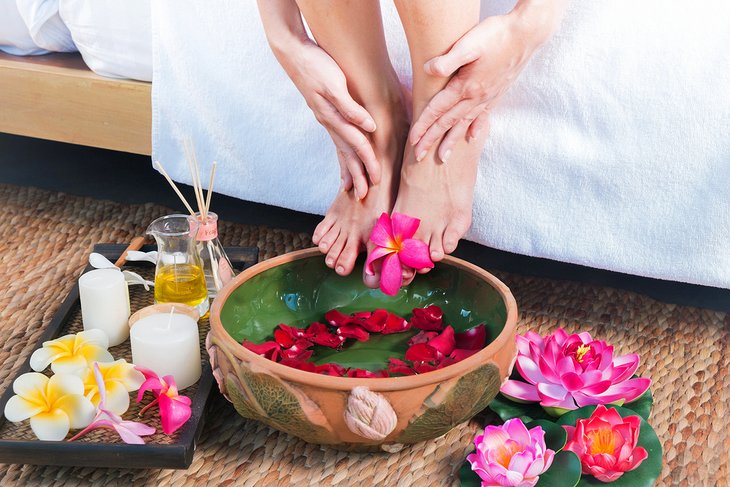
One of the many things Thailand is famous for is its affordable spa culture. Whether it's a casual pop-in for a stretchy Thai massage or a full-on day of bliss at a luxury spa, Bangkok has a facility to fill whatever you're looking for.
A traditional Thai massage is the best introduction into Thai spa culture. This style of massage has been around for more than 2,000 years. It's a dry massage, meaning it does not use oils. Instead, the therapists use stretching and rocking techniques to improve flexibility, relieve tension and promote blood circulation.
Thai massage can be used to help alleviate many ailments, from headaches and back pain to flexibility and joint stiffness. You can find affordable Thai massage parlors all over the city of Bangkok. Most massages will be less than 300 Thai baht.
Or you can check into some of the more high-end options for entire menus of treatments, body scrubs, and wraps. Clinique La Prairie, for example, has opened a new treatment center in Bangkok in The St. Regis Bangkok. This wellness center combines both wellness programs with nutrition and medicine to help patients achieve a more well-rounded, balanced life.
Check into a Luxury Hotel
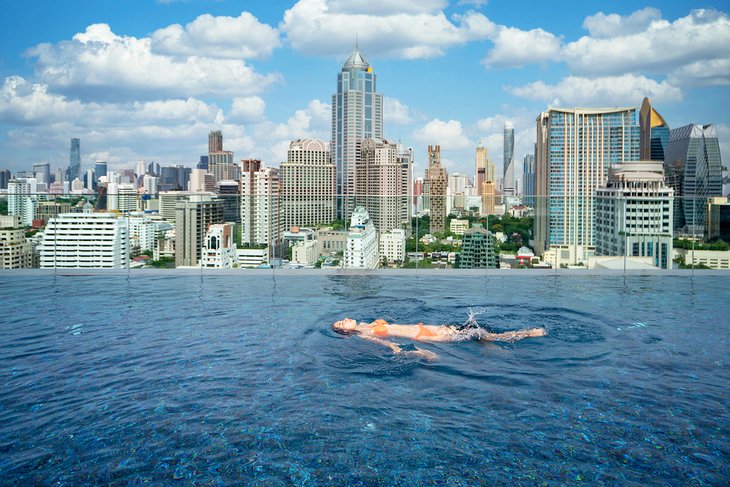
Speaking of high-end and luxury, if you can swing a stay at one of Bangkok's many luxury hotels it will be a game-changing experience. Bangkok has no shortage of opulent five-star hotels, from the historic and classic Mandarin Oriental, Bangkok to the sleek, chic, newer Capella Bangkok.
Bangkok has plenty of budget-friendly options and hotels across the spectrum, but there is something about a luxury hotel stay in Bangkok that truly makes the experience magical. Many five-star hotels in Bangkok have world-renowned restaurants, like the two-Michelin-starred Le Normandie by Alain Roux at the Mandarin Oriental. Others have fabulous spas, gorgeous pools, and rooms with spectacular views.
Whether on the banks of the Chao Phraya River, or overlooking Lumpini Park, Bangkok has dozens of five-star hotels that will make your visit a trip to remember.
Practical Tips for Visitors
- Consider a Tour: To spare yourself the trouble of bargaining for everything and trying to find a taxi that will actually take you where you want to go, a guided tour might be the most practical option. It will save you both time and aggravation-and you'll also get the benefit of having a knowledgeable guide along for the adventure.
- Be Prepared to Bargain: This applies as much to taxi rides as market shopping. Taxi drivers in Bangkok are notorious for overcharging, so agree on a price before getting in. You can also insist that they use their meter, but then watch it carefully to make sure it's not jumping around, as some have been rigged to run faster than they should.
- Take Advantage of Public Transportation: Even with an honest cabbie, rides can get expensive in Bangkok's traffic. Bangkok has a good public transportation system, with both above-ground and underground trains covering a good portion of the city. Buses can take a while because of traffic jams, but trains provide a quick, easy, and cheap way to get around. The system is user-friendly, very affordable, and takes little time to figure out, so take advantage of it while you're in town.
- Be Prepared for the Brutal Heat. There's no sea breeze here to help with the burning temperatures, and no break from the humidity when you're walking the streets of Bangkok. So if you're out for the day, plan on mixing some indoor shopping along the way for some air-conditioned relief. Stay hydrated at all times and wear plenty of sunblock. Choose cotton and linen clothing and grab an umbrella or hat when you're at Chatuchak Market for some extra sun protection.
- Watch Out for Scams: As mentioned above, taxi drivers often try to overcharge or insist that their meters don't work. Use your judgment and walk away from anyone who doesn't seem trustworthy. Another scam to watch out for involves a driver or supposed tour guide who agrees to take you one place and starts making stops along the way, usually at a gem store or a tailor. Drivers get a commission when they bring in tourists, but these places are often overpriced and not worth visiting. Insist that the driver takes you to your original destination, or tell them you're leaving. This will usually get things back on track, but if it doesn't, you'll find another cab quickly enough.
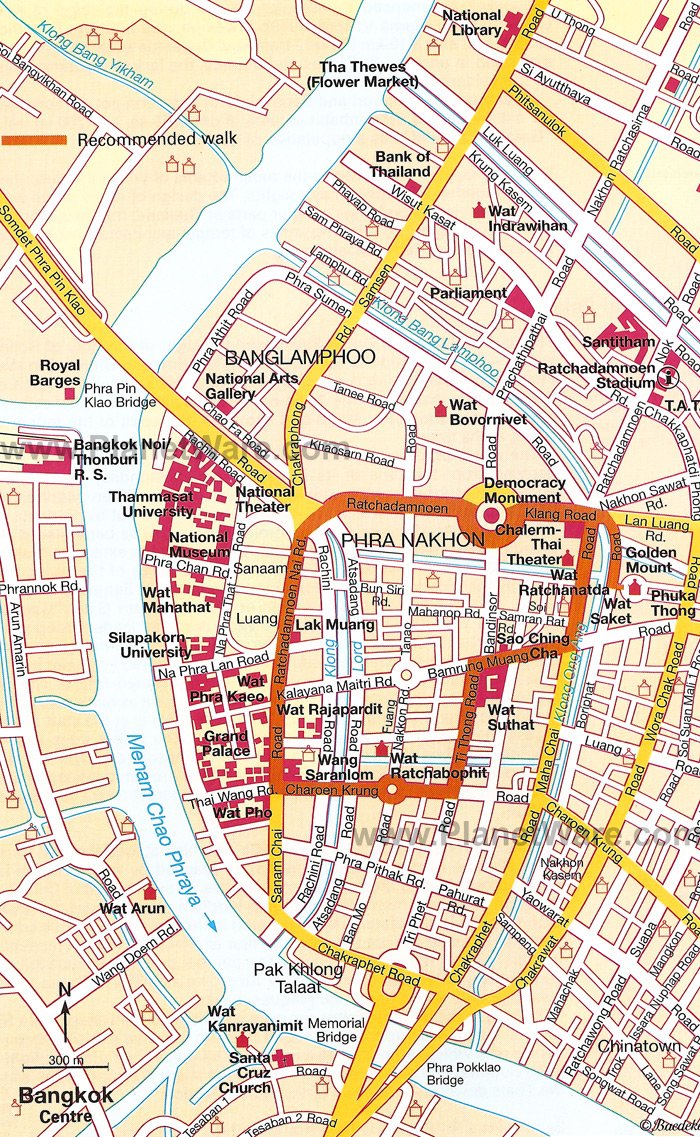
Map of Tourist Attractions in Bangkok
Best Time to Visit Bangkok, Thailand
| Average minimum and maximum temperatures for Bangkok, Thailand in °C | |||||||||||
| J | F | M | A | M | J | J | A | S | O | N | D |
| 32 22 | 32 24 | 33 26 | 34 27 | 33 27 | 33 27 | 32 26 | 32 26 | 32 25 | 32 25 | 31 23 | 31 21 |
| PlanetWare.com | |||||||||||
| Average monthly precipitation totals for Bangkok, Thailand in mm. | |||||||||||
| 10 | 28 | 31 | 71 | 191 | 152 | 158 | 188 | 320 | 231 | 58 | 10 |
| Average minimum and maximum temperatures for Bangkok, Thailand in °F | |||||||||||
| J | F | M | A | M | J | J | A | S | O | N | D |
| 89 71 | 90 75 | 92 78 | 94 80 | 92 80 | 91 80 | 90 78 | 90 78 | 89 77 | 89 77 | 88 74 | 87 70 |
| PlanetWare.com | |||||||||||
| Average monthly precipitation totals for Bangkok, Thailand in inches. | |||||||||||
| 0.4 | 1.1 | 1.2 | 2.8 | 7.5 | 6.0 | 6.2 | 7.4 | 13 | 9.1 | 2.3 | 0.4 |
Bangkok's weather is tropical all year-round, which translates to long, hot days no matter what time of the year you arrive. If you'd like a bit of a break in temperatures (high 20s instead of high 30s Celsius), December and January are the best time to visit Bangkok weather-wise. But overall, you will not be disappointed with the weather if you visit Bangkok between November and March. Because Bangkok is still very much a tropical destination, the weather can often have a mind of its own. The heavy monsoon rains taper down in early November, and the holiday crowds don't arrive till late December, so you'll see slightly cooler, drier weather and smaller crowds. Bear in mind, however, that the time between November and January is high season, so hotel rates and airfare will be at their highest.
If your plan is to head south to the islands after a stop in Bangkok, arriving between November and April guarantees the best beach and water conditions. In Bangkok, where everything's air-conditioned, and many of the attractions are at least partially indoors, there's no such thing as "the worst time to visit." For example, arriving during the wettest months might seem inconvenient, but it guarantees shorter lines at the main attractions and lower prices almost everywhere.
If you want a peek into local culture, the two major Thai festivals occur in April and November. April is the Songkran festival, which is Thailand's most famous festival. It's the traditional Thai New Year festival, and it's a time when the entire country erupts with celebration. November hosts the Loi Krathong, which is the time to thank the Water Goddess for her abundance, as well as ask forgiveness for the human pollution of the bodies of water. It's a beautiful festival held all over the country, marked by thousands of lanterns that are released into the night sky. In December, all the major shopping areas in Bangkok get decked for Christmas, even though it's not traditionally celebrated in Thailand.
More Related Articles on PlanetWare.com
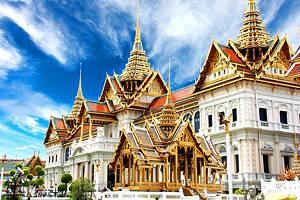
Bangkok & Beyond: No visit to Bangkok is complete without a proper tour of the Grand Palace, the former residence of kings and now a massive museum. For tips on what to see inside the palace, take a look at our article, Exploring Bangkok's Grand Palace: A Visitor's Guide. Ready to explore outside Bangkok? Find out how to get to popular Ayutthaya in our article, From Bangkok to Ayutthaya: Ways to Get There.