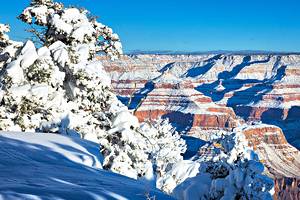
Attractions & Places to Visit in Arizona
Author Lana Law has spent many winters in Arizona and traveled the state extensively.
In the heart of the American Southwest, Arizona is filled with natural wonders, vibrant cities, and charming small towns. The Grand Canyon is one of the top attractions in the United States and a must-see destination. But those who venture deeper into the state will find unique places to visit and interesting sights.

While cities and towns like Phoenix and Sedona make great vacation destinations, you can head beyond the urban centers to discover Native American cliff dwellings and remnants of ancient cultures, along with historic ghost towns from the mining days.
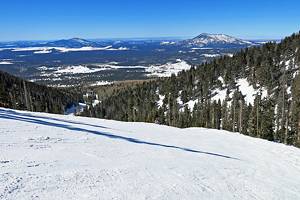
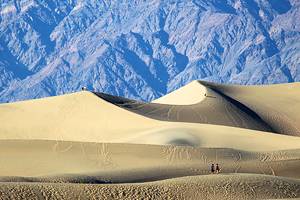
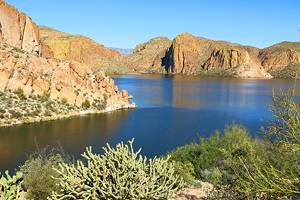
Arizona also has a landscape perfect for outdoor adventures. The state is home to deserts, lakes, mountains, slot canyons, saguaro cactuses, buttes, waterfalls, and even a volcano with downhill skiing, all of which offer a world of possibilities for travelers.
Before heading off on your trip, have a read through our list of the best attractions and places to visit in Arizona.
Grand Canyon
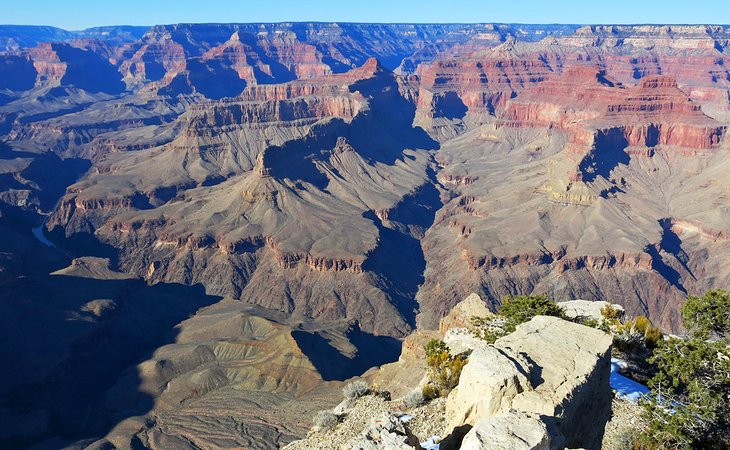
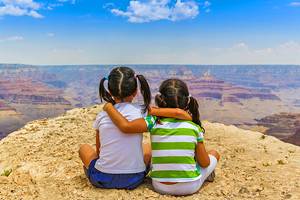
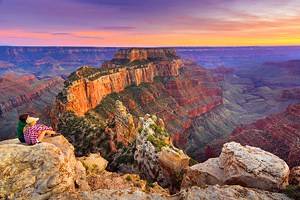
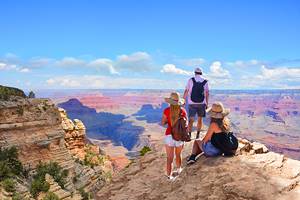
Standing on the rim of the Grand Canyon peering out over the endless ridges of colorful cliff walls and deep ravines, it's impossible not to be inspired by this natural wonder. The view never gets old no matter how many times you visit.
One of the biggest attractions in America, and certainly in the state of Arizona, the Grand Canyon is a place that has to be visited to be fully appreciated. Carved out over the centuries by the Colorado River, which can be seen in the distance far below, the canyon glows in the late afternoon sun, revealing hues of orange, red, yellow, and everything in between.

Most visitors head to the South Rim of the Grand Canyon, where lookouts all along the road and walkways stretching along the canyon's edge offer incredible views. The most famous and easily accessible lookout here is Mather Point, a great place for sunset. You can park at the visitor center and walk to this spot.
Several of the most popular hikes in the park leave from the South Rim. This is also where you'll find Grand Canyon Village, with hotels and other tourist amenities, and camping for RVs and tents.
The North Rim provides a different view altogether, but the road is closed in winter. Depending on the time of year you visit the canyon, the North Rim may not even be an option.
If you've seen pictures of the glass bridge jutting out over the Grand Canyon, these are from Eagle Point. The Skywalk, as the bridge is known, is at Grand Canyon West, about a 2.5-hour drive from Las Vegas. This is not part of Grand Canyon National Park but you do have to pay an admission here.
For those who want a closer look, hiking trails offer access to incredible lookouts and a route to the canyon floor. If you want less physical activity, try a helicopter flight over or into the Grand Canyon.
- Read More: Tourist Attractions at the Grand Canyon
Sedona
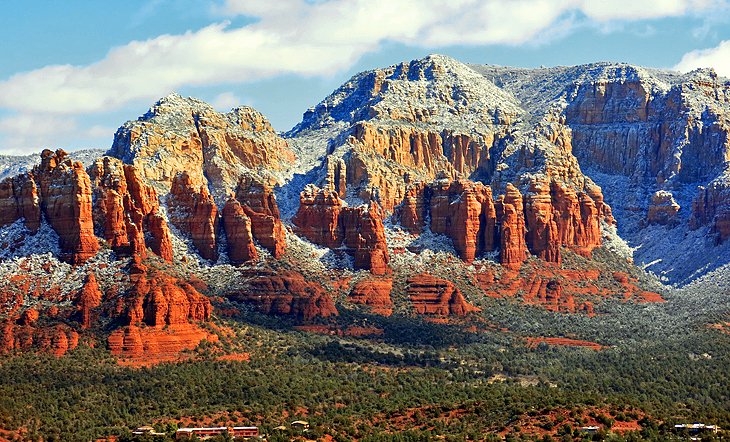
Surrounded by stunning red rock mountains and buttes, Sedona has one of the most beautiful settings in Arizona. It's popular with hikers, bikers, sightseers, and those seeking a spiritual experience. And it has not gone unnoticed. In recent years, this small town has been discovered by tourists who flock here in unprecedented numbers.
Sedona is considered by many to be a highly spiritual place. It is known for its energy vortexes, found at a number of sites around the town. In downtown, you'll also find New Age shops and unique opportunities, from UFO tours and aura readings to psychics and crystal sellers.
Sedona's main street (89A) is full of interesting tourist shops, art galleries, and restaurants and is an easy place to spend an afternoon. The town is also one of the best places to visit in Arizona if you're looking for great hiking trails and mountain biking trails.
The drive into town from the south, beginning at the Village of Oak Creek, is mesmerizing and pullouts along the way allow you to stop and enjoy the scenery.
Jeep tours, one of the most popular things to do in Sedona, provide an even easier way to get out into the landscape. Also in the surrounding area are a number of historical Native American dwellings, which you can visit on your own or as part of a tour.
You can also find a number of good golf courses and golf resorts in Sedona. If you want something a little more relaxing, consider a stay at one of Sedona's spa resorts.
Popular day trip destinations within easy reach of Sedona include Flagstaff and Jerome. The scenic drives to both of these towns from Sedona make them worth the trip, but you can easily fill a day exploring either place. Skiers can even find downhill skiing just outside Flagstaff at Arizona Snowbowl.
Sedona is a popular day trip from Phoenix, about a 1.5-hour drive north of the city.
Monument Valley
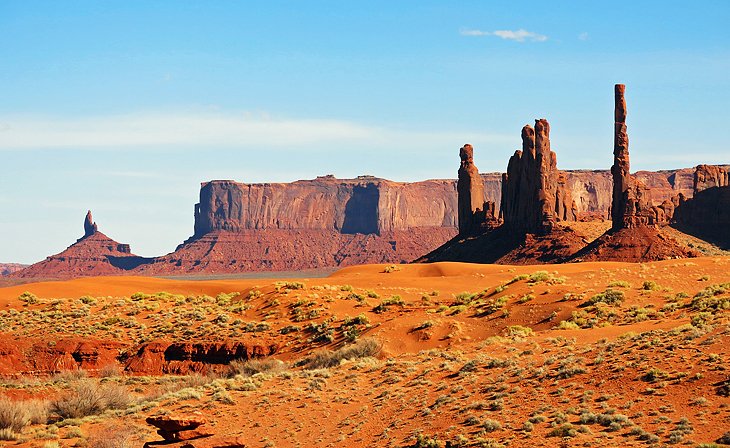
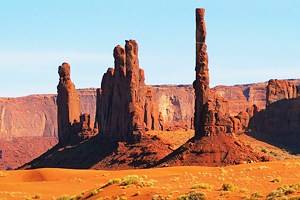
Some of the most iconic images of the Southwest are the sandstone buttes that dominate Monument Valley. This area, straddling the border between Arizona and Utah, includes jagged rock formations, stone spires and buttes, and sand dunes. It's one of the best parks in Utah and Arizona.
At the heart of the valley is the Monument Valley Navajo Tribal Park, where you'll find an impressive visitor center and a 17-mile self-drive route along a one-way gravel road through the park. You cannot take RVs on this drive but the view from the visitor center and gift shop is itself worth the cost of admission.

You can also take a guided sightseeing tour to explore the area more thoroughly. The 4-mile Wildcat Trail is the only hike you can do in the park without a guide, but it is worth doing if you can't do the scenic drive.
Camping is available in the Tribal Park at The View, which, as the name suggests has a stunning setting looking out over the buttes and desert. The campground itself is very basic but watching the sunset and rise is a spectacular experience.
If you don't have time to go into the park, you can appreciate some of the views from the highway.
Phoenix
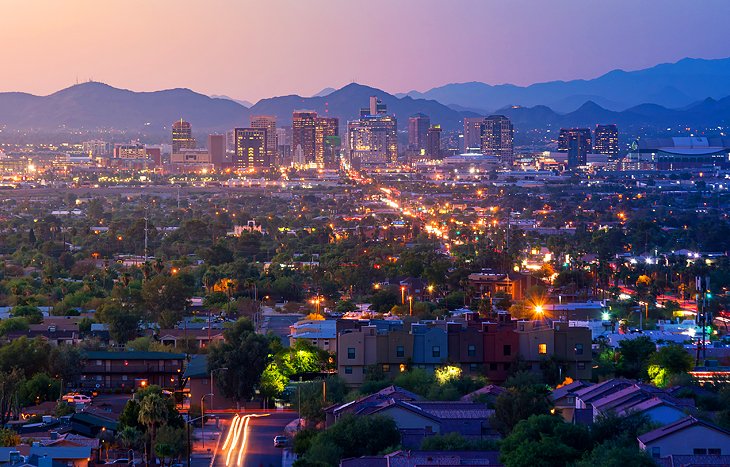
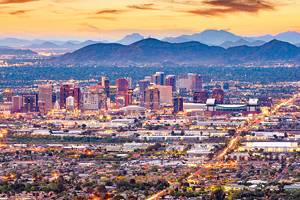
Phoenix is a great base for exploring Arizona but it's also a major destination in the winter for golfers and sun seekers, who simply want to enjoy a stay at a resort or spa and spend a little time basking in the heat of the desert.
In the Phoenix Metropolitan Area, which includes Scottsdale and Mesa, you'll find great shopping, dining, golf courses, desert parks with hiking trails, biking trails, campgrounds, and some outstanding attractions. The luxury resorts around Scottsdale make great vacation destinations.
Topping the list of places to visit around Phoenix are the Heard Museum and Frank Lloyd Wright's Taliesin West. For musicians, the Musical Instruments Museum is a must. This huge complex showcases instruments from all over the world with accompanying videos demonstrating how they are traditionally used in their country of origin.
If you are spending some time in the area, there are some wonderful day trips from Phoenix, which will take you to cliff dwellings, historic mountain towns and ghost towns, and even the Grand Canyon.
- Read More: Tourist Attractions in Phoenix
Hoover Dam

Hoover Dam is one of America's great engineering marvels. This massive structure, completed in 1935, crosses the Colorado River, linking Arizona and Nevada. It is 726 feet high and 1,244 feet long.
Lake Mead, held back by the Hoover Dam, is the largest artificial lake in the United States. It is 110 miles long, and holds the equivalent of two years of flow of the Colorado River.
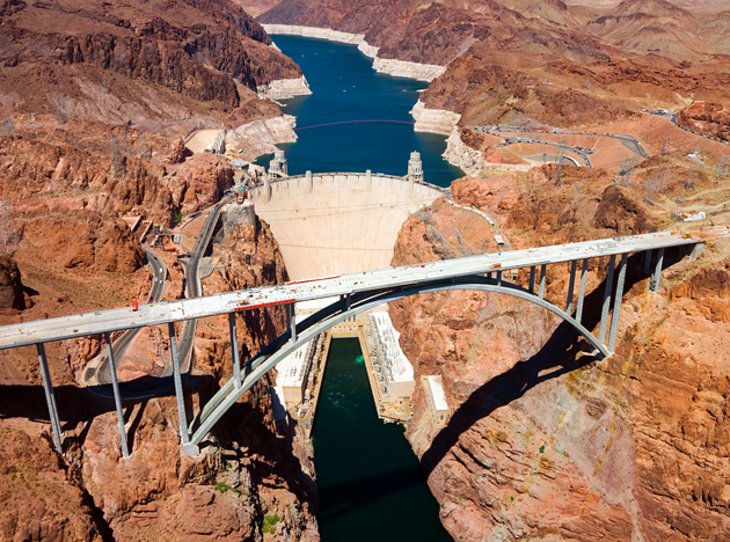
You can drive (no through traffic, return the same way) or walk across the dam for free, although there is a charge for parking. Another option is to take a tour of Hoover Dam or the Powerplant. The visitor center provides information on the dam and tours, and has a café with some basic food options.
You can park well back from the visitors center and walk across the Mike O'Callaghan-Pat Tillman Memorial Bridge, which has a pedestrian-only lane, for the best views over the dam.
Glen Canyon National Recreation Area

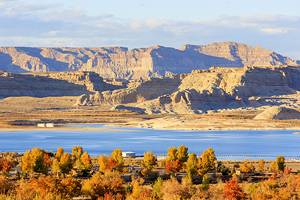
The Glen Canyon National Recreation Area is a stunning region of blue water, desert landscape, and dramatic stone walls. Home to Lake Powell, one of the largest manmade lakes in the United States, this area is known for both land-based and water-based recreational activities.
The Glen Canyon Dam was constructed between 1956 and 1964 to block the Colorado River and create Lake Powell. A 15-mile section of Glen Canyon downstream from the Glen Canyon Dam, stretches from the dam down to Lees Ferry.
The town of Page is a good base for exploring the Glen Canyon National Recreation area and surrounding region. The largest marina on Lake Powell, Wahweap Marina, is located just 7 miles north of Page.
One of the area's biggest attractions is the nearby slot canyons of Antelope Canyon. Depending on the section of the canyon, you can either simply walk through a narrow slot canyon with shafts of light penetrating through the top, illuminating the red walls, or opt to repel down into a canyon.
Photos of Antelope Canyon are often found on postcards or in fine art galleries. You can visit Antelope Canyon on a guided tour.
Tucson
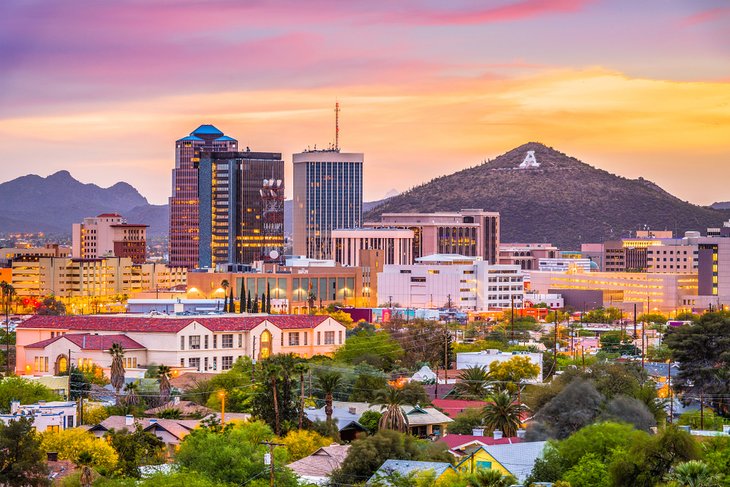
Tucson is a beautiful city set in the Sonoran Desert and surrounded by mountains. As the second largest city in Arizona, it has many cultural attractions, as well as historic sites and natural areas to explore nearby.
Some of the highlights include the Arizona-Sonora Desert Museum, Saguaro National Park, El Presidio Historic District, and Old Tucson Studios.
Nature lovers will find wonderful hiking trails and camping in the city and nearby surrounding mountains and canyons. The Mount Lemmon Scenic Byway is a popular driving route just outside of Tucson, which offers outstanding views. From Tucson, you can also do day trips to nearby destinations like Tombstone or Bisbee.
Although the climate is warm and arid, Tucson is a little higher than Phoenix and is generally slightly cooler. The elevation is just under 2,400 feet.
Jerome
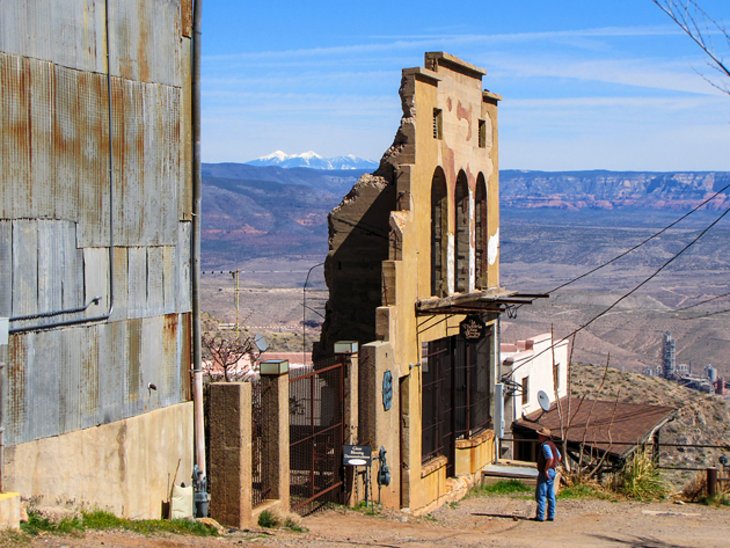
Set on a mountainside high above the desert floor, Jerome is an old mining town, turned ghost town, turned tourist attraction. A steep hill with switchbacks is the main street through town, lined with interesting stores and restaurants.
Views from the streets and some of the shop windows are amazing. Most of the old buildings have been renovated but some still stand as ruins, creating a very interesting dynamic.
The town's history can be appreciated at the Gold King Mine Museum and the Jerome State Historic Park.
This town is a popular day trip from Sedona, Prescott, Phoenix, or Flagstaff. Accommodation is available for those who want to spend the night.
Jerome is unique, to say the least, but some might just call it quirky. The Sliding Jail in Jerome was originally built around 1928. Built on a clay slick, it soon began to slide and now sits 2,500 feet from its original location. The Bartlett Hotel was once one of Jerome's finest hotels but today stands in ruins.
The Jerome Grand Hotel, built in 1927, is the highest public building in the Verde Valley, and it offers breathtaking views.
Canyon De Chelly National Monument
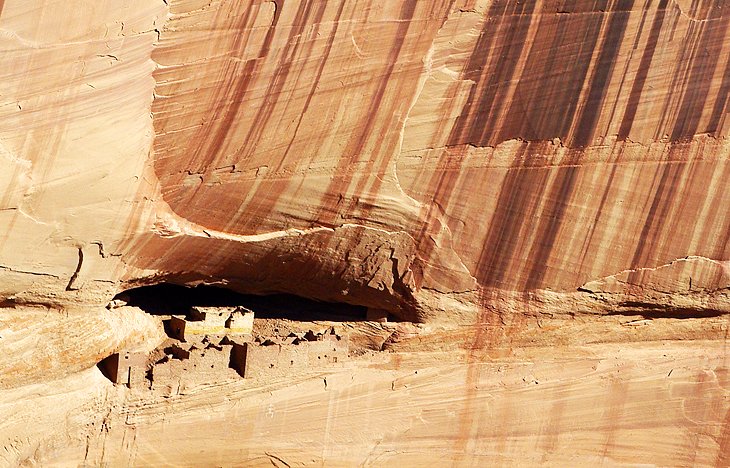
Canyon de Chelly National Monument is home to spectacular Native American cliff dwellings set along steep-sided canyons, with walls up to 1,000 feet high.
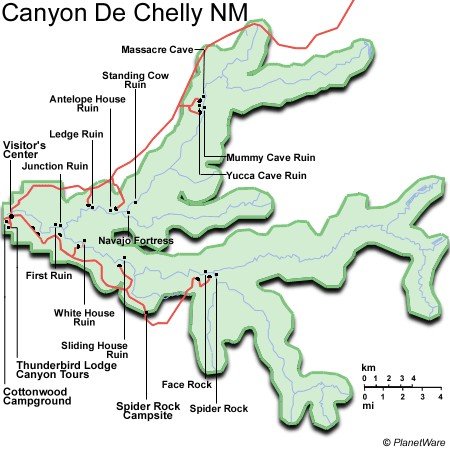
In the main canyon, some of the key attractions are the White House Ruins, constructed circa 1050 and discovered in 1849, and Spider Rock. The White House is the best known of the more than one hundred cliff dwellings.
The only self-guided hike in the park, which leaves from the White House Overlook on the South Rim, descends 600 feet to the White House Ruins.
Other cliff dwellings include the Antelope House and Mummy Cave (in which mummies were found) in the Canyon del Muerto. Most of the ruins, which are largely inaccessible to visitors, were occupied from around AD 350 to 1300.
You can tour the site on your own by driving along the North and South Rim Drives and stopping at the pullouts. Although you can easily see ruins nearby, many of the lookouts also have scopes that let you pinpoint ruins on the distant walls.
From spring until fall, you can join a free ranger-led hike or take a private tour of the canyon.
Horseshoe Bend
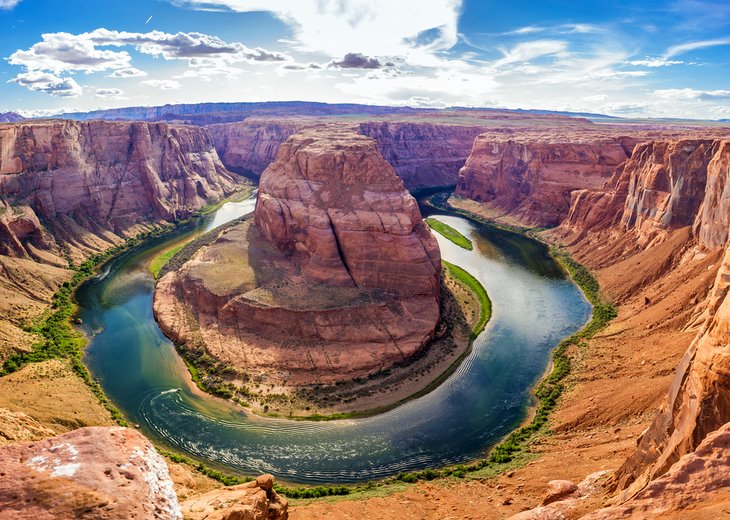
It's hard to scroll through things to do in Arizona and not come across a striking picture of Horseshoe Bend. This stunning sight, where the Colorado River makes a dramatic 270-degree U-turn around a sandstone escarpment, is a hot spot for photographers visiting Arizona. The sight of the green water of the river juxtaposed with the tan sandstone in an unbelievable natural formation is simply breathtaking.
Until recent years, Horseshoe Bend was relatively undiscovered by the masses, but with the age of Instagram and other photo-sharing services, its popularity has mushroomed, and it is a must-do when visiting Arizona. Today over two million people visit annually.
Count on a 1.5-mile round-trip walk along a rock walkway to get to the overlook. You won't find any real safety features here except for a lookout area with a fence. If you want to walk right out to the edge, you are free to do so at your own risk.
Bisbee
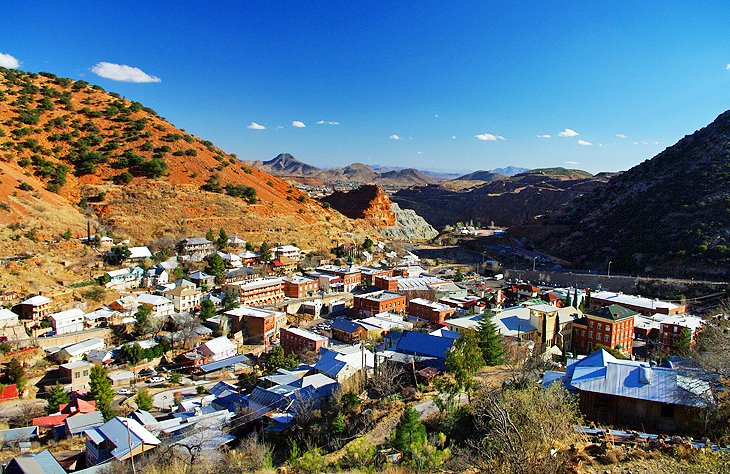
In the far southeast corner of Arizona, near the Mexico border, is one of Arizona's most interesting towns and possibly one of its best kept secrets. The former mining town of Bisbee is a unique little community set high in the mountains and one of the best small towns in America.
After the mines here closed, Bisbee became a ghost town, and squatters took up residence. Eventually, the town became a haven for artists and hippies.
Today, it is a prosperous small town with an eclectic mix of residents, unique shops and restaurants in the historic downtown, and many interesting things to see and do.
Homes, many of which are former miners' cabins, line the hills surrounding the historic downtown area. Many of these residences are only accessible via long sets of stairs that lead to the town center below.
Views from the upper streets and hillside homes are incredible, looking out over mountains all the way to Mexico. In the hills above town are a number of informal hiking trails.
Bisbee is a popular day trip from Tucson and surrounding areas, often combined with a stop in Tombstone.
Havasu Falls
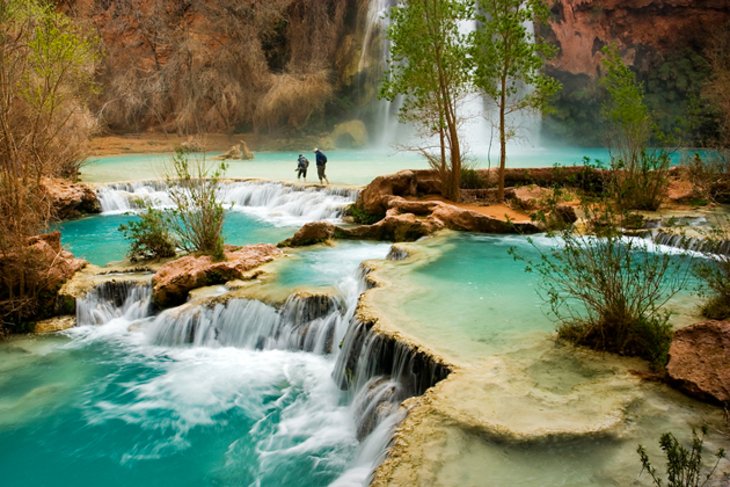
Near Supai on the Havasupai Indian Reservation is the 100-foot Havasu Falls. The pools at the base of Havasu Falls have a bluish-green tint to the water, and the fall is forked so it appears that there are two falls when the river is flowing heavily.
In the canyon of Havasu Creek, a tributary of the Colorado River, some 450 people of the Havasupai tribe (the "people of the blue-green water") live a secluded life, subsisting on their modest farming activities but now mainly dependent on the tourist trade.
In this paradisiac valley, the Havasu have created a number of waterfalls and carved out basins in the travertine rock which form attractive bathing pools.
Day hiking is not allowed here. You need to make reservations, obtain a permit, and pay a fee. Access is via a long hike, horseback or mule, or helicopter.
Lake Mead National Recreation Area
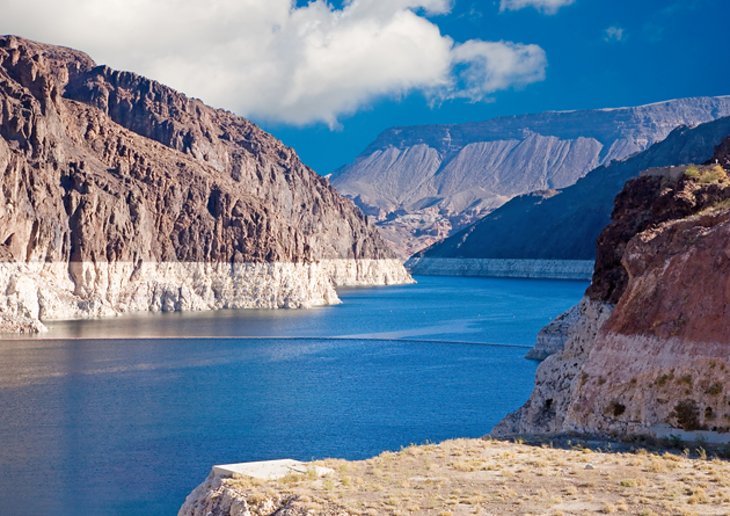
Lake Mead National Recreation Area spans 177 miles of the Colorado River and includes Lake Mead and Lake Mohave. The area's 1.5 million acres stretches into southern Nevada.
The area offers boating and water sports, camping facilities, fishing, and hiking opportunities. Lake Mohave is 67 miles long, making it the smaller of the two major lakes in the Lake Mead National Recreation Area. Like its counterpart, Lake Mohave is an artificial body of water, held back by Davis Dam.
Willow Beach is a small resort town on the Colorado River with accommodations, restaurants, a marina, and a fish hatchery.
Tombstone
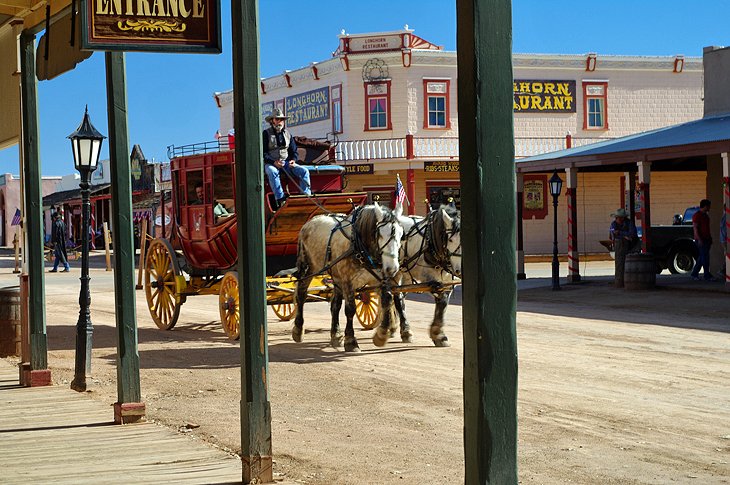
Tombstone offers a modern look at an Old West town. Staged gunfights in the streets and characters walking through town in period costumes recreate the glory days of this small Arizona town.
Every shop, restaurant, and attraction is designed with tourists in mind, but you can still see some of the town's history in the historic sites, including the famous O.K. Corral and the Boothill Graveyard.
Also of note is the Tombstone Courthouse State Historic Park, housed in the original courthouse, which is now a museum.
You can easily visit Tombstone on a day trip from Tucson. You can also continue past Tombstone to visit the historic mining town of Bisbee, and combine these two destinations in one day trip.
- Read More: Tourist Attractions in Tombstone
Flagstaff
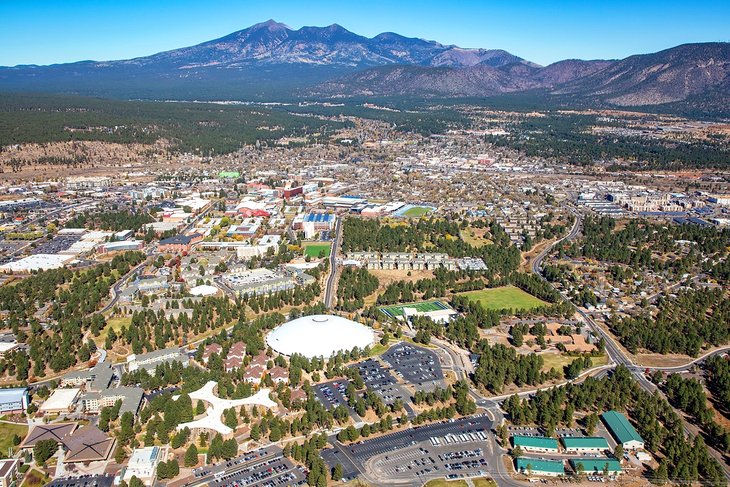
One of the main stops on Historic Route 66, Flagstaff is a treasure trove of well-preserved buildings and streets. Take some time to stroll around the restored downtown area, and if you find yourself in town at night, check out the impressive neon signs.
However, Flagstaff, or Flag as the locals call it, is not all about history. Today it's a young, dynamic mountain town with a lively air, driven by the large number of students at Northern Arizona University (NSU). This active set ensures that you'll find a good variety of restaurants along with entertainment throughout town.
Owing to its elevation at nearly 7,000 feet, Flagstaff enjoys a more moderate climate than Phoenix, just a couple of hours down the road. This means it gets chilly here in the winter, and snow falls not only in town but at Arizona Snowbowl Ski Resort located a short drive from the city.
Flagstaff is an ideal place to base yourself if you are considering visiting some of the national parks and monuments located nearby, including the Grand Canyon, Walnut Canyon, Wupatki National Monument, and Sunset Crater National Monument.
Read More:
Petrified Forest National Park
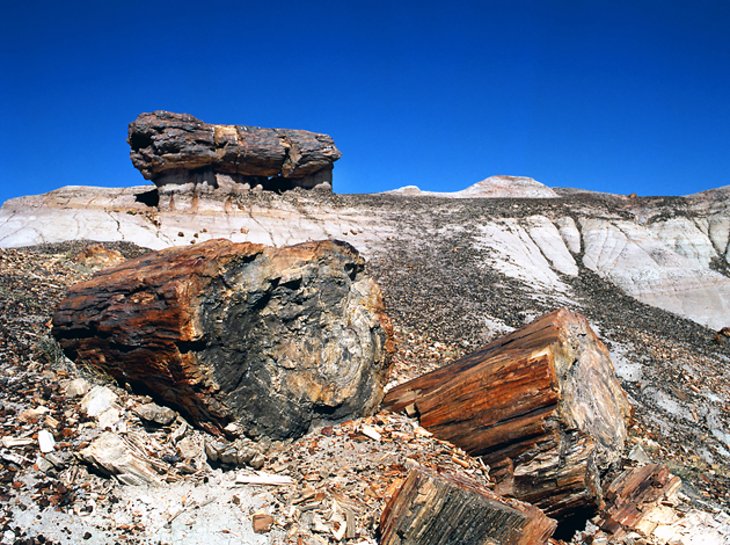
Petrified Forest National Park is a little out of the way from the major tourist destinations and, as a result, it is not as visited as many of Arizona's other national parks. If you are anywhere near this area, it is worth taking the time to stop in.
Large pieces of petrified wood, along with fossilized plants, fish, and reptiles, have been revealed in great numbers in what is today Petrified National Forest in the Painted Desert. The park access road runs by many of the highlights and short interpretive trails allow for close-up looks at a variety of unique sights.
The Visitors Center provides insight into the ecology and geology of the park and is a good place to start before heading out on the drive.
The park is located just off I-40, east of Holbrook. If you are driving between Flagstaff, AZ, and Albuquerque, NM, it's a must-visit.
Saguaro National Park
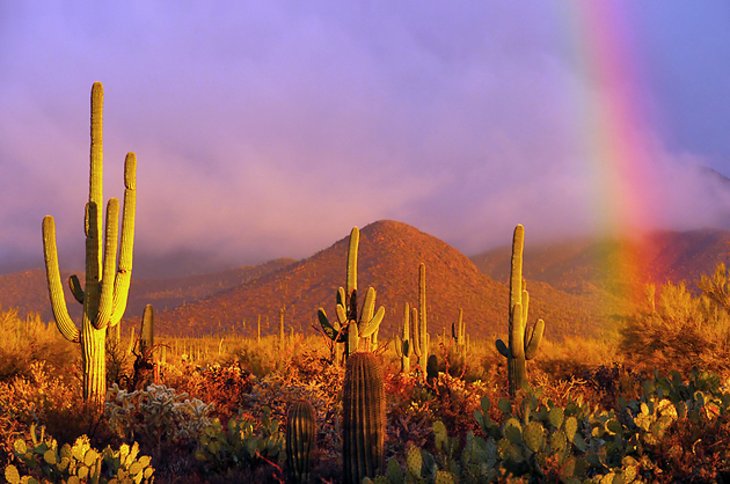
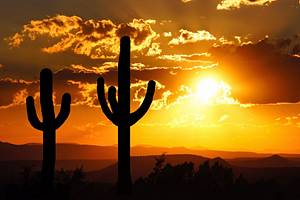
Saguaro National Park is a great place to experience the desert landscape around Tucson and see the famous saguaro cactuses up close. The park has two sections, an east and a west portion, located on the east and west sides of Tucson, approximately 30 minutes apart.
Both sections of the park offer great opportunities to see the desert flora and fauna along roads and hiking trails. Hikes range from easy walks to challenging trails that lead up into the high mountains, reaching up to 8,000 feet in elevation.
You can visit both sections of the park on the same entrance ticket or park pass.
Antelope Canyon at Page
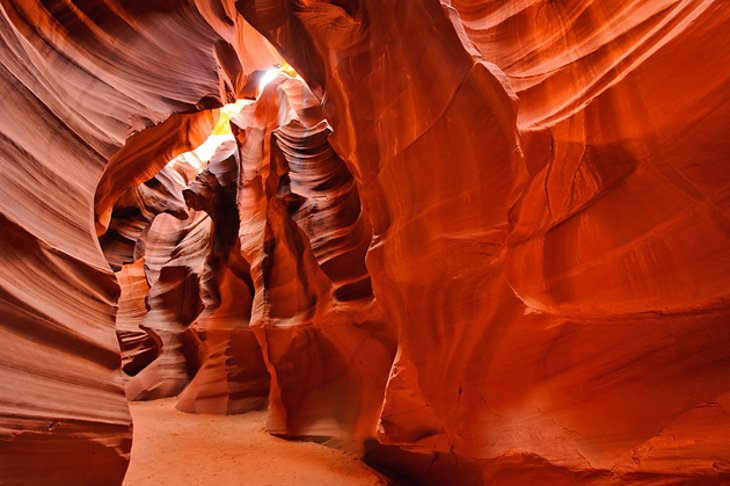
Seen in countless photographs in galleries all over Arizona, Antelope Canyon is a slot canyon located just outside of Page. The sculpted, twisting sandstone walls rise up around you, with shafts of light breaking through from the narrow opening above as you walk through the canyon.
You can tour Upper Antelope Canyon or Lower Antelope Canyon, or both, on a guided tour. Upper Antelope Canyon is the easier option, perfect for anyone with mobility issues or people who prefer a flat ground and solid footing, but it still provides the stunning scenery.
Photographers will not be disappointed! You are given plenty of free time to explore on your own and at your own pace. The canyon lies within the Navajo Nation reserve boundary.
Organ Pipe Cactus National Monument
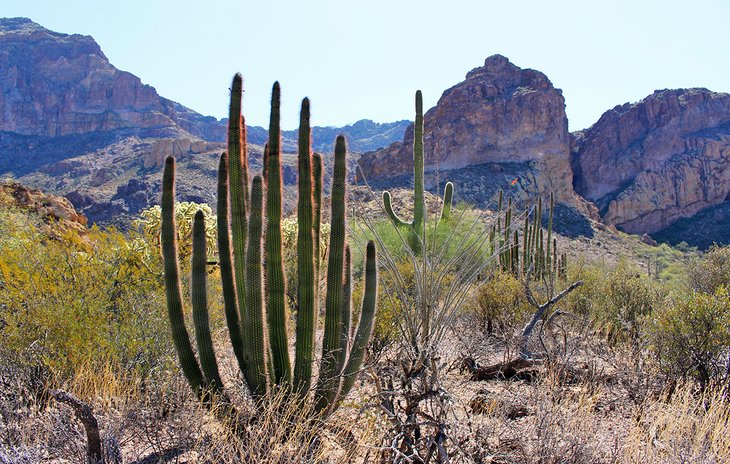
Organ Pipe Cactus National Monument is an International Biosphere Reserve situated in southwestern Arizona, on the frontier with Mexico. The main feature of the monument is the namesake organ pipe cactus, but the area is stunning, with mountains and beautiful sunsets over the desert.
Within the area are three distinct desert vegetation zones and some 30 different species of cactus. The organ pipes grow up to 23 feet high and bloom from May to July. Because of the often extreme heat during the day, it opens up its flowers only after sunset.
The area can be explored on various roads and hiking trails, but the two main scenic drives of note are Ajo Mountain Drive and Puerto Blanco Drive. You can access hiking trails off both of these roads.
The Bull Pasture/Estes Canyon Loop Trail is one of the top hiking trails in Arizona. This is just one of the hikes in the park.
The park is also one of the best places to camp in Arizona, and given that the main attractions in the park are quite a drive from the nearest towns and hotels, camping is a great option out here.
Lake Havasu
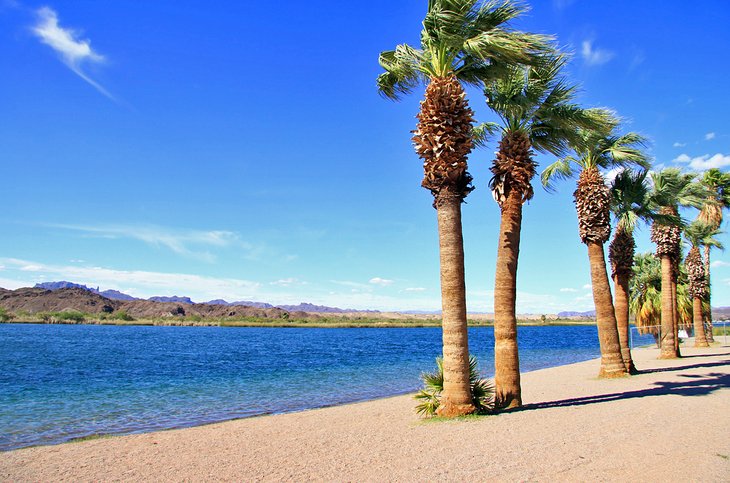
One of the most delightful small cities in Arizona, Lake Havasu is an oasis in an otherwise dry and dusty desert. Created when the Colorado River was dammed, Lake Havasu today is a wonderful place to enjoy the water at the beach, on a pleasure boat, or at a lakeside patio.
The city that surrounds the lake has two personalities: In the winter, it's home to snowbirds from the northern states and Canada fleeing the cold. In the spring and summer, it's home to local Arizonians looking to escape the heat.
A highlight of any visit to Lake Havasu is a stroll over London Bridge. This bridge, parts of which date to 1831, was transported from London, England, and installed at its present location in 1971. A fun fact about the bridge is that it was actually reassembled on dry land in the middle of a field. It was only later on that a canal was dredged underneath it.
Prescott
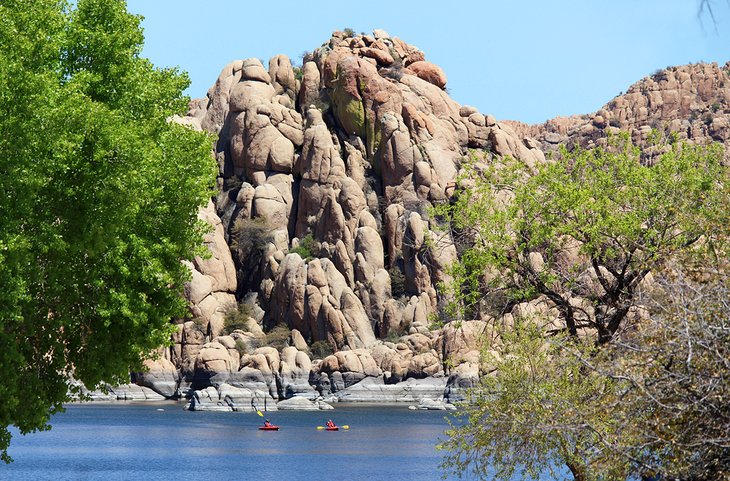
With tall Ponderosa pine trees, lakes, and occasionally even a sprinkle of snow, Prescott is an unexpected find in Arizona. At 5,300 feet, this small city has more defined seasons. It's also incredibly scenic and offers opportunities for hiking, kayaking, and camping.
This city is also a former capital of the Arizona Territory. The charming downtown has a number of tourist attractions and historic sites, including the old courthouse and the Elks Theatre. Stop for lunch at one of the downtown restaurants or spend a night at one of the beautifully restored bed and breakfasts or hotels.
Prescott also calls itself "Arizona's Christmas City," so if you are here in November or December you can enjoy the lights and festivities of the season.
Yuma
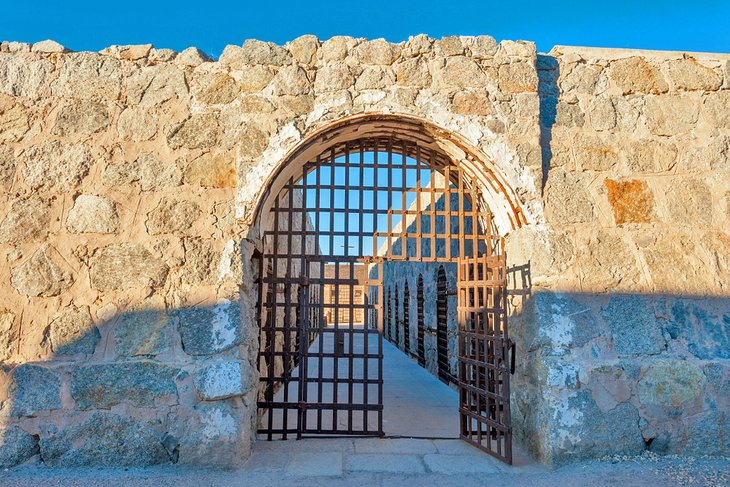
The city of Yuma is off on its own in the far southwest of Arizona and a stopping-off point for people heading to and from Mexico. Here, you'll find some interesting historical sites, one of the most important being the Yuma Territorial Prison State Historic Park. Tour the park, dating from 1876, and step into the cells where the outlaws were housed.
Another must-do when in town is to stroll up and down the historic main street. Just look for the neon sign indicating the street, and you'll know you've found the right place. A number of restaurants, shops, and other services line the street, many fronted by a covered walkway.
Yuma is fortunate for such a dry place to have the Colorado River flowing right through town. Exceptional opportunities for water-based recreation exist, including pleasure boating, swimming, kayaking, and stand up paddleboarding.
Tumacacori National Historical Park
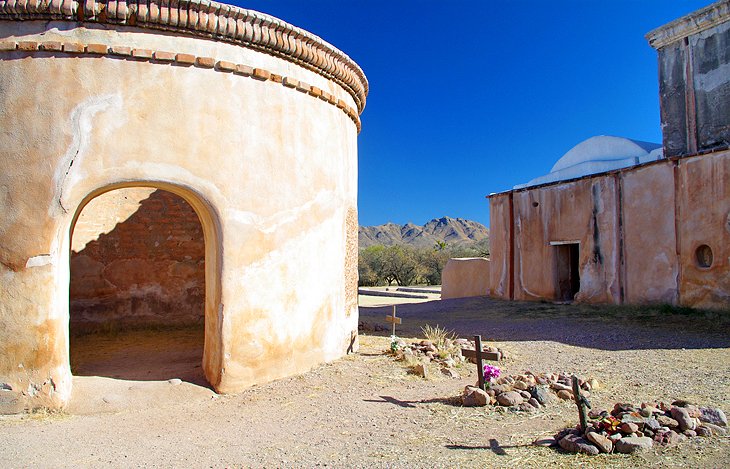
Tumacacori National Historical Park, located south of Tucson, preserves the ruins of three early Spanish colonial missions on 47 acres in southern Arizona. San José de Tumacácori and Los Santos Ángeles de Guevavi were established in 1691 and are the two oldest missions in Arizona. The third mission, San Cayetano de Calabazas, was established in 1756.
The site was abandoned in 1848 due to Apache raids, neglect, and a terrible winter. Tumacacori became a national monument in 1908 and the two Spanish missions, Guevavi and Calabazas, were added to the site in 1990.
The adobe structures and crumbling architecture in some areas make this a delightful place to explore with a camera.
Address: 1891 East Frontage Road, Tumacacori
Map of Attractions & Places to Visit in Arizona
More Related Articles on PlanetWare.com
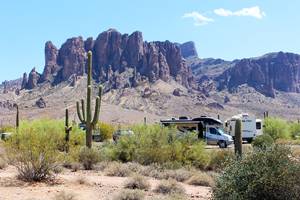
Camping in Arizona: Spending a night under the stars in the quiet of the desert should be on everyone's bucket list of things to do. Arizona is the perfect place for camping during the winter months and in the spring, when the desert turns a lush green and blooms in a fantastic display of color. Campgrounds near Phoenix usually offer the warmest weather, making them perfect during the coldest months. Tucson campgrounds are a little cooler but still great for camping in winter.
In spring and early summer, you can move into higher elevations. At this time of year, consider heading to the campgrounds in Sedona and Prescott. At a much higher elevation, the campgrounds around Payson are also good in late spring and summer. For a more complete look, see our article on the best campgrounds in Arizona.