10 Top-Rated Attractions & Things to Do in Tombstone, AZ
This famous Wild West town is the granddaddy of western folklore, where characters of the Old West have been immortalized in stories, and in some cases, brought back to life on the dusty streets of Tombstone. Set in the southeastern corner of Arizona, a little over an hour from Tucson, the town has preserved and restored many of the original buildings and opened them up to the public in the form of museums, restaurants, and stores.
Actors dressed in period costume walk the covered boardwalks or ride into town on horseback, and staged gunfights break out in the streets. Visitors are invited to step back into history, becoming part of the scene. Plan your visit with our list of the top tourist attractions and things to do in Tombstone.
See also: Where to Stay in Tombstone
- 1. See a Gunfight at the OK Corral
- 2. Wander down Allen Street
- 3. Visit Boothill Graveyard
- 4. Courthouse State Historic Park
- 5. Tour the Bird Cage Theatre
- 6. Go Underground on a Good Enough Mine Tour
- 7. Rose Tree Museum
- 8. Tombstone Epitaph
- 9. Old Tombstone Western Theme Park
- 10. Tombstone's Historama
- Where to Stay in Tombstone for Sightseeing
- Map of Attractions & Things to Do in Tombstone, AZ
- Tombstone, AZ - Climate Chart
1. See a Gunfight at the OK Corral
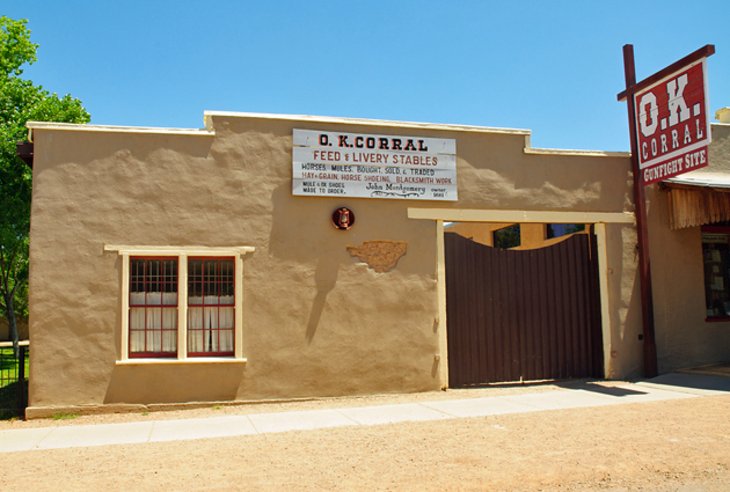
The OK Corral is the most well-known site in Tombstone. This was the scene of the famous shoot-out in 1881 between the Earp and Clanton gangs, a legendary event in the Old West. Today, life-size replicas of the nine gunfighters stand on the spots where they began the gunfight, giving a sense of the distance, or lack of distance, between each of the men, and the overall layout. The setting remains much the same as it was in 1881.
A re-enactment of the gunfight takes place daily inside the OK Corral complete with the sounds of pistols firing and gun smoke in the air.
A visit to the OK Corral is more than just the gunfight reenactment, your ticket gets you admission to the Historama and the Tombstone Epitaph. Visitors can also tour the stables and C.S. Fly's Photo Gallery.
Official site: http://www.ok-corral.com/
2. Wander down Allen Street
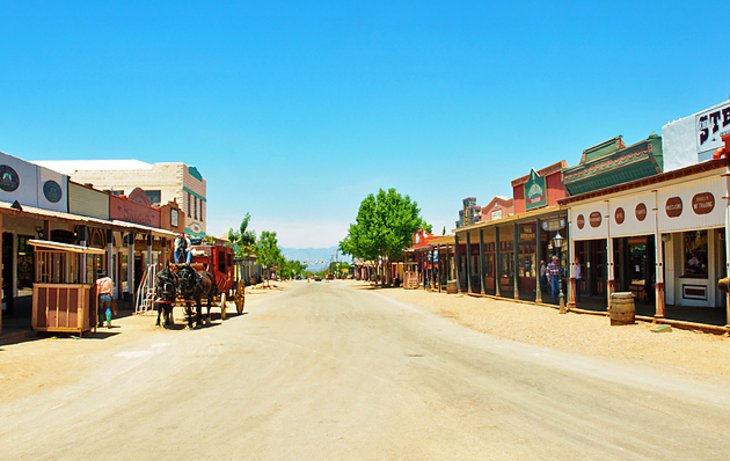
Allen Street is the main street through town, where visitors will inevitably find themselves. This is where many of the major attractions are located, as well as the restaurants and shops, and the famous old saloons. Covered boardwalks run the length of the street and provide a bit of shade in this sunbaked town.
Allen Street is also the scene of occasional historical re-enactments, where performers put on staged gunfights, and barroom brawls break out in the restaurants. Even if nothing is taking place, actors roam the street in western costumes. On one of the corners on Allen Street is the famous O.K. Corral.
3. Visit Boothill Graveyard
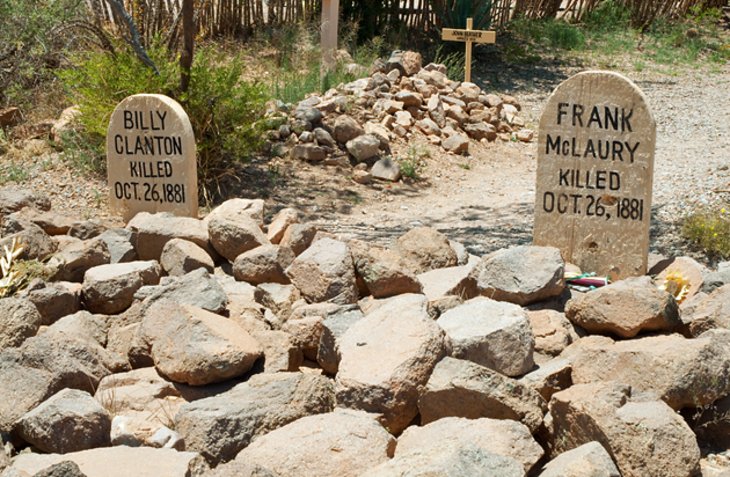
Boothill Graveyard in Tombstone is the final resting place for all of the town's hanging, lynching, and shootout victims. The number of graves is estimated at 276, many of them unmarked. Boot Hill was founded in 1878 and houses many unknown grave markers because so few people at the time carried identification. Many were only known by their nicknames!
In more recent years, the graveyard was restored, with the crosses redone and repainted, giving it a much less authentic feel. However, one upside is that you can now read the inscriptions.
4. Courthouse State Historic Park
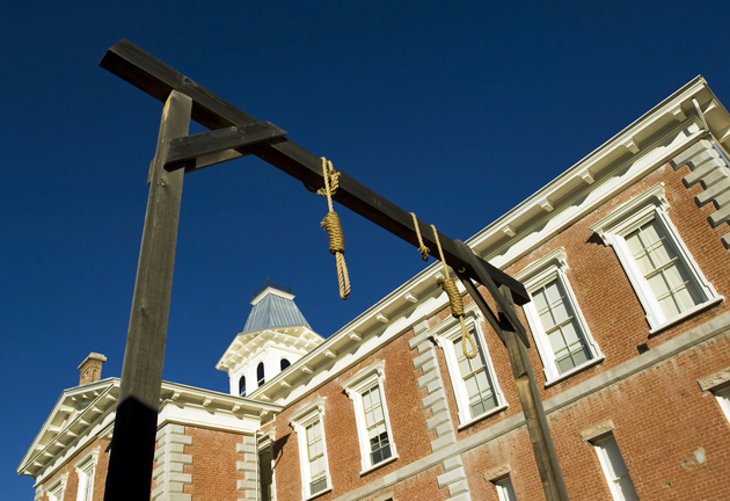
The Tombstone Courthouse, now a State Historic Park, was built in 1882 but abandoned in 1929 when the county seat moved to Bisbee. The courthouse housed the sheriff, recorder, treasurer, and the board of supervisors, with a jail located at the rear.
Today the building houses one of Tombstone's best museums. Here, you'll find all kinds of information on the lives of local citizens from the late-19th and early-18th century. On display inside are interesting antiques and artifacts. Outside in the courtyard stands a replica of the gallows where criminals were publicly hanged.
Address: 223 Toughnut Street, Tombstone, Arizona
Official site: https://azstateparks.com/tombstone/
5. Tour the Bird Cage Theatre
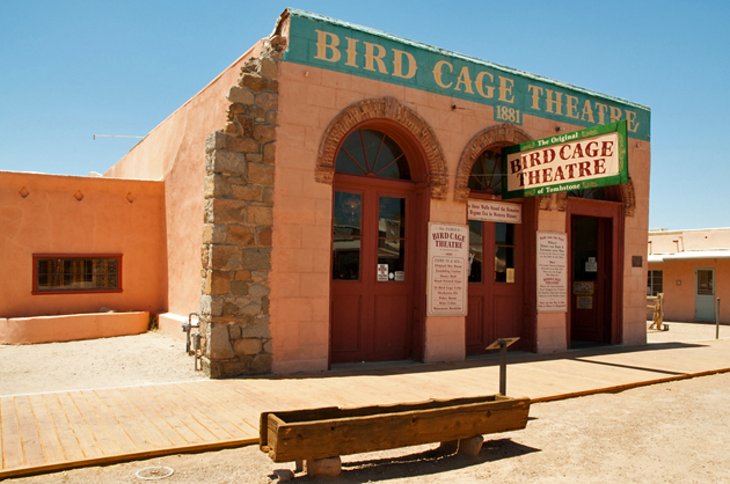
Built in 1881, the Bird Cage Theatre never closed during its eight years, operating day and night. A theater, dance hall, saloon, and brothel, the Bird Cage is said to have 140 bullet holes in the wall and ceiling.
Original fixtures and furnishings are still on display with the hand-painted stage and orchestra pit in original condition. The stage features photos and stories of the many entertainers that performed. Some rooms located below the building, which were sealed off since 1889, have been opened to the public. They remain as they were found in recent days.
The building is also believed by many to be haunted, and one of the most popular things to do here is the ghost tour, taking place in the early evening.
Address: 535 Allen Street, Tombstone, Arizona
Official site: http://tombstonebirdcage.com/
6. Go Underground on a Good Enough Mine Tour
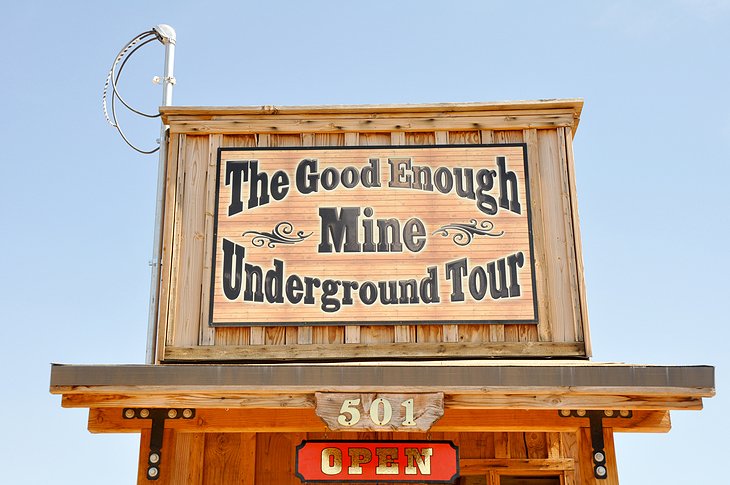
Tombstone's rough and tumble history is on display everywhere in the town, but if you want to learn more about the mining history and what drew people here, take a Good Enough Mine Tour. The Goodenough Mine began operation in 1879 and was a major silver producer in the area.
Today, you can take an underground tour and learn about the workings of the mine and hear stories about the miners. You'll go 100 feet below the surface to the remnants of a former silver mine. The tour takes 45 minutes and involves a few sets of stairs.
7. Rose Tree Museum
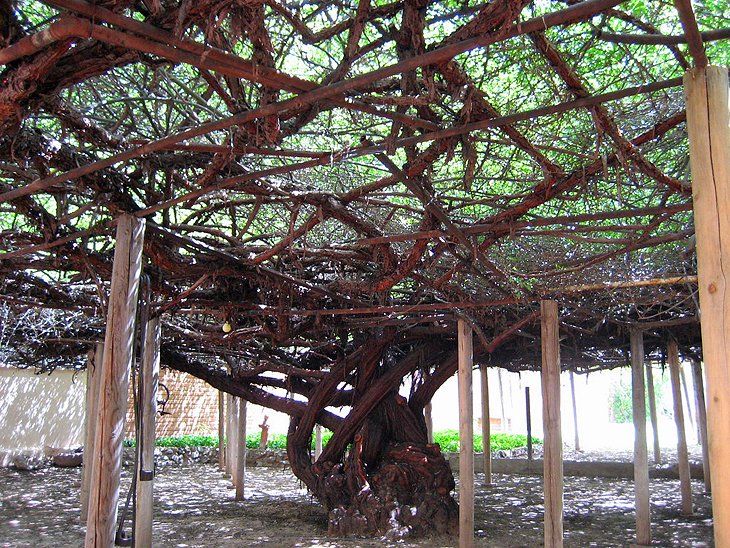
First opened in the 1960s, the Rose Tree Museum offers a look at the history of the families who have called Tombstone home for the generations. In the backyard stands what is known as the World's Largest Rose Tree. If you are visiting between mid-March and mid-May when it's in bloom, be sure to stop in to see the incredible display of double white flowers.
The rose tree provides ample shade and is a pleasant spot to escape the heat of Tombstone. The museum also offers accommodation in suites where you'll have unlimited access to the rose tree.
Official site: https://tombstonerosetree.com/
8. Tombstone Epitaph
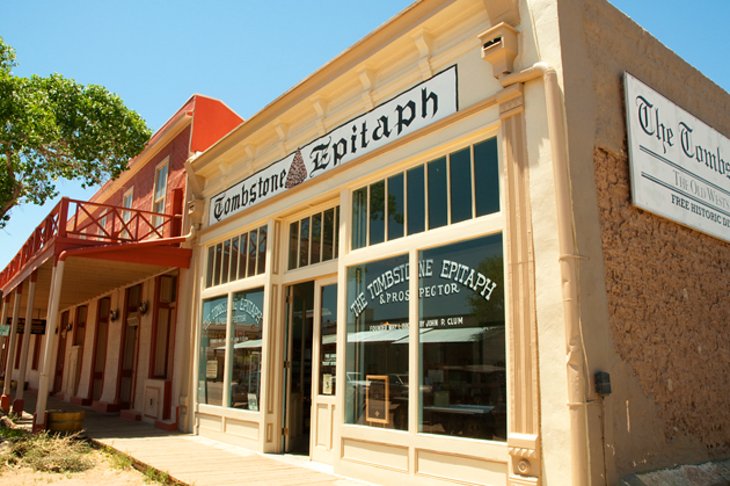
The Tombstone "Epitaph" paper was founded in 1880 by John Philip Clum. It was the local newspaper of the day and covered the stories that today comprise Tombstone's history. One of the first big stories was the gunfight at the O.K. Corral. Today, it still publishes regularly-written as if it were back in the olden days-and is known for being the oldest continuously published newspaper in the state. It is designed to be fun and entertaining, while portraying the history of the Old West.
The Epitaph Museum is a free attraction in Tombstone, and visitors can see printing techniques of the 1880s. The original press is on display.
Official site: http://www.tombstoneepitaph.com/
9. Old Tombstone Western Theme Park
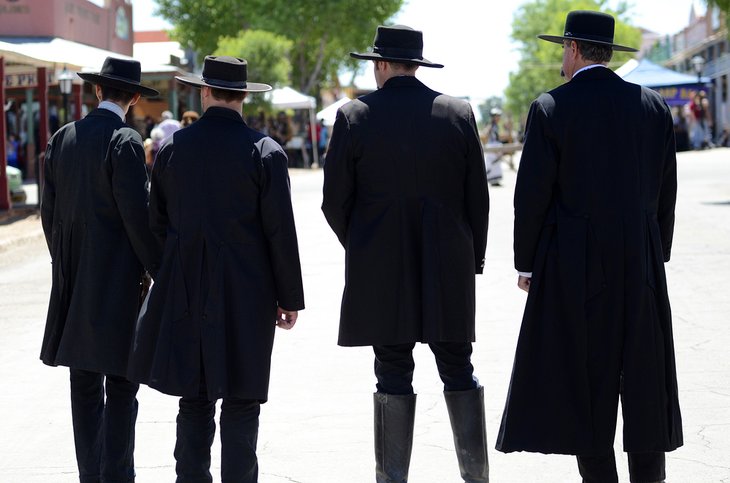
For a different take on the gunfight at the OK Corral, swing by the Old Tombstone Western Theme Park. Here, you'll find a fun and not so serious take on what really happened.
Costumed actors have a good time drawing out the laughs from the audience with their antics and stunts. The Old Tombstone Western Theme Park is perfect for the entire family, some of the highlights include the 17-hole (yes 17, not 18!) miniature golf course, a Shootin' Gallery, a train museum, an opportunity to pan for gold, and a jailhouse where you can be photographed in the slammer.
This is one of the most popular attractions in town; consider booking in advance with a ticket to the Gunfight Show at the Western Theme Park.
Official site: http://tombstonegunfights.com/
10. Tombstone's Historama
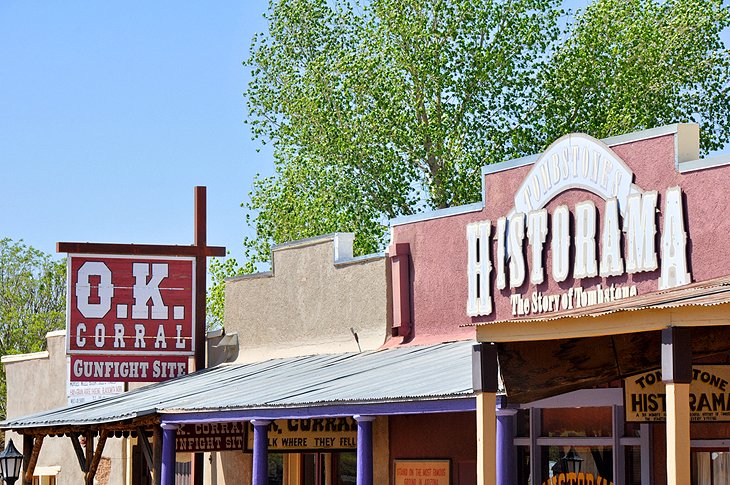
This is the best place to learn about the history of Tombstone and hear some of the stories behind the characters that lived here and helped create the legends and myths that surround the town.
This 30-minute video presentation is narrated by Vincent Price and helps give visitors a better understanding of the Old West. Admission to the Historama is included with admission to the OK Corral.
The show runs on the hour, so be sure to time your arrival accordingly.
Where to Stay in Tombstone for Sightseeing
Tombstone is all about the Old West, and many of the area's hotels reflect this theme. If you are stopping here for the night, you can find some interesting hotels that will add to your experience.
- Tombstone Monument Ranch: Just a couple of miles west of town and one of the best places in the Tombstone area, this ranch is built to resemble an Old West town. The 18 Western-themed rooms are each uniquely designed. Amenities include a pool and hot tub, an on-site restaurant, and guests can also enjoy horseback riding and evening entertainment at the ranch.
- Landmark Lookout Lodge: Just a five-minute drive from Tombstone, this hotel offers comfortable rooms, a swimming pool, and a cooked-to-order breakfast included in the rate.
- Larian Motel: A good budget choice, the Larian Motel offers affordable rates, a great location, and rooms with an Old West theme.
- Tombstone Sagebrush Inn: If you are traveling with a dog, the Sagebrush Inn is a good option. This value hotel features rustic décor, comfortable beds, small outdoor sitting areas in front of the units, and is known for having hosted John Wayne.
Map of Attractions & Things to Do in Tombstone, AZ
Tombstone, AZ - Climate Chart
| Average minimum and maximum temperatures for Tombstone, AZ in °C | |||||||||||
| J | F | M | A | M | J | J | A | S | O | N | D |
| 16 2 | 18 4 | 21 6 | 25 8 | 29 13 | 35 17 | 34 19 | 32 18 | 31 16 | 26 11 | 20 6 | 16 3 |
| PlanetWare.com | |||||||||||
| Average monthly precipitation totals for Tombstone, AZ in mm. | |||||||||||
| 26 | 19 | 18 | 6 | 7 | 16 | 72 | 78 | 39 | 33 | 18 | 27 |
| Average monthly snowfall totals for Tombstone, AZ in cm. | |||||||||||
| 0 | 0 | 0 | 0 | 0 | 0 | 0 | 0 | 0 | 0 | 0 | 1 |
| Average minimum and maximum temperatures for Tombstone, AZ in °F | |||||||||||
| J | F | M | A | M | J | J | A | S | O | N | D |
| 60 36 | 64 39 | 69 42 | 77 47 | 85 55 | 95 63 | 93 67 | 90 65 | 88 61 | 78 52 | 68 43 | 60 37 |
| PlanetWare.com | |||||||||||
| Average monthly precipitation totals for Tombstone, AZ in inches. | |||||||||||
| 1.0 | 0.7 | 0.7 | 0.2 | 0.3 | 0.6 | 2.8 | 3.1 | 1.5 | 1.3 | 0.7 | 1.1 |
| Average monthly snowfall totals for Tombstone, AZ in inches. | |||||||||||
| 0 | 0 | 0 | 0 | 0 | 0 | 0 | 0 | 0 | 0 | 0 | 0.4 |
More Related Articles on PlanetWare.com
Nearby Areas Worth Visiting: The area southeast of Tombstone holds some unique attractions. Less than 30 minutes south of Tombstone, in the mountains near the Mexico border, is the old mining town of Bisbee, one of Arizona's lesser-known gems. You can learn more about this town in our article on the Top Attractions & Places to Visit in Arizona.
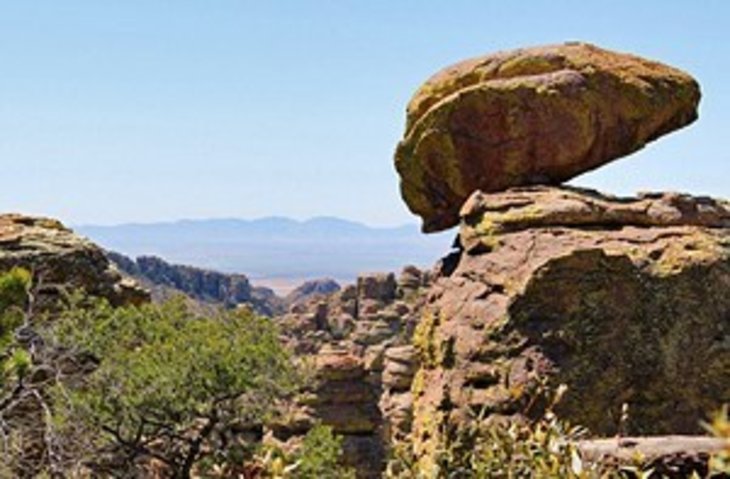
Another interesting spot, about a 1.5-hour drive away, which many travelers aren't familiar with, is Chiricahua National Monument. Our article on the Best Hikes in Arizona offers ideas for hiking in Chiricahua, and our piece on the Best Campgrounds in Arizona offers information on camping in this area.