

One Of America's Largest Freshwater Springs Is A Wildlife Haven With Refreshing, 70-Degree Waters
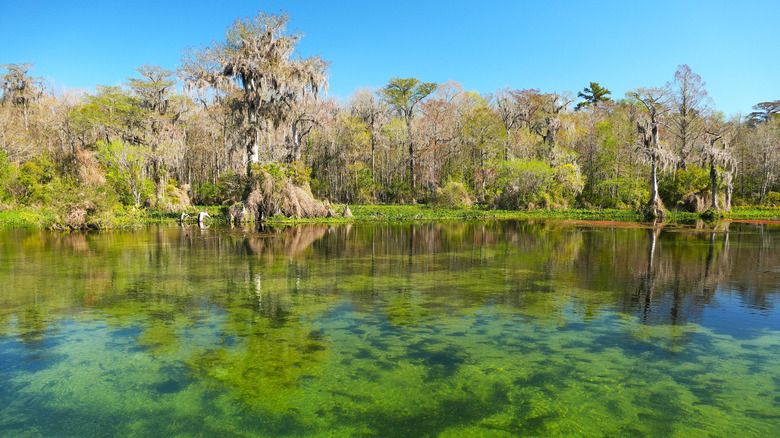
Hidden away from Florida's top tourist attractions is a sprawling estate with Spanish moss dangling from a grove of ancient cypress trees, sitting just 15 miles south of Tallahassee. Wakulla Springs, located within Edward Ball Wakulla Springs State Park, is home to one of the world's largest and deepest freshwater springs. Within the park, a Spanish-style lodge, built in 1937 and listed on the National Register of Historic Places, will transport you to Old Florida with its elegant dining room and accommodations. Wakulla Springs is a destination full of historic charm and natural wonder.
The Wakulla Springs form the head of the Wakulla River, and its main basin is a whopping 300 feet wide and 185 feet deep. The springs, cypress groves, sinkholes, and underwater caves protected at the park are teeming with wildlife. Visitors can take a riverboat tour, swim (the water is a refreshing 70 degrees Fahrenheit all year), hike, and stay overnight to learn about the park's history and ecology. The Lodge at Wakulla Springs' lobby, with its decorative vaulted wooden ceilings, leather sofas, and marble floors, is definitely worth peeking at. You might just be tempted to spend the night in one of the guest rooms, some of which overlook the springs. As one visitor wrote in a review on Tripadvisor, "It was like a Disney experience except all the nature was real and not contrived."
While the closest city with a major international airport is the Florida capital, the park is also a three-hour drive from Gainesville. If you're building a Panhandle itinerary of record-breaking natural wonders, you might also want to visit Florida's tallest waterfall at Falling Waters State Park, just under a two-hour drive away. It's a great destination for a day trip, as well as an essential stop during any Panhandle getaway.
Wildlife at Wakulla Springs
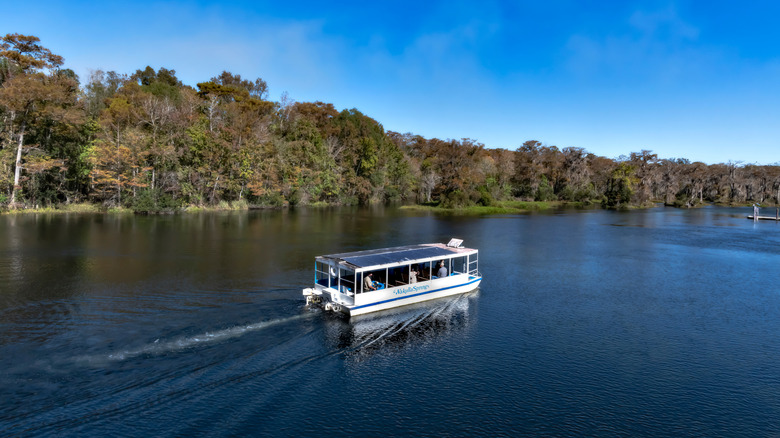
Florida is known for its natural springs, such as in High Springs; however, Wakulla Springs stands out for its diverse wetland wildlife. Despite significant habitat disruption, the springs still draw incredible numbers of diverse birds, reptiles, fish, and mammals. In fact, scientists do weekly surveys to keep careful track of the fluctuations of wildlife in the park that change with the seasons. It's an awe-inspiring place to learn about ecology, including the human impact on other species. Visitors can take a 45-minute riverboat tour that runs in a 2-mile loop where you're likely to spot wildlife, and guides cover the history of Indigenous peoples in the region, the origins of the park, and stories from underwater cave explorations. Tours run every day, and tickets are $8 for adults and $5 for children (as of this writing).
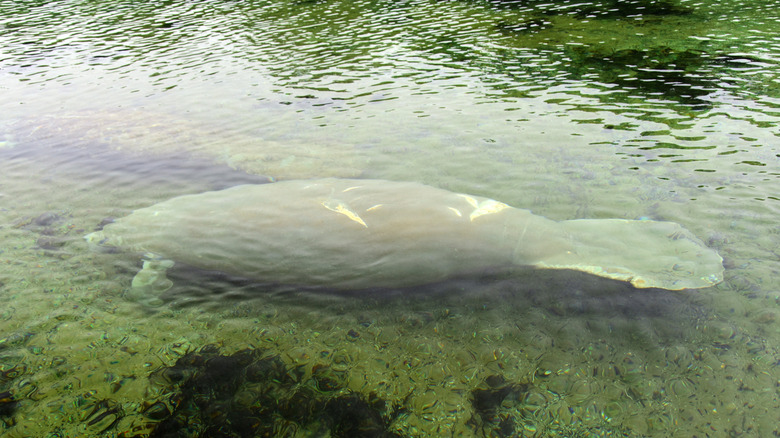
Alligator sightings are extremely common at Wakulla Springs. On average, visitors may spot a dozen or more alligators during a boat tour. One writer for the WFSU Public Media Ecology Blog even reported once seeing 50 of them on one of the riverboat tours. Sadly, though, this population of beloved Florida reptiles has experienced massive declines over the last several decades largely due to human activity. You can also spot manatees, particularly in the winter when they visit the springs in search of warmer waters. These large, endangered marine mammals can grow over 13 feet long and are hard to miss swimming in Wakulla's clear waters.
Although the larger animals tend to steal the spotlight, there is an incredible abundance of smaller animals at Wakulla that deserve just as much attention — especially those with wings. Close to 250 species of birds have been recorded at the springs on eBird, including some migratory species that spend the winter here. Common sightings include anhingas, common gallinules, pied-billed grebes, hooded mergansers, black vultures, least bitterns, herons, ospreys, and ibises. Butterflies are also abundant in spring and fall.
Other activities at Wakulla Springs
Going for a dip at Wakulla Springs is a great way to refresh and recharge. The water tends to be clear with a greenish hue, due to large amounts of chlorophyll. The springs stay at a constant temperature of about 70 degrees Fahrenheit through all seasons, which is comparable to the temperature of the Atlantic Ocean at Miami Beach in the winter. In the summer, the water becomes a refreshing place to cool off; in winter, it's a great place for a cold plunge. There is a designated swimming area in the park with some physical deterrents to protect the area from alligators, but these barriers aren't completely foolproof. There's always a risk when swimming in natural areas that overlap with wildlife in Florida, so stay alert.
There are several hiking trails at the park that meander through forested areas and past a few remarkable sinkholes. The Hammock Spur Trail and the Cherokee Sink Trail are each about 1 mile long. If you're up for a longer stretch, the Sally Ward Trail runs about 6 miles through a shaded forest. Once you've worked up an appetite outdoors, the menu at The Lodge at Wakulla Springs serves up a wide range of classic and Southern fare, from crab cakes and fried green tomatoes to filet mignon and grilled beef liver. If you want something a bit lighter to tie you over, head over to the lodge's Soda Parlor & Spring Shop. Root beer floats, sundaes, and other old-timey delights are served here on a massive 70-foot marble counter. The lodge also hosts seasonal events, such as special themed cruises, holiday feasts, and murder mystery-themed activities.