

Flight Attendants Use This Sneaky Code Word To Say You're Good-Looking
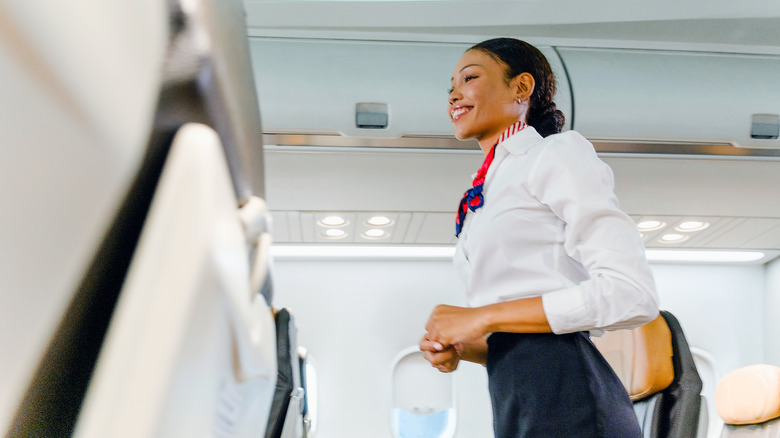
There are many tricks of the trade when it comes to being a flight attendant, such as knowing how to pack quickly and efficiently, as well as being a customer service whiz at 30,000 feet in the air. I've held the job for over a decade, and there are some things that come easily, as well as some skills that take time and experience to master. One of the largest adjustments to make is acclimating to the lack of personal space and privacy, especially when speaking with other members of the crew, which is why we tend to resort to code words to communicate quickly.
Flight attendants utilize these shorthand terms for everything from duty-related tasks to covertly pointing out attractive people, and one example is not actually a word we utter to each other, but rather to passengers themselves. If you're lucky enough to have a flight attendant say "cheerio" to you rather than hello or goodbye, don't be surprised if the rest of the crew takes notice, as this may be a signal to everyone within earshot that you're good-looking.
It may seem a little unnatural to call out passengers in this manner, and that's kind of the point. Some crew members go so far as to call it the cheerio game or challenge, and you have to keep a straight face while you do it. Read on to learn about different code words flight attendants use and what they mean, as well as the times we're most likely to use them and why.
Why do flight attendants use code words?
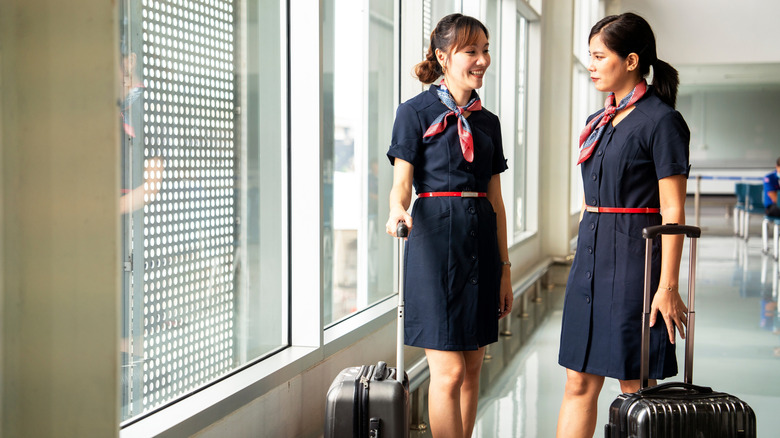
The most common reason flight attendants use code words doesn't have anything to do with trying to be sneaky — more likely it's to streamline an emergency situation or just to save time. We have lots of multi-step procedures that must be completed daily, and while some code words like "cheerio" are complimentary, many are more neutral in nature. For example, one of the first things we look for during boarding is what we refer to as an "ABP," or able-bodied person. These are the passengers we would approach if we were to need extra help during an emergency.
That being said, there will be times when we don't want to be overheard by passengers. If you hear us refer to someone named "Philip," we may be using the abbreviation "PILP," which stands for "passenger I'd like to punch." Not very nice, I know, but we have to get creative when we're trapped in the air for hours at a time with someone who is misbehaving. And we aren't the only ones — airport workers also have code words for annoying travelers.
Another example of us calling out a passenger may bring about a whimsical image, but when "mermaid" is used as a flight attendant code word, it is definitely not a compliment. This refers to when a passenger takes it upon themselves to spread out across a whole row, often without having asked permission to move from their assigned seat. But don't worry — it's not just passengers we pick on. For example, if you hear a flight attendant call another crew member a "galley queen," it means that person is being territorial over the limited space we have in our preparation areas.