

California's Abandoned Army Base Is Now A Huge National Monument And A Coastal State Park
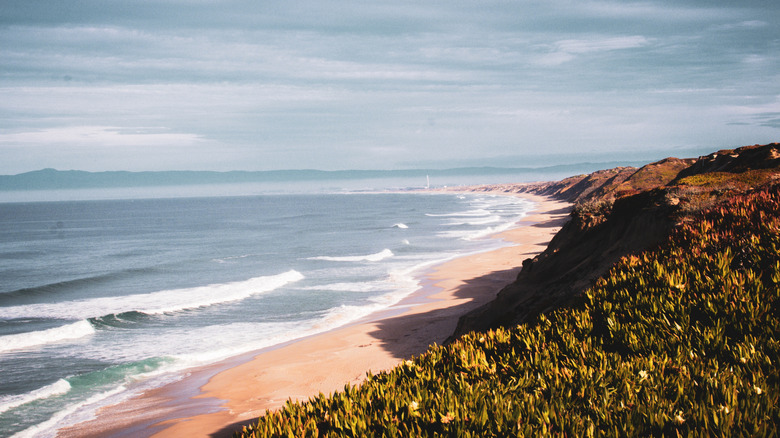
During World War I, the Army acquired a beautiful sweep of oceanfront land in central California to have more space for training artillery and cavalry troops. Thus came to life what would later be known as Fort Ord. As many as 1.5 million soldiers trained at Fort Ord between 1917 and 1994, including for World War II, the Korean War, the Vietnam War, and the Panama invasion of 1989. It's also the first Army base that went through racial integration, after President Truman signed an order in 1948 to abolish segregation. In 1994, the military closed the base under the Defense Base Closure and Realignment Act of 1990.
Today, major parts of the former Fort Ord military base have been converted into Fort Ord National Monument and Fort Ord Dunes State Park. Together, they comprise more than 15,000 acres of public lands for outdoor adventure and beachfront access to the Pacific Ocean. At the national monument, you'll find 86 miles of trails for cyclists, hikers, and horse riders. The state park, meanwhile, sits right on the coast with 4 miles of beach, as well as hiking and biking trails through scenic dunes overlooking Monterey Bay National Marine Sanctuary. The park's dunes and beaches are home to many endangered species.
The two locations are a 30-minute drive from one another in the towns of Seaside and Marina, California. Fort Ord Dunes State Park is located about a one-hour drive south of Santa Cruz and about 2.5 hours south of San Francisco. They sit along the southern curve of Monterey Bay, a region with scenic coastal towns and beaches, from Capitola's scenic beaches and coastal charm to Carmel-by-the-Sea's pristine beach getaway.
Hitting the trails at Fort Ord National Monument
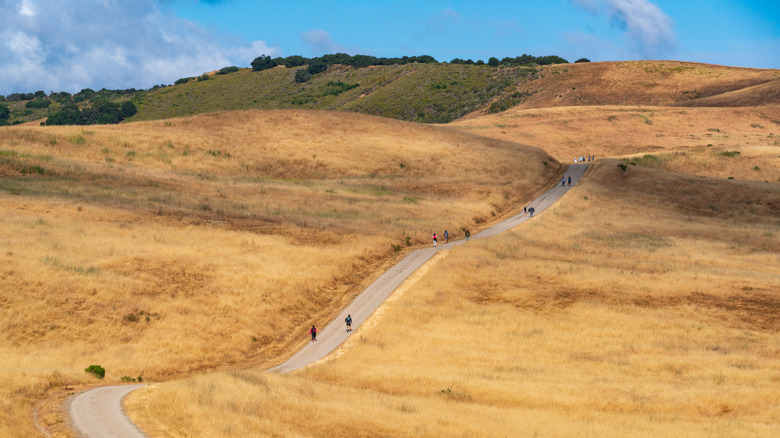
Fort Ord National Monument is known for its gentle rolling hills and coastal foliage that are home to many animals, including some rare and endangered species. It's also home to one of the largest remaining areas of maritime chaparral, a unique coastal habitat characterized by dense, woody shrubs and small trees such as manzanitas, wild lilac, and chamise. The park is a great place to spot and photograph the area's abundant wildlife, which includes black-tailed deer, turkeys, bobcats, coyotes, red-tailed hawks, coast horned lizards, golden eagles, and mountain lions.
There is a robust network of both paved and unpaved biking, hiking, and riding trails across the park. For first-time visitors who want a shorter route, the Trail 30, Engineer Road, Oil Well Road, and Trail 101 Loop may be a good option. It's about 3.8 miles and takes roughly 1.5 to 2 hours to complete. If you're looking for something a bit more active, you might try the Guidotti, Skyline, Oil Well, and Toro Creek Loop in the southeast corner of the park. It's a roughly 6-mile trek that packs in some extra elevation that's totally worth the panoramic views of the park. There's also a 6-mile section of the Juan Bautista de Anza National Historic Trail that passes through the park, which commemorates an 18th-century passage of Spanish colonists from Sonora, Mexico, to Alta California.
There are no entrance fees, and the two main access points at the Creekside Terrace Trailhead and the Badger Hills Trailhead offer free parking and restrooms. Keep in mind that because of its historical use as a training ground for military troops, large portions of the public lands at Fort Ord National Monument are still undergoing environmental cleanup. The areas of concern are clearly marked by signs and fences.
Natural beauty at Fort Ord Dunes State Park
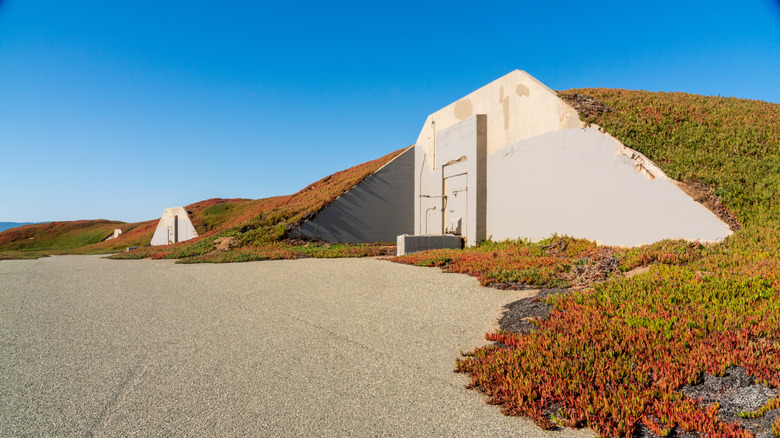
There are 4 miles of golden beach at Fort Ord Dunes State Park, as well as 4 miles of biking and hiking trails. It's the perfect place to set out on the sand and enjoy the California sunshine. These dunes were also part of extensive military training operations and have undergone cleanup that's enabled wildlife to flourish once again. Visitors may spot resident seals and sea lions, and the park is also a large habitat for the Smith's blue butterfly, the snowy plover, and the California legless lizard. Remnants of the military's presence still dot the coastline. For example, there's a path in the park that meanders along old Army bunkers and a few old firing ranges, tucked into the dunes. Wildlife peeking out through massive dunes in the midst of military installations is part of what gives this park its unique charm.
There's no fee to enter, and there's a large parking lot at the park entrance. While breathtaking, this is not a good beach for swimming: The ocean currents here are extremely strong and dangerous, and there are no lifeguards. Beneath the turbulent waves, however, is a vast ecosystem of rich marine life, including whales, dolphins, and sea otters. On the north side, the beach connects to Marina State Beach, a popular place for hang gliding and kite flying because of its strong winds. Above the beach, there is a large paved trail that winds through the dunes. That trail connects to another paved path, the Monterey Bay Coastal Recreation Trail, which stretches 18 miles from Castroville in the north to Pacific Grove. Fort Ord Dunes State Park is a perfect stop to add to a Pacific Coast road trip.