

Between Nashville And Knoxville Lies A Tennessee State Park With Spectacular Waterfalls
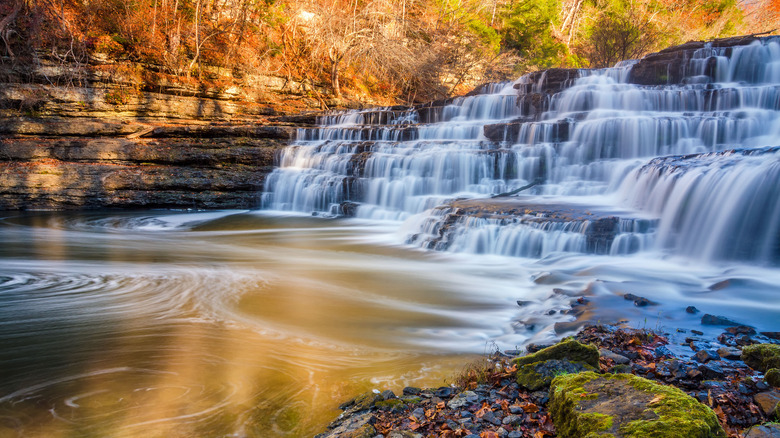
Tennessee's tourism image generally revolves around the music and party vibes of Nashville or the majestic rolling peaks of the Great Smoky Mountains. "Waterfalls" aren't necessarily what most people picture when they think of Tennessee. However, Tennessee does, in fact, have a surprisingly rich collection of lovely waterfalls cascading through its mountain forests. Many of them are a convenient day trip away from a major Tennessee city. One perfect example of this is Tennessee's Burgess Falls State Park. Located about an hour and a half from Nashville and two hours from Knoxville, Burgess Falls State Park is within driving distance of both cities. At the same time, Burgess Falls State Park's unspoiled forest setting and waterfall views offer a serene reprieve from noisier tourist destinations.
While Burgess Falls State Park takes its name from a particular waterfall within its boundaries, the park actually contains several different waterfalls tucked away in a verdant Tennessee woodland. With so many waterfalls to show off and even more photogenic forest views, Burgess Falls State Park is a top escape for hikers and outdoor lovers to explore. In fact, the park's many trails offer some of the best waterfall shots in Tennessee (a state that, as you'll recall, does have quite a few waterfalls to share). Remarkably, Burgess Falls State Park is also a terrific destination for adventures on the water, with excellent paddling and fishing spots in defiance of the normal "look but don't get in" reputation of waterfalls. All in all, a visit to Burgess Falls State Park is a must-have entry on any outdoor travel itinerary in the fertile lands between Knoxville and Nashville.
Tennessee's secret waterfall haven
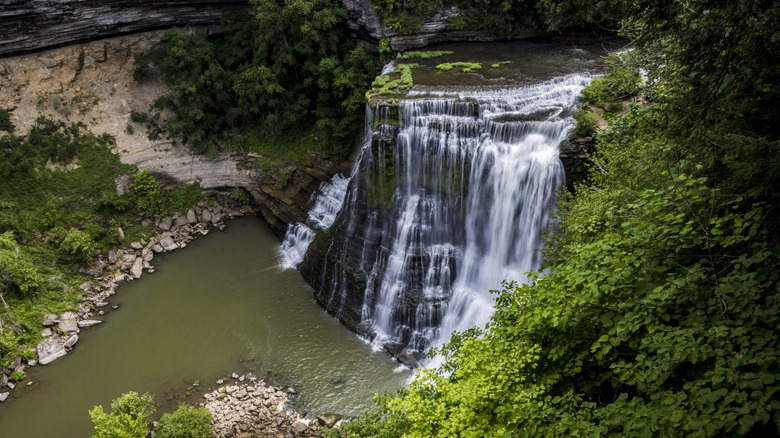
The most prominent American waterfalls east of the Mississippi River are usually heavy hitters like Niagara Falls or the amazing cascades found in New York's "Grand Canyon of the East" at Letchworth State Park. Tennessee's contributions to the Eastern U.S.'s waterfall catalog include smaller, but equally scenic, waterfalls pouring through the state's many mountainous areas. Burgess Falls State Park features four different waterfalls aligned through a limestone gorge, each with a distinctive shape and aesthetic. The star of the park's waterfall show is the namesake Burgess Falls, a cataract-type cascade defined by a series of rocky "steps" that alter the water's course as it descends into the gorge. The other three waterfalls within the park — Middle Falls, Pipeline Falls, and Falling Water Cascades — also take on unique, layered shapes that make for great photographs, even if they don't reach quite the same height as Burgess Falls.
Burgess Falls State Park's remarkable waterfalls are the result of Tennessee's Falling Water River as it makes its way through the Caney Fork River Watershed. The steep rocky bluffs, canyon ridges, and riverside forests that adorn the park's waterfalls reflect its location along the eastern edge of the Eastern Highland Rim. Though not as prominent a geological feature as Tennessee's Blue Ridge Mountains, the Cumberland Plateau is a gorgeous and ecologically rich region of Appalachia that features vast hardwood forests and even archeological treasures like Tennessee's new Cardwell Mountain State Archeological Park. Though not directly connected, Burgess Falls State Park also administers the equally stunning Window Cliffs State Natural Area and its unique limestone "bridges" just eight miles away.
What to do at Burgess Falls State Park
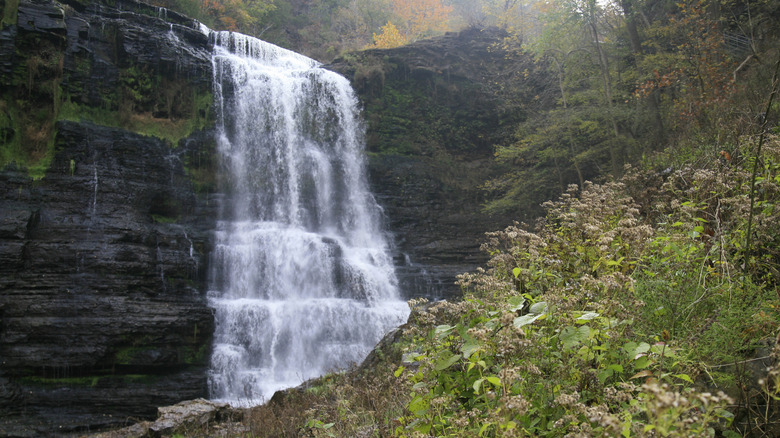
At only 304 acres, Burgess Falls State Park is relatively small as far as state parks go, but that modest size packs quite a few opportunities for outdoor activities. The park is obviously a go-to Tennessee destination for waterfall viewing, as its infrastructure includes overlook areas with exceptional panoramic views of the falls. Burgess Falls State Park also has several miles of forest trails of varying degrees of difficulty. The 1.3-mile Burgess Falls Trail is likely the primary introduction to the park for most hikers, with easy access to the main Burgess Falls viewing area and a convenient loop shape that takes hikers on a comprehensive introductory tour of the park. The shorter River Trail and Ridgetop Trail, when taken together, form a lovely 1.5-mile loop with superb views of all four waterfalls and plenty of opportunities to explore the surrounding forests.
Unfortunately, the base of the falls is not accessible on foot from the park. However, Burgess Falls is still viewable from the bottom up via the Falling Water River itself. Despite the many precarious waterfalls, Burgess Falls State Park is a worthy destination for kayakers. Though the park itself has no river access points, kayakers who enter the river from the nearby Center Hill Lake or Cane Hollow can paddle to the base of Burgess Falls when water levels allow and get a front-row seat to its cascading glory. If, somehow, Burgess Falls State Park did not satisfy your waterfall hunger, the park is only 40 miles away from the equally impressive Fall Creek Falls State Park, another Tennessee waterfall haven and one of the best destinations for first-time visitors to Tennessee.