

One Of America's Least-Visited National Parks Is A Fall Escape With Colorful Foliage & Cave Tours
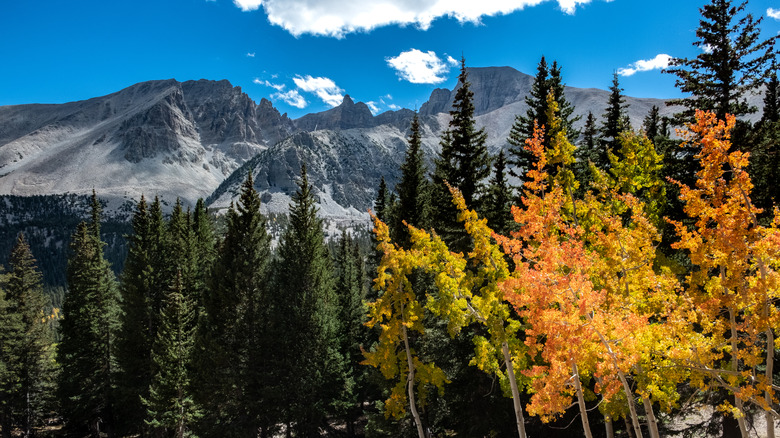
Despite its relative proximity to two major tourist hubs, Great Basin National Park ranks surprisingly low in popularity. This gorgeous stretch of wilderness is only a 4.5-hour drive from Las Vegas and a 4-hour drive from Salt Lake City. That's comparable to the driving time between Las Vegas and one of America's most visited national parks. In 2025, Great Basin received about 160,000 visitors compared to the Grand Canyon's 4.4 million visitors. If you're looking for an uncrowded park with an abundance of diverse landscapes, including mountains, lakes, streams, forests, deserts, and underground caves, Great Basin is the far better choice.
Great Basin National Park can actually still get a bit crowded in the summer. However, summer also brings frequent afternoon thunderstorms, particularly in July and August, which can pose hazards for hikers. So, here's a little secret: Fall is actually one of the best times to visit Great Basin National Park.
Although the park is not very crowded in general, the campsites can quickly fill up during the summer months. Camping is one of the main lodging options in this remote part of Nevada. Fall generally brings fewer crowds, although campsites can fill quickly during September's Astronomy Festival. It's also the time when the park's 77,000 acres of mountains and forests explode in glorious colors. After the fall equinox, when the nights begin to get longer, visitors also have more time to explore the night sky. Great Basin is an internationally recognized Dark Sky Park, and it hosts an annual Astronomy Festival in September. Here are some ways to enjoy Great Basin's changing foliage and underground caves.
Ways to enjoy fall at Great Basin National Park
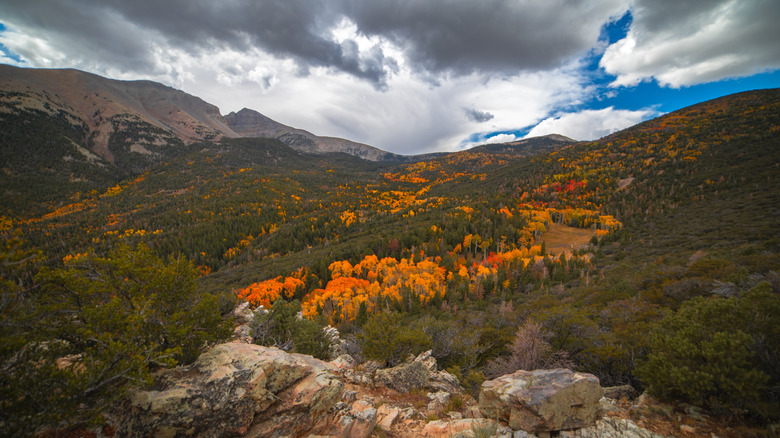
One way to appreciate Great Basin's fall foliage is along the Wheeler Peak Scenic Drive, a 12-mile paved road that branches off Nevada Highway 488 and climbs to the Bristlecone Trailhead and Wheeler Peak Campground. The drive is about 30 minutes one-way without stops and takes you to an elevation of about 10,000 feet above sea level. There are many opportunities for views, picnics, and hiking trails along the way. For example, hikers can visit the Wheeler Peak Bristlecone Pine Grove, home to ancient trees that can live for thousands of years. Although these are evergreen trees that don't change color, their longevity is incredible to witness. The Wheeler Peak grove is the park's most accessible bristlecone grove, reached by a 2.8-mile round-trip hike from the Bristlecone Trailhead.
Another great place to enjoy the Great Basin's colors during autumn is at Baker Creek on the east end of the park. The Baker Creek Loop is an approximately 3.3-mile round-trip hike through an aspen grove, rated easy to moderate and taking about 1.5 to 3 hours, depending on your pace. One thing that may make you want to slow down is the distinctive tree carvings, called arborglyphs, left by the folks who once lived as shepherds on these lands. If you're looking for a more challenging hike, check out the Snake Divide Route, which takes you out and back along 13.4 miles. The winding road along Snake Creek also offers views of cottonwoods that turn golden in autumn.
Caving adventures at Great Basin National Park
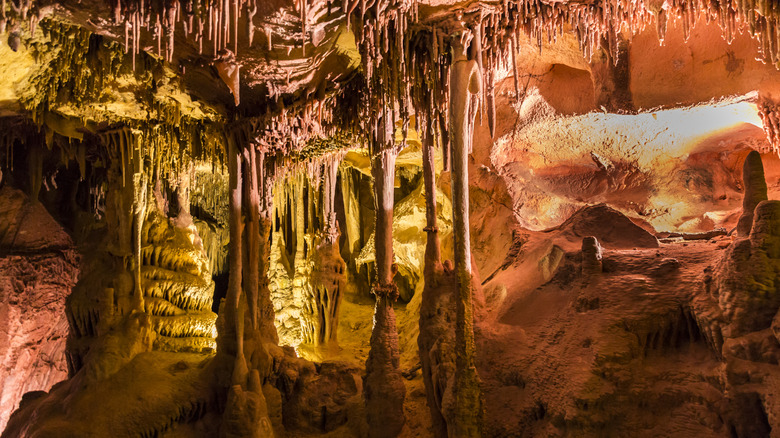
There are many national parks whose caves are front and center, like at Mammoth Cave National Park. Great Basin is home to 40 known caves, including Lehman Caves, Nevada's longest cave system. Named for Absalom Lehman, who explored it in 1885, the cave system became a national monument in 1922. Researchers have discovered more than 10 species previously unknown to science in caves throughout the park.
Today, the Lehman Caves are open to visitors through ranger-guided tours that are best reserved in advance. There are four different tours offered on varying schedules that range from $8 to $40 per adult. Accessible Gothic Palace, Grand Palace, and Lodge Room tours lead visitors through a series of chambers in which you can expect to see stalactites, stalagmites, cave bacon, and cave turnips — various formations that take thousands of years to materialize through small deposits of minerals. As one visitor who took the Grand Palace Tour put it on Tripadvisor: "There were so many interesting formations and rare formations. I have never been to a cave like this!"
The park also offers a guided 3-hour "Introduction to Wild Caving" tour for visitors ages 16 and older seeking a bit more of a thrill off the paved paths. Keep in mind this tour includes scrambling and belly crawling through very narrow spaces. In addition to guided tours, folks who have the appropriate level of experience and permits are allowed to explore seven other "wild" caves located within the park.