

Rick Steves' Clever Tip To Avoid Paying For Expensive Parking In Europe
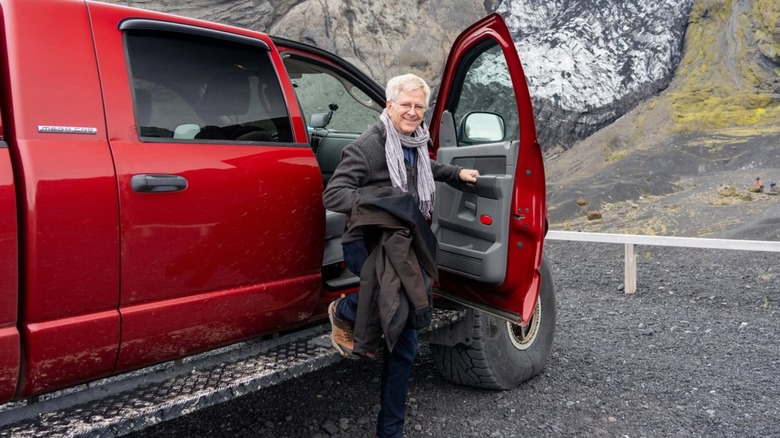
You're visiting Europe and you've chosen to rent a car to get around. You've got your foreign driver's license ready to go (which you should make sure to scan as a backup before your trip), you're in your rental vehicle, and you're all set to start exploring. But before you can begin sightseeing, you have to park — and that can get expensive. Instead of driving directly into the city and paying for prime parking, you may want to take some advice from travel pro Rick Steves and find a park-and-ride lot instead. On his website, Steves says, "... there are free and efficient park-and-ride lots outside of many city centers. If you make a point to use these, you'll save both time and money — and help European cities cut down on traffic congestion in their clogged city centers." In another article, he expands on that, telling travelers that he himself avoids the often frustrating one-way streets by parking in lots outside the city. In fact, he reveals that some cities don't allow parking inside the city center at all.
Steves explains that these park-and-ride lots sometimes have a fee that actually includes a transit ticket to get into the city, or they may be free, with inexpensive transit. Depending on where these lots are, you might even be able to walk into the city. While street parking can sometimes be cheaper if you're only visiting somewhere for a short time, such as to go to a museum or wander a famous neighborhood, the time limits may add constant trips back to move your car, and if you don't make it, you can end up with expensive parking tickets. While Steves reminds tourists to be cautious when using parking lots, these lots are usually a better option than downtown street parking.
Park-and-ride lots and other parking options in Europe
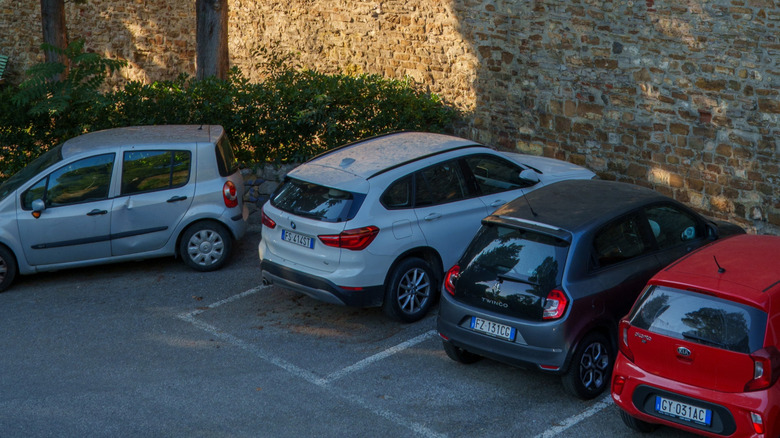
You can find parking lots around Europe by looking for a blue sign with a "P" on it. You can also use lot-finding apps like Parking Space Finder, look at official city websites, search for lots on Google Maps, or ask your hotel concierge. For some of the larger cities, or during high tourist season, you may want to leave your rental car at your hotel and use public transportation like buses, subways, or trains instead. However, if you plan on staying out late, make sure you note when public transportation stops running in the evening and have a plan for getting a taxi or rideshare.
Of course, you can take your chances with street parking if you don't want to leave your car outside the city. However, Rick Steves warns of the narrow streets in Europe, and if parking isn't your strong suit, lots are a better choice. If you do choose street parking, however, make sure you know what the parking signs or markings indicate, from the colors painted on the curb to whether or not there is a meter. (No meter doesn't mean you can park there for free.)
You may also find a cardboard clock in your rental car, or you can pick one up at a gas station or other spots. These are to indicate what time you parked your car for timed spots. However, Steves recommends not wasting your vacation time looking around for just the right parking spot, or one where you won't get a ticket. Just park outside the city and use that extra time to explore. Finally, once you're out of the car and ready to sightsee, take Steves' advice on how to have a more immersive experience while traveling abroad.