

Rick Steves' Clever Tip To Avoid Tourist Crowds When Visiting Europe's Hotspots
If you've been dreaming about a visit to countries like Italy, France, Spain, Greece, or Portugal, you're not alone. In fact, Europe recorded 793 million international tourist arrivals in 2025, according to UN Tourism. That, of course, means crowds. While visiting off-season or even in the shoulder seasons can help give you a bit more space to move around, lines and museums packed with people may feel inevitable.
However, travel pro Rick Steves has a really clever tip to help you avoid the worst of the crowds, even if you're there at the most packed time of year. In a post on his website, Steves says that when you visit Europe's hotspots, the time of day you go can make a big difference. He tells us, "At popular sights, it can help to arrive early or go late. This is especially true at places popular with cruise excursions and big-bus tour groups."
If you're trying to avoid cruise ships and the hordes of passengers they bring to a city and its sights, you can look up which ships are docking and when on sites like Cruise Timetables or Cruise Mapper. You can also make timed reservations ahead of time — one of the things Steves says you should always do before a trip – and choose an early or late time to visit each location. However, there are some specific sites that have longer hours or days when they're open late, which might help you feel a little less like a sardine in a can when you're trying to view priceless works of art or famous landmarks in Europe.
Avoiding the worst of the European crowds, as per Rick Steves
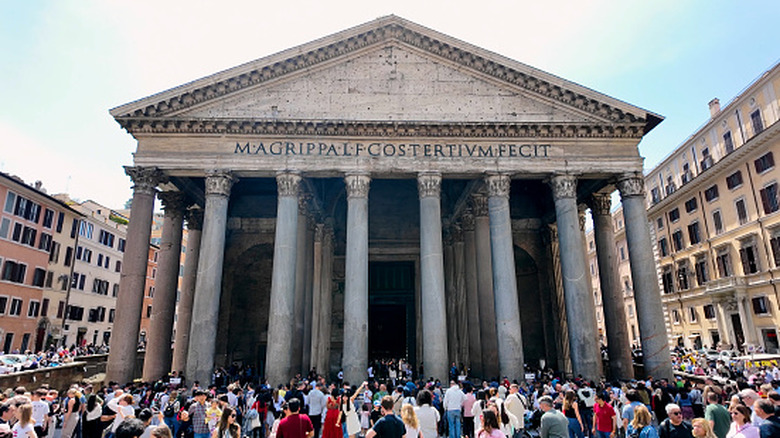
Some major tourist attractions stay open late fairly often. Rick Steves mentions the Tate Modern in London, which has late Friday and Saturday evening hours. While many tourists are eating a late dinner, you can enjoy some amazing art. The Louvre Museum, one of the iconic French attractions you have to see if you're visiting Paris, is open until 9 p.m. on Wednesdays and Fridays, and the Palais de Tokyo is open every night until 10 p.m. except on Tuesdays, when it's closed. In Barcelona, the Casa Batlló by Gaudí is open every day from 9 a.m. to 10:30 p.m. In Rome, the Pantheon stays open until 7 p.m. (though the ticket office closes at 6 p.m.), and the Colosseum stays open until 7:15 p.m. during some parts of the year.
However, there is more to see than just museums. In another post, Steves writes about walking through Rome in the evening. You can see the Colosseum lit up at night or experience the passeggiata, where people enjoy walking through public squares, catching up, being seen, and maybe even enjoying a drink at a café. Steves mentions that it's particularly good to do this around the Spanish Steps, though do keep an eye out for pickpockets. A number of cities have lovely views of major monuments lit up at night, though the morning is a great time as well. Imagine viewing Rome's Trevi Fountain just after dawn, before most tourists have even had their morning cappuccino.
You can also visit museums and other places right when they open, before the crowds have a chance to form. Finally, Steves recommends looking at a good guidebook (he's written quite a number of them), which he says will have information about the best times to visit.