

What Airport Security's Swab Tests Actually Detect
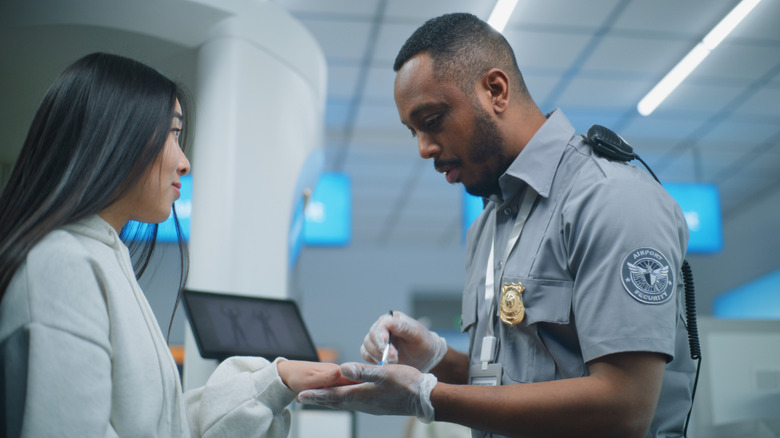
If you're a frequent flyer, you're likely familiar with most of the Transportation Security Administration (TSA) security procedures. You keep your carry-on liquids and gels in containers of 3.4 ounces or less, packed in a clear plastic bag. You go through a full-body scanner or metal detector. You might even be aware of certain behaviors the TSA is on the lookout for. However, you may not have experienced another step TSA officers can take during screening: the swab test. If you have, you know that you may be pulled aside while an officer wipes a small swab across your hands, carry-on bag, or other belongings. When a TSA officer does this, they're looking for traces of explosive compounds.
After collecting the sample, the officer places the swab in an explosives trace detector, which screens for microscopic residue of compounds associated with explosives. If the machine sounds an alarm, your airport security experience may take a bit longer. The next step is additional screening, which can include a closer inspection of you or your belongings. While that can be frustrating and a little nerve-wracking, an alarm doesn't necessarily mean TSA officers believe you're carrying an explosive.
Reasons you may test positive on an airport swab test
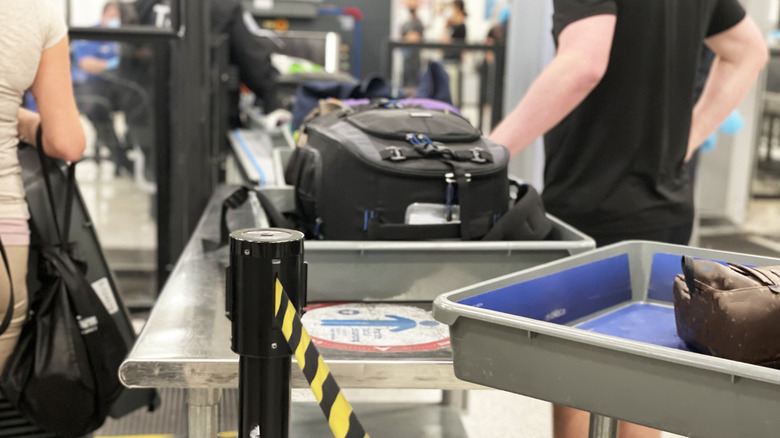
It's always a bit worrying when the TSA stops you for something, especially if you're late for your flight. (I was once pulled aside because the metal spiral on my notebook triggered a secondary check, if that makes you feel better.) However, there are legitimate reasons someone might have trace residue on their hands or belongings. People who regularly handle firearms or ammunition, for example, including police officers and hunters, can pick up residue through ordinary activities.
If you've been somewhere for the Fourth of July and used fireworks, that might trigger a positive swab test. Some medications that contain nitroglycerin can also leave traces. In fact, TSA specifically allows passengers to travel with nitroglycerin tablets and spray. Other innocently acquired residue, including fertilizers, can also trigger an alarm.
Remember that the swab is only one part of airport security screening. Advanced Imaging Technology (AIT) scanners can show that you don't have anything dangerous on your person, and the bag scanner and subsequent search can confirm that. Take a deep breath and stay calm while offers complete the additional screening. Finally, while you're thinking about security, here is the difference between full-body scanners and metal detectors.