

5 German Beer Garden Rules American Tourists Break In Only 10 Minutes
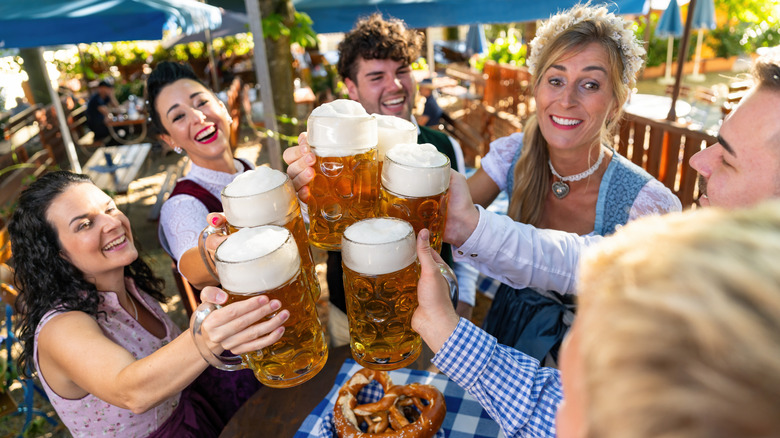
There's nothing like sipping on a locally brewed beer in good company. This is the heart of the Bavarian tradition of beer gardens, or "biergärten" in German. By name, beer gardens may not be so unfamiliar to Americans. In the 1800s, German immigrants brought over tasty brews and community-oriented traditions that Americans eagerly integrated. Soon, beer halls and gardens started to pop up in U.S. cities with large German immigrant communities, with their own American twist.
Beer gardens have also expanded across Germany, from Hofbräuhaus (one of Bavaria's must-see tourist attractions) to Berlin's popular gardens (though some Germans will tell you that the authentic beer garden experience is only found in Bavaria, where these establishments originated). No matter where you're traveling in Germany, there are some expected behaviors and norms that may vary from beer gardens in the U.S.
Some Americans who hear "beer garden" might immediately think of Oktoberfest. While both traditions come from Bavaria, Oktoberfest is a beer festival that happens in the fall in Germany's "cultural powerhouse" city of Munich. Meanwhile, beer gardens are open roughly from May through October, and enjoyed most during the summer. But that mix-up isn't the only mistake American tourists tend to make. Here are a few faux pas to avoid, along with tips on how to respect the local customs and not stick out like a sore thumb.
Taking over a whole table, or sitting at the wrong one
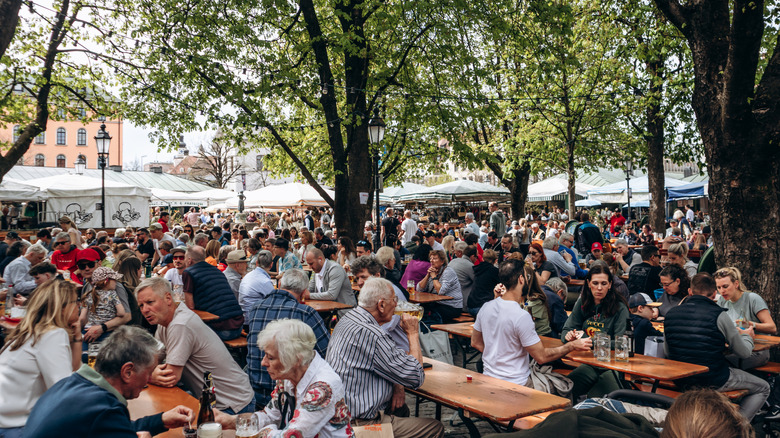
Beer gardens are a place for gathering, and they draw all kinds of people. In Germany, they're largely considered family-friendly places, meaning it's totally normal to bring small children and even dogs to the bar (double-check ahead of time to confirm the garden's rules on the latter). Generally, the seating is set up for a community feel. In many of the older, more traditional gardens, you'll specifically see long wooden tables and benches.
One thing Americans may not realize right away is that these are meant to be shared. It's totally normal at beer gardens to sit at a table with strangers, so make sure to leave space for other guests. Although you don't need to go out of your way to chat up the people next to you, it is expected that you at least greet them politely and pass the mustard.
The other unspoken rule at beer gardens is that there are two different types of seating. The first type is self-service. If you want to bring your own food, which is considered part of the authentic experience, sit here. You will need to go to the bar to order your drinks and then carry them back to your table. While you're at it, don't overestimate your carrying capacity — another common mistake. The other type of beer garden seating is where you'll get table service, usually at tables where there are tablecloths and cutlery. You should also be careful not to sit at any table designated "stammtische," which is reserved for regulars.
Overlooking beer garden food
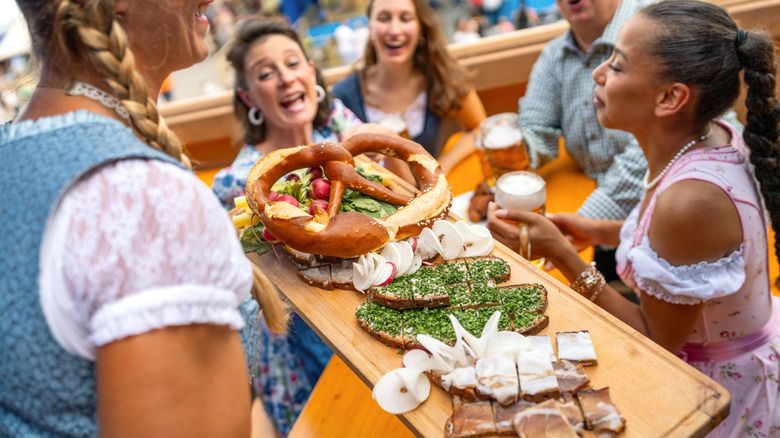
Yes, the main reason people go to beer gardens is to drink beer. So, many Americans may not realize that beer gardens are, in fact, common places to share food. In the early days, brewers were legally only allowed to sell beer and bread, which meant people had to bring their own food if they wanted to eat and not just drink. That evolved into a culture of people bringing their own food to beer gardens that still continues today. The unspoken rule is that you bring your own homemade food or food fresh from the local market — not delivery or takeout from the restaurant next door.
If you're in the mood for snacks and cold platters over beer, a picnic is a great choice. There are several examples of classic beer garden fare that you could consider bringing along. Large pretzels, for example, are a German staple that dates back to medieval times. German pretzels are unique for their lye crust, which gives them their famous deep brown, crispy exterior that pairs so well with obatzda, a soft cheese and butter spread. There's also wurstsalat, a cold sausage salad with onions and pickles. Another classic, and a great option for vegetarians, is kartoffelsalat, a salad that features chunky potatoes and a tangy vinaigrette, typically without mayonnaise.
Many beer gardens also have their own kitchens and offer excellent food. While it might be a bit pricey, it's totally worth paying a bit more to get a taste of some hot and hearty platters that might be more difficult to bring in a picnic. For example, hendl is a popular menu item featuring crispy-skinned, juicy chicken, as well as schweinshaxe, slow-roasted pork with crackling skin and tender meat.
Ordering beer in the wrong format
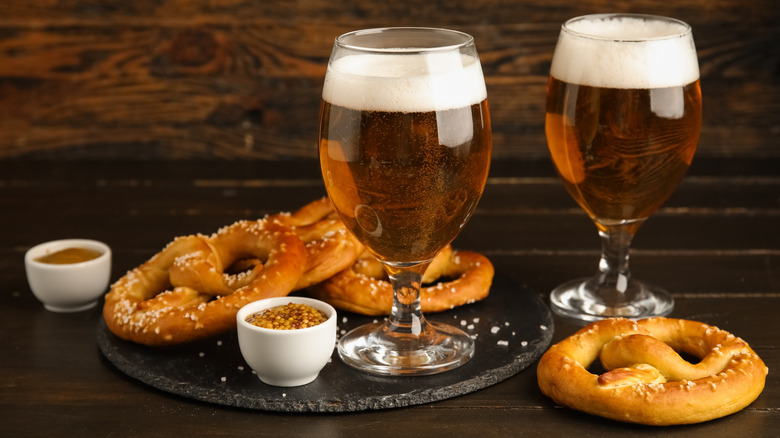
A pint — 16 ounces — is perhaps the most commonly ordered format of beer in the U.S. If you're going to a German beer garden, it's really worth brushing up on the many other options that exist to get the most out of your experience. The art and craft of serving beer goes deep in Germany, and beer glasses are made with specific beverages in mind to enhance and maximize their specific flavors and aromas.
The most iconic is the maßkrug. These big, heavy mugs are easy for Americans to recognize because they are commonly used at Oktoberfest and contain 1 liter of beer, roughly equivalent to two pints. If you're drinking helles or festbier, the maßkrug is a great choice. Ordering this large of a beer as a default might make you stand out as a tourist, though. The standard in most places is to order a halbe, or a half liter, which is the equivalent of a pint in the U.S.
The best approach is to think about what kind of beer you're drinking as a starting point, rather than how much you want to drink. Wheat beers, such as hefeweizen, are traditionally served in a curved, pint-sized glass called a weizen glass that showcases the beer's foam tops. If you're ordering a stronger beer like a bockbier or a doppelbock, don't be surprised to see it being served in a smaller format called a pokal, a 0.3-liter, tulip-shaped glass that tucks the beer's aromas into its curves and encourages sipping. It's also important to keep in mind which region of Germany you're in. Beers are intensely local, and each region has its own customs and variations. Locals will appreciate that you take the time to learn them.
Taking your mug home as a souvenir
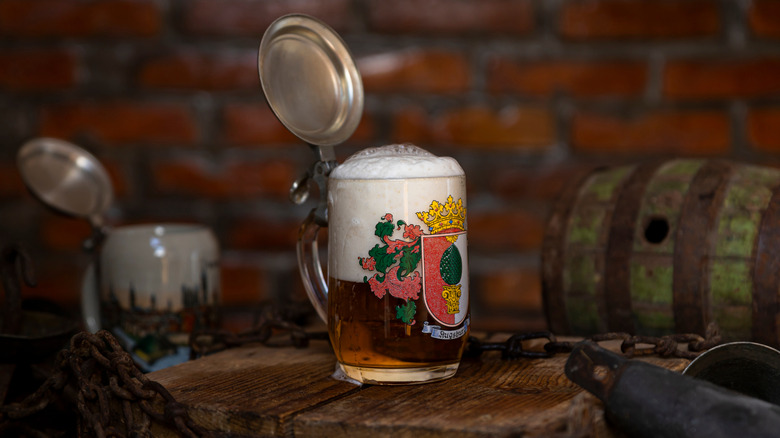
Beer glasses from Germany are excellent souvenirs and even collectible items. However, there is a growing tendency for visitors to try and smuggle their glasses out that could get them into trouble. This flagrant tourist behavior is quite common at larger festivals. For example, at Munich's Oktoberfest, more than 220,000 glasses were seized from would-be thieves one year, according to the event's official website. This might be spilling over into other contexts beyond just festivals, which would explain why many beer gardens have implemented a token system in an effort to prevent people from leaving with the brewery's glassware after they finished drinking.
At many beer gardens, when you order a beer, you will be asked to pay a deposit. The deposit usually ranges from €3 to €5, and in exchange, you will receive your beer as well as a plastic or wooden token. After you're done drinking, you'll be expected to return both your glass and the token to the bar to receive your deposit back.
It's true that beer mugs and glasses in Germany are special. There are also many different styles of mugs. You can find collectible ceramic steins with lids and intricate, hand-painted designs for sale at shops throughout Germany. Many larger and more famous beer gardens also have their own souvenir shops where you can find a useful and affordable gift to bring home.
Getting the toasting etiquette wrong
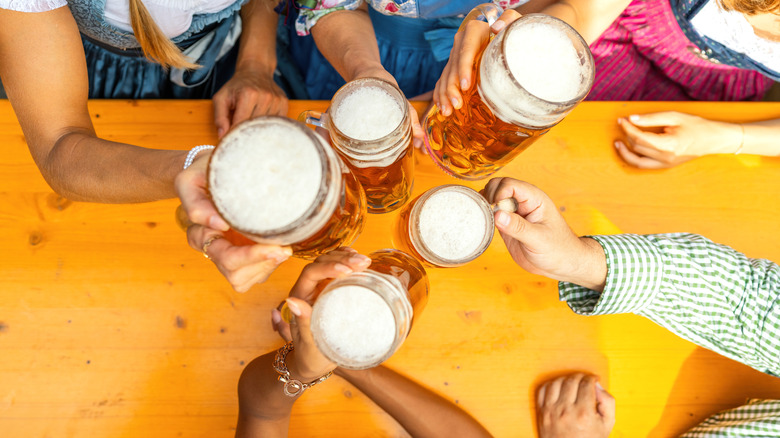
A proper toast is a key part of the beer garden ritual. In fact, it's usually not just one toast. Over the course of a single liter, it's said that most people will toast glasses at least 10 times. That means 10 occasions for Americans to fumble, per drink. So, let's go over the basics.
First, wait until everyone in your group has their drink before toasting. It's also considered impolite to sip your beer before everyone has their drinks. Once everyone has been served, raise your glass. Instead of saying "cheers" when you clink glasses, say "prost!" This word is, unusually for the German language, borrowed from Latin to mean something like, "May it be beneficial." Conveniently, prost is pronounced in a way that rhymes with "toast." Be careful: The expression "zum wohl" is also commonly used to make toasts in German but is much more formal and tends to be used when drinking wine and spirits, rather than beer.
Clink your glass with each person in your party. It's extremely important that you look each person in the eyes as you clink; failing to do so is considered bad luck for both parties. Eye contact is meant to signal respect and connection, which is what the beer garden experience is really all about.