

One Of Tennessee's Best Lake State Parks In Nashville Offers A Serene Nature Escape
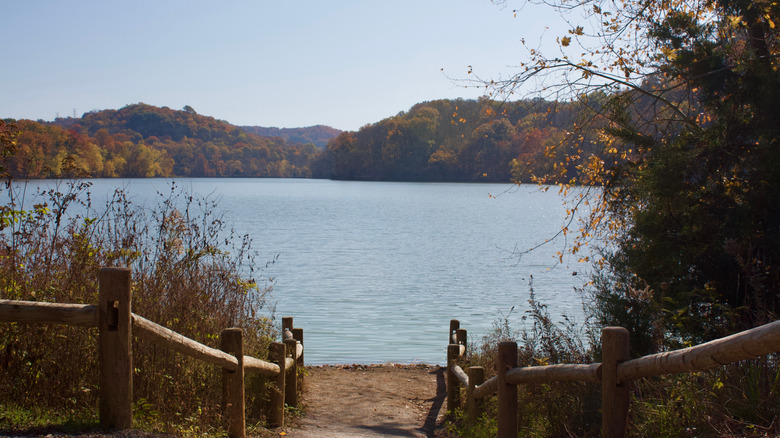
As the undisputed "Music City," Nashville is a vibrant epicenter of music and pop culture, with a country-and-western twist that lets visitors from around the world live out their inner cowboys for a day. Not every Nashville attraction is part of its iconic music and party scene, however. In fact, one of Tennessee's most serene nature parks sits about 9 miles south of downtown. Take a look at any single shot of Radnor Lake State Park, and you would likely assume you're looking at somewhere far removed from a major urban area. But though it looks like a scene from a remote forest preserve miles from civilization, Radnor Lake State Park is surprisingly close to downtown Nashville and its popular Broadway musical thoroughfare.
If you're flying into Nashville, Radnor Lake State Park is about 13 miles by road from Nashville International Airport (BNA). As Nashville's airport is already one of the most interesting U.S. airports for a layover thanks to its live music and abundant art, recently landed visitors can make Radnor Lake one of their first stops and experience a completely different side of the city's magic. Even without the airport as a contrast, Radnor Lake State Park offers a nature escape that can remedy any stresses of modern life. It offers plenty of beautiful and accessible hiking trails where visitors of all ages, abilities, and preferences can explore a tranquil nature preserve far from the noise and crowds of downtown. Meanwhile, its protected forest ecosystem provides homes for many native wildlife species you may see on your trip, including some of Tennessee's best birdwatching opportunities. And like all other Tennessee state parks, Radnor Lake State Park is free to enter.
A glistening lake haven right outside Nashville
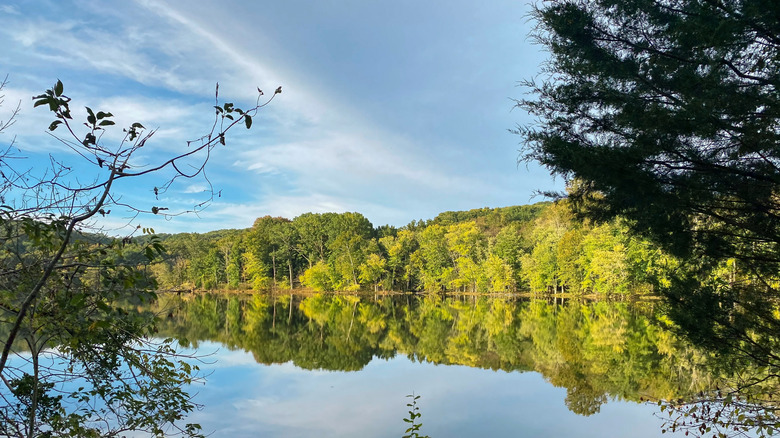
Tennessee's state park system contains everything from waterfall-rich Appalachian havens like Fall Creek Falls State Park to geological and cultural treasures like Tennessee's new Cardwell Mountain State Archaeological Park. Radnor Lake State Park lacks record-setting waterfalls or immense cave systems, but it protects one of Tennessee's loveliest lake oases in the middle of an urban corridor. The park's 1,391 acres center around the calm waters of the 85-acre Radnor Lake.
Technically an artificial reservoir rather than a natural lake, Radnor Lake was created in 1914 by the Louisville and Nashville Railroad to provide water for steam locomotives. As diesel engines replaced steam engines, the reservoir eventually became obsolete for its original purpose. However, conservation efforts had already begun decades earlier, with the railroad declaring Radnor Lake a wildlife sanctuary in 1923. In 1973, Radnor Lake became Tennessee's first official state natural area.
Today, Radnor Lake is worlds away from its industrial origins. As a Class II Natural Area, it protects a diverse array of native Tennessee plants and animals. Aspiring botanists can hike across hundreds of acres of native trees, shrubs, vines, and colorful wildflowers along the lake's shores and the gentle rolling forest ridges around it (some reaching 1,200 feet in elevation). Animal lovers may see some of Radnor Lake's resident wildlife during their visit, including river otters, beavers, turtles, bald eagles, herons, and waterfowl. Though Radnor Lake State Park is day-use only, it's less than 3 miles from Vanderbilt University's Dyer Observatory, where aspiring astronomers can enjoy extraordinary views of the night sky right in Nashville's backyard.
Radnor Lake's abundant outdoor adventures
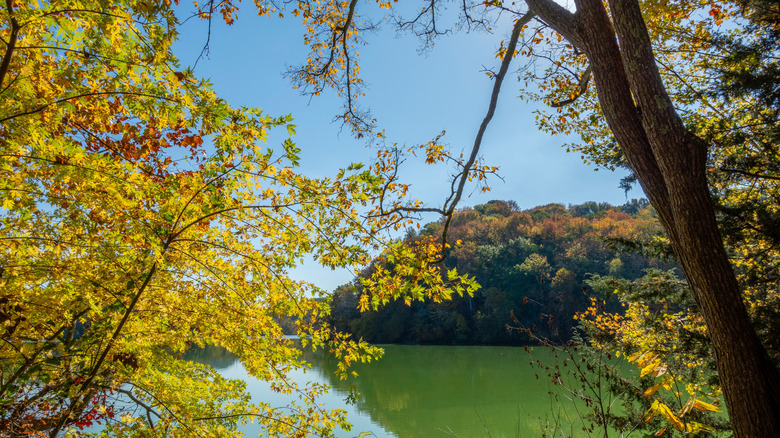
Radnor Lake State Park's protected ecosystem and well-balanced visitor amenities make it a stress-free complement to a trip through the rich culture and cuisine of Nashville's "Music City" atmosphere. Hikers can take advantage of the park's numerous trails to sightsee, exercise, or just enjoy relaxing walks in a vibrant forest environment. The trail network ranges from short and accessible paths to more challenging jaunts up the park's steep ridges.
The Dam Walkway and Spillway Trail are simple, quarter-mile strolls along flat gravel or mulch walkways that provide views of Radnor Lake and the surrounding forest. The 3-mile Radnor Lake Trail features a flat, manageable loop that circumnavigates the entire lake. Longer and more challenging hikes are available on the Ganier Ridge and South Cove Loop trails, which combine scenic strolls around the lake with more arduous ascents up the park's steeper hills. The Radnor Lake Visitor Center also offers all-terrain wheelchairs free of charge, though reservations are required at least 48 hours in advance.
Radnor Lake State Park's well-preserved forest ecosystem means abundant opportunities for birdwatching. The park's trails pass through different habitats, giving hikers opportunities to spot a wide variety of bird species. Radnor Lake itself is a popular hangout for geese, herons, and other waterfowl, while migratory birds like warblers, vireos, and flycatchers are often seen in the spring and fall. Bird lovers can also visit Radnor Lake's Barbara J. Mapp Aviary Education Center and its 550-foot boardwalk to learn more about the region's native birds (and even meet some non-releasable birds of prey during the center's educational events).