

Flight Attendants Say This Item Is One Of The Dirtiest Surfaces In Your Airplane Seat
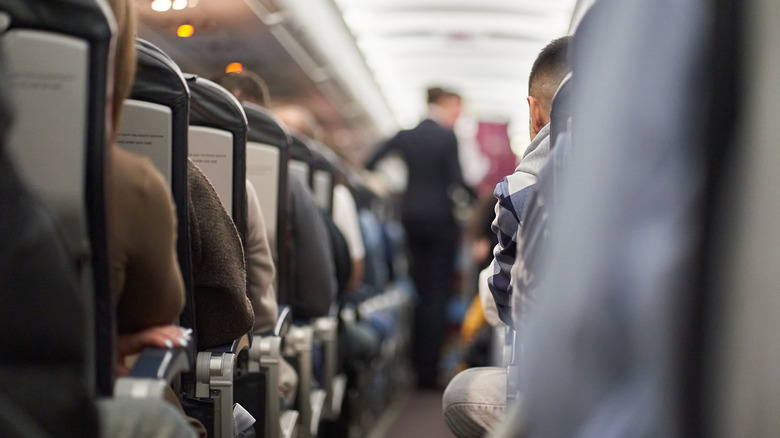
There are lots of things to worry about when you're packing for a trip. For one, flight attendants will be the first to tell you not to leave home without disinfectant wipes – I've been one for over 10 years, and I never report to work without them. The list of unsanitary things that you come into contact with on a plane is long and includes germs found right in your own seat. In fact, one of the dirtiest places on the whole plane is something almost every single person will use at least once during the flight, and that's the tray table.
Passengers do a lot of things to make flight attendants cringe, but nothing sends me into a full-body sweat like catching someone dumping out a snack and eating it directly off a tray table. And it's not just the fact that countless other people have touched it. Passengers place all kinds of trash (think dirty tissues, finger and toenail clippings, and, worst of all, soiled diapers) on their tray tables. I have also seen babies and dogs sitting directly on them.
Suffice to say, you have no idea what has occurred on your tray table prior to you lowering it and utilizing it to hold personal items like tablets, laptops, and cell phones, never mind food. "As a flight attendant, I've seen everything...and trust me, you do NOT want to eat off that tray table without wiping it down first," @yanabiryukova shared on Instagram. "Before your next flight, pack those Clorox wipes and thank me later," she advised.
How often are tray tables cleaned on an airplane?
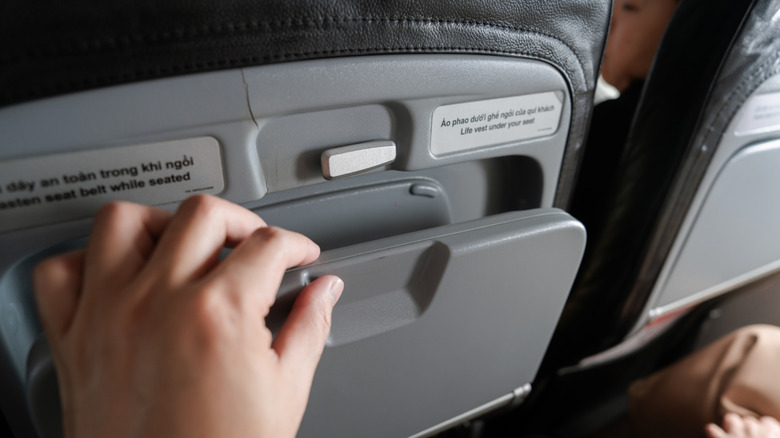
There are a few open secrets when it comes to air travel, like the disturbing reason you may want to avoid drinking coffee and tea on airplanes. Another is the fact that the tray tables are not cleaned throughout the day. "Planes are not getting any kind of deep clean in the day unless there is a specific action to pull the plane out of service — and we frankly rarely see that," Sara Nelson, president of the Association of Flight Attendants-CWA International, revealed to The Washington Post.
There are many times when flight attendants do not leave the airplane between flights, so I bear witness to what happens every time passengers deplane and the cabin is cleaned for the next crowd. These practices may vary by airline, but typically, excess garbage is removed from seatback pockets, seatbelts are crossed, the floor of the cabin is vacuumed, and the trash is taken out of the bathrooms (which do receive extra attention in the form of a wipe down). That's it. Nothing else in the cabin is deep cleaned or sanitized, and those tray tables stay in their upright, locked positions until the next passenger lowers them.
Tray tables will only receive extra care if they are so excessively dirty (think food spills, gum, or marker) that flight attendants notice and take matters into their own hands, or if passengers clean their own trays. One exception to this rule occurred during the height of the COVID-19 pandemic when airlines began doing more to sanitize the planes than common practices require. At my airline, this included a cleaning crew that got on the plane, lowered the tray tables, and swiped them with a wipe (the same one for multiple trays), but this extra step ended when pandemic regulations were relaxed.
How to clean your airplane tray table
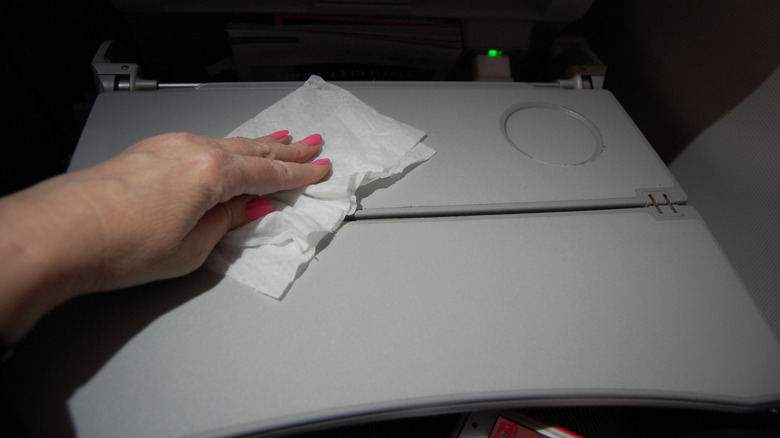
I spend anywhere from 30 to 50 hours a week on a plane, which means I have plenty of tips to offer, like this airplane armrest hack that can make your trip more comfortable. When it comes to cleanliness, brushing off your tray table with the napkin your flight attendant hands you to accompany your beverage is not going to do the job that's needed here. I highly recommend packing your own disinfecting wipes in your carry-on luggage and wiping down your tray table as soon as you reach your seat. It's true that most people don't do this, and probably get off the plane to go on and lead a perfectly normal life, but why risk exposing yourself to extra germs, especially during busy flying times that may coincide with flu season?
And your tray table isn't the only place where you can expect (and eliminate) higher concentrations of germs. Other areas close to your seat that top the list are the adjustable air vents above your seat, the headrests, and your seatbelt — specifically the buckle. Seatback television touch screens and safety information and menu cards are also high contamination surfaces. When it comes to other areas of the plane, bathroom door handles and fixtures rank high for contamination, as well as the overhead bins. In fact, CBC found mold, staph and other potentially harmful pathogens after taking 100 samples during 18 different flights from these common surface areas.
So, be sure to pack your wipes, and if you happen to forget them, you can always ask your flight attendants if they have any they can spare. Chances are there is an extra pack or two somewhere in our preparation areas.