

The Unique Secret Spot In Death Valley National Park That Most Tourists Miss
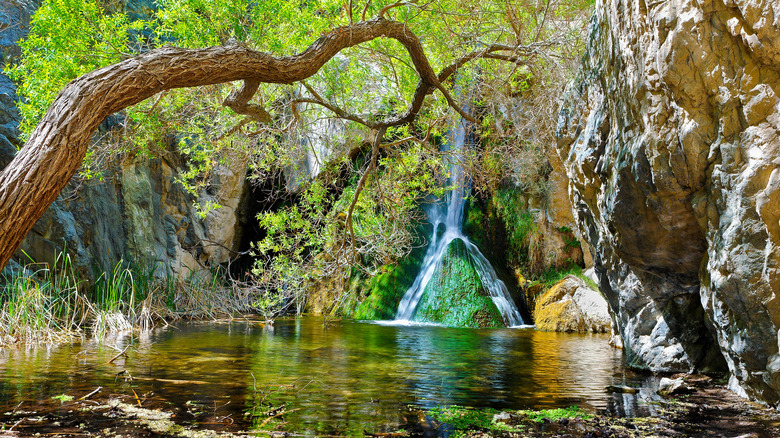
Though debates will always rage about which U.S. national park is the most beautiful or the best for recreation, few would dispute that Death Valley National Park, situated in California and Nevada, would win the title for "most ominous name." Indeed, the macabre moniker is quite apt in this case. Sitting in a natural "bowl" just east of the Sierra Nevada, Death Valley is one of the lowest, driest, and hottest places on Earth. With summer temperatures regularly rocketing well into the triple digits, and with little precipitation to provide relief, Death Valley's extreme conditions epitomize what many think of when they picture a desert. However, Death Valley's notorious climate does not entirely preclude scenic water features. One of Death Valley's most remarkable hidden gems is something few would expect to even be possible in such arid conditions. Believe it or not, the small but extraordinary Darwin Falls is a lush, spring-fed waterfall tucked away in a secret corner of one of the world's hottest and driest locations.
Of course, among experienced travelers, Death Valley National Park is far more than just extreme temperatures and desert vistas. Away from the daytime heat, Death Valley National Park's lack of light pollution places it among the top U.S. national parks for stargazing, for example. And that doesn't even touch on the park's surprising wildflowers, abundant birds, and extremely rare fish. Darwin Falls fits right in with Death Valley's extensive collection of astounding attractions somehow thriving in a harsh climate. Nestled in a beautiful canyon and drawing from the natural springs that secretly flow through the park, Darwin Falls offers a unique Death Valley hiking adventure and some of the most intimate shots you'll find anywhere in the park's vast desert landscape.
Darwin Falls is an oasis in one of the world's hottest places
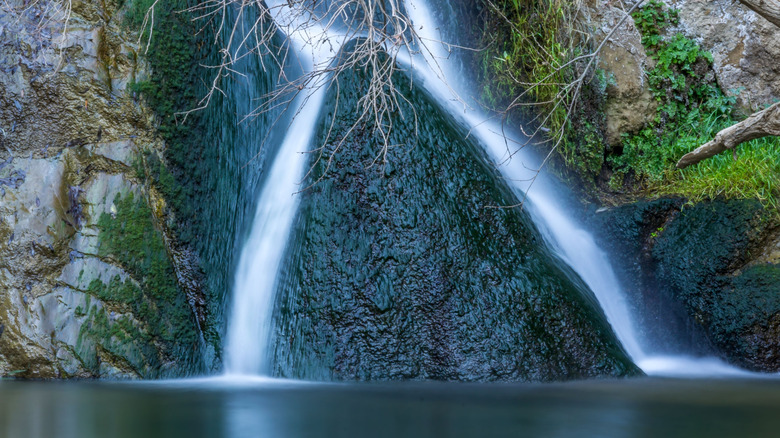
While Death Valley receives less than 2 inches of precipitation a year, it does get some additional hydration courtesy of its natural springs and seeps. Darwin Falls draws from one such spring, creating an emerald green oasis in the midst of an arid desert canyon. Though it does not quite reach the monumental dimensions of Yosemite National Park's breathtaking waterfalls elsewhere in California, Darwin Falls' 18-foot height is quite impressive in the parched context of Death Valley.
You may think a year-round waterfall would be a top destination in a place as dry as Death Valley, but Darwin Falls is largely hidden from normal park tourist routes by the narrow Darwin Canyon and its volcanic rock cliffs, tucked away in the Panamint Springs Area. For many visitors, this area near the park's western boundary is rather bland and barren at first glance, as the lush oasis framing Darwin Falls is largely buried from view by the canyon walls. The surrounding Panamint Valley, however, has plenty of remarkable vistas to share, if you know where to look. Though out of the way from the park's main attractions, Panamint Valley has unique panoramas of mountain-framed deserts that make excellent backdrops to Darwin Falls.
Within its canyon cloister, Darwin Falls fuels a verdant habitat that seems miles away from the harsh Panamint Valley landscape just outside the gorge. As visitors approach the falls, the park's standard groves of desert-dwelling sagebrush give way to colorful gardens of wildflower-bearing plants like Mojave asters and desert globe mallow. Once at the falls, hikers can enjoy a break from the boiling sun under a shaded canopy of spring-fed willows and cottonwoods.
How to visit Darwin Falls
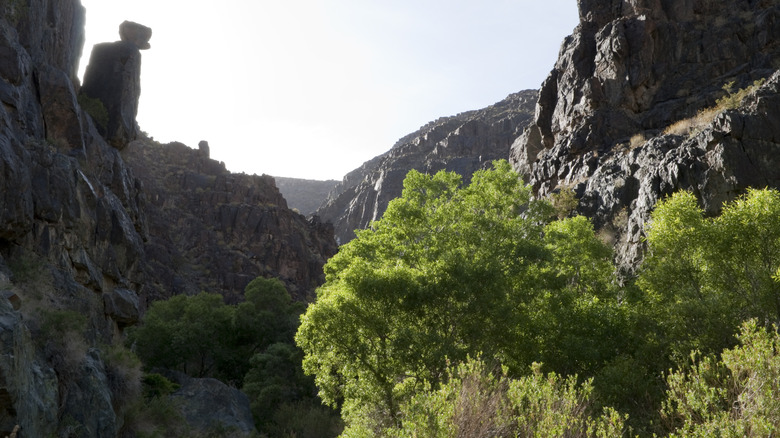
The Darwin Falls trailhead is about three hours west of Las Vegas by car. This means that you could, theoretically, leave your Vegas Strip hotel in the morning, spend all day exploring the wild oasis of Darwin Falls, and get back in time to enjoy Las Vegas' amazing restaurants and top-tier dining experiences for dinner. Typically, you would get to Darwin Falls on the Darwin Falls Trail via the unpaved Darwin Falls Road. However, as of September 2026, road damage from recent flooding has closed parts of the access road to the trailhead, so visitors must park farther away on the shoulder of CA-190 and hike the rest of the way.
Fortunately, the main route is relatively flat for a canyon excursion, with the main challenges being only a few rocky sections as you enter the canyon proper. Do note that the route into Darwin Falls is unmarked and lacks restroom facilities. The full hike to Darwin Falls and back from the trailhead is about 2 miles and should take around one to two hours, depending on your pace. Unfortunately, swimming is prohibited at the falls, though the nearby trees should provide a good deal of shade from the desert heat (especially if you visit in the winter or early spring, when the weather is milder). Just 12 minutes away by car is the park's Panamint Springs Resort, with food, refreshments, and overnight lodging available to guests. Or, if you want to escape into even more rugged wilderness, Darwin Falls is next to the Bureau of Land Management's Darwin Falls Wilderness, which serves as a wilder and less developed version of Death Valley National Park.