

Rick Steves Is 'Religious' About This Recovery Routine While Hiking In Europe
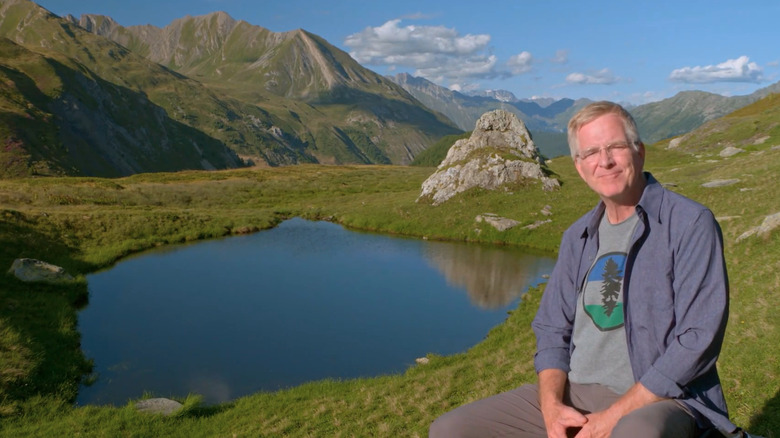
Travel pro Rick Steves has been helping people have the best European experiences since he started his company, Rick Steves' Europe, in 1976. He has fantastic tips and tricks for those venturing to Europe for the first time, as well as seasoned travelers. Whether Steves is reminding people not to be perfectionists about their trip and just go with the flow, or advising people to travel with a partner or friend to maximize the experience, he's one of the ultimate authorities on the best ways to explore a new place.
One tip he has on his website after trying the famous European long hike, the Tour du Mont Blanc, which goes through France, Italy, and Switzerland, is to be as "religious" about your recovery routine as he is.
Stretching is key. "After learning my lesson on other long hikes, I decided to be religious about stretching on the Tour du Mont Blanc from the start. I had a routine of six stretches and spent time throughout the day making sure I didn't tighten up. Very important!" Steves says, in the post. You may think you're going to be fine if you're in relatively good shape, but, particularly with a days-long hike, that soreness and stiffness can creep up on you. As a veteran of hundreds of hikes, 24 marathons, dozens of half-marathons, and counting (some only days apart), I can tell you that there is nothing more important than taking care of your body when you're putting forth effort like this.
Preparing and recovering from a long-distance hike
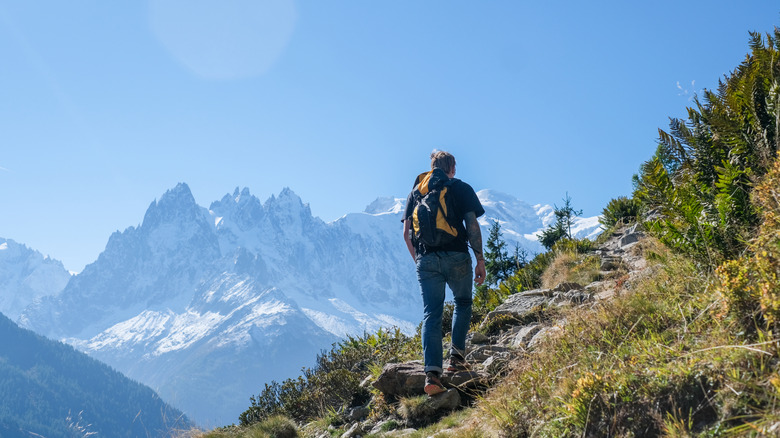
The Tour du Mont Blanc is a 100-plus-mile loop that takes multiple days and features more than 30,000 feet of elevation gain (yes, you read that right). In another post, Steves says that he and the people he traveled with did "the best 60 miles in six days from mountain lodge to mountain lodge, catching local buses through the less exciting parts, and letting a "sherpa service" shuttle our bags each day." Still, 60 miles is a really long hike, and stretching is vital for an effort like this.
According to REI, dynamic stretches are the best ones to do. This sort of stretching isn't like the type you may have done in track practice in high school if you're of a certain age. You don't simply hold whatever position you move into. Instead, you keep moving the muscles with things like hamstring kicks, heel kicks, and hip circles. Additionally, Steves reminds hikers to prep with the right socks and shoes, moleskin if you get hot spots on your feet, and food to fuel your body. He mentions a "daily bag of trail mix" and protein for your morning meal. It's also imperative to hydrate. Sure, you may have to "go" off the trail, but dehydration is no joke and can be very dangerous.
Finally, even if a long-distance hike isn't in the cards for you, Steves has often recommended walking tours when exploring Europe. They're a wonderful way to get a real feel for where you are, and they can also save you money. However, make sure you follow his lead and stretch, no matter what sort of physical effort you've put in during the day.