
The High-Tech Gadget That Belongs On Every Camper's Shopping List
We may receive a commission on purchases made from links.
If your vacation time takes you to a city or town, packing is relatively easy. If you're using your days off to spend some time in nature on a camping trip, you have to plan ahead. In addition to a tent, snacks, and a sense of adventure, you should have a thorough packing list. You'll need things like a warm sleeping bag to keep out the cold, and extra essentials like fire starters and power sources. However, one high-tech gadget you need on your list that you may not have considered is a water filtration system, which can keep you from getting sick. While many developed campgrounds often have potable water, some don't. That's also true for backcountry campsites, and long hikes.
Filtering your water is vital if you didn't bring any with you. In fact, the Centers for Disease Control (CDC) advises against drinking from unknown water sources. You can't tell if water is safe just because it's clear. Instead, they recommend boiling it for at least a minute, or filtering it. Boiling may work for you if you're simply sitting around a campfire. However, if you're hiking, moving around, or can't wait for it to cool down — particularly if you're dealing with dehydration — a filtration system is a smart item to have along with you. It's not just drinking water, either. The CDC also recommends filtering water for hand-washing, cooking, washing dishes, or even brushing your teeth. There are several different kinds of filtration systems available, so you have options.
Types of water filtration systems for camping and hiking
The CDC says that a filtration system with an absolute pore size (i.e., hole size) of 0.3 microns or smaller will remove bacteria and parasites, and some systems also have a disinfectant that kills viruses. The organization has a handy PDF that provides quick reference information worth saving. This is also a much better solution than carrying all the water you need, as one person asks about in a thread on Reddit's r/camping. In fact, according to Minimal Gear, the average camper will need around two gallons of water per day, which would be awfully heavy to carry. Plus, if you have kids along and/or your dog (yes, they need filtered and safe water, too), that's a lot of H2O.
You can use filters that work with gravity, where you hang them up and allow the water to go through. There are bottle filters that push water through a filter as you squeeze the bottle or suck it through a straw. You can also find straw filters so you can sip right from the source, whether it's a lake, river, or stream. There are also differences in terms of what contaminants are filtered, so it's best to be clear on what your goals are before you make a purchase.
Recommended water filtration systems for camping and hiking
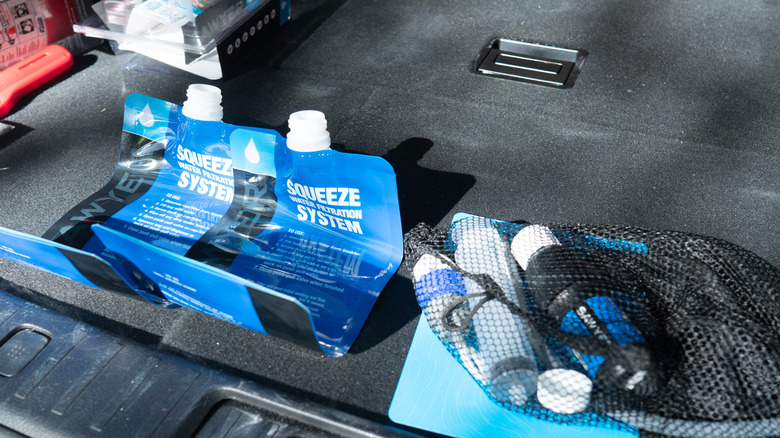
In a Reddit thread on backpacking, there are several filtration brands recommended. They include Katadyn BeFree, Sawyer Squeeze, and Grayl. Katadyn BeFree 1L Lightweight Collapsible Water Filter Bottle is around $60 on Amazon at the time of this writing, and it comes in several colors and styles. This is a squeeze-style filter that removes sediment, fine particles, microplastics, and 99.9% of bacteria and protozoan cysts, with a carbon filter to help reduce odor and improves taste. The gravity-style Sawyer Squeeze Water Filtration System is $65 on Amazon, and it comes in different sizes. It removes bacteria, protozoan cysts, sediment, and microplastics and lasts up to 100,000 gallons. It's also less than six ounces if you're considering weight.
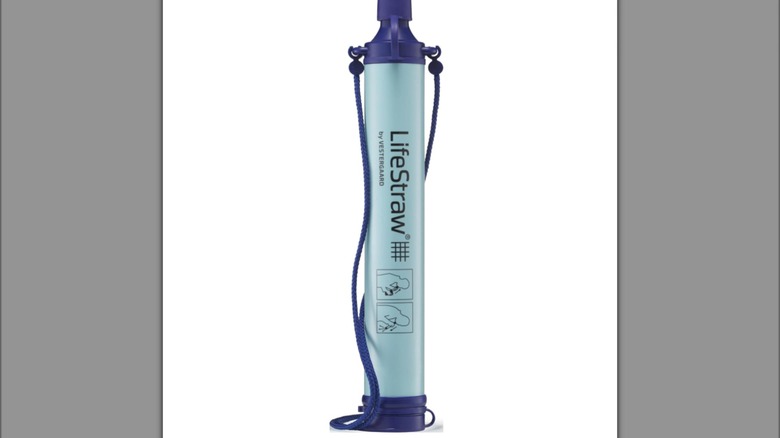
The Grayl GeoPress 24-ounce Water Purifier & Water Filter Bottle on Amazon is around $100. It comes in several colors and protects against viruses, protozoa, and bacteria. You press a button, and it takes eight seconds to filter. LifeStraw Peak Squeeze is a water treatment option for backpacking. It's on Amazon for around $36 for the 22-ounce size, and around $40 for the 33.8-ounce size. It filters out bacteria, parasites, microplastics, silt, sand, and cloudiness. The LifeStraw Personal Water Filter on Amazon for $15 allows you to sip directly from a water source, filtering bacteria, microplastics, and parasites.