

Oregon's Largest Artificial Lake Is An Outdoor Gem Surrounded By Scenic Mountains
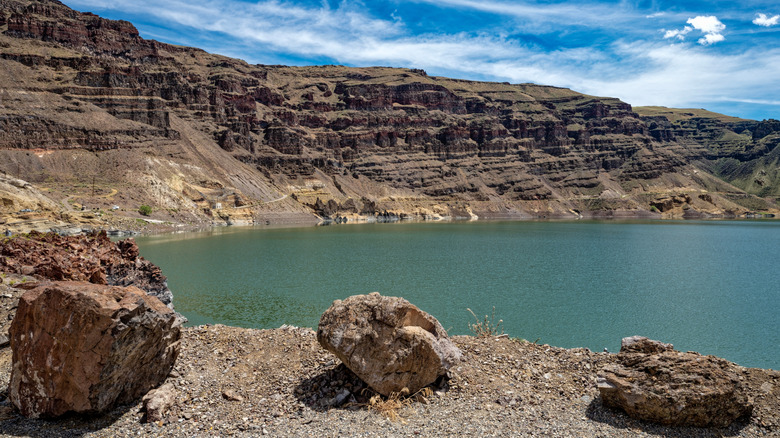
From Crater Lake to the stunning coastal destination of Cascade Head, Oregon is blessed with beautiful (and well-preserved) natural areas for outdoor recreation. In the parched, steep desert canyons of the mountainous eastern side of the state, engineering and human ingenuity transformed a 53-mile-long stretch of the powerful Owyhee River into Oregon's largest and longest artificial lake, Owyhee (pronounced "oh-why-hee") Reservoir. The lake was formed in 1932 to store water for irrigation and was used as a working model for the Hoover Dam. In more recent decades, it's become a desert oasis for adventurers in one of the most remote corners of the West.
Owyhee Reservoir (also called Lake Owyhee) sits at the center of rock formations that are millions of years old and is a base to explore one of the most unique regions of the entire state. Vegetation in the Owyhees is incredibly diverse, ranging from dogwood and mountain mahogany trees growing alongside vibrant yellow and pink native wildflowers. Visitors drawn to quiet desert scenes can take in dramatic views of high-desert mountains from along the water or at Lake Owyhee State Park on the lake's east shore.
Lake Owyhee is located over an hour southwest of Ontario, Oregon, and less than two hours from Boise, the nearest major city and major airport (BOI). As you drive to the lake, the narrow road snakes through the Owyhee canyons; if you're driving an RV or a bigger vehicle, be sure to go slow and take your time as you head toward the lake.
Civilization in the desert at Lake Owyhee State Park
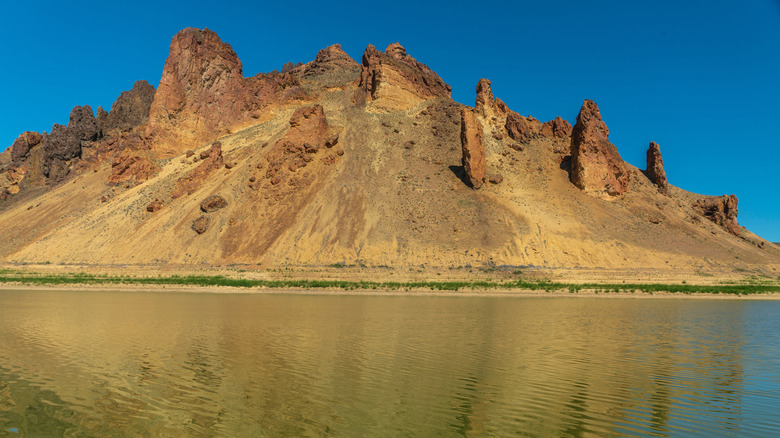
If you're coming to explore the desert mountain landscapes around Owyhee Reservoir, you'll likely want to visit Lake Owyhee State Park. With two campsites, boat ramps, and a day-use area, it's a solid base for a self-catered adventure, and a small piece of civilization to return to after hiking, fishing, or spending a day on the water. The park's McCormack Campground has hot showers and flush toilets, while the Indian Creek Campground has tent sites and two cabins with beds, though there are no showers. Both camping areas have electricity, water, and boat ramps; however, the camping areas are normally winterized between October and March. Campsites and cabins are reservable in advance on the Oregon State Parks website.
Some of the most scenic views from Owyhee Reservoir are from the water by motoring or paddling up the river canyon. The scenes may put off some Hells Canyon vibes, which is arguably more impressive than the Grand Canyon, though you can expect a much calmer trip compared to jetting or floating up the Snake. Travelers not bringing a boat or paddlecraft from home can rent what they need at Intermountain Power Sports in Nampa, Idaho. If you do plan to spend the day on the water, be sure to check the reservoir's water level beforehand and bring a fishing pole. Like the scenic mountain views, the catfish, crappie, and bass fishing are noted to be excellent as well.
Explore the mountains around Lake Owyhee
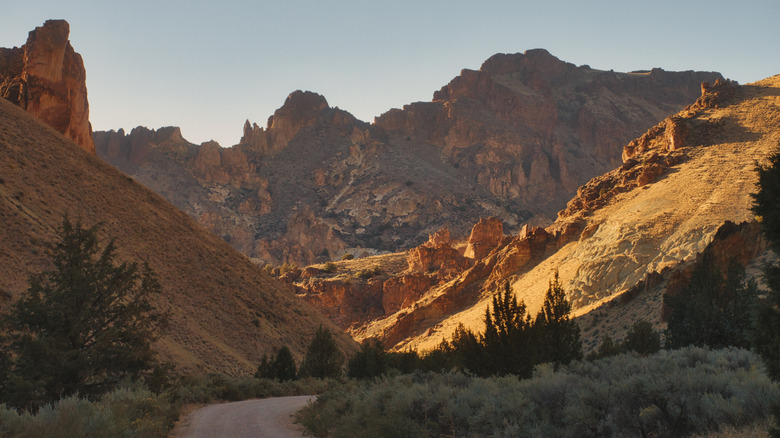
Fans of the desert likely have hikes at otherworldly Bryce Canyon National Park or incredible Zion National Park near the top of their bucket list, though they won't be the only ones. If you're a more experienced outdoor enthusiast looking to escape the crowds, explore Leslie Gulch, a hidden gem nestled against the reservoir that resembles Southern Utah, including towering rock hoodoos. It's off the beaten path, up a scenic dirt road an hour from U.S. 95 near the Oregon-Idaho border. Along the way, get out and stretch your legs by hiking through Juniper Gulch. While you're taking in the sights, keep your eyes peeled for animals as well. Over the past decades, bighorn sheep have been reintroduced in the area, and habitat around Leslie Gulch also supports mule deer and birds of prey. If you're looking to experience the magic of the Owyhees, stay for the sunset and the early-morning skies. The Slocum Creek Campground has nine free, non-reserved dry campsites with basic amenities including covered picnic tables, fire rings, and vault toilets. Please keep in mind the area is "an area of critical environmental concern," according to the Bureau of Land Management, so be sure to leave no trace.
Unlike the Oregon coast, Eastern Oregon's weather is drier and more extreme. Summers are often hot, and winters can be bitterly cold. It's also more isolated. The rugged region surrounding Lake Owyhee, the nearby Owyhee Canyonlands, is locally known as "The Big Quiet"; you're miles from a gas station, a marina, a hospital, and cell phone service. If you plan to visit Owyhee Reservoir, double-check all of your fuel gauges before leaving town, and be well prepared in case of a breakdown or medical emergency.