

Forget Napa Valley: Virginia's Coveted Wine Region Offers Scenic Blue Ridge Mountain Views
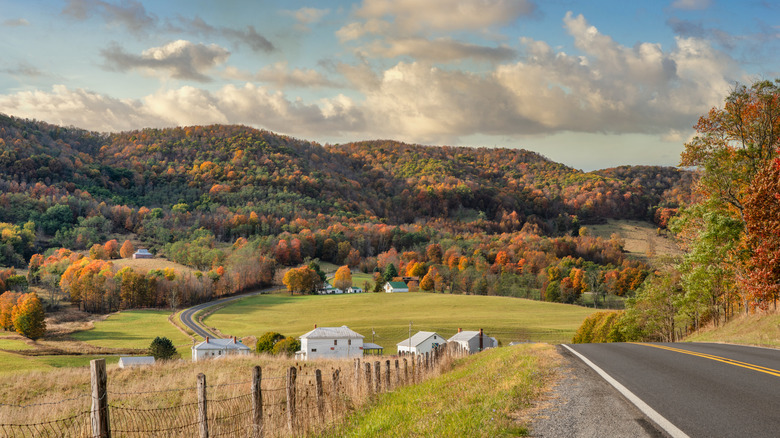
Virginia's Shenandoah Valley rolls out between the Blue Ridge Mountains to the east and the Allegheny Mountains to the west. The region's centuries-old towns preserve a rich agricultural heritage, including viticulture. This slice of Appalachia offers a more down-home, cozy experience than Napa tends to. Here, wine country is one of Virginia's must-see destinations.
Winemaking has been part of the Shenandoah Valley's identity since European settlement in the late 1700s, and the region was formally recognized as an American Viticultural Area (AVA) in the 1980s. Today, the AVA covers approximately 2.4 million acres, making it significantly larger than Napa Valley. Despite its long history, it remains comparatively overlooked by many wine travellers. "The Shenandoah Valley is a fairly undiscovered wine growing region, even by the people who live here," winemaker Lee Hartman told C-Ville. "In many regards it's one of the best places to grow grapes with higher elevation, less rain, cooler temperatures, and an already existing farming culture. Neighboring wineries are farther apart than in Loudoun and Albemarle."
Vineyards aren't the only thing to see in the Blue Ridge Mountains. For example, there are the Luray Caverns — the largest caverns in the eastern United States — as well as the smaller Dixie Caverns. The region is also of course filled with scenic trails that criss-cross the valley and slope up the mountains into gorgeous scenic lookouts. Seven Bends State Park alone features approximately nine miles of hiking and cycling trails along the North Fork of the Shenandoah River. Historic battlefields, museums, theaters, and seasonal festivals celebrate the area's rich cultural traditions. The Shenandoah Valley Music Festival, for example, is an end-of-summer staple that's been going on since the '60s. A trip to Virginia's wine country can be as packed with culture, history, and adventure as it can be laidback.
Visiting the wineries and estates of the Shenandoah Valley
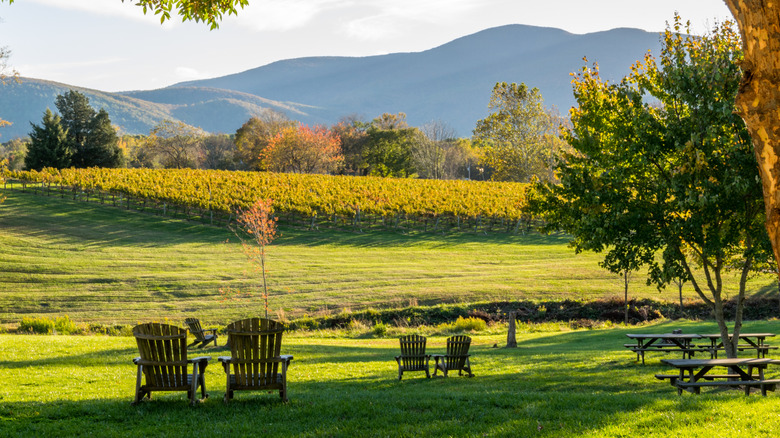
The Shenandoah Valley's climate has proved particularly well-suited to varieties such as Riesling, Pinot Noir, and Chardonnay. One of the best ways to explore this delicious diversity is by traveling along the Shenandoah Valley Wine Trail, which offers an opportunity to discover more than 20 wineries spread across approximately 200 scenic miles. The trail generally follows Interstate 81 that runs north-south. The vineyards are not densely clustered together like in other wine regions, so you've got stretches of gorgeous scenery amongst the foothills to enjoy in between stops.
Among the region's standout destinations is Cave Ridge Vineyard in Mount Jackson, a family-owned winery overlooking the valley. One of its most distinctive features is a collection of wines aged inside the tunnels of the nearby Luray Caverns, where the naturally cool and stable underground environment provides ideal conditions for maturation. Guests have noted in reviews that the outdoor seating includes particularly memorable views of vineyards backed by the Blue Ridge Mountains. Cave Ridge also offers regular events on the calendar including yoga in the vines, workshops, trivia, and guided tours.
Another stop worth highlighting is Purple WOLF Vineyard near Harrisonburg. This estate grew from a successful lavender farm before expanding into viticulture. The tasting room features traditional wines alongside distinctive lavender-infused varieties. Sample wines while taking in mountain views, or relax on a covered deck equipped for every season with heaters and ceiling fans. Visitors can stroll through the estate's unique, interactive gardens that offer a walking lavender labyrinth, a pond, animals, swings, a life size checkerboard, and more. During the summer, there is also the opportunity to pick your own lavender, and take a guided tour of the grounds. The relaxed atmosphere is a perfect example of the Shenandoah Valley's reputation as an approachable winemaking region.
Planning a trip to the Shenandoah Valley
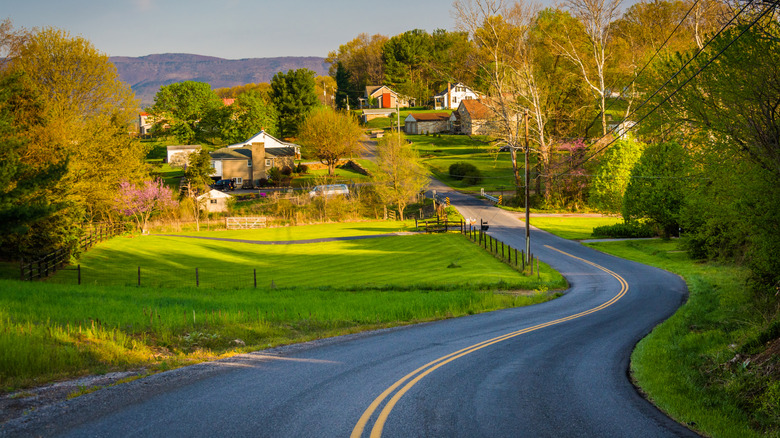
The Shenandoah Valley is easily reached by car in a couple of hours from Washington, D.C. The nearest major airports are Washington Dulles International Airport (IAD), Ronald Reagan Washington National Airport (DCA), and Richmond International Airport (RIC), which provide convenient options for domestic and international travelers and are all around a couple of hours away. Because the valley covers such a large geographic area and wineries are spread across rural communities, renting a car is generally the most practical way to explore. Driving also allows visitors to enjoy the region's scenic roads, including the Blue Ridge Parkway, a 469-mile scenic roadway in the United States that connects Shenandoah National Park in Virginia to the Great Smoky Mountains National Park in North Carolina.
Travelers familiar with Napa Valley, California's most popular wine region, may notice a very different atmosphere in Shenandoah. There are much fewer grand estates and luxury-focused tasting experiences. Here, wineries are family-owned and emphasize hospitality, affordability, and a slower pace. Tasting fees and guided experiences also tend to be more accessible. For example, Purple WOLF Vineyard lists a guided tour for $20, an educational tasting for $24, and a combined tour and tasting package for $42, making it possible to sample local wines without the premium prices.
Accommodation options are equally varied, ranging from restored farmhouses and historic cottages to charming Airbnb rentals. Some wineries also offer on-site lodging, allowing guests to wake up surrounded by vineyards and mountain vistas. For example, Ecco Adesso Vineyards in Rockbridge County, for example, offers several guest houses and a one-bedroom cabin. Given that outdoor recreation is another highlight of the region, packing comfortable hiking gear is highly recommended for a visit to this region.