

You Can Visit Two Of California's Stunning, Neighboring National Parks In One Trip
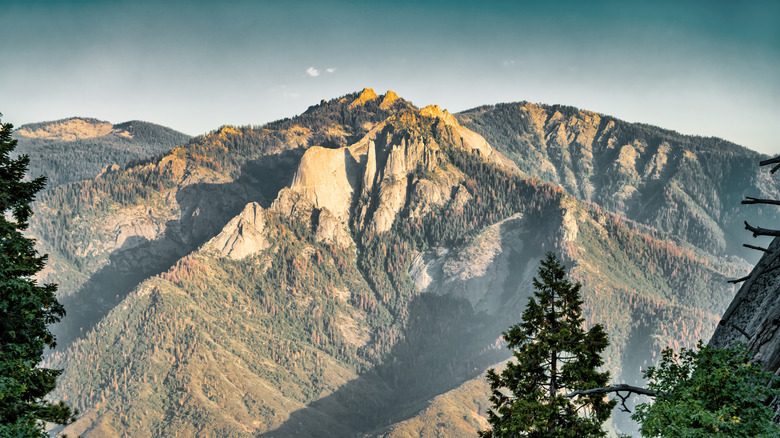
One key element that makes America's national parks so amazing is their sense of distance. Being, in most cases, large-scale nature preserves, many national parks offer an escape from the stresses and headaches of modern civilization. One downside, however, is that these parks are often remote. Major national parks like Yellowstone and Yosemite are often far enough removed from major population centers that getting to them requires a full trip. And while a few national parks are close enough to each other to allow for a multi-park road trip (like Utah's "Mighty Five" or Shenandoah and the Great Smoky Mountains via the Blue Ridge Parkway), the prospect of visiting multiple national parks in one day is often out of the picture. Such is not the case in California, however. Among the state's record nine national parks, two are not only right next to each other but actually administered as a single park entity. Though they protect some of the wildest features in the contiguous U.S., California's Sequoia and Kings Canyon national parks can be experienced in one single, epic trip.
Both Sequoia and Kings Canyon are part of California's lofty Sierra Nevada mountain range, which presides over the state's eastern "backbone" along the border with Nevada. In terms of transportation, visitors are usually looking at a one-hour drive from Fresno and a four- to five-hour drive from San Francisco. Once there, the joint-administration system lets visitors easily explore the best features of both parks — features that include some of the largest trees, highest mountains, and grandest vistas in the United States.
Two magnificent national parks for the price of one
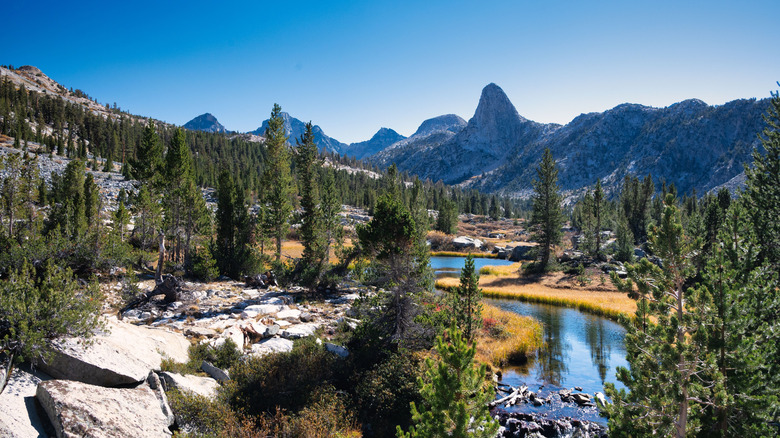
One benefit of Sequoia and Kings Canyon's joint administration is that visitors can access both parks with just one entry fee. That single entry fee provides access to more than 865,000 acres stretching across the foothills of the Sierra Nevada, with immense forests and gargantuan mountain passes intertwined throughout. The geology of the dual parks includes a panorama of mountain peaks over 12,000 feet high, with 12 peaks exceeding the rare 14,000-foot mark. The dynamic, biodiverse ecosystems found at lower elevations provide complex environments for all sorts of plants and animals.
Sequoia National Park is the older of the two. Established in 1890, Sequoia is, in fact, the second-oldest national park in the country. Sequoia earned this early recognition from its titular giant sequoia trees. Reaching heights well over 200 feet, giant sequoias are the largest trees on Earth by volume. Sequoia National Park is part of an elite club of world record-holding national parks thanks to the planet's largest single tree: the 274-foot General Sherman. Taller, still, is the 14,505-foot Mount Whitney (the highest mountain in the contiguous U.S.), which is partially within Sequoia National Park's boundaries. Sequoia also includes Yosemite-like granite domes, including the 6,725-foot Moro Rock and its breathtaking summit viewpoints.
Kings Canyon National Park is named after the epic, mile-and-a-half-deep canyon cutting through the Sierras. Kings Canyon's granite monoliths and mountain forests frequently draw comparisons to Yosemite. As Yosemite ranked among the most-visited U.S. national parks in 2025, Kings Canyon provides a much less crowded alternative to its fellow California park. Its attractions include more awe-inspiring sequoia trees (like the 268-foot General Grant), the mysterious Boyden Cavern, and magnificent canyon viewpoints like Panoramic Point and Cedar Grove.
What to include on your Sequoia/Kings Canyon National Park itinerary
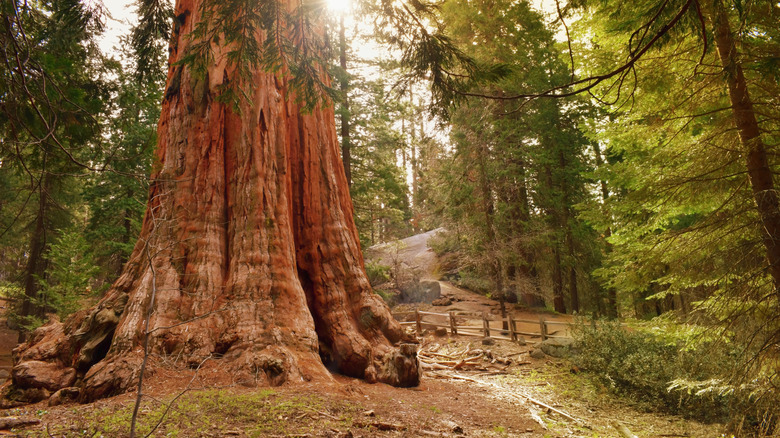
Sequoia and Kings Canyon have three main entrances: Sequoia's Ash Mountain Entrance, Kings Canyon's Big Stump Entrance, and the Lookout Point Entrance to Sequoia's remote Mineral King area. Visitors have plenty of options for a full day's itinerary in both parks. The most obvious stops for a single day in Sequoia and Kings Canyon would be the park visitor centers, which include information, educational exhibits, and gift shops. Near the Foothills Visitor Center and the Ash Mountain Entrance is the Giant Forest Museum, a must-stop for anyone intrigued by the almighty sequoias outside.
After the museum, travelers can see these unbelievable trees in person at the various giant sequoia groves. The two most famous sequoia trees, General Sherman and General Grant, are less than an hour's drive from each other. This gives tree-lovers ample time to explore lesser-known sequoia groves, like Redwood Mountain Grove and Muir Grove. Visitors can also stop at Tunnel Log and drive their car directly through a fallen sequoia! Beyond the giant trees, Sequoia and Kings Canyon itineraries may also include stops at the magical Crescent Meadow, subterranean wonders like Crystal Cave, natural observation decks like Moro Rock, or marvelous waterfalls like Roaring River Falls. During the busy season, the parks operate a helpful shuttle service between popular attractions.
Hiking is obviously a top activity, and both Sequoia and Kings Canyon have plenty of scenic trails of varying difficulty levels. Visitors can also relax at a gorgeous picnic area, or enjoy a scenic drive to a sublime viewpoint. Sequoia and Kings Canyon are among the best California national parks for camping, with 14 campgrounds spread out across both parks. Both parks also have modern lodges and cabins for cozier overnight stays.