

One Of North America's Least Visited National Parks Is A Remote Hiking Gem In Canada
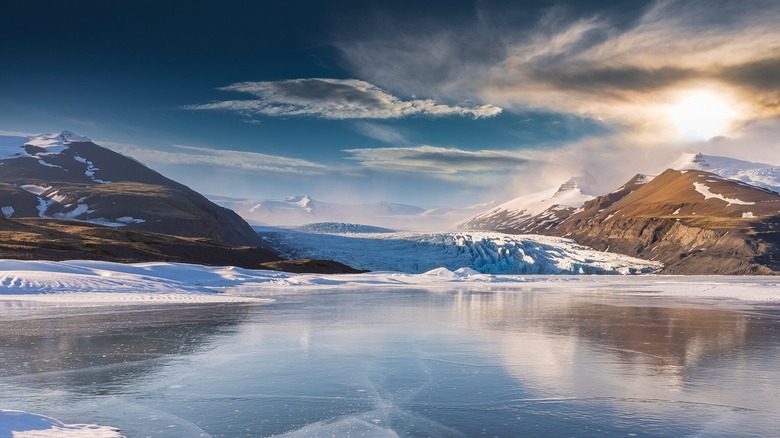
North America's national parks represent some of the most famous (and most popular) outdoor vacation destinations in the world. American national parks like Yellowstone, the Grand Canyon, and the Great Smoky Mountains consistently draw millions of visitors each year. North of the border, Canadian national parks like Banff are likewise preeminent tourist attractions with scenery that's recognized all across the globe. Famous as these parks are, however, they are not exactly representative of all national parks on the continent. Some North American national parks are so remote, rugged, and undeveloped that few travelers even know they exist, let alone manage to visit. Deep in the remote latitudes of the Canadian Arctic, Canada's Quttinirpaaq National Park may hold the title of North America's least-visited national park.
Quttinirpaaq National Park's record lack of visitors makes perfect sense once you glance at its location on a map. Unlike popular national parks, which tend to sit near major transport centers, airports, or highways, Quttinirpaaq National Park lies in the far north of the Canadian territory of Nunavut. Though Nunavut covers more than 800,000 square miles, its permanent population is a mere 37,000 people — far fewer than some of the smallest cities in the U.S. In this already sparsely populated Arctic territory, Quttinirpaaq National Park is so far north that it nearly touches the North Pole!
Unsurprisingly, no roads go this far north, and air travel is both limited and precarious. This extreme isolation, however, guarantees an unprecedented outdoor experience for the bold few who do manage the trip. For them, Quttinirpaaq National Park's vast Arctic landscape, massive ice sheets, and untouched mountains offer some of the purest "back-to-nature" hikes in both North America and the world at large.
Discover an untouched Arctic wilderness just south of the North Pole
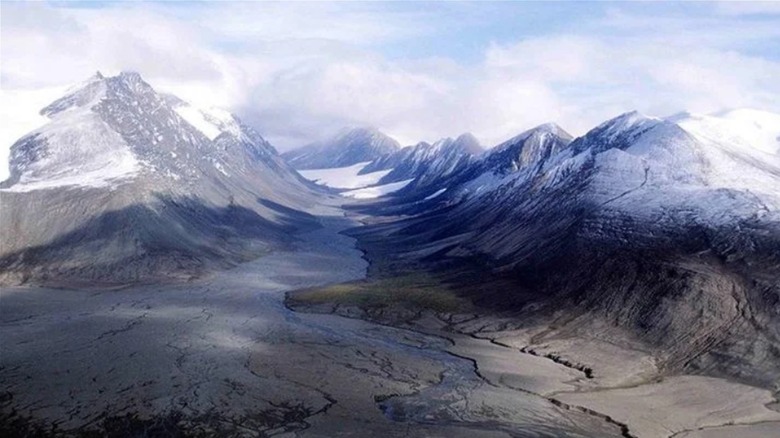
In complete contrast to major Canadian cities like Toronto and their convenient opportunities for fun tourist getaways, Quttinirpaaq National Park represents (in the fullest sense of the term) the "True North" of Canada's immense landscape. Quttinirpaaq protects the northern section of Nunavut's Ellesmere Island, itself one of the northernmost islands in the Canadian Arctic. Such a massive stretch of undeveloped polar terrain provides the park with plenty of space. Indeed, at more than 14,500 square miles in size, Quttinirpaaq is the second-largest Canadian national park, smaller than only the roughly 17,000-square-mile Wood Buffalo National Park.
The name Quttinirpaaq translates to "top of the world" in the Inuktitut language. The name makes sense, given that Quttinirpaaq may be the northernmost national park in the world. To put things in perspective, Quttinirpaaq is less than 500 miles from the North Pole! Despite its North Pole proximity, Quttinirpaaq is unlikely to make any list of top December tourist attractions for Christmas season vacations. According to some sources, the park receives a total of seven individual visitors in certain years.
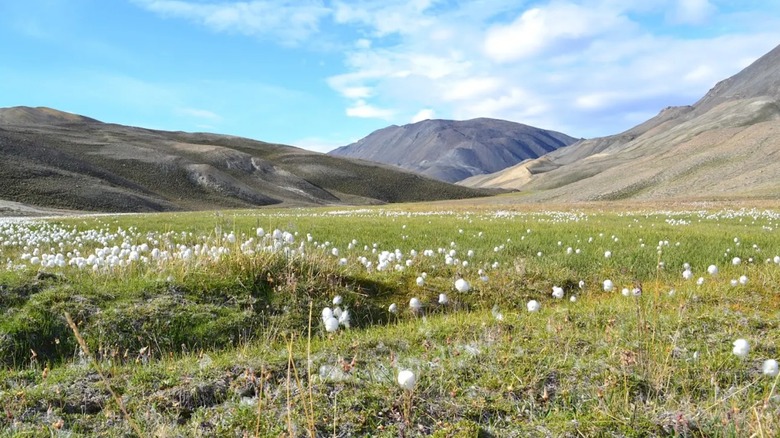
Still, those seven visitors get to experience a truly authentic tour of Canada's Eastern High Arctic region, complete with immense glaciers, tundra, polar deserts, and wind-carved mountains. While such an extreme climate may seem more hostile to life than the driest hot deserts, Quttinirpaaq is actually home to some of the hardiest plant and animal species on Earth. Visitors might encounter Arctic residents like muskox, caribou, wolves, Arctic foxes, and (of course) polar bears. Geographic features at Quttinirpaaq include marvels like the Nunavut high point of Barbeau Peak, the mountain-encapsulated Tanquary Fiord, and several large glaciers.
How to experience Quttinirpaaq National Park
Like the U.S.'s least-visited national park with amazing views, Quttinirpaaq National Park requires some extra effort to get to. Most Quttinirpaaq trips embark from Nunavut's Resolute Bay, itself a remote Arctic community that ranks among Canada's northernmost settlements. Canadian North Airlines does offer flights to Resolute Bay from Nunavut's Iqaluit International Airport. However, unless you already happen to live in Nunavut's capital (and only) city, getting to Iqaluit will require an additional flight from Ottawa or Yellowknife.
From Resolute Bay, you can get to Quttinirpaaq via a charter flight with a private transportation service like Kenn Borek Air. Flights to Quttinirpaaq can depend heavily on weather and crew availability, which limits the visitation window to the summer months between May and August. Daily excursions at Quttinirpaaq cost $17.75 CAD ($12.81 USD), while overnight trips cost $37 CAD ($26.70 USD). While those park fees may sound reasonable, the actual charter flight from Resolute Bay can cost around $10,000 CAD, or around $7,200 USD.
This beautiful (and expensive) isolation forges many of the planet's most wild hikes. Quttinirpaaq has no real established trails, and hikers must have a high level of wilderness experience, preparation, and resources. Still, the park does have a few unofficial hiking routes that showcase its most awe-inspiring views. The Kettle Lake walking tour covers 5 miles past the namesake Kettle Lake and the major sites used by ancient Paleo-Inuit peoples. Other hikes along the Hunters Wall and Mary Creek Ridge routes also pass Paleo-Inuit structures and spectacular Arctic landscapes. If snow conditions are favorable, Quttinirpaaq is a challenging but rewarding destination for epic cross-country skiing. Overnight stays will require either remote backcountry camping or modest lodging options in Resolute Bay.