

Rick Steves Shares The Right Way To Exchange Currency In Europe To Avoid Wasting Money
Traveling in a new country can feel liberating. New sites, new destinations, and new languages all add to the excitement. Even using different currency can feel like its own adventure. But those unfamiliar bills and coins are very real money, and on his website, travel expert Rick Steves cautions visitors to Europe to be careful when exchanging their dollars for local cash so they can avoid wasting money in fees.
While exchanging dollars for euros, for example, is easy thanks to readily accessible kiosks and stores, it can be expensive. Many cash exchange businesses charge high commissions, which Steves says you should avoid. Even businesses that don't have high commissions can still hit you with a poor exchange rate. Of course, avoiding cash exchange entirely is the simplest way to avoid losing money on exchange fees, and Steves recommends minimizing the act when possible. But exploring a country with no local currency can be dicey, since some shop owners and restaurants may not accept credit cards.
Even if you plan to visit one of Europe's five best budget-friendly destinations, you'll want to ensure you're saving money when exchanging it for local currency. In these instances, Steves has a useful tip: "Note the difference between the rates for buying (the bank buys foreign currency from you to exchange into local cash) and selling (the bank sells foreign currency to you). A good rule of thumb: The difference between the buy and sell rates should be less than 10 percent."
Know where (and when) to exchange currency
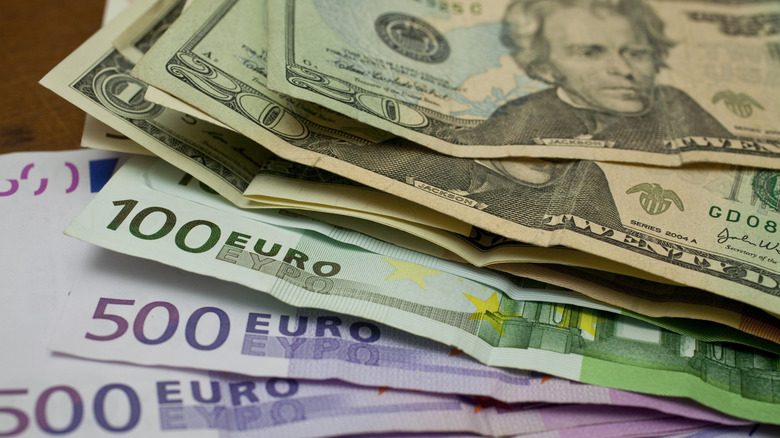
More than likely, you're going to need physical money during your travels. For many, that means exchanging dollars for euros or pounds, for example, before even leaving American soil. But Rick Steves advises against that practice. Waiting to exchange currency until after you land in your destination country means you can avoid bad stateside exchange rates, he notes. While ATM withdrawals may have some conversion fees attached, Steves says he has "yet to see a European airport that didn't have plenty of ATMs," making them a convenient option once you've touched down.
Unfortunately, traveling to Europe in 2026 will cost more than you think, so saving money where you can is more important than ever. That means knowing where to get cash besides the airport ATMs. Many European banks won't exchange dollars for local currency unless you have an account with them, Steves shares. If you're struggling to find a place to make the exchange, the guidebook author suggests checking the local European post office, since many postal outlets run their own banks and can exchange cash.
Steves suggests having at least an approximation of current exchange rates in your destination country and getting familiar with the coins and paper cash before you spend it. It's also wise to use the currency you have in the country in which it's valid and spend coins before crossing borders in Europe. This prevents bringing coins or cash with you back into a country where it has no value.