

Rick Steves' Clever Money Tip To Stay Vigilant While Shopping In Europe

Rick Steves knows that many travelers in Europe are on a budget. To that end, the travel pro has helped vacationers out over the years with tips on not wasting money on fancy hotels and eating near market halls for lower-priced meals. However, there is another way to save money, which is to make sure you're not getting ripped off while on vacation. It's easy to let your guard down, especially when shopping or spending money on attractions. On Steves' website, he says that, when spending cash in Europe, "assume you'll be shortchanged." It's upsetting to think about people with bad intentions when you're on holiday, but it can happen anywhere at any time, and if the currency you're using is unfamiliar, it's easy for someone to take advantage of you.
Steves writes, "Some people who spend their lives sitting in booths for eight hours a day taking money from strangers have no problem stealing from clueless tourists who don't know the local currency." In fact, he says that he watched someone do it, and noticed that only about half of the people figured it out. Staying vigilant about your change (and doing some quick mental math) can keep this from happening to you and your family.
Don't get ripped off in Europe
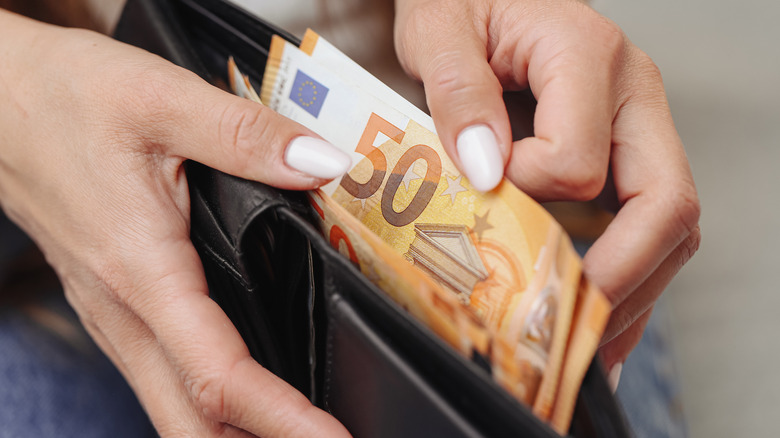
Rick Steves reminds us that knowing the value of each bill and coin in your destination is important, so you know what you should be getting back during a transaction. It's also important to check what you've been handed — if you need a second to count it, do so. However, being familiar with the local currency goes beyond just counting your change.
It's also important, Steves says, to know the exchange rates between dollars and the local currency. While you don't have to get it exactly right (as rates do change often), having a ballpark idea of what, say, €25 is in dollars is wise. Steves even suggests you and your travel companions quiz each other. You can also download a currency converter app for your phone or put the exchange rate for dollar amounts to the local currency into your phone's note-taking app so you can estimate what your bill would be in dollars. This is especially helpful if you're paying with a credit card, so you don't return home to a sky-high bill. On that note, if you have the option to pay in dollars or the local currency when swiping your credit card, Steves recommends paying in local currency because the card machine's exchange rate is usually bad. Finally, no matter where you're traveling, it's smart to follow Steves' tips for outsmarting pickpockets. After all, money (and documents) kept safe is money saved.