

Forget Sequoia National Park, Head To This Stunning California State Forest Instead
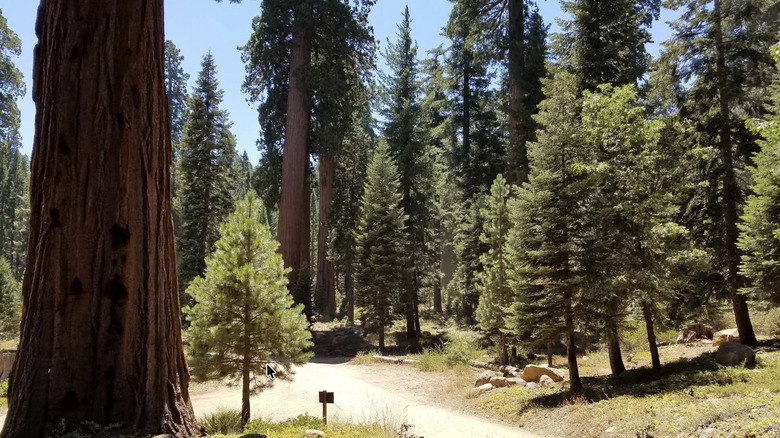
California's larger-than-life sequoias attract visitors from all over the globe to the western slope of the Sierra Nevadas, the only place in the world where groves of the trees naturally grow. In 2025, over 1.3 million visitors flocked to Sequoia National Park to witness the towering beauty of General Sherman and enthrall themselves in the incredible natural scenes. Due to so many visitors, the park is known to be overcrowded on the weekends and on holidays. Instead of fighting the crowds, travelers can opt to visit a local secret: neighboring Mountain Home Demonstration State Forest. It offers a similar experience of towering trees and natural seclusion, without the hordes of tourists or entrance fees.
The Mountain Home Demonstration State Forest, often shortened to "Mountain Home," is home to over 4,500 of the largest old-growth giant sequoias in the state. According to conservationist John Muir, these trees were considered to be "the finest in the Sierra" and are nestled amongst other pine, cedar, and fir trees. Like at Sequoia National Park, visitors can hike, fish, and take a scenic drive in the state forest, as well as camp under a blanket of stars. The wildlife is similar as well, and visitors may spot deer, bald eagles, and even black bears. One notable difference, though, is that the forest is known for being a living research area where visitors can experience conservation and recreation research in action.
The Mountain Home Demonstration State Forest is located 22 miles east of Porterville and borders Sequoia National Park to the south. Travelers coming from the LA area have about four hours of driving ahead of them. The nearest major airport is the recently expanded Fresno Yosemite International Airport (FAT), about two and a half hours away.
Unique experiences at the Mountain Home Demonstration State Forest
The 5,069-acre Mountain Home Demonstration State Forest has a rich and unique history. Over 20 prehistoric and 17 historic sites, including hand-carved granite "Indian Bathtubs," show evidence of Native American activity in the forest, long before settlers arrived and began logging the trees. Visitors curious about the park's cultural history shouldn't miss visiting the Sunset Point Archaeological Interpretive Site and the Exeter Rocky Hill Site, managed by the Archaeological Conservancy, to see incredibly well-preserved Native American rock art. Visitors curious about the logging history in the forest can see the remnants of an old mill and a former logging operation at the Enterprise Mill site.
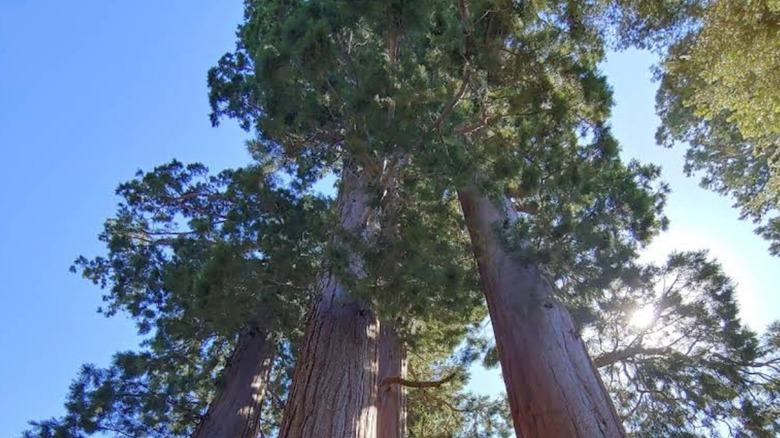
Like at Sequoia and Redwood National and State Parks, which are full of ancient, towering trees, visitors can take a scenic drive through the state forest and see some of the world's largest giant sequoia trees, minus the heavy vehicle traffic. Mountain Home Grove is encircled by Balch Park Road and Bear Creek Road, which snake through the forest and lead visitors to the doorstep of giant redwoods. Arguably, these roads provide better access to the trees by car than at Sequoia. Along the way, you'll see two examples of how hardy the trees are. The 214-foot-tall Genesis, formerly the largest tree in Mountain Home, survived being severely burned in the 2020 Castle Fire. Another of the most well-known trees in the forest, the 167-feet-tall, 27-feet-wide Hercules, survived being carved into a room in the late 19th century (you can still climb its small staircase and go inside) and struck by lightning. Other forest roads in the park branch off to other towering trees, including 247-foot Adam, which was thought to be the largest tree in the area when it was named. You can find a vehicle tour map at the forest headquarters on Bear Creek Road.
A traditional outdoor camping trip in the Sierras
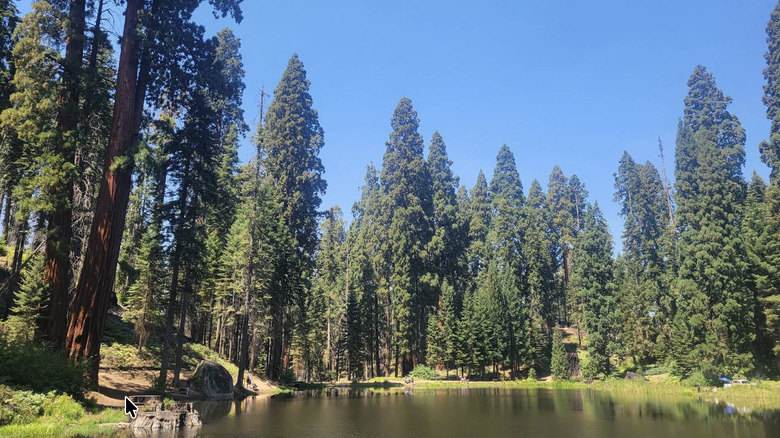
Visitors looking to get away from the hustle and bustle of the city — or hot temperatures in other parts of California — will have plenty to do on a traditional camping trip at Mountain Home. While Sequoia has 14 campgrounds that are commonly full, all six regular campgrounds at Mountain Home (apart from the Methuselah Group Campsite) are reservation-free. They also have all the essentials (water, campfire rings, picnic tables, and restroom facilities) you'll need for a quiet trip in the forest and offer easy access to outdoor activities. If you plan to do a bit of hiking, the Shake Camp Campground is just steps away from the 2-mile Adam and Eve Tree Loop and trails heading into the Golden Trout Wilderness. For anglers, the Hedrick Pond Campground, the Moses Gulch Campground, and the more secluded Hidden Falls Campground have easy access to fishing. Visitors are allowed to keep the fish they catch (and even hunt in certain areas during hunting season) but must follow state regulations.
If you're looking to camp under the shade of towering sequoias, or be at the center of outdoor activities in the area, consider the Balch Park Campground. Being a Tulare County park, the area was never logged, and the county maintains two fish ponds and the largest regular camping area (with 71 campsites) in the forest. Larger campers up to 40 feet can also be accommodated there.
The forest is temperate, with highs reaching into the upper 70s and lows dipping below freezing during the winter, when the forest closes down. These cooler months are a great time to visit Red Rock Canyon, a colorful state park, about three hours away.