

This National Park In California Offers Serene Desert Camping And Recreation
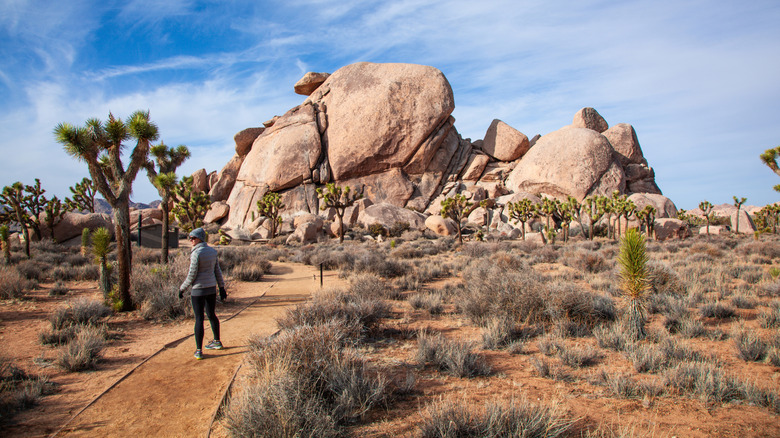
When it comes to national parks in the United States, California is king. The Golden State has nine, stretching from the ancient, towering redwood forests of Northern California to the sprawling deserts of SoCal. These majestic, sweeping landscapes have inspired artists, musicians, and outdoor enthusiasts for generations. One of the state's most notable national parks is the emblematic Joshua Tree National Park, where two major desert ecosystems, the Mojave and the Colorado, meet.
Joshua Tree's unique topography makes the park stand out among others in the Golden State. The park's elevation ranges from 536 feet to well over a mile high on the top of Quail Mountain and has different plant and animal life in each of the biomes. In the Colorado Desert, for example, you won't find the park's namesake Joshua trees, but you will find tall, flowering Teddy bear cholla cacti. Higher up, you may spot bighorn sheep foraging among pinyon pine and juniper trees. Within Joshua Tree, there are several ways to enjoy the natural scenery, including by climbing, hiking, or spending the night underneath the starry desert skies. No matter which way you explore, please do so carefully. Native plants and animals are competing for limited water in a harsh environment; interact with them through your binoculars or camera from far away.
If you're flying into Southern California, the nearest major airport is in Palm Springs, less than an hour from both of the park's most popular entrances, the West Entrance and the South Entrance. Even though you may not be given a ticket upon entry, you'll still have to pay for admission upon leaving. Regular vehicle entry fees are $30, as of this writing.
Activities in a desert full of life
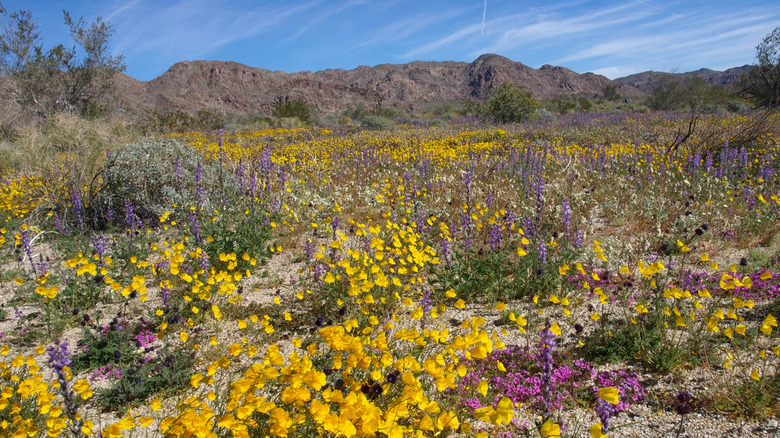
The most popular time to visit Joshua Tree is in the fall, winter, and early spring months, when the temperatures are cooler. During this time of year, beautiful desert flowers bloom. Then, as the temperature warms, the mountains gradually fill in with color. Popular hikes to see the flowers this time of year include the mile-long loop through Hidden Valley (give scrambling a try here) and the longer, 2-mile Split Rock Trail, which loops around dozens of species of wildflowers and Joshua trees.
Wildlife watching is another popular recreational activity in Joshua Tree National Park. The seemingly inhospitable environment is home to slow-moving tortoises, fast-moving jackrabbits, and hundreds of species of high-flying birds, some of which are active in the park year-round, including roadrunners, mockingbirds, wrens, and even birds of prey. You'll likely spot a few around sources of water, including near Barker Dam, a popular place for rock climbing and hiking, or around several of the oases in the park.
The weather in Joshua Tree is incredibly harsh and a key reason why most visitors come during the earlier part of the year. Summer days can reach over 100 degrees Fahrenheit. Though Indigenous tribes and animals were able to adapt to the desert environment, don't take the conditions lightly. Before going out to explore for the day, be sure to bring plenty of food, electrolytes, and at least a gallon of water per person. If you need to top off your bottle, you'll find water in a handful of locations across the vast park, including at ranger stations, visitor centers, and the West Entrance.
Camping in Joshua Tree National Park
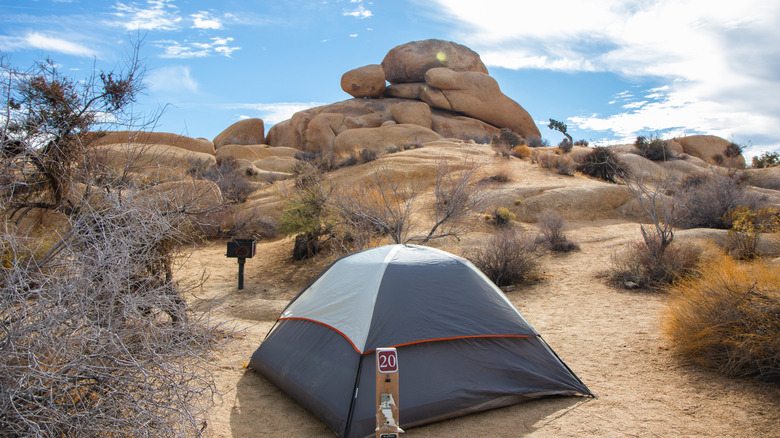
Joshua Tree National Park has nine total campgrounds and 500 campsites. While this may sound like a lot, note that these grounds fill up quickly during peak camping seasons in winter and spring. It is one of the top winter weekend getaway destinations in California, after all. While Jumbo Rocks is popular with families and Indian Cove is a good choice for climbers, both are dry campsites without water. Only two campgrounds, Black Rock and Cottonwood campgrounds, have water and restroom facilities. Campsites are reservable up to 180 days in advance on Recreation.gov. If you're willing to chance it, the park has three walk-up campgrounds for RVs or tents, though it's best to have a backup plan. There are several local campsites in Twentynine Palms and at the Chiriaco Summit Campground, which is free but has no water, garbage service, or restrooms.
Campers should be well prepared for their trip and plan to be self-sufficient. If you'd like a break from camp food, you'll find restaurants nearby. Ten minutes from the park's South Entrance, the Chiriaco Summit Restaurant serves up home-cooked meals. Closer to the West Entrance past Twentynine Palms, Crossroads Cafe is a convenient stop for breakfast, while Sky High Pie will suit your craving for pizza.
Although it's not one of the best national parks for stargazing (largely due to nearby Palm Springs), Joshua Tree is still a fabulous place to see the stars twinkle in the night sky, and the park is recognized as an International Dark Sky Park by DarkSky International. You'll find some of the most spectacular night skies in Southern California in the eastern stretches of the park near the Cottonwood Campground.