

How This California Couple Legally Built A Home In Glacier National Park
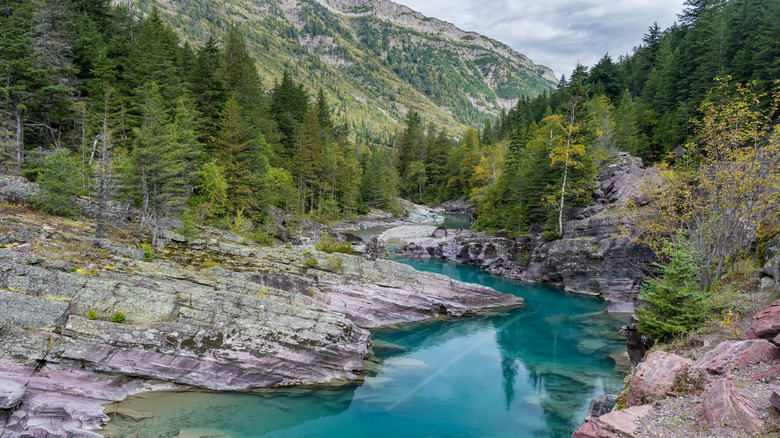
For outdoor enthusiasts, visiting Glacier National Park is a bucket-list experience. Located in northwestern Montana along the Canadian border (as well as in Wyoming and Idaho), the park encompasses more than 1 million acres of rugged mountains, alpine meadows, forests, and glacier-carved valleys. Its dramatic scenery attracts millions of visitors a year (in fact, it's one of the overcrowded national parks that ditched reservations in 2026), placing it among the most celebrated protected landscapes in the United States.
Yet, few people know that tucked within the boundaries of the park are a small number of privately owned properties. One such parcel became the center of a lengthy legal battle after John and Stacy Ambler, a couple from San Diego, purchased a half-acre lot near McDonald Creek in 2019. The property was located within park boundaries but remained privately owned, allowing the couple to pursue their plans to build a home there. According to Montana Free Press, the Amblers claimed they had received approval from local authorities indicating that they could construct a three-story residence on the site. The couple moved forward with the development, but the project soon attracted opposition.
Nearby residents and conservation advocates raised concerns about construction activity along the beloved McDonald Creek, a waterway valued for its ecological and scenic value. Complaints were filed with the Flathead Conservation District, which oversees compliance with Montana's land and water protection regulations. The dispute centered on whether the project violated the Montana Natural Streambed and Land Preservation Act, a law intended to protect rivers and streams from activities that could alter their natural condition. While conservation groups argued that the construction required additional review, the Amblers maintained that they had followed the rules. The dispute highlights a little-known reality of American national parks: Not all land within park boundaries is publicly owned.
A loophole to private ownership in national parks
This issue of privately held land in public parks dates back to the early years of the national park movement. In 1872, Yellowstone became the world's first national park. Decades later, Congress passed the Organic Act of 1916, creating the National Park Service and establishing a federal agency to manage the growing network of protected landscapes. As the national park system expanded, the federal government faced a practical problem: Many of the lands they sought to designate as parks contained privately owned properties. In certain cases, governments used eminent domain to acquire land for public purposes, but the practice was highly unpopular. In response, officials sometimes allowed private owners to retain their property, even as the surrounding land became federally protected.
These privately owned parcels are known as "inholdings," and today, they exist in parks across the country in many different forms. Some are working ranches or grazing lands. Others are mining sites, campgrounds, vacation cabins, private residences, or even small communities. For example, Mammoth Cave National Park is an underrated Southern gem of natural beauty that contains 19,661 acres of private property – roughly 28% of the park's total acreage. Many inholdings trace their origins to the settlement of the American West. The property purchased by the Amblers is one example. According to court documents, it was originally granted to another owner in 1908 through the Homestead Act, which offered 160 acres to settlers willing to move west and establish residences on undeveloped land.
Many visitors assume everything inside a national park belongs to the federal government. However, thousands of privately owned parcels remain scattered throughout the park system. Keep an eye out, and next time you visit a national park, you may notice their subtle presence.
The ongoing battle to protect land inside national parks
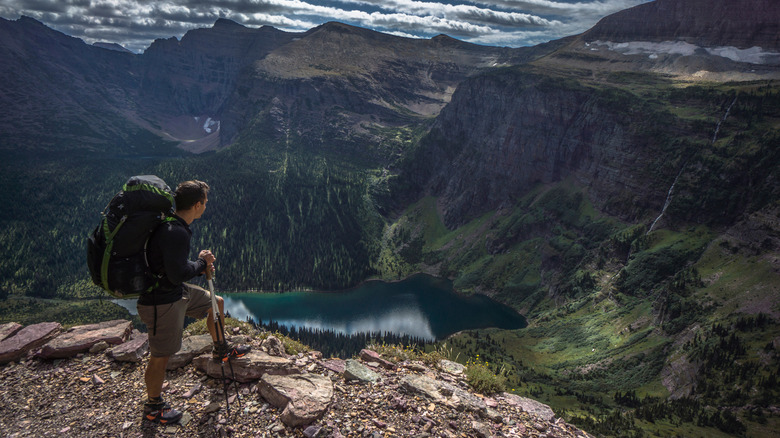
The debate over inholdings extends far beyond a single home in Glacier National Park. Across the United States, privately owned parcels remain embedded within some of the country's most treasured natural areas. According to the Trust for Public Land, approximately 15,000 inholdings exist within more than 400 units managed by the National Park Service. Taken together, these privately owned parcels cover an area nearly the size of Connecticut.
Critics argue that inholdings undermine the ecological and cultural value that national parks were created to protect. Development may increase human disturbance, alter wildlife habitats, fragment ecosystems, or place additional pressure on sensitive landscapes. These concerns are particularly pronounced in places such as Glacier National Park, where waterways play an important role in regional ecology. According to the National Park Service, Glacier's waters form part of the headwaters of the continent. At Triple Divide Peak, water can flow toward three separate drainage systems, eventually reaching the Pacific Ocean, the Atlantic Ocean, and Hudson Bay. The park's streams and rivers support a wide range of species, including spawning fish, aquatic invertebrates, several types of birds, beavers, and otters. Because these waterways sit at the source of larger watersheds, their health has implications far beyond park boundaries.
As a result, some conservation organizations advocate purchasing privately held parcels when they become available and incorporating them into surrounding public lands. Others take a different view, arguing that inholdings represent legitimate private property rights and rare opportunities for people to own land in extraordinary natural settings. Real estate listings often emphasize that exclusivity. In one example, Mantle Ranch, a roughly 525-acre property located within Dinosaur National Monument in Colorado, sold for nearly $4 million. The ongoing debate reflects a broader tension between conservation and private ownership. In the case of the Amblers, a final decision from a federal appeals court ruled in the couple's favor in April 2026.