

Italy's 'Vienna By The Sea' Is An Underrated Solo Travel Destination With Postcard Views
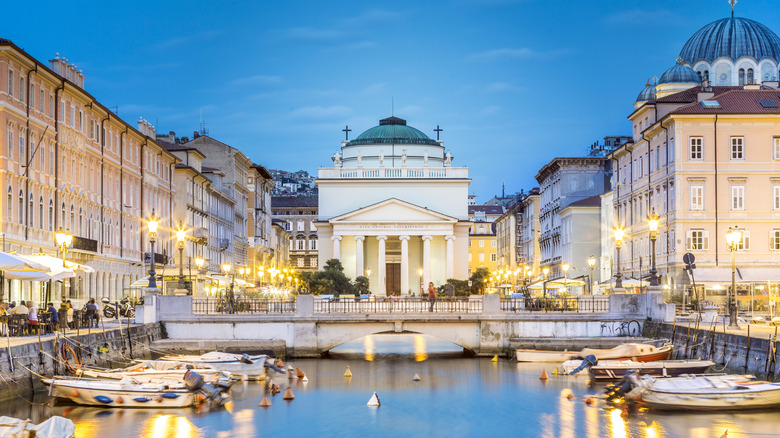
The port town of Trieste occupies a geographic position that may not come to mind when people think about traveling to Italy. It sits on the far northeastern side of the country, squeezed between the Adriatic Sea and the Slovenian border. Italian, Austrian, Greek, Croatian, and Slovenian influences converge in this city's architecture, cuisine, and culture, creating a vibrant destination. With a population of just over 200,000, it is compact enough to explore on foot, while still offering enough attractions to fill several days — part of what makes it the perfect destination for solo travelers.
Often called "Vienna by the Sea," it was for centuries the principal port of the Austro-Hungarian Empire, and that history remains visible throughout the city. Since that time, its reputation as a major center of economic and cultural power (and, therefore, a destination for travelers) in Italy has ceded to others such as Milan and Venice. Yet, its vast cultural wealth has stood the test of time. Visitors will encounter a medieval old town, grand neoclassical boulevards, elegant coffeehouses, and a waterfront that resemble Vienna more than they do Italy's top destinations and attractions. Trieste is also generally more affordable than many of Italy's best-known destinations, checking off a key feature any solo traveler should keep in mind.
Standout attractions include the 19th-century Miramare Castle, the Roman Theatre of Trieste, and the Arco di Riccardo, remnants of the city's ancient past that sit surprisingly close to modern streets and shops. There are a handful of must-see museums, including the Maritime Museum (Museo del Mare), which explores Trieste's long relationship with shipping and trade. Perhaps most appealing for those traveling alone is the city's cafe culture. Lingering over coffee remains a local tradition, and Trieste's historic cafes provide the perfect place for visitors to read, work, people-watch, or strike up conversations with locals and fellow travelers. In addition, it's easily accessible: The nearest international airport is 21 miles northwest, while Venice is just under two hours away by train.
The best viewpoints and photo spots in Trieste
Trieste's unique coastal geography creates numerous memorable views that solo travelers can take in, even without being accompanied by a tour group. One of the most rewarding locations is Contovello, a small village situated northwest of the city center and near Miramare Castle. Characterized by humble dwellings, narrow lanes, and a distinctly rural atmosphere, Contovello feels removed from the urban core despite being only a short distance away. The road leading to the village provides sweeping views across the Gulf of Trieste. Many photographers stop along the route, and the village itself is equally appealing, with traditional architecture and quiet streets that reflect the area's Slovenian and Italian heritage.
Farther north on the plateau lies Opicina, known for its elevated position overlooking the city. Historically, visitors could reach the area aboard the famous Trieste-Opicina tram, one of Europe's oldest tramways. Today, the route remains an important local landmark. Near the center of Opicina stands the Obelisk, a monument that offers one of the broadest panoramas in the region. The nearby Napoleonic Way, a scenic walking route along the ridge, is particularly popular for sunset views and photography.
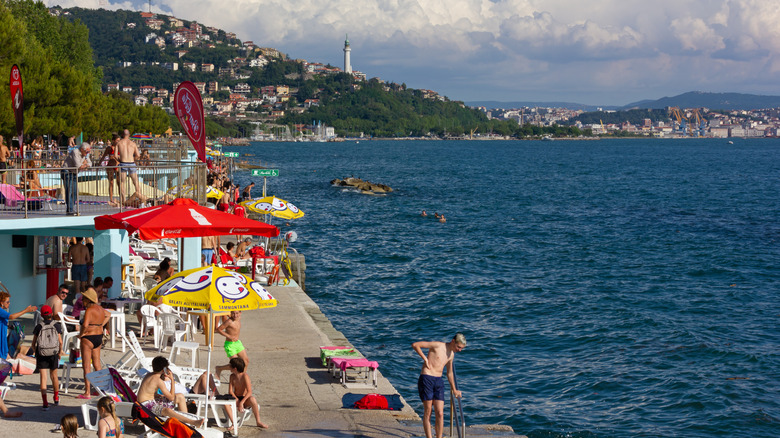
The neighborhood of Barcola stretches along the northwestern waterfront between Trieste and Miramare Castle. This seaside promenade is one of the city's most beloved public spaces. Residents and visitors come here to bathe in the Gulf of Trieste and to walk, jog, or simply enjoy views across the water. Easily reached by transit from central Trieste, Barcola provides solo travelers with some of the city's most accessible and rewarding coastal scenery, with many bars and restaurants within walking distance.
Exploring Trieste's historic coffee culture
Coffee is woven into daily life in Trieste, stemming from the city's historic role as the Austro-Hungarian Empire's primary seaport for coffee imports. Today, Trieste boasts a cafe culture and historic coffeehouses that could be said to rival Demel, a cafe and top tourist attraction in Vienna – and cafe-hopping is the perfect activity for solo travelers looking for a deep cultural dive that's still affordable.
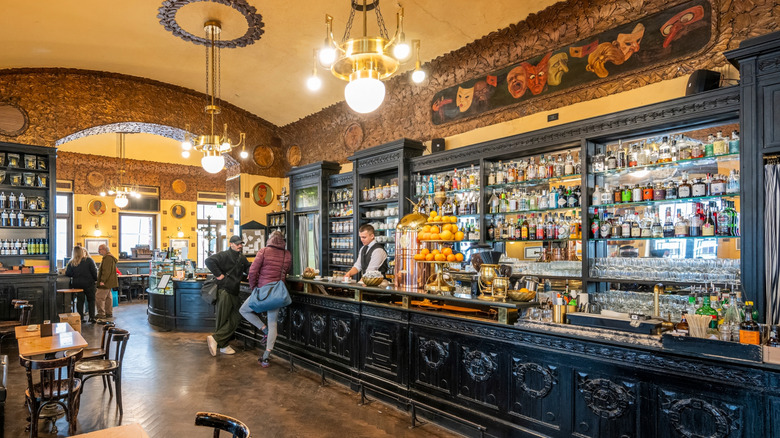
Among the city's most famous establishments is Antico Caffè San Marco, located east of the Canal Grande area near the edge of the city center. Opened in 1914, the cafe became a gathering place for writers, intellectuals, and political figures. Today, visitors can still experience some of its old-world traditions, including coffee served on silver trays alongside a small glass of water, reminiscent of Austrian coffeehouses. The cafe also houses a bookstore, making it a popular destination for solo travelers looking for a great read to keep them company on their journey.
Southwest of San Marco, near Piazza Unità and a short walk from the waterfront, stands Caffè Tommaseo, the oldest cafe in Trieste. Founded in the first half of the 19th century, it retains many historic design features, including ornate interiors, decorative moldings, and elegant seating areas. In the heart of the city center, near the lively Piazza della Borsa area, Caffè Urbanis offers a more contemporary atmosphere while remaining connected to its 19th-century origins. Its outdoor terrace provides an excellent vantage point for observing daily life in one of Trieste's busiest public spaces. The cafe is particularly known for serving shakerato, a chilled espresso shaken with ice and sugar that becomes especially popular during warmer months. It's the perfect spot for solo travelers to immerse themselves in the heart of Trieste's social life.