

Florida's Coveted Beach City Issues $500 Fines For Breaking This Swimming Rule
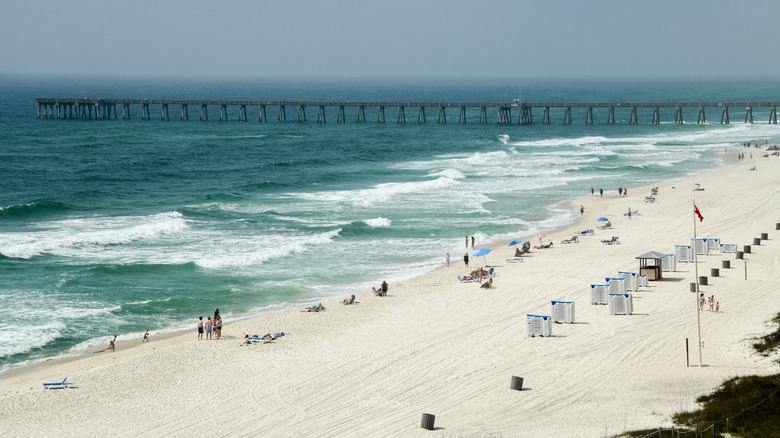
Florida's panhandle is a summer vacation destination for thousands of families each summer. The warm sunshine, white sand, and clear blue waters make it a perfect place to take some time away from the real world. But the waters can be dangerous, and the last thing anyone wants is for a tragedy to mark what should be a festive vacation.
This is why Panama City Beach is putting extra focus on an important swimming rule along its shores. When the waters are unfavorable to swimming conditions, beach lifeguards will place double red flags on the beach to indicate treacherous waters. The message is simple: Red flags mean stay out of the water.
Rules vary and evolve regularly among beach communities to increase visitor safety. One municipality in California, for example, recently enacted an "umbrellas only" rule designed to ensure lifeguards have a clear view of the water and its swimmers. Panama City Beach wants to encourage safety for its visitors and residents, too. "Entering the water during Double Red Flag conditions is very dangerous for you and your potential rescuer," the official Panama City Beach site says. Those who break the rule and swim when there is a double-red-flag warning will get a $500 ticket, whether you get caught in dangerous tides or not. Break the rule a second time and expect a $1,000 fine.
Double red flags indicate that the water is off-limits to swimmers

Safety rules are in place everywhere, and tourists have died after ignoring them. Double red flags on the beach mean the water is unsafe and swimming is prohibited. The ordinance passed in 2024 allows Panama City Beach officials to fine swimmers who ignore double-red-flag conditions, even without a verbal warning. The danger is real, and while the waters off Panama City Beach may often look inviting, dangerous rip currents — narrow and powerful channels that can quickly pull swimmers out to sea — have caused drownings over the years, including as recently as May 2026, Panama City News Herald reported.
Tourists are the most common victims to get caught in these currents, according to the newspaper, and even skilled swimmers can get into trouble. Unfortunately, drownings along Florida's Gulf Coast aren't uncommon and happen every year. In 2025, three people reportedly drowned in Panama City Beach. In 2024, the surf claimed seven lives. And in 2023, seven people drowned in Panama City Beach during a nine-day period in June, according to CBS News.
Of course, lifeguards can dramatically increase safety on the beaches, according to the Florida Beach Patrol Chiefs Association. Beaches with lifeguards consistently see a decrease in drowning incidents compared to areas that are not monitored, the association says. While it's comforting to have a lifeguard nearby, swimmers can take responsibility for their own safety by heeding the flag warnings along the beach.
Stay safe and know your beach warning flags
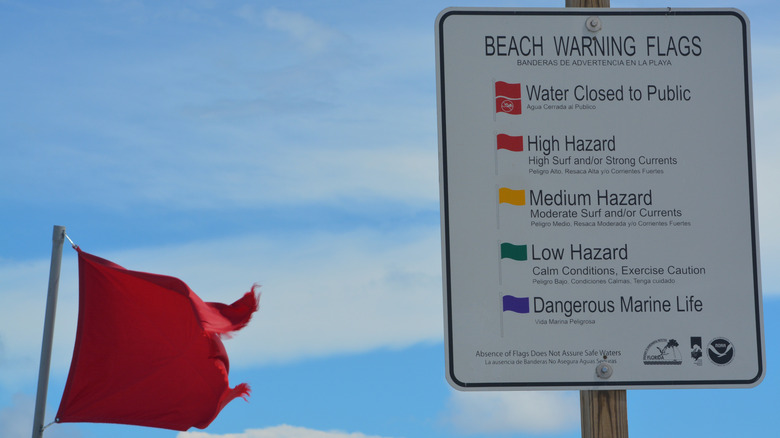
Being aware of water conditions before even getting your feet wet is an important way to stay safe at any of Florida's beautiful towns worth visiting for a weekend getaway. That includes becoming familiar with the flag warning system utilized by the United States Lifeguarding Association. The double red flag, which closes the waters to all swimming, is used in the most severe cases but isn't the only color to watch for.
If a single red flag is displayed on the beach, the waters aren't closed, but swimmers are discouraged from entering due to rough conditions or dangerous currents. A yellow flag advises caution because currents and moderate surf could pose a threat to weaker swimmers. If an orange windsock is displayed, this typically means inflatable rafts and other similar objects are discouraged due to strong winds.
Flags are used to warn about conditions besides currents and surf, too. A purple flag, for instance, means dangerous marine life like stingrays or jellyfish (excluding sharks) have been spotted and that minor injuries are possible. A red-and-white flag may indicate a shark has been spotted or that some other emergency situation is underway, such as a search mission or a contaminant in the water. If you're ever unsure what the flag warnings mean, ask a nearby official or lifeguard for guidance.