

Washington's Scenic Alpine Lake Offers Hiking Trails With Picture-Perfect Views
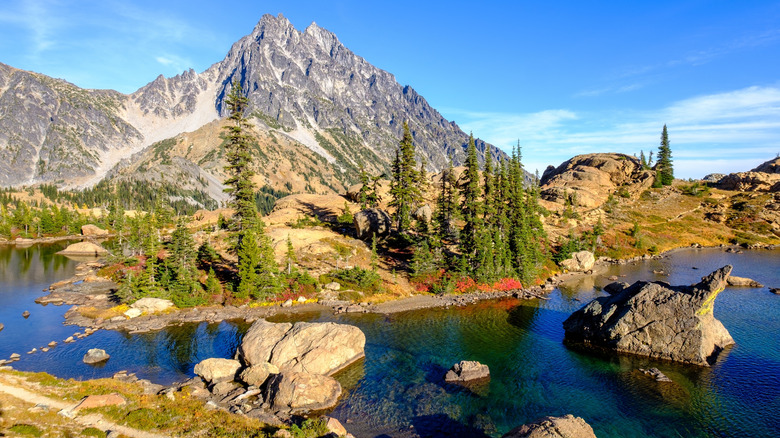
Washington is covered in natural wonders fit for an outdoor bucket list, from the spectacular Mount Rainier National Park with an active volcano to the wind-swept Palouse. Deep in the state's dividing line, the scenic Cascade Mountains, lie hundreds of alpine lakes in the aptly named Alpine Lakes Wilderness Area. One of these, Lake Ingalls, is a sapphire in the truest sense of the word, with crystal blue, glacial waters that mirror the environment on a bluebird day. Perched over 6,400 feet up, Lake Ingalls glistens below the towering Ingalls Peaks and Mount Stuart, the highest point in the Alpine Lakes, serving as a well-deserved reward for your eyes and your spirit.
Like many of the other natural treasures of the Cascades, you'll have to take a grueling day hike to reach the lake. And despite the challenge, every step of the way is scenic. You'll pass through forests of Douglas fir and larch trees, and will likely spot mountain goats and maybe even cute pika on your hike. However, expect crowds if you visit during the peak fall hiking season.
In good weather conditions, the trailhead is less than a three-hour drive from Seattle, and access is relatively straightforward off Interstate-90. Note that the road changes to gravel on the way there, but it is navigable with a regular vehicle when dry. The parking lot fills quickly, so arrive early to secure a spot.
Challenging hikes lead to incredible views at Lake Ingalls
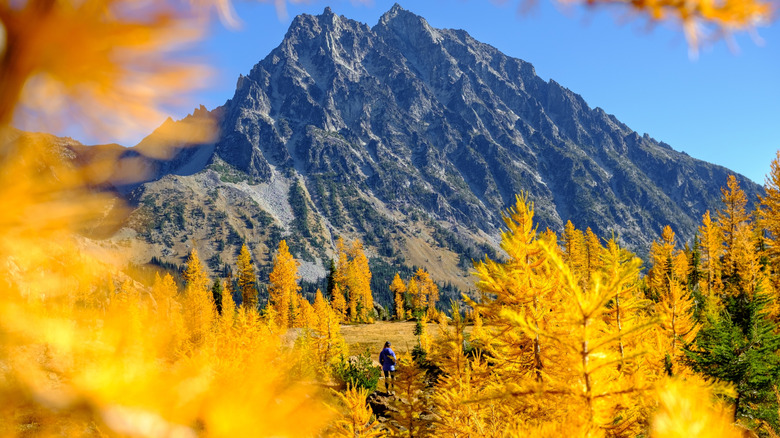
As you're starting your hike, you'll be able to scout the crowds before choosing your adventure: the Lake Ingalls Trail, the Esmeralda Trail, or the Longs Pass Trail. All three start from the trailhead, though along the route, each hike branches off, leading to a different destination.
The Lake Ingalls Trail hike climbs over 2,800 feet in 4.5 miles. As you make your ascent, the landscapes and scenery on the Lake Ingalls Trail will change, serving as encouragement to keep going. About 3 miles in, you'll reach Ingalls Pass. For an easier walk to the lake, take the left fork of the trail. The right fork leads through the beautiful meadow of Headlight Basin before climbing back up toward the lake. About a third of a mile from the trailhead, the Esmeralda trail splits off. This 7-mile round-trip hike is a bit gentler with a smaller elevation gain and leads past wildflowers and small streams in the summer months. If you have the energy, take a 2-mile detour to see Lake Ann. Otherwise, continue toward Fortune Creek Pass for spectacular views of several mountains, including Mount Daniel, Hawkins Mountain, and Mount Hinman.
One more possibility is to take the Lake Ingalls Trail for a mile and a half, then hop on the Longs Pass Hike, a grueling but rewarding hike for mountain lovers. This nearly 6-mile hike meanders up switchbacks through mountain goat habitat and over loose rocks, leading to an incredible view of Mount Stuart.
Planning your trip to Lake Ingalls
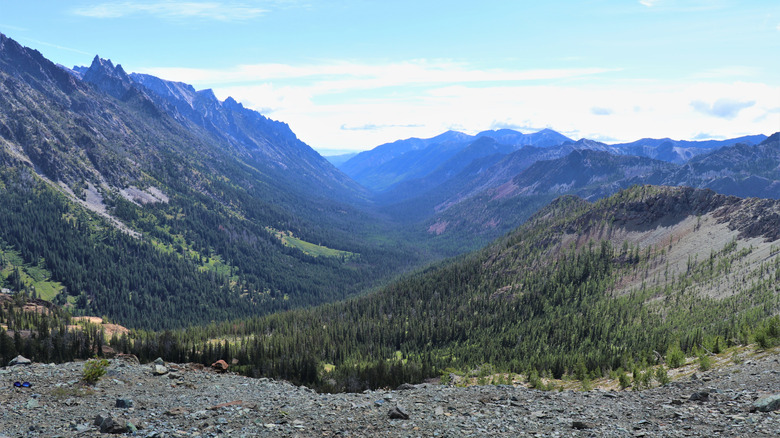
It's always a good idea to be prepared for a day hike. However, on a long and strenuous trek where the weather and temperatures can rapidly change – especially in the fall – preparation is key to enjoying your time in nature. Before reaching the trailhead, be sure to bring all the clothing, food, water, and sun protection that you'll need for your adventure, and ensure that your maps work offline (there is no reliable phone service in the area). If you are missing something, stop in Cle Elum on the way for any last-minute groceries or essentials. Pre-hike meal stops in town include the Sunset Cafe for a full breakfast or chicken-fried steak and the Cle Elum Bakery for doughnuts and pastries (or a cookie for later!). Once you reach the trailhead, you'll find the only vault toilet in the area.
If you're planning to camp to beat the morning crowds or savor more time in the woods, you'll find no shortage of campgrounds in the area. Twentynine Pines Campground is one option, though it is closed due to flooding as of this writing. As an alternative, the riverside Teanaway Campground has 55 tent and RV sites with fire pits, or try the easily accessible Beverly Campground, which offers 14 primitive tent sites with picnic tables. For a more comfortable trip, don't forget these five camping essentials.
The Forest Service notes that 150,000 visitors come to the Alpine Lakes Wilderness Area annually, some of whom do not follow the rules or regulations in place. When hiking and exploring, please do your part to leave no trace, only use existing trails, and pack out everything you've brought in. And don't forget a recreation pass, available from Discover Your Northwest or a local Forest Service office. If this hike whets your appetite, don't miss exploring North Cascades, one of America's least-visited national parks.