

Seasoned Campers Swear By This Hack To Stay Extra Warm While Sleeping
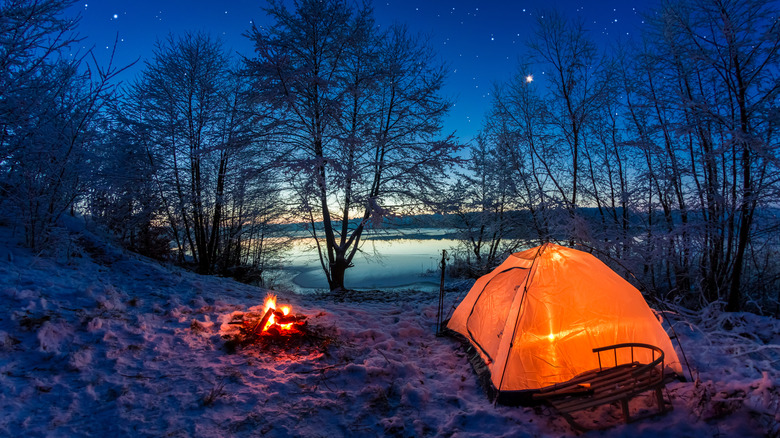
Camping is largely considered a summer activity, with sunshine and warmer weather providing ideal conditions for extended time outdoors. Winter camping has its own perks, such as smaller crowds and better chances of spotting wildlife. But sleeping in the cold requires a few strategies, and experienced campers will tell you that the key to staying warm overnight is eating a big meal before bedtime. While it's essential to pack a high-quality sleeping bag to stay warm, loading up on calories can go a long way to keep you toasty on cold nights in the wilderness.
Blogger and seasoned camper, Amanda Outside, writes, "Your body is like a furnace, and when you eat food, your body can convert that into the energy needed to help keep you warm at night." She continues, "I've noticed that when I eat a good dinner and add a little extra fat into my meal, I'm warmer during the night, and ultimately sleep a lot better in the backcountry." John Huston, a polar explorer, outdoor educator, and cold weather expert, agrees. "If it is super cold, really stuff yourself," he shared with Backpacker's Pantry. "Think of those dense calories as adding a load of hardwood to the wood stove. You want it to burn all night."
Of course, there are other things you can do to generate heat, such as this exercise hack that can help you stay warm in your sleeping bag. But eating certain foods will give you maximum warming benefits without the extra effort. That being said, not all food groups are created equal when it comes to raising your body temperature, so it's useful to know which ones have the greatest effect.
Choose these foods to stay extra warm in your sleeping bag
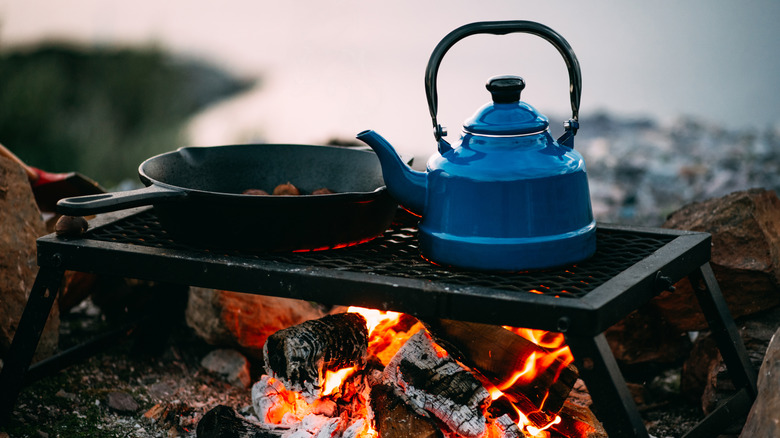
There is a scientific reason why eating certain foods at night can help to keep you warm. Thermogenesis is the process by which digesting food increases the body's metabolic rate, causing it to expend energy and generate heat. According to an article by Harvard Health Publishing, metabolic rate is a key determinant of body temperature. Healthline reports that foods high in protein can increase metabolic rate by 15% to 30%. Carbohydrates only increase it by 5% to 10%, and fats by 3% at most. Because of this, protein has a greater thermic effect than other macronutrients.
While carbohydrates are often mentioned when it comes to fueling the body — think runners who "carb load" before a race – they are generally a faster-acting energy source than protein. It takes the body much longer to digest protein, providing a more sustained energy source that can be more beneficial for staying warm at night. For this reason, carbohydrates are best for quick fuel at breakfast or before a big hike, instead of at bedtime.
It's clear that protein is the right choice for warmth, but it's not always the most practical for camping trips. Rather than packing foods that spoil quickly, campers can stick to more convenient choices like nuts. Almonds, pistachios, and peanuts are all a good source of protein and healthy fats. Other backpack-friendly sources of protein include canned beans, high-calorie bars, and dried meats such as beef jerky, but be mindful of sodium content. Other foods that take longer to digest, such as steel-cut oats, could also have warming benefits without the blood sugar spikes caused by refined carbohydrates. So whether you're beach camping in California or winter camping along the Oregon coast, don't forget to eat a sizeable, protein-packed dinner before bed.