

One Of Asia's Unexpectedly Affordable Countries Of 2026 Stretches Your Dollar Further
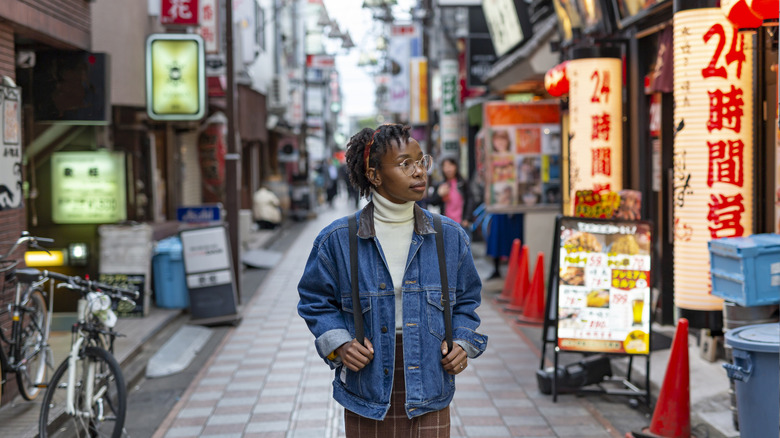
If money is tight but you still want to travel abroad this year, Japan is a better option than you might think. The Japanese yen remains weak compared to the American dollar — $1 is equivalent to roughly 160 yen, at the time of writing. That means Americans looking to spend less for an overseas trip can get more bang for their buck with a visit to Japan. In 2025, the conversion rate between the two currencies essentially resulted in an approximate 25% discount for American travelers. According to Japan Guide, single travelers on a budget can spend as little as 5,000 yen per day on accommodations, meals, and sightseeing, equivalent to around $32.
These exchange rates really do mean a dollar stretches further in Japan, and a bit of strategic planning can help you save even more. Airfare, for instance, will likely be the biggest expense a traveler will encounter on a trip to Japan. Experts recommend being flexible with dates when choosing flights for the best savings. Travelers may be able to find more affordable prices by visiting Japan during the off-peak months of January and February. Plus, there are many tips and tricks for finding deals on flights – be on the lookout for flash sales and last-minute discounts.
Even if the flight are on the pricey side, many tourists find that once they arrive, traveling in Japan is surprisingly affordable. But lower prices doesn't necessarily mean low-quality service or disappointing amenities. Fortunately, comfortable stays are available for nearly every budget if you know where to look.
Japan is full of comfortable and budget-friendly accommodations
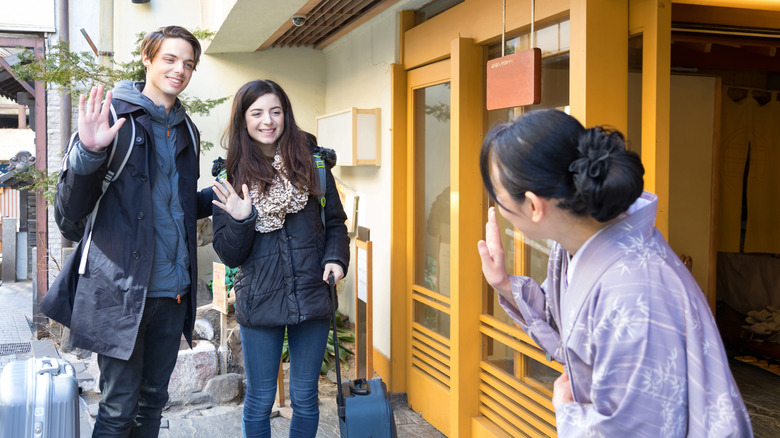
There are numerous high-end, luxury hotels in Japan, but they're far from the only option for travelers. A capsule hotel, for example, is a great option for those seeking convenience and affordability. Capsule hotels are exactly what they sound like — a dormitory-style space that consists of private "capsules" just large enough for sleeping in, usually outfitted with power outlets and a separate storage locker for luggage. At anywhere from $12 to $30 per night, depending on the location and season, these pod-like arrangements are not luxurious by any means, but they are comfortable, safe, and especially popular among those traveling solo.
If you're traveling with family, vacation rentals are readily available through booking platforms like Vrbo and Airbnb. Often, these rentals come with access to a kitchen, which allows you to save on meals by preparing them yourself. Visitors seeking greater immersion in local culture can stay in a "minshuku," a Japanese-style bed and breakfast, or a "ryokan," a budget-friendly Japanese inn, for anywhere from $30 to $75 per person, according to Japan Guide. Affordable stays are relatively easy to find in Japan, and travelers will also discover that traveling around the country is both easy and cheap.
Japan's low-cost transportation helps you save money on sightseeing
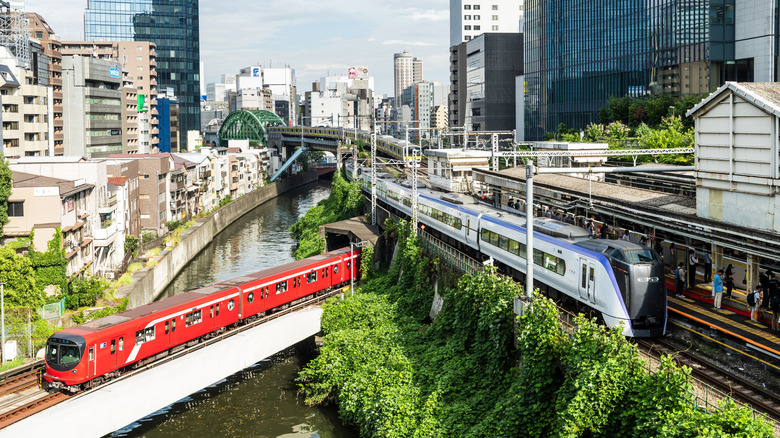
Japan's tourism sector is thriving. In 2025, a record-breaking 42.7 million people visited the nation. Given the amount of beautiful destinations to snap pictures and excellent attractions for first-time visitors, Japan's growing popularity is not surprising. But even with an influx of tourists on top of its 122.4 million residents, getting around is easy, thanks to its impressive network of reliable public transportation options.
In the larger cities, local trains are the best choice for short trips. Prices vary by distance, but are usually less than $3 per trip. Japan's IC card is a convenient option for visitors, and in some cities, paying with an IC card is cheaper than buying a paper ticket. This reloadable pass provides access to almost every transportation option in the country and is available in nearly every convenience store. Taxis are always an option, but are best suited for short trips rather than extended drives, which can rack up higher fares. For those longer trips, consider Japan's highway buses. These tend to be pretty comfortable and are more affordable than other long-distance travel options within Japan, such as local flights and the "shinkasen" bullet train.
Japan has three major international airports — Haneda Airport (HND) and Narita Airport (NRT) in Tokyo, and Kansai International Airport (KIX) in Osaka. Each of these airports provide access to transportation networks and taxis. They also have accommodations nearby or on site that make it easy to get some rest before or after your flight.