

Visiting Yosemite National Park? This Neighboring Lake Town Is A Must-Visit
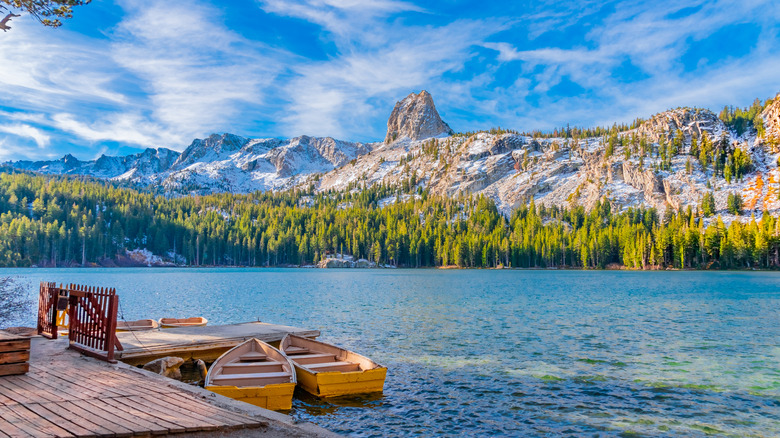
Roughly 40 miles southeast of Yosemite National Park's majestic cliffs and waterfalls, a lake town of about 7,000 people sits on the eastern ridge of the Sierra Nevadas, amidst some of the region's tallest peaks. Its elevation, surrounding mountain terrain, and proximity to public lands make it one of the top outdoor destinations in the Eastern Sierra area. This town is known as Mammoth Lakes. Located within the Mammoth Lakes Basin, this community enjoys more than 100 gorgeous alpine lakes. Their turquoise waters, fed by melting ice in the mountains, are simply stunning. During the summer, many of these lakes are popular watering holes for residents and visitors alike looking to cool off after hiking. There are also plenty of rentals for boats, tubes, kayaks, fishing gear, and paddleboards in the region.
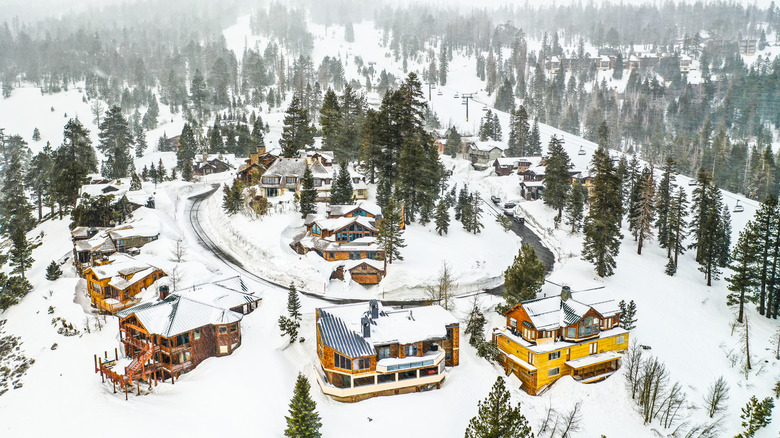
During the winter, the town transforms into a winter wonderland for snow sports lovers. Mammoth Mountain Ski Area is the region's largest winter attraction and one of California's best-known ski resorts. Its high elevation, "from 7,953 feet in town to 11,053 feet at the summit," often allows for a longer operating season than many other ski areas in the state. In addition to downhill skiing and snowboarding, the mountain also supports cross-country skiing, snowshoeing, ziplining, snowmobiling, and more.
Another notable local feature in Mammoth Lakes is the presence of geothermal activity. Nearby, you can find several natural hot springs, where mineral water emerges from underground sources. These springs attract visitors interested in both the region's geology and the waters' refreshing, rejuvenating benefits.
Enjoy waterfront adventures in Mammoth Lakes
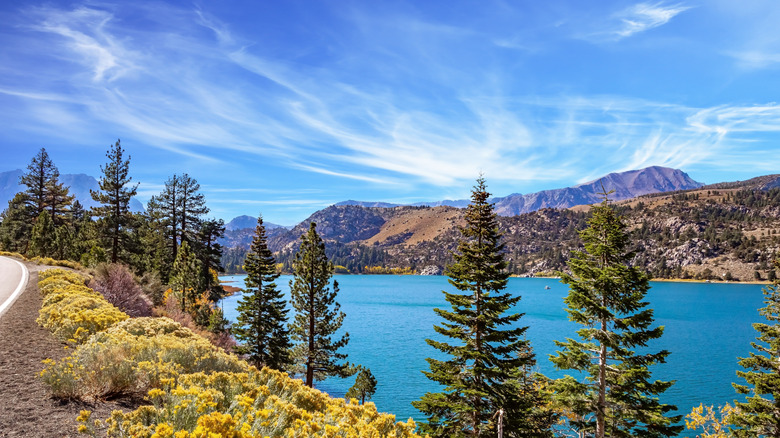
Among the most notable short excursions from Mammoth Lakes are the June Lake Loop and the Mammoth Lakes Basin, both of which can be explored in a single day. The June Lake Loop lies north of town and is a 14-mile scenic drive that passes a chain of mountain lakes. The route includes June Lake, Gull Lake, Silver Lake, and Grant Lake, each with a slightly different landscape and recreational use. The small community of June Lake (sometimes called the "Switzerland of California") also serves as a central stopping point for dining, shopping, and lodging. It's a practical day trip for travelers to Mammoth Lakes who want to see more of the Eastern Sierra region without covering a long distance on foot.
Closer to town, the Mammoth Lakes Basin offers more alpine scenery. This area contains five main lakes — Lake Mary, Lake Mamie, Lake George, Horseshoe Lake, and Twin Lakes — connected by a network of roads and trails. The basin serves as one of the region's primary recreation areas during the summer and early fall.
Campgrounds are located near several of the lakes, allowing overnight access to the area without traveling far from town. Kayak and paddleboard rentals are available at some locations, and fishing remains a popular activity throughout the basin.
Make the most of Mammoth Lakes with these travel tips
From San Francisco, the drive to Mammoth Lakes takes about five to six hours. Once you've arrived, there are some local public transport options that make driving optional and can help you avoid parking headaches while sightseeing. During warmer months, the free Lakes Basin Trolley connects Mammoth Lakes with trailheads, campgrounds, and popular lake areas. Additional local shuttle services operate within town and between lodging districts, ski facilities, and commercial areas. The Yosemite Area Regional Transportation System (YARTS) provides transit into Yosemite National Park during the summer, as well as to and from Fresno Yosemite International Airport.
Accommodations in Mammoth Lakes primarily include cabins, campgrounds, and lodges. There are also a few larger, full-service hotels and ski resort stays available. If you're not planning to take advantage of Mammoth Lakes' status as one of the best winter destinations in California, one of the top times to visit is between July and September, when roads and high-elevation trails are typically clear of snow. June is about the earliest you'll want to visit, as this is when wildflower season typically flourishes. In autumn, visitors often note the magic of the fall colors, as foliage turns across the surrounding valleys. Because of its location near Yosemite, Mammoth Lakes is a great option as a base for exploring the Eastern Sierra region or as an addition to a national park itinerary.