
North America's Deepest Lake Is A Unique Recreation Gem (And It's Not In The US)
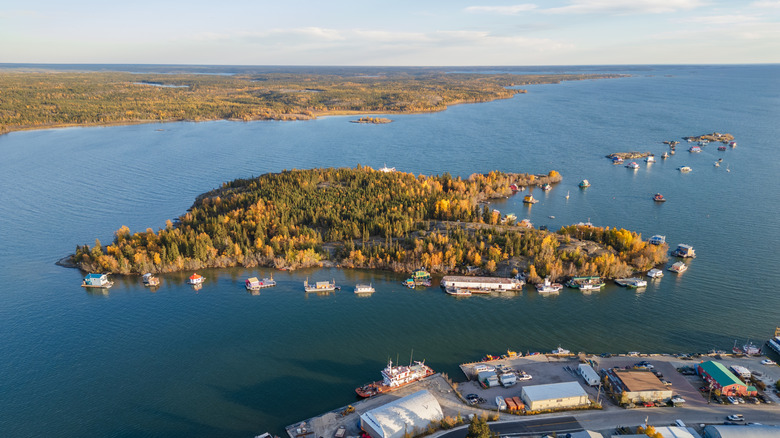
From coast to coast, North America glistens with dazzling lakes. Some of the continent's most remarkable lakes stand out for their extreme size and depth. The largest, Lake Superior, has stunning waters perfect for swimming and recreation, including scuba diving. But it's safe to say that nobody has ever touched the bottom of the the deepest lake in North America, Great Slave Lake. The deepest section of Great Slave Lake is pitch black due to the lack of sunlight, and the lake is deep enough to submerge Toronto's CN Tower or Manhattan's One World Trade Center underwater.
Perched in the Northwest Territories of Canada, Great Slave Lake is a haven for hardy wildlife and explorers looking for an authentic adventure. The immense lake is larger than Massachusetts, and surrounding its shore are the traditional lands of several Indigenous communities — the lake itself is named after the Slavey Indigenous people. European fur traders first settled on the lake the late 1700s, but few people ventured this far north until the 1930s, when gold was discovered on the lake's northern shore around Yellowknife, the only city in the Northwest Territories.
Despite being in one of the more remote parts of Canada, getting to the lake is relatively simple. You'll find direct regular flights to Yellowknife Airport (YZF) from major cities across Canada, including Toronto, Edmonton, Calgary, and Vancouver. Those who prefer the conveniences of the city can stay in Yellowknife, which borders Great Slave Lake. Alternatively, if you wish to explore other communities along the lake, rental cars are available from the airport — at Hertz, the average price was $126 CAD per day at the time of writing, equivalent to roughly $92 USD. Wildlife lovers can pay a visit to the nearby Mackenzie Bison Sanctuary, a massive forested area home to the free-roaming bison herd known as Mackenzie Herd.
Immerse yourself in nature on Great Slave Lake
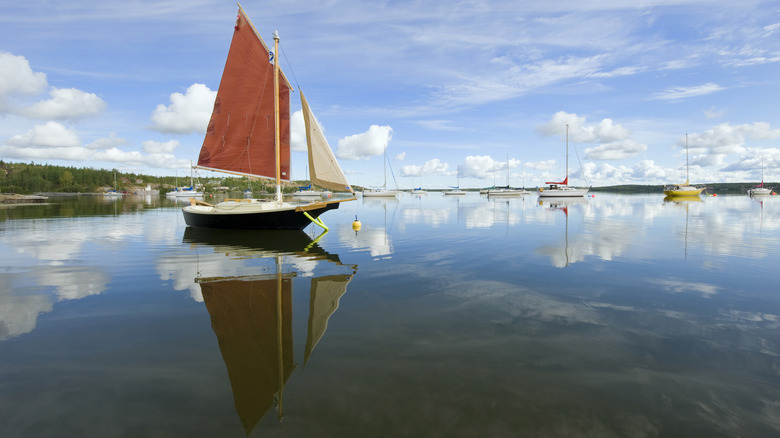
Lined with rugged cliffs in the north, and dotted with beaches in the south, Great Slave Lake is a diverse playground of outdoor adventure. Bird lovers will find themselves in heaven exploring the lake's two "arms." The North Arm is a stopover for 100,000 water birds in spring, while bald eagles nest in the cliffs of the East Arm. Along the forested western shore, you may see larger wildlife including caribou, wolves, moose, and bears.
Visitors hoping to swim should manage their expectations, as Great Slave Lake is ice cold. It's an ancient glacial lake, after all, and remains frozen for over for two-thirds of the year. Canoeing is one of the most exciting ways to explore Great Slave Lake, much like Indigenous tribes have for thousands of years. Be sure to bring a fishing rod and obtain a local license as it has some of the best lake trout fishing in the world. Several local companies provide fishing and paddling excursions in the warmer months. Visit between late August and early October for the best chance to see magical northern lights at night — the Northwest Territories are one of Canada's best destinations to snap photos of the aurora borealis.
Along the south shore, you'll find several sandy beaches in Hay River Territorial Park. Walk barefoot on the soft sand, rest on driftwood logs, gaze out at the fishing boats on the water, or brave the chill and take a dip in the lake. Visitors who wish to linger a little longer will find a modern campground near the beach, along with a well-maintained picnic area to take in the quiet and peaceful scenes.
Unique and enriching experiences on Great Slave Lake
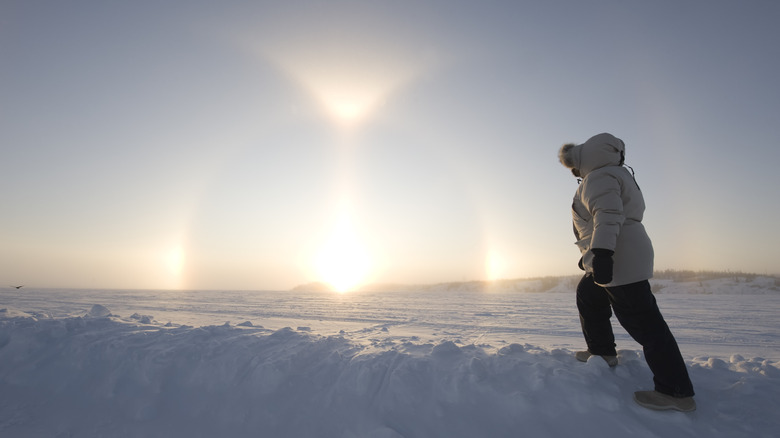
The small towns along Great Slave Lake are remote, but not completely isolated. Many communities are accessible by local plane, by road on Great Slave Route, and by ice in the winter, when the lake is transformed into a frozen roadway. Visiting in the winter provides access to unique experiences, such as trips to Yellowknife's Indigenous Dene camps by snowmobile, or traversing the frozen road by dog sled, skis, or fat bike. Outside of Yellowknife, Dettah is a welcoming community where visitors can soak up Dene culture by visiting museums and participating in traditional sports such as stick pull or snow snake.
Hay River, the largest town on the south shore of Great Slave Lake, brims with activities and stunning scenery during all four seasons. Whether you're interested in golf, ice fishing, or a boat cruise, the town offers a little bit of everything. The locals are described as "big-hearted people, living vibrant lives," according to Spectacular Northwest Territories. This should come as no surprise, given that Canada is one of the friendliest countries in the world. Travelers seeking the comforts of home will have several charming hotels, cabins, and cottages to choose from in Hay River.
For a one-of-a-kind experience on Great Slave Lake, take an excursion from Yellowknife to the small community of Łutsël K'é, the only settlement on the East Arm. Accessible by plane, boat, or snowmobile, the settlement is inhabited by the Łutsël K'é Dene people. Visitors will have the opportunity to observe their traditional way of life while being on the doorstep of Canada's new national park, Thaıdene Nëné National Park Reserve.