

The Most Frustrating Travelers In Airport Security Lines, According To Experts
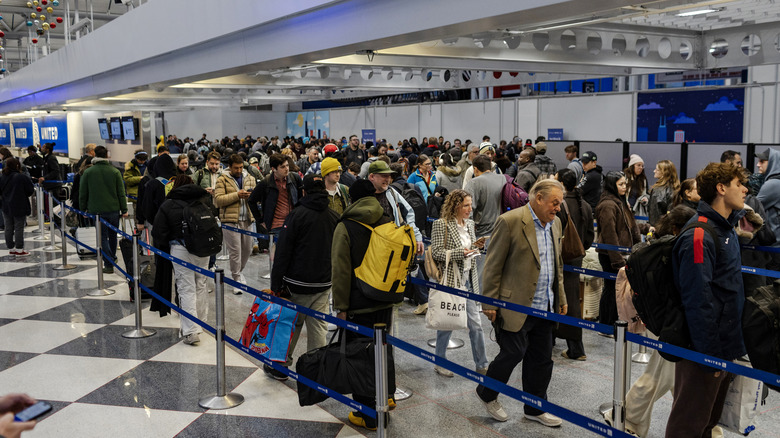
Airport security checkpoints have been known to plant storm clouds on an otherwise sunny mood. This part of travel can be stressful, not only because of the strict screening procedures passengers must follow, but also because airports are busier than ever before, according to the Transportation Security Administration (TSA), which often means long lines. If you're an experienced traveler, you may be able to navigate airport security with ease. But every now and then, unprepared or downright irresponsible passengers gum up the screening process, making even the most frequent fliers break out in a sweat. Airport security is a team effort between passengers and screening officers, and each must do their part to keep lines moving smoothly. However, when travelers do not follow the standard rules and procedures — either intentionally or unintentionally — it can slow everything down and increase stress for everyone involved.
Here are five types of travelers you may encounter at airport security who are known to make the process more challenging than it needs to be. While it's likely that these travelers simply aren't familiar with the rules and etiquette of airport security, the inevitable delays can be frustrating. For that reason, it always helps to pack a bit of extra patience and kindness when you travel.
The overpacker

Airlines generally allow passengers to bring one carry-on suitcase and one personal item with them in the cabin. However, some travelers push these limits by turning the contents of their luggage into a set of Russian nesting dolls, or stuff the bag until it is bursting at the seams. What these passengers may not realize is that an overstuffed carry-on is more difficult to screen, which can cause delays for everyone in line.
"The X-ray operator can not readily identify the masses in the bag," said Transportation Security Officer Michael Delgado to Apartment Therapy. He warned that an overstuffed bag is ten times more likely to get flagged and pulled aside for an additional security check. As a result, passengers may be stuck waiting while officers sift through the contents by hand. "I always advise travelers to never overpack their carry-on bags," said Delgado. To avoid overpacking on your next trip, consider using this simple wardrobe strategy.
The line jumper
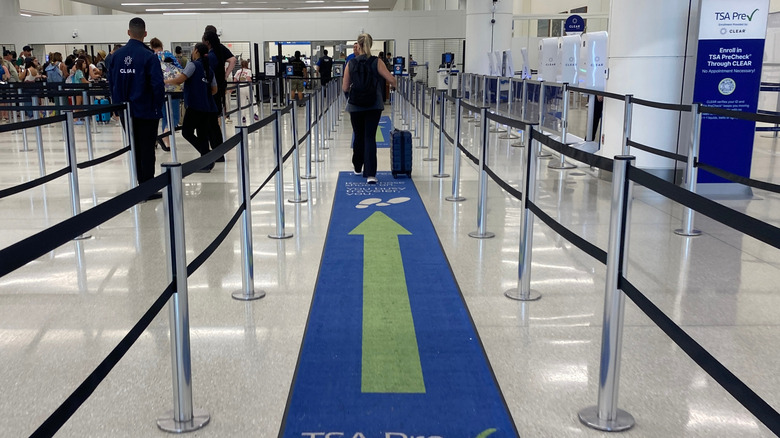
Travelers who intentionally step into the wrong line, especially those who try to cheat the system and use a priority line without access, are some of the most frustrating to deal with. Andrew Thomas, an entrepreneur who has traveled over a million miles, wrote in an Inc. opinion piece, "No amount of smooth talking will get you past the Pre-Check boarding pass and ID check. This slows everyone up and puts you at risk of going to the back of the long line."
To speed up security for all passengers, airports across the U.S. are beginning to add dedicated lanes for families with children under 12 years old. The TSA also has over 1,300 enrollment centers across the country for TSA PreCheck, which is generally much faster than the regular security line. The TSA's convenient new screening method doesn't even require you to pull out your passport, so there's truly no excuse for line-jumping nowadays.
The unprepared traveler
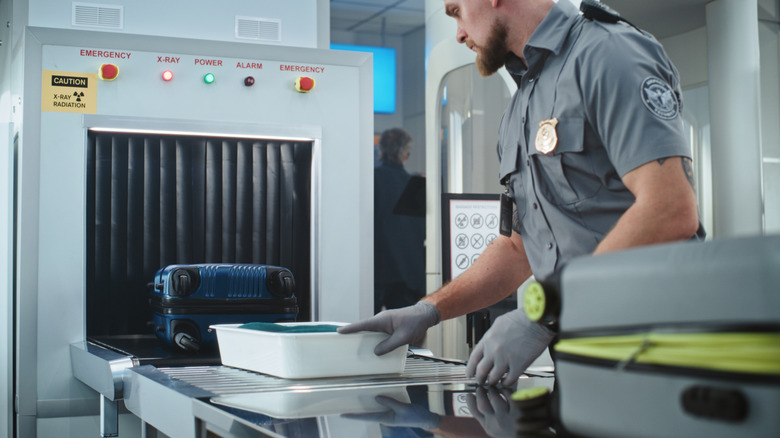
There are a few standard rules that passengers must follow prior to stepping through the security scanner. Neglecting them, or not taking a few extra seconds to prepare beforehand, frustrates experienced travelers. "The worst one to me is people who wait until they're about to step through the security scanners to check their pockets and then they do a little dance of taking their wallet and their keys and they're emptying a pocket full of change," noted Kyle Potter, executive editor of the Thrifty Traveler, via the Washington Post. The TSA's newest body scanners will detect any item concealed under layers of clothing, resulting in a pat down from security officers while everyone else waits.
Despite improvements to screening technology in the last few years, the TSA officially still enforces policies for passengers carrying liquids and larger electronics through security. Passengers are commonly tripped up by the 3-1-1 rule, meaning that each traveler is only allowed to bring one quart-sized bag with bottles that are under 3.4 ounces in size through the checkpoint. Further, if you don't have PreCheck, you will have to take out your laptop and tablet before putting them in a bin on the belt.
The social media star
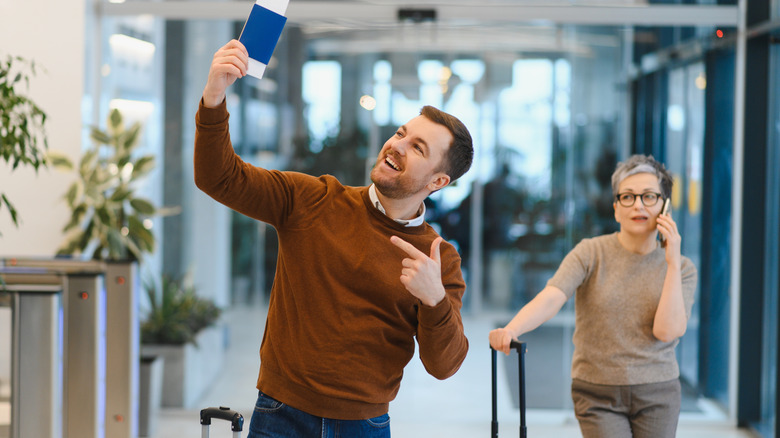
Social media is flooded with travelers documenting their journeys on their phones, often without realizing how their actions may impact other passengers at the airport. For example, the "airport tray aesthetic" trend was particularly irksome for fliers a few years back. Frequent business traveler Krishna Rajan noted in Deccan Chronicle, "There's nothing worse than being stuck behind someone more interested in getting the perfect photo of their tray than getting through security quickly. It's not just inconsiderate — it's frustrating."
While the TSA does not prohibit filming as long as you're not disrupting the screening process, it's not the same in other countries. Doug Drury, Professor and Head of Aviation at CQUniversity in Australia, wrote in The Conversation that rules for phone use differ from country to country at airport security checkpoints. Some may not allow mobile phones to be used to protect airport security operations. Travelers who are using their phones while waiting should also be aware that other passengers may have eyes on their devices. Cell phones are reported to be the most frequently stolen item at airport security.
The mad dasher
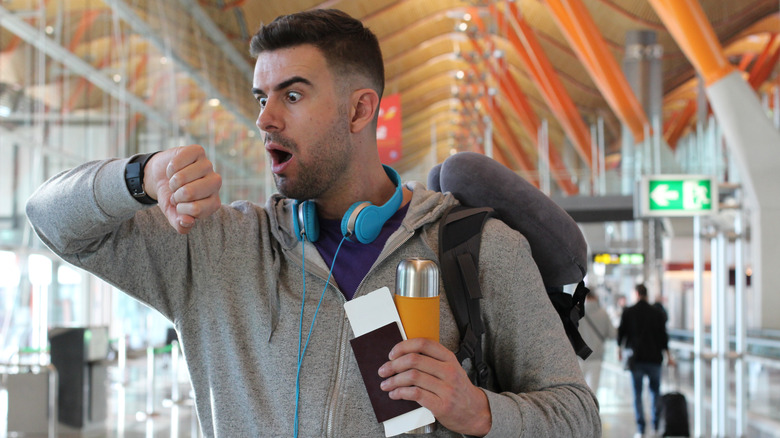
Travelers who are running late for their flight often attempt to rush through security. However, impatient and careless travelers do not go unnoticed by eagle-eyed TSA officers, who might interpret it as suspicious behavior. As a former TSA agent noted in Reader's Digest, travelers who are uncooperative or downright rude may get a taste of their own medicine. "If I report you to my higher standing officer because you weren't nice, my higher standing officer can keep you for a pretty long time," they said. "We can — and we will — make you miss your flight."
Travel expert and Southwest Airlines flight attendant Christy Betbeze noted in a Southern Living article that "calm, steady progress" is the best way forward when security lines are seemingly stuck in place. Passengers are advised to arrive at least two hours early for domestic flights and three hours for international. But if you do run into a last-minute emergency and arrive at the airport late, many airlines have an unofficial "flat tire" rule as a courtesy, allowing passengers to rebook on the next available flight if they miss departure. Do yourself a huge favor, though, and check in online to show you've done your best to make it.